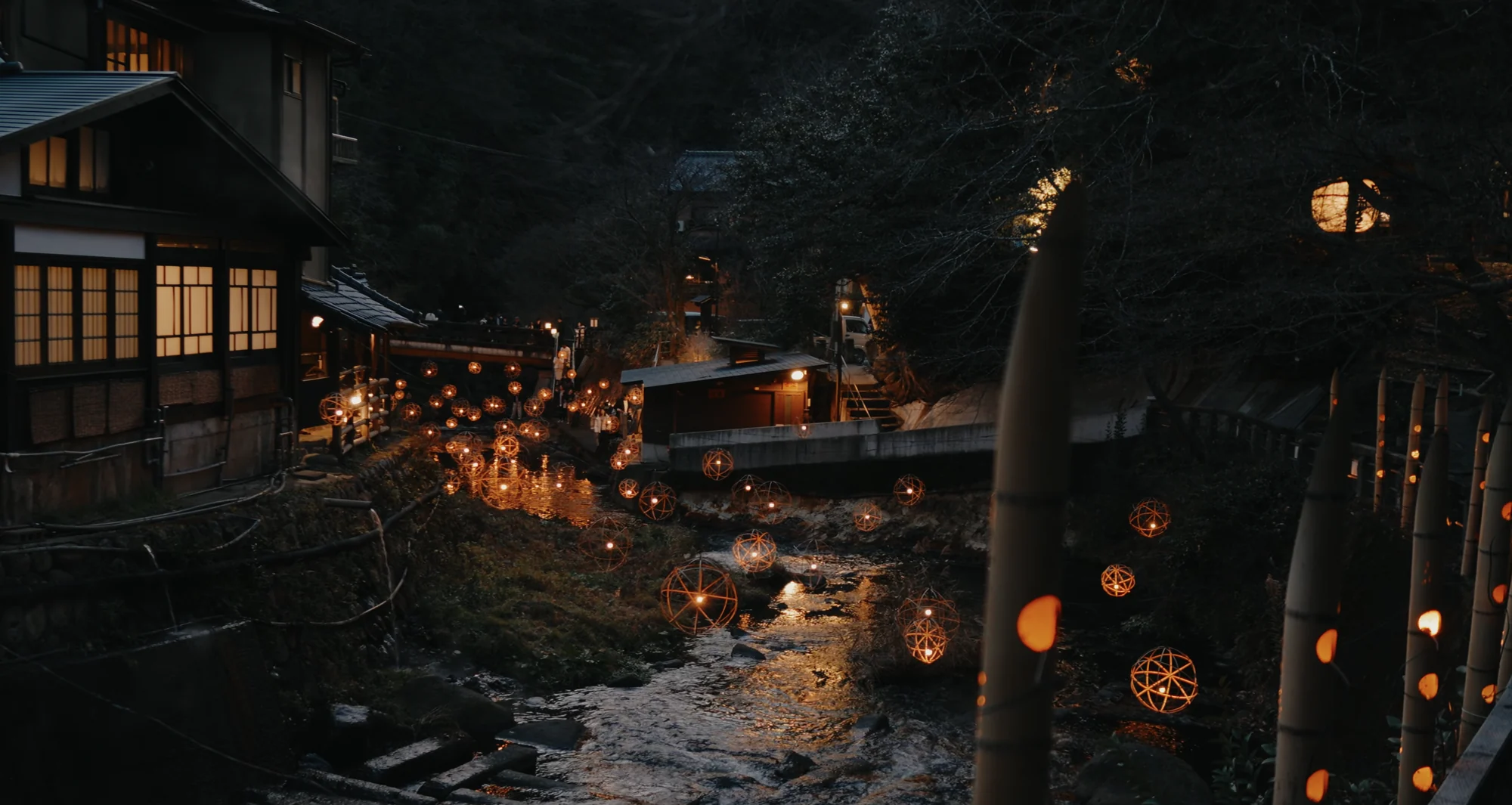
What Yuakari is
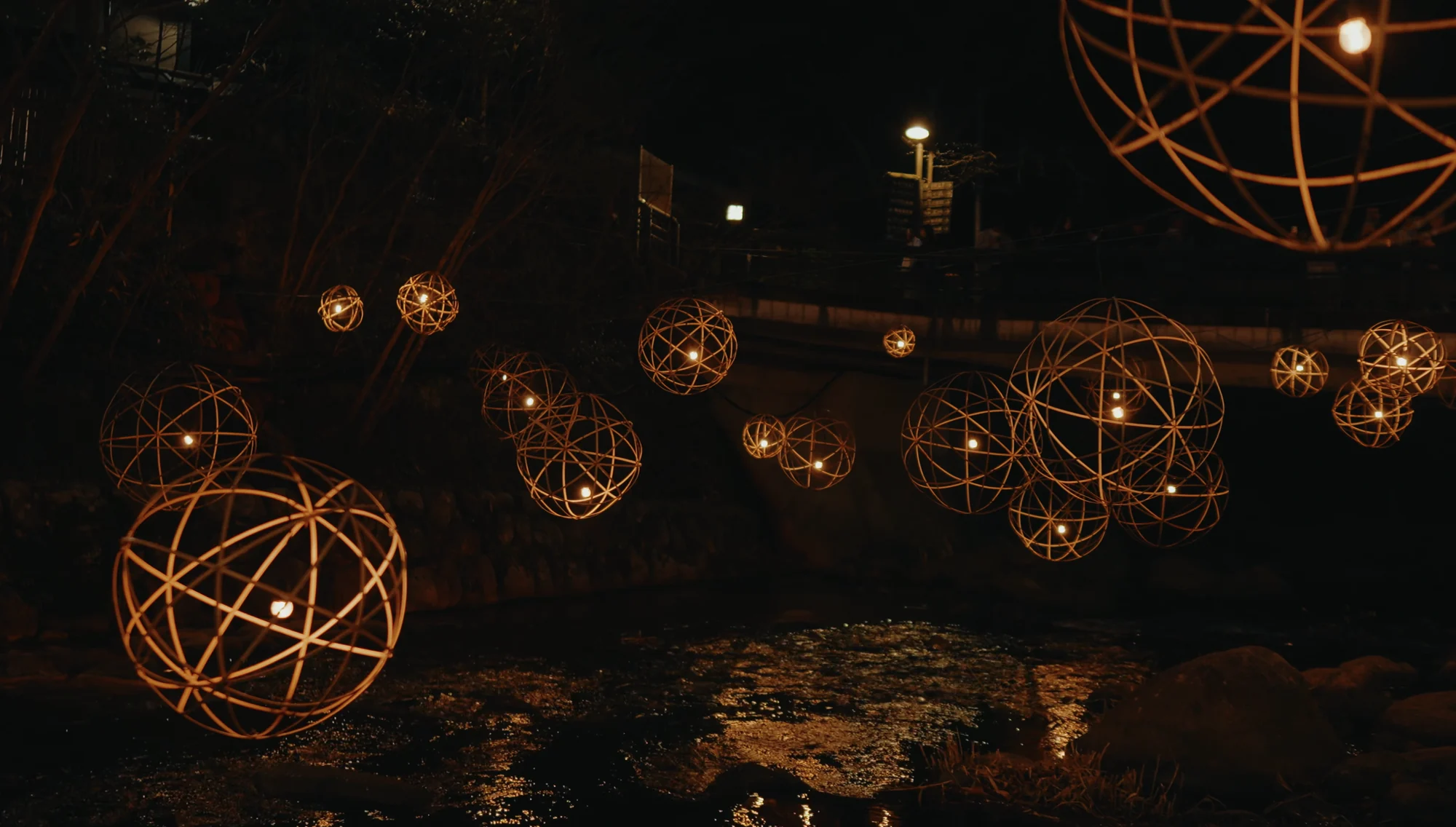
Yuakari (湯あかり, roughly "hot-water glow") is the village's winter illumination, and the ryokan association describes it simply: the lanes lit by bamboo ball lanterns through the cold months. What that understates is the effect. From the first bridge the gorge becomes a corridor of warm points — openwork temari spheres clustered on the banks and set on frames above the current, and taller cylindrical lanterns, around 2 m (6.5 ft), marking the lanes and stairways.
The Tanoharu riverbanks and the central bridges carry the densest installations; side lanes pick up the theme past inn gates and stone steps. Steam from the baths drifts through the light, and on a snowy night the composition completes itself. The scale is intimate rather than vast — a village wearing lights, not a light show wearing a village — which is exactly why it photographs the way it does.
Now past its tenth season, it has become the village's winter signature, and because it runs nightly for roughly three months it is the rare famous illumination you can have nearly to yourself.
The light as the design code, after dark
Understand the lanterns as architecture and the event stops being decoration. Daylight Kurokawa is governed by subtraction, the earth tones, the subdued lettering, the trees where billboards stood, and at sunset that governance faces its test: a resort street with no neon is, left alone, simply dark. Yuakari is the village answering its own rule without breaking it.
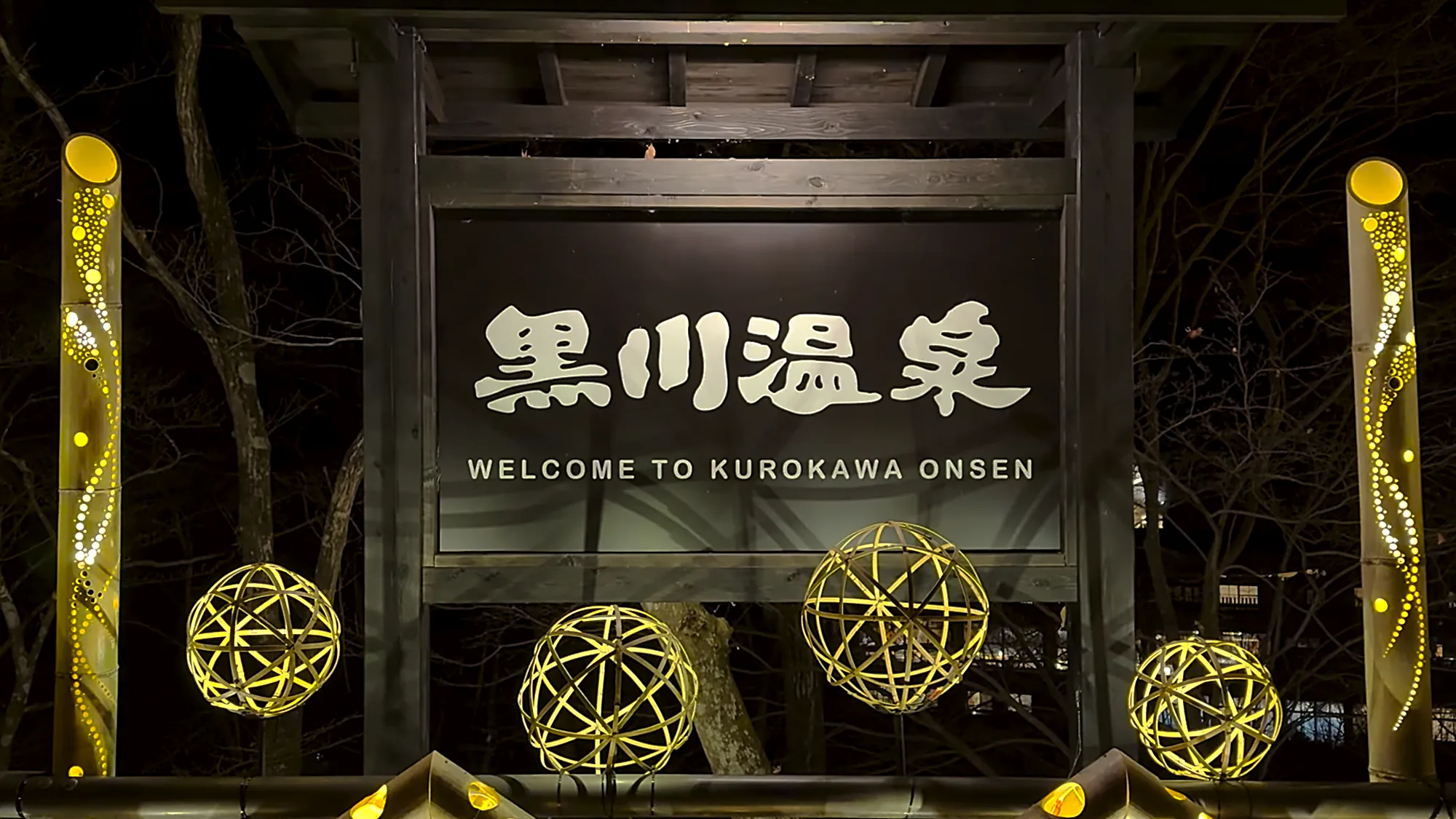
Mari-akari: bamboo spheres, woven by hand, lit from inside.
The light is warm-spectrum and low to the ground, the fixtures read as craft rather than infrastructure, the placement follows the river and the walking lines rather than the shopfronts, and nothing blinks, scrolls or advertises. Even the economics run on the village's cooperative pattern: the illumination is free to walk, its benefit accrues to every inn equally in the form of the after-dinner village their guests experience, and the same conservation instinct that routes one per cent of every tegata into the environment keeps the night landscape as tended as the daytime one.
Compare the alternative, which any traveller has seen: the onsen street lit by vending machines, convenience-store frontage and competing signage, each light rational alone and the street ruined collectively. Kurokawa's dark valley makes the opposite wager, that a village which controls its light controls its atmosphere, and the lanterns are that control made beautiful.
This is why the event photographs like a historic scene despite being a modern program: it is designed by the same hand, under the same philosophy, as the lanes it illuminates. The visitor who walks it having read the village's history is watching the revival's aesthetic argue its case at night, and winning.
When it runs, and when to go
The event runs nightly from about December 20 to March 31, dusk until 10 pm; the 2025–26 season opened on December 20 with lights from around 5:30 pm. Exact dates are set each season and are worth confirming before a trip built around them. Two timing rules hold within that window. By month, January and February bring the best odds of snow on the lanterns and the sharpest cold-air contrast for the baths that bookend the walk.
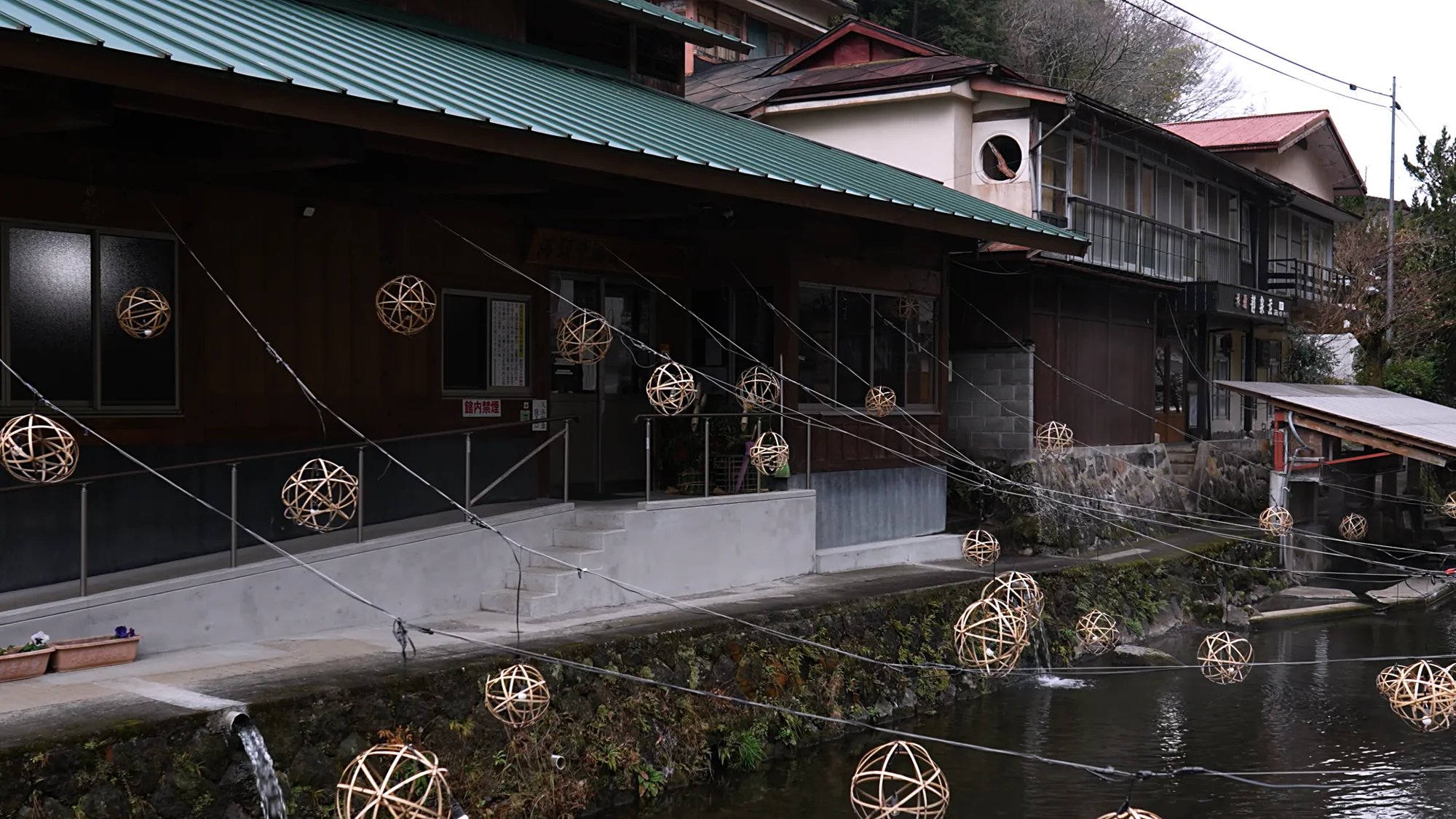
They hang all day, unlit. Most visitors walk past them at noon.
By hour, the stretch just after full dark and the hour before the 10 pm close are quietest, while the 6-to-8 pm middle carries dinner-break strollers out of the inns; weeknights beat weekends comprehensively. Day visitors run into winter's hard fact — the last buses down the mountain leave early, well before the lanterns are at their best — so in practice Yuakari is an overnight guest's event, which our worth-it page weighs honestly.
Timing the light: which nights, and which hours
Three clocks govern the event, and reading them together produces the right evening. The season clock first: the current window runs December 20, 2025 to March 31, 2026, nightly, and it costs nothing to see, which together define the planning gift, fourteen weeks of free, standing illumination that no date inside the window can miss.
The calendar clock second: the week between Christmas and January 3 fills the village like the festival it effectively is, and holiday-adjacent February weekends carry their own pressure, so the connoisseur's slots are the long midweeks of deep January and February, when the lanterns burn for a fraction of the audience. The evening clock last, and it matters most: the light's character changes across the night.
The first hour after dusk carries the blue remnant of daylight and the day's last visitors; mid-evening belongs to the staying guests, out between dinner courses and baths; and the final stretch before the lanes empty entirely is the photographer's and the romantic's hour, when a walker can have whole bends of the river to themselves.
If the trip can spare it, the correct answer to "which night" is two: the first evening spent learning the route with the crowd's energy around you, the second spent editing it down to your three favourite stops taken late and unhurried. And if the sky delivers snow, drop every other plan. Falling snow through lantern light over steaming water is the single image this village does better than anywhere in Japan, and it cannot be scheduled, only met.
Seeing it well
Walk the full river line once without a camera first: the upper bridges for the corridor view, water level where the paths allow for reflections, then the side lanes where a single lantern lights stone and steam. Bathe before you walk — in yukata and the inn's padded haori if the cold allows, your own coat if not — because the post-bath warmth buys half an hour of comfortable slowness in the cold.
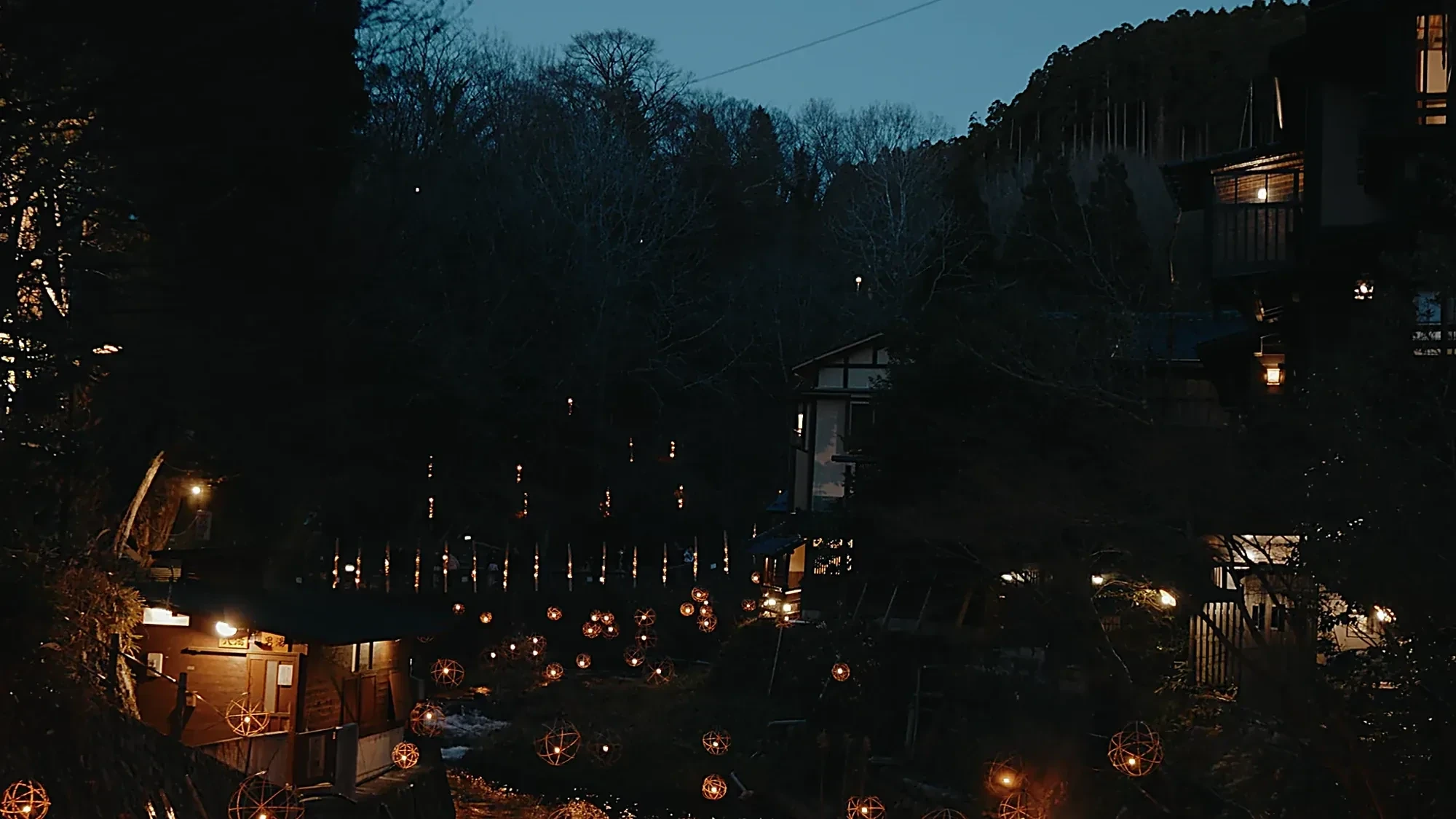
Blue hour, not full dark. The window is about twenty minutes.
Photographers want a fast lens or a pocket tripod for the reflection shots, falling snow in the frame when it is offered, and the plain courtesy of never blocking a narrow bridge for a composition. The lanes are tight and the event is, first, the village's own evening; a spent tegata and a slow walk is the correct way to be in it.
Walking the light: how to pace an evening under the lanterns
The illumination is not a site you visit but a route you walk, and pacing it well is the difference between a photograph and an evening. Begin at the river, because the water is the event's stage: the lantern light works hardest where it doubles on the stream, and arriving there first, while your eyes are still adjusting from the inn's brightness, delivers the strongest single impression the village can arrange. Walk slowly.
The route through the lanes is short by any hiker's measure, and the correct unit of progress is not distance but stops: the bends where the river view opens, the bridges, the mouths of the stone stairways, the small shrine at the village's heart where the retired tegata discs hang in their hundreds, lantern-lit like a wall of small moons. Then do the thing day visitors cannot: leave and come back.
The lanterns burn through the evening, and the walk repays a second pass after your bath or after dinner, when the lanes are emptier and the cold has deepened; the same route at 21:30 is a different, quieter masterpiece than at 18:30.
Total investment for both passes is perhaps an hour of walking, none of it strenuous, all of it cold, which is the design working as intended: the village's whole winter logic is the alternation of cold lanes and hot water, and the illumination simply makes the cold half of that equation as beautiful as the steam. Dress warmly, pocket the phone between stops, and let the slowest walker in the party set the speed.
Photographing the lanterns without spoiling them
The event is generous to cameras and precise about conduct, and the two facts belong together. The rules first, because they are posted and they are kept: no drones without permission, no smoking along the lanes, and the bath-photography prohibition is at its most absolute after dark, when a lens near a rotenburo is a serious offence against the people in it; the changing-room threshold ends every camera's evening, full stop.
Inside those lines, the craft is standard night work with village manners. Low light rewards stability, so brace on railings and walls rather than planting a tripod across a working lane, and where a tripod is used at all, the courtesy is edges and short stays, never the middle of a bridge at peak hour.
Expose for the lanterns and let the shadows fall dark, because the event's beauty is precisely its restraint, warm points of light in a genuinely dark valley, and a brightened, noise-lifted file that turns night into dusk reports a village that does not exist. The river stretch delivers the signature frame, light doubled on moving water, and the stairways deliver the depth shots, lanterns receding in tiers.
Phones do better than expected if held still against something solid and allowed their night modes' full exposure time. And the best photographic advice is the oldest: take the frames, then put the camera away for the second pass. The event's real medium is not light on a sensor but cold air, hot water and slow walking, and no file captures the third of those.
The rules after dark
Yuakari has no tickets and no gates, so its only infrastructure is behaviour, and the relevant rules are the village's own published code. Drones are the explicit one: the association requires prior permission for any drone use, and an illumination of open flames-in-bamboo over a river in a village of wooden inns is precisely where that rule is enforced with no humour at all; leave the drone at home and let the reflections do the aerial work.
Photography at street level is welcome, with the boundary the village draws sharply: the lanterns, the lanes, the river, yes; the baths, never, an association-wide prohibition that does not soften because the light is beautiful. The lanes are non-smoking outside designated corners, the narrow bridges are working thoroughfares where a planted tripod is a blocked path, and the quiet that makes the event what it is belongs to everyone, including the guests asleep behind the lattice windows you are photographing.
None of this needs policing in practice, because the event's whole atmosphere teaches it: a village that lights itself by hand, in bamboo, for three winter months, is trusting its visitors with something flammable, fragile and free. Ten minutes into the walk, most people find they have lowered their voices without being asked.
A Yuakari night, planned end to end
The event rewards a shaped evening more than most, because its window is fixed and the village around it runs on inn time. The plan that works: check in by mid-afternoon and take a first bath in daylight, so the post-onsen warmth is banked before the cold sets in.
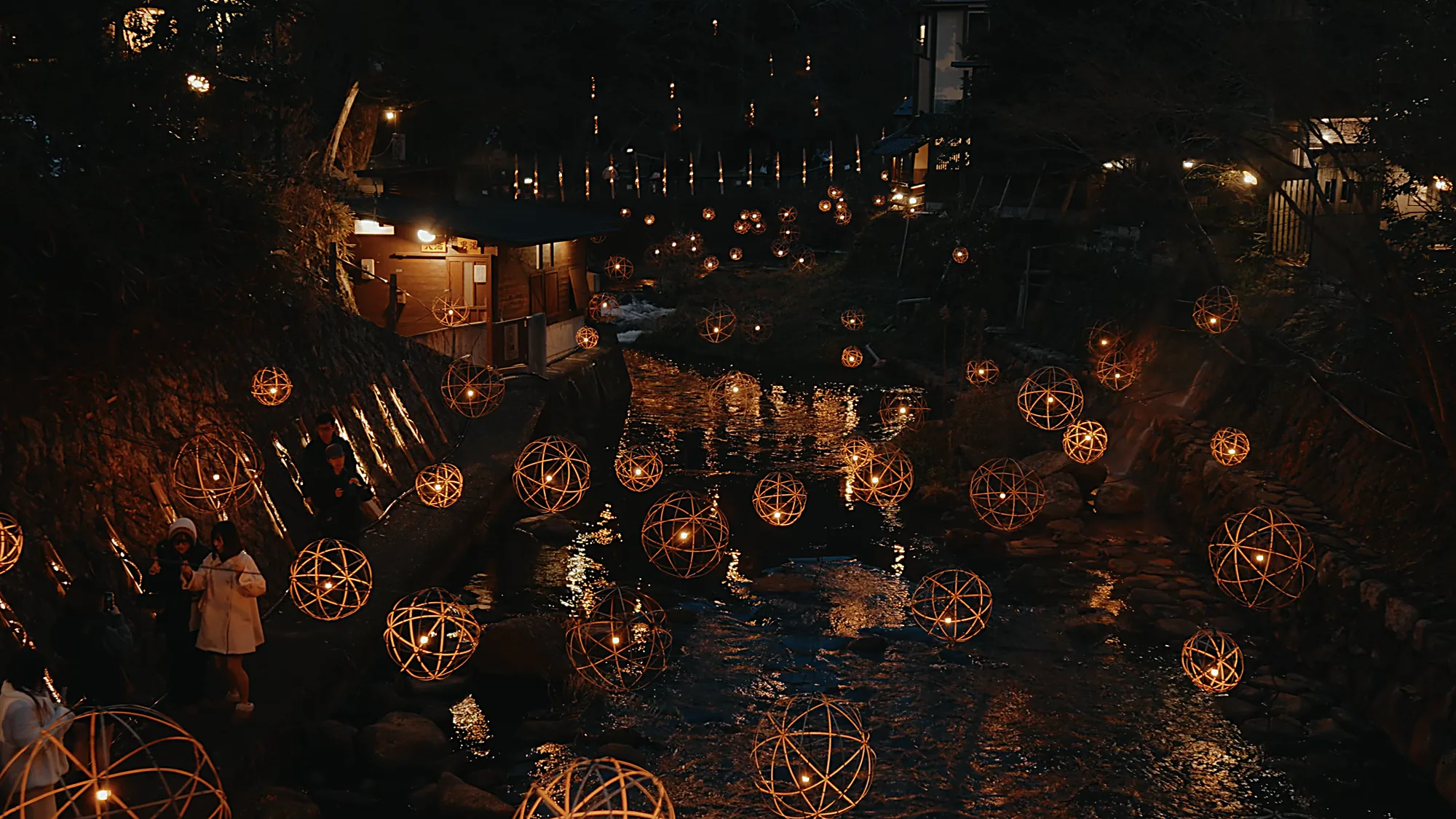
Bath, dinner, then the river. In that order.
Watch the light fail from your room or a lane-side bench; the lanterns come up with dusk, around 5:30 pm in the deep of the season, and the first half hour, blue sky dying behind warm bamboo light, is the photographers' slot most visitors spend at dinner. Eat when your inn seats you, because kaiseki hours are not negotiable, and treat the 6-to-8 pm crowd on the bridges as the price of digestion.
Then the main event: the full river walk after 8:30, when the dinner strollers thin, taken slowly, downstream and back, with the side lanes saved for the return leg. Couples should hold the hour before the 10 pm close, the emptiest and coldest and best of the night; families should run the walk early and let small lantern-viewers sleep; photographers should walk once with no camera at all, then return to the three compositions the first pass chose.
And everyone should end the same way, in hot water: the night's second bath, after the lights go out, is the village's own designed conclusion, steam standing in cold air that still seems to hold a little of the glow.
Building the Yuakari trip: an itinerary that uses the light properly
The lanterns reward a trip built around them rather than appended to one, and the build is simple. Night one: arrive by mid-afternoon on the direct Fukuoka bus or by car with daylight to spare, take the first bath at your own inn, walk the illumination's full route in the busy early evening to learn it, dinner, then the short second pass to your favourite stop before bed.
Day two: the tegata circuit through the morning window, lunch in the lanes, a kashikiri hour or a third stamp in the afternoon, and the evening replayed at leisure, this time with a chloride soak timed just before the walk so the water's held warmth carries you through the coldest stretch, and a sticker highball at the hearth-side izakaya on the slope, open into the late evening, as the closing scene.
Day three: the morning bath, breakfast, and the bus out. The overnight structure is not incidental, it is the event's entire economics: the lanterns burn brightest for people with nowhere else to be, and a day trip that leaves before dusk in winter has, bluntly, missed the season's point, while even a dusk-hour day visit meets the route at its most crowded and leaves before its best hour.
Two nights midweek inside the window, booked with the bus and the inn confirmed together, is the full experience at the season's gentlest prices. The village will fill the itinerary's every gap without being asked. That is what it was rebuilt to do.
The craft, and the code
The lanterns are made locally each year: bamboo cut and woven in the surrounding Minamioguni hills, repaired and replaced through the season, a small winter economy for the craftspeople and a deliberate extension of the rule that rebuilt Kurokawa in the 1980s. This is the point most visitors miss. The village bans neon and garish signage by its own aesthetic code, and Yuakari obeys it — bamboo and lamplight, never the LED spectacle a resort would reach for.
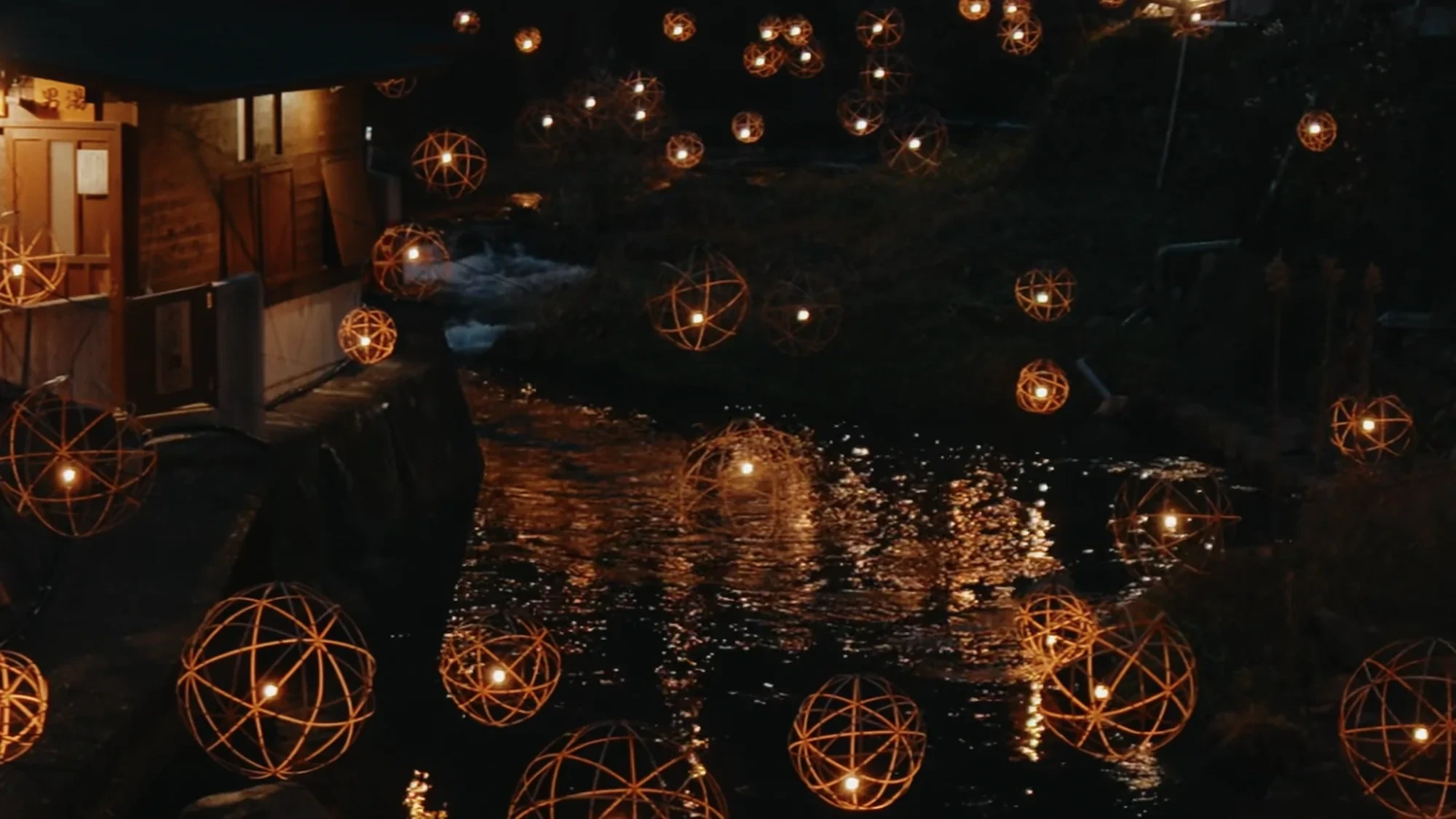
Made locally, from local bamboo, and taken down again each spring.
The illumination is not decoration bolted onto the village; it is the same design philosophy, 「あるがままの自然」, nature as it is, expressed after dark. Small temari and other pieces appear in village shops during the season for anyone who wants the glow to come home.
The summer counterpart
Yuakari is the winter half of a year-round instinct. From June 1 to September 30 the village runs a second, far less known illumination, Kasa Andon, pairing travel-parasols with bamboo ball lanterns along the same lanes. Between the two, Kurokawa is lit by hand for most of the year, always in the same materials. If you are visiting outside winter and expecting darkness, the warm-season lights are the pleasant surprise; the best-time and summer pages carry the detail.
One village, two lights: Yuakari and its summer sibling
The winter lanterns are half of a year-round design, and seeing the pair clarifies both. From June 1 to September 30, 2026, the village stages Kasa Andon, the summer illumination of lantern-lit parasols, and like Yuakari it is free and it is nightly; between the two windows, the village keeps some form of evening light burning for most of the calendar. The pairing is worth a moment's thought because it shows the illuminations are policy, not events.
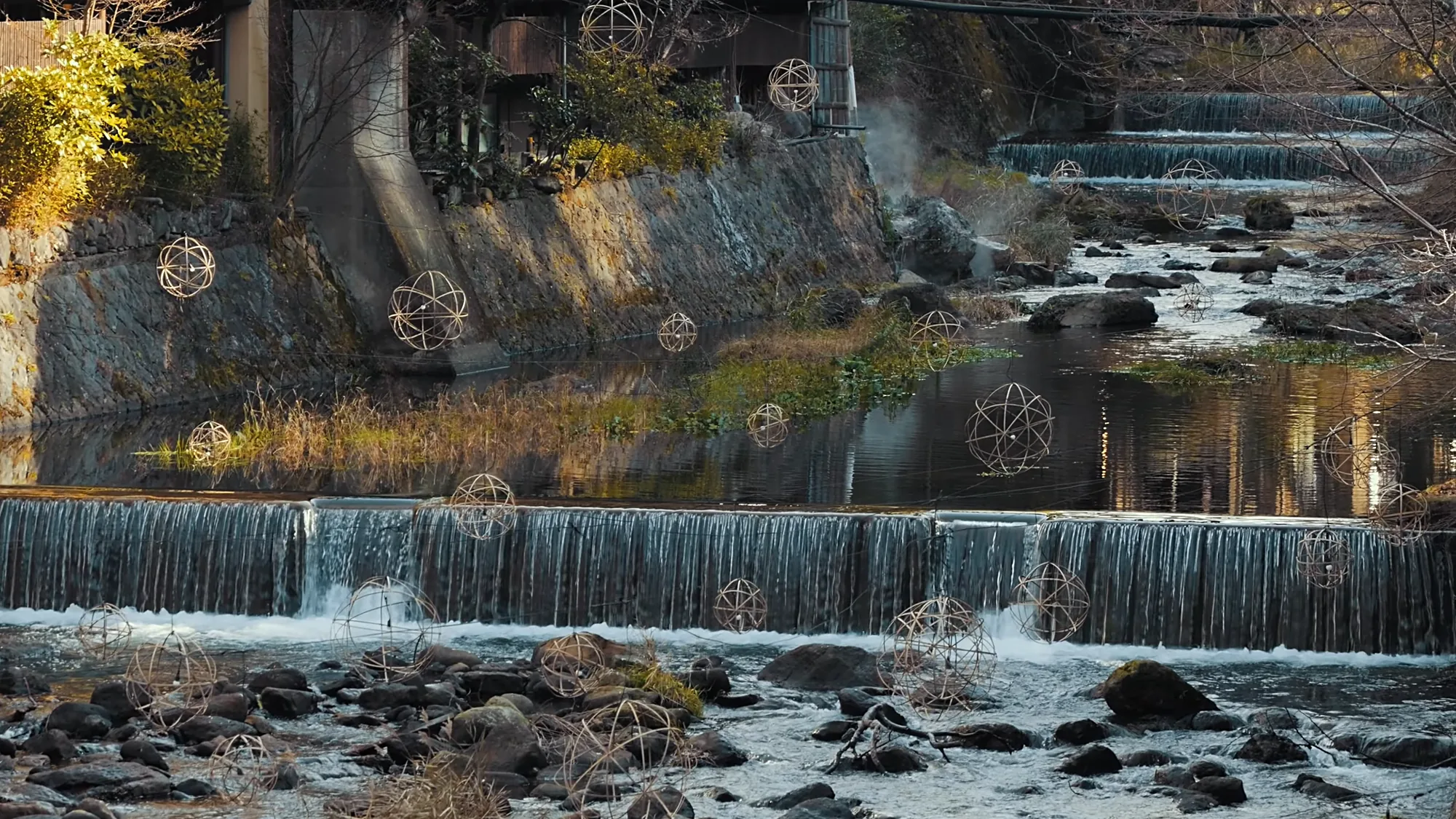
The lanterns return outside winter too, in a quieter form.
A festival is staged for a date; these are staged for a condition, the village after dark, and their job is identical in both seasons: to give staying guests a reason to walk after dinner, to reward the overnight visitor over the day-tripper, and to extend the design code past sunset. That last point is the deep one.
The code that removed two hundred signs and bans the neon that every other resort street accumulated leaves the village genuinely dark at night, and the illuminations are the code's answer to its own darkness, light added the way the village adds everything, low, warm, handmade-looking and aimed at the river and the lanes rather than at advertising anything.
Choosing between the two seasons is really choosing a temperature: the parasols belong to soft evenings and cider on the slope, the lanterns to steam and gloves. For collectors of the village's moods, the honest recommendation is the calendar's own: the windows barely overlap the shoulder seasons, so a spring or autumn visit trades the illuminations for foliage or blossom, and a summer-and-winter pair of trips collects the village's two engineered nights complete.
Questions visitors ask about the lanterns, answered
Do the dates change each year? The pattern is stable, a winter window from late December through late March, but the exact opening and closing days are announced each season, so a trip built around the first or last night should be confirmed against the association's own announcement rather than any guide's memory, ours included. Does it run in bad weather?
The event is the village's evening condition rather than a staged performance, and cold is its natural medium; snow improves it beyond argument, and on genuinely foul nights the sensible answer is the one the village itself suggests, a shorter walk and a longer bath. Is it accessible for slow walkers?
The core riverside stretch is the gentlest part of the village and the most rewarding per step; the stone stairways add tiers and effort, and a party with limited mobility can hold to the river and lose remarkably little, though winter footing asks for care and unhurried feet everywhere. Is there an entrance fee or a ticket? No, it is free, which remains one of Japanese tourism's quiet astonishments given what an equivalent staged illumination costs elsewhere.
How crowded will it be? Peak week, genuinely busy; midweek deep-winter, sometimes nearly private; and the late hour is quieter than the early one on every night of the season. And the question underneath the others, is it worth planning a whole trip around: yes, with the one condition this page keeps repeating, that you sleep in the village. The lanterns are the argument for the overnight, made in light.
Tips
Confirm the current season's exact dates before booking a trip around Yuakari.
Go on a weeknight and walk after 8:30 pm for the emptiest bridges.
Bathe first, then walk; post-onsen warmth makes the cold an ally.
Bring a fast lens or a mini tripod for reflection shots, and never block the narrow bridges.
January and February nights offer the best snow odds on the lanterns.
Frequently asked questions
What is Yuakari in Kurokawa Onsen?
When is Yuakari held?
Do you need tickets for Yuakari?
Can you see Yuakari on a day trip?
When did Yuakari start?

Verified by The Japan Onsen Society
Show all sources
Verified July 7 to 16 and September 6, 2026 by The Japan Onsen Society. The bamboo-lantern illumination and its winter run are the association's own; the finer details (the tenth season, the roughly 2 m pillar height, the temari craft economy) rest on the Minamioguni town tourism body and are marked , and exact dates are set each season.
Yuakari: lanes lit by bamboo ball lanterns, roughly Dec 20 – Mar 31 · Kasa Andon summer illumination Jun 1 – Sep 30 · the natural-materials design code → 黒川温泉観光旅館協同組合 kurokawaonsen.or.jp → verified Sep 6, 2026
Tenth season (2025–26) · temari + ~2 m pillars · Minamioguni bamboo craft → SMO Minamioguni town tourism → confirm anniversary count and details each season
VERIFY:
Season dates each year (2025–26 opened Dec 20) — confirm current season before publish
Hours (about 5:30 pm to 10 pm) and free viewing current
Tenth-anniversary count — update per season
Winter last-bus times for the day-trip warning; re-check under the 2026 earthquake service reductions
USD conversions n/a
黒川温泉観光旅館協同組合 公式サイト (Kurokawa Onsen Ryokan Co-operative Association, home) - the Yuakari season window (December 20, 2025 to March 31, 2026 for the current season) and the bamboo-lantern description, verified September 6, 2026
黒川温泉観光旅館協同組合 よくある質問 (official FAQ) - the visitor code applied above: drone permission requirement, non-smoking lanes, and the in-bath photography prohibition, verified September 6, 2026
黒川温泉観光旅館協同組合 入湯手形 (tegata page) - the one-per-cent conservation contribution and the tegata mechanics threaded through the itinerary, verified September 6, 2026
黒川温泉観光旅館協同組合 アクセス (access matrix) - the Fukuoka direct-bus timing behind the arrival plan, verified September 6, 2026
山の宿 新明館 歴史 (Shinmeikan, history page) - the sign removals and あるがままの自然 philosophy the design-code reading rests on, verified September 6, 2026
Related guides
When to Visit
Best time to visit
Kurokawa has no bad season; what changes is contrast, colour, and competition for beds in a village of thirty small inns.
When to Visit
Winter
The baths were built for cold air. Winter supplies it, adds the lanterns, and thins the day crowds.

When to Visit
Kurokawa Onsen: The Complete Guide
A wooden pass buys three baths from twenty-five. The innkeepers agreed, decades ago, to look like this.