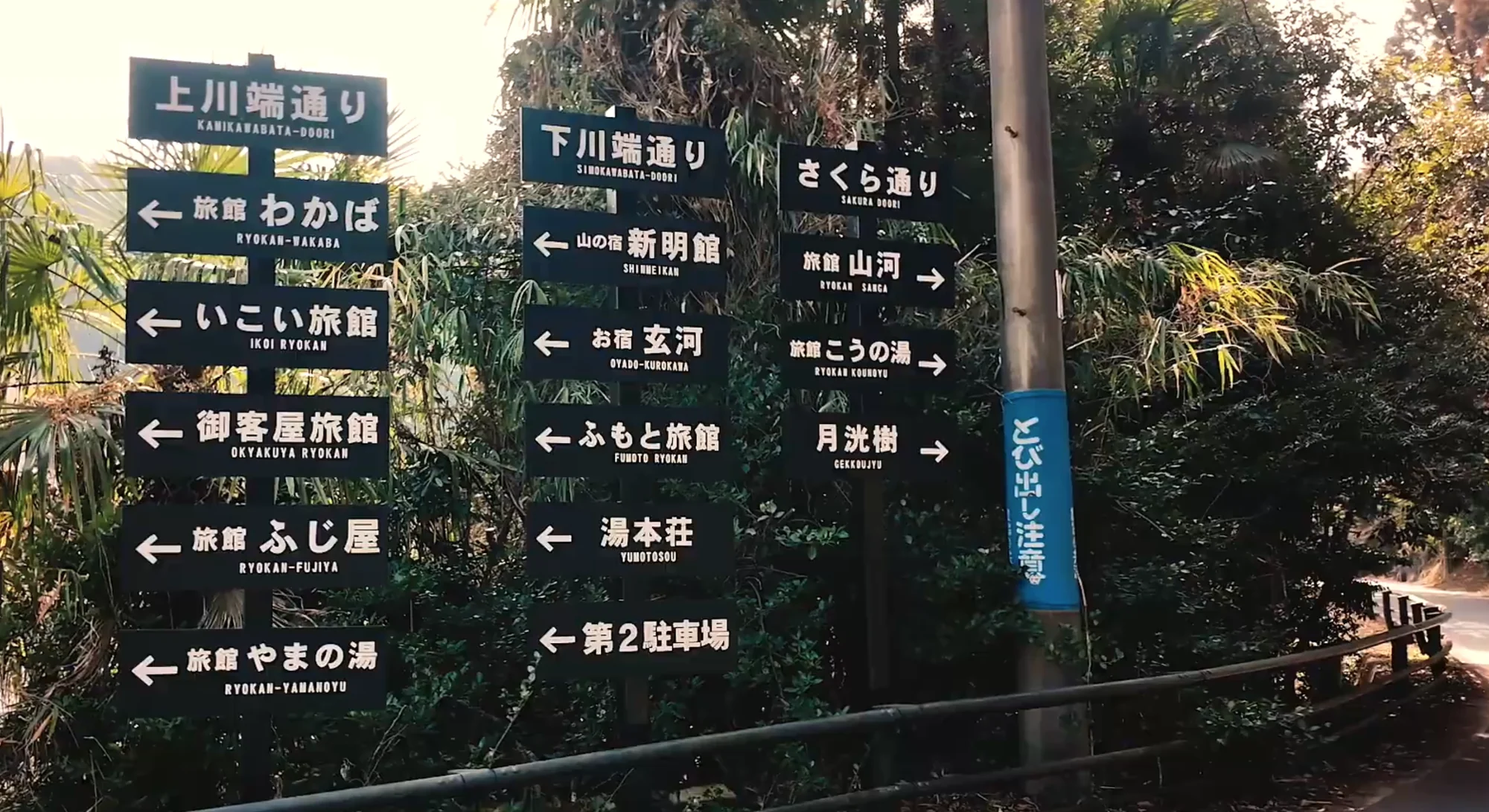
The budget math that matters
A Kurokawa night splits into room, meals and baths, and the tegata collapses the third: ¥1,500 (about US$10) opens any three of the twenty-five scheme rotenburo to every visitor, so the famous bathing costs the same whether you sleep in a forest suite or a six-mat room. Meals resist cutting — the village has few dinner seats outside the inns, which makes the two-meal plan the practical default and the modest tier's included kaiseki its quiet bargain.
That leaves the room as the real variable, and it is a wide one: the association's per-person listings run from ¥12,727 to ¥122,700, so "budget" here simply means the bottom of a very tall band, not a different village.
The numbers that shape a budget plan
Three counts frame any budget plan, and each is correct about a different thing. Thirty inns belong to the Kurokawa association; the tegata scheme covers twenty-five open-air baths; and fifty-three lodgings with roughly 2,300 beds is the capacity of the whole five-hamlet 南小国温泉郷, not Kurokawa alone.
For a budget traveller the practical reading is: thirty inns to choose a floor-price room among, twenty-five baths every one of those rooms can reach on a ¥1,500 pass, and a wider district of fifty-three lodgings to fall back on when the village's own cheap beds are gone.
The village sits at about 700 m (2,300 ft), bus-only, overnight-first — a scarcity that filters crowds rather than a price that filters wallets, which is why the honest budget line is "book early and midweek," not "find the cheap trick."
What a night really costs, end to end
It helps to assemble the budget from the sourced parts rather than guess at a total. The room at the floor is ¥12,727 per person with two meals at お宿玄河 (about US$85), and that figure already includes dinner and breakfast — the village's most expensive-to-replace items — so it is not a bare room rate but a half-board one. The baths are a flat ¥1,500 tegata (about US$10) whatever the room, covering any three of the twenty-five scheme rotenburo.
The transport is a highway-bus fare — a few thousand yen one way from Fukuoka, to be confirmed at the operator since the association does not print fares. Beyond that, the costs are optional: a green-sticker snack, a single extra bath at roughly ¥500–800 (visitor-reported), a souvenir.
So a genuine budget night, half-board plus famous baths, sits near the floor of the price ladder rather than below it — there is no cheaper tier hiding under it, which is the honest shape of the number and the reason the strategy is "modest inn, midweek, book early," not "find the discount."
A day in the village, costed to the yen
Here is what a full Kurokawa day actually spends once the room is paid, using only published figures. The tegata: ¥1,500 (US$10), which includes not just three baths but, via the green sticker, one snack or souvenir from the nineteen-shop redemption list, so the afternoon's soft-serve or highball is already inside the pass. A fourth bath beyond the pass, if you want one: the one sourced day-use price is Yamamizuki's ¥600 (US$4).
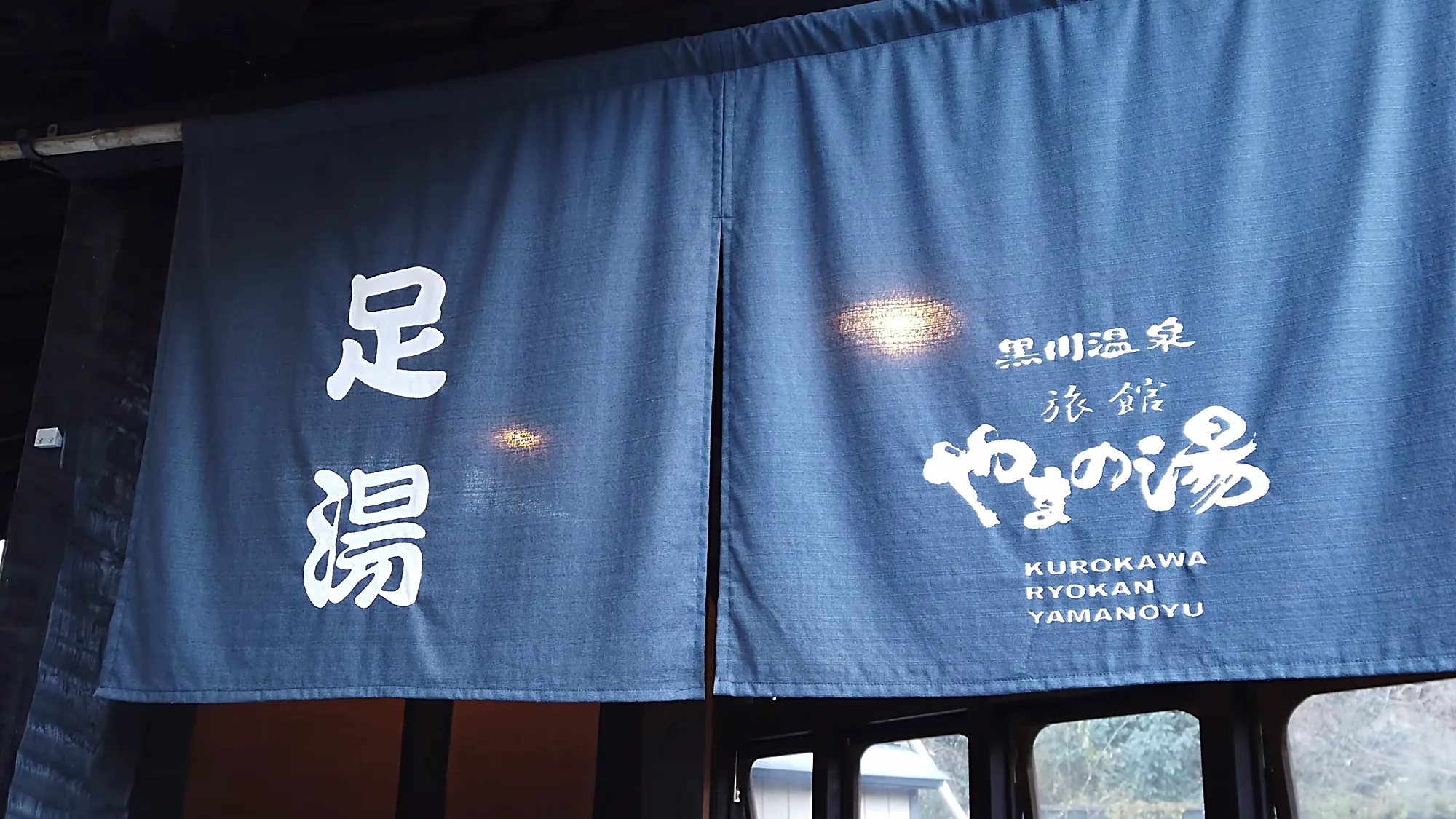
Most of a cheap day here is spent on the lane, which costs nothing.
Lunch on the lanes: the village's counters and cafes are modest by design, and the two-meal inn plan has already covered dinner and breakfast. Transport within the village: zero, because everything crosses on foot. Which produces the startling total: a fully lived Kurokawa day, three famous baths, a snack, a fourth soak and every lane and bridge in the village, runs about ¥2,100 (US$14) beyond the room-and-meals rate. There are large theme parks whose parking costs more.
The budget traveller's real spending decisions in Kurokawa are the room band and the bus, and once those are fixed, the village itself is startlingly close to free.
The budget two-nighter, totalled
Extend the arithmetic to the trip the budget tier actually rewards, two nights, and the totals stay startling. Two nights at Genka's floor: ¥25,454 (US$170) with four meals included. One tegata, spent across both days as the six-month validity invites: ¥1,500. Buses from Kumamoto, the sourced benchmark: ¥6,800 (US$45) return. A kashikiri hour split two ways, the trip's one luxury: ¥1,000 a head at the documented rate. Lunches and lane spending across two days, generously: ¥3,000 (US$20).
The all-in figure lands near ¥38,000 (US$253) per person for two full days and nights, seven baths' worth of access counting the inn's own, four meals, the lanterns in season, and the five-hamlet or caldera day that the second morning opens. Run the same trip at the twelve-door band's upper edge, Shinmeikan's ¥19,800 floor, and the total still sits near ¥52,000 (US$347) for a two-night stay at the village's most storied address.
The comparison that matters is not against luxury Kurokawa but against the traveller's alternative elsewhere: two urban nights plus restaurant meals plus attractions anywhere in Japan outruns both figures without providing a single rotenburo. The budget tier's secret is that it is not the cheap version of Kurokawa; it is the correct-priced version of an experience other destinations cannot sell at any price.
What the floor actually is
The cheapest bed in Kurokawa and the smallest inn in Kurokawa are the same place: お宿玄河 (Genka), dead centre of the village, just four rooms, from ¥12,727 per person with two meals — about US$85. Just above it sits 優彩別館 (Yūsai Bekkan) from about ¥13,000, a traditional inn away from the bustle.
The ¥16,000 rung adds choice: やまの湯 (Yamanoyu), modern and contemporary in feel; 樹やしき (Kiyashiki), on high ground with a view over the village; and the 瀬の本高原ホテル (Senomoto Kōgen Hotel), a highland hotel looking across the five peaks of Aso. 南城苑 (Nanjōen) is, in the association's own words, cheapest booked directly by phone or web.
Expect tatami rooms, sometimes shared or small in-house baths, and set dinner hours — plain, and perfectly adequate for people who came to be out in the lanes and the water. One correction to guidance you will see elsewhere, ours included: のし湯 Noshiyu is not a budget house — the association prices it at ¥24,000–32,000; the genuine floor is Genka and the ¥13,000–16,000 inns above it.
What ¥12,727 actually buys
The village's cheapest bed and its smallest inn are the same address: お宿玄河 (Genka), dead centre of the village, only four rooms, from ¥12,727 per person with two meals — about US$85, and the genuine floor of the whole roster. Just above it, 優彩別館 (Yūsai Bekkan) from about ¥13,000 is a traditional inn away from the bustle, and 南城苑 (Nanjōen) is, in the association's own words, cheapest booked directly by phone or web.
At the ¥16,000 rung the choice widens without leaving the modest tier. Expect tatami rooms, sometimes shared or small in-house baths, and set dinner hours — plain and perfectly adequate for a traveller who came to be out in the lanes and the water rather than in the room.
One correction to guidance you will see elsewhere, ours once included: のし湯 (Noshiyu) is not a budget house — the association prices it at ¥24,000–32,000 — so the honest floor remains Genka and the ¥13,000–16,000 inns above it.
What ¥12,727 actually contains
Itemise the floor rate and the tier's value stops being abstract. A night at the village's cheapest listing includes the tatami room and futon; kaiseki dinner, the multi-course evening meal that would anchor the bill anywhere else in Japan; breakfast; yukata for the lanes and the padded layer in the cold months; the inn's own baths on the house schedule; the shuttle conversation if the house runs one; and the entire public layer of the village, the lanes, the lanterns in their seasons, the river, the shrine, whose price is behaviour rather than money.
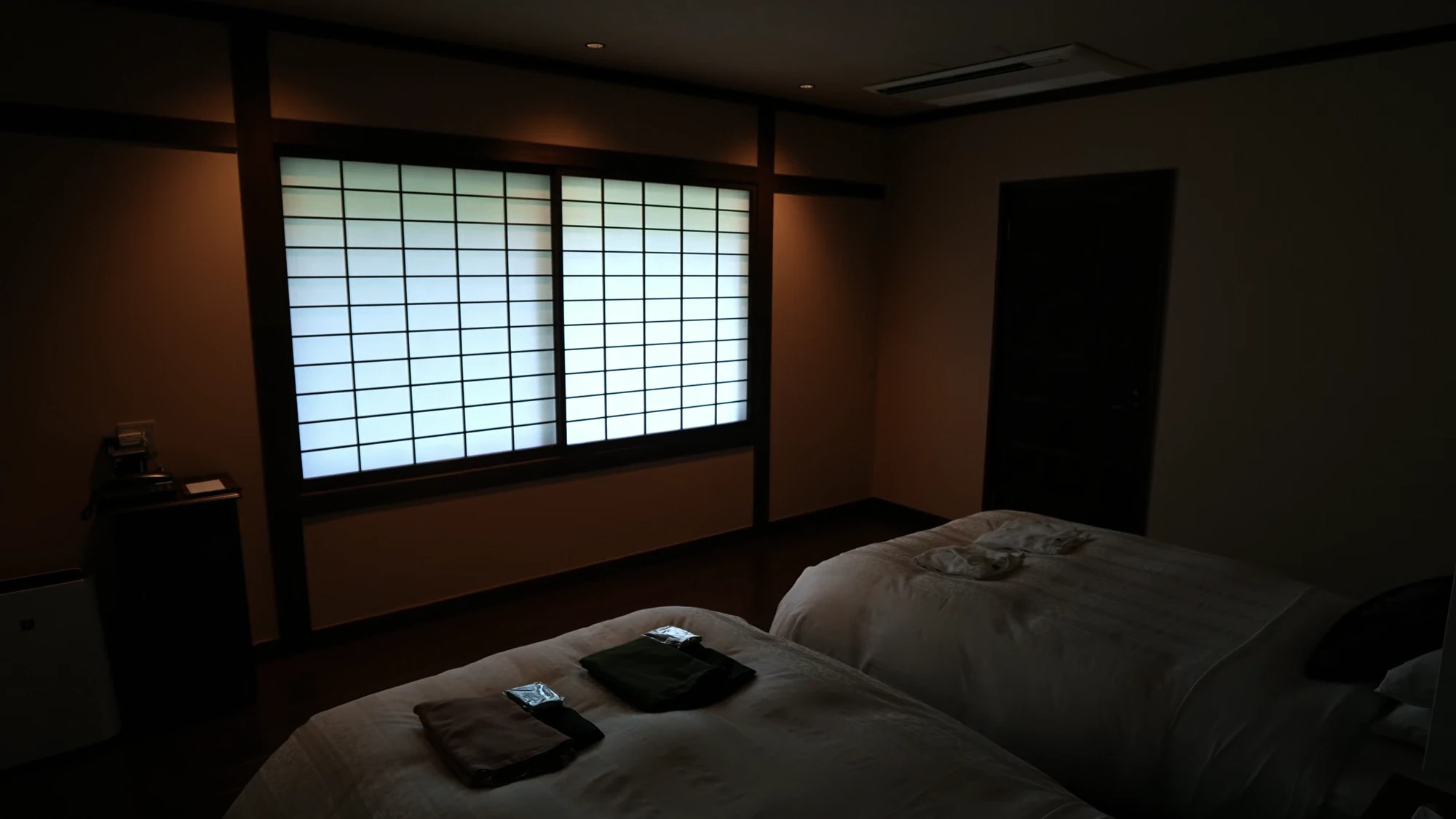
At the floor rate this is the room: tatami, futons, and the same water as upstairs.
What the floor rate does not contain, and budget clarity means listing it: the taxes above the band, the tegata itself at ¥1,500 (US$10), any kashikiri hour, day-use baths beyond your stamps, lunch, and the bus that brought you. Two readings follow. First, the floor is not a stripped product; it is the full ryokan format at the smallest scale, the same evening the ¥40,000 rooms eat and bathe through, executed plainly.
Second, the true budget total is the floor rate plus a predictable ¥2,000 to ¥4,000 (US$13 to $27) of village extras, which the day-costing section above already itemised, and pretending otherwise is how budget plans die at checkout. Price the whole night honestly and the floor still embarrasses every city alternative; that is the tier's entire argument, and it survives the arithmetic.
The twelve doors under ¥20,000
The directory's floor is wider than the famous-floor story suggests, and working it row by row turns budget Kurokawa from a compromise into a menu. Twelve captured listings open below ¥20,000 (US$133) per person with two meals. Genka, ¥12,727 to ¥14,545, four rooms at the dead centre, the absolute floor and the location champion. Yusai Bekkan from ¥13,000, the away-from-the-bustle annexe, quiet at nearly the floor price.
Kiyashiki from ¥16,000, high ground and a view over the rooftops, the budget tier's only vantage play. Yamanoyu from ¥16,000, the contemporary-design house, the tier's answer for futon-sceptics. Senomoto Kogen Hotel from ¥16,000, the grassland hotel with the five peaks across its windows, the budget key to the highlands. Yamabiko from ¥17,000, the great Senninburo attached to an entry room. Yamamizuki from ¥18,000, the village's most celebrated water at its most misunderstood price.
Ichinoi, ¥18,700 to ¥24,200, yunohana drifting in the tub, the visible-chemistry bargain. Okunoyu from ¥19,000, two thousand tsubo of stillness. Sanga from ¥19,000, woodland silence with its own shuttle custom. Nanjoen from ¥19,000, cheapest booked direct, by its own admission. And Shinmeikan from ¥19,800, the hand-dug cave and the founding story sneaking under the line by two hundred yen.
Twelve doors, twelve different products, one band: the budget traveller's real problem in Kurokawa is not scarcity but choice, and that is a problem this page is delighted to cause.
The famous names at their budget entry
The overlooked budget play in Kurokawa is not a cheaper inn but a cheaper room at a celebrated one, because the association's bands reveal how low the great houses actually start. Yamabiko, keeper of the village's largest rotenburo, opens at ¥17,000 (about US$113). Yamamizuki, whose riverside bath we rank first in the village, opens at ¥18,000 (US$120). Ichinoi, with its yunohana-flecked sulphur water, runs a tight ¥18,700 to ¥24,200 (US$125 to $161). Okunoyu and Sanga both open at ¥19,000 (US$127).
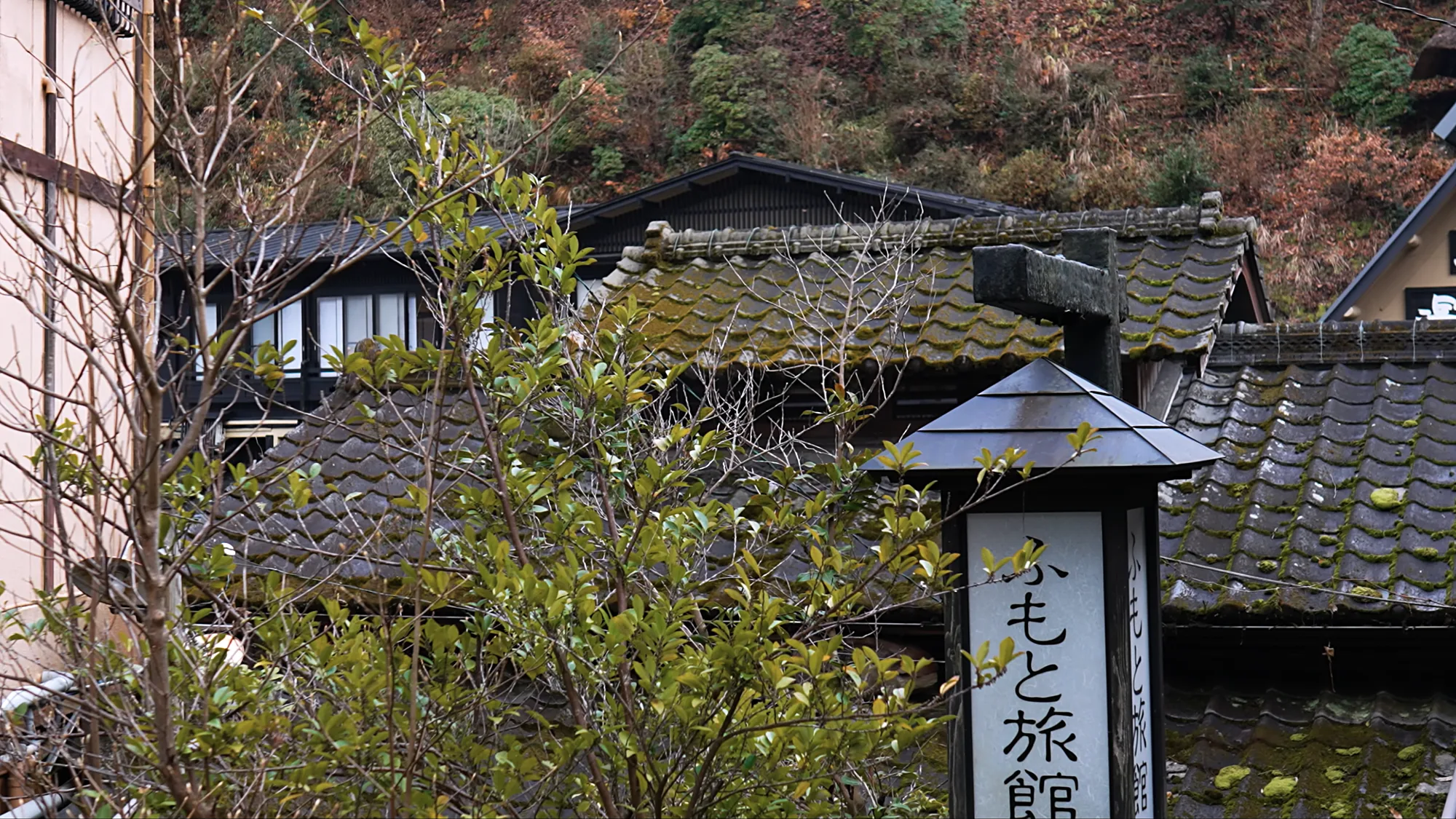
The known names all keep a cheapest room. It is rarely the one on the website.
Those entry rooms are the plainest in each house, often smaller, sometimes without the view, occasionally with shared facilities, and they put you inside the same building, the same dinner service and the same baths as guests paying nearly triple.
On a midweek date outside the peaks, a budget traveller can sleep at a famous inn for a few thousand yen more than the village floor, and the difference between ¥12,727 at Genka and ¥17,000 at Yamabiko is one of the better-value gaps in Japanese travel. The honest rule: below ¥20,000, choose the house whose bath you want at dawn, because at that hour the entry room and the best suite hold identical rights to it.
Reading a cheap listing without fear
One skill separates confident budget bookers from anxious ones: reading a low price without assuming a catch, and the directory teaches it. In most travel markets a floor price signals a defect; in this one it signals scale and plainness, and the record proves it twice over.
The village's cheapest listing is also its most central and among its smallest, four rooms by the shrine, which no distressed property could be; and the famous houses' sub-¥19,000 entries share buildings, baths and kitchens with rooms at triple the price, so the low number buys the same address with humbler wallpaper.
The genuine trade-offs the tier's prices encode are all visible in the listings' own language: smaller rooms, sometimes shared facilities, plainer views, the A-type's no-stream-view honesty at Yamamizuki being the format's model disclosure. What the prices do not encode, anywhere in the record, is a service tier; the two-meal structure, the yukata, the bath access and the shuttle conversation run the full field.
So read a cheap Kurokawa listing the way the village writes it: as a smaller portion of the identical dish. The anxious question, what is wrong with it, has a documented answer, nothing; the useful question, what am I not getting, has one too, square metres and scenery from the window, both of which the village outside the window was always going to beat anyway.
The full price ladder, so you can see where budget sits
Budget in Kurokawa means the bottom of a very tall ladder, and it helps to see the whole thing, per the association's own per-person, two-meal, tax-excluded listings. The floor is お宿玄河 (Genka), ¥12,727–14,545 — four rooms, dead centre. Then 優彩別館 (Yūsai Bekkan) ¥13,000–20,000, a traditional inn away from the bustle. Around ¥16,000: 樹やしき (Kiyashiki) on high ground, the contemporary やまの湯 (Yamanoyu), and the 瀬の本高原ホテル (Senomoto Kōgen Hotel) across the five peaks of Aso.
The village-centre band, ¥17,000–27,000, holds やまびこ (Yamabiko) ¥17,000–50,000, 山みず木 (Yamamizuki) ¥18,000–45,000, 壱の井 (Ichinoi) ¥18,700–24,200, 奥の湯 (Okunoyu) ¥19,000–40,000, 山河 (Sanga) ¥19,000–40,000, 南城苑 (Nanjōen) ¥19,000–33,000, 新明館 (Shinmeikan) ¥19,800–25,300, ふもと (Fumoto) ¥20,000–26,000, 美里 (Misato) ¥20,000–27,000, and いこい (Ikoi) ¥21,500–23,500. Higher: こうの湯 ¥24,000–35,000, のし湯 (Noshiyu) ¥24,000–32,000, 帆山亭 ¥24,000–46,000, 黒川荘 ¥26,273, 深山山荘 ¥30,250–35,750. The ceiling is 月洸樹 (Gekkoju) at ¥69,900–122,700 — nearly ten times the floor. Budget is not a different village; it is the bottom two rungs of that ladder.
Stretching further
Three legitimate stretches. Weekday travel cuts rates and opens rooms the weekends never release. Staying in Minamioguni's surrounding hamlets or along the bus road, where pensions and farm stays are reported to undercut the village, works for drivers who accept a five-to-fifteen-minute hop to the lanes (confirm inn by inn). And the day-trip-plus-cheap-base pattern — sleeping in Aso or Kumamoto — turns Kurokawa into an afternoon-and-evening visit; it saves money and costs the dawn baths, a trade the worth-it page prices honestly, and one made harder now by the 2026 earthquake's bus reductions .
Upgrading one thing: where the next thousand yen goes best
Budget travel's real skill is not spending less but upgrading precisely, so close with the marginal-yen table, each rung priced from the record. If you have ¥1,500 (US$10) above the floor plan: the tegata, always, before anything else; no upgrade in the village returns more per yen. The next ¥2,000 (US$13): the kashikiri hour, the tier's one affordable luxury, splitting to ¥1,000 a head for a couple.
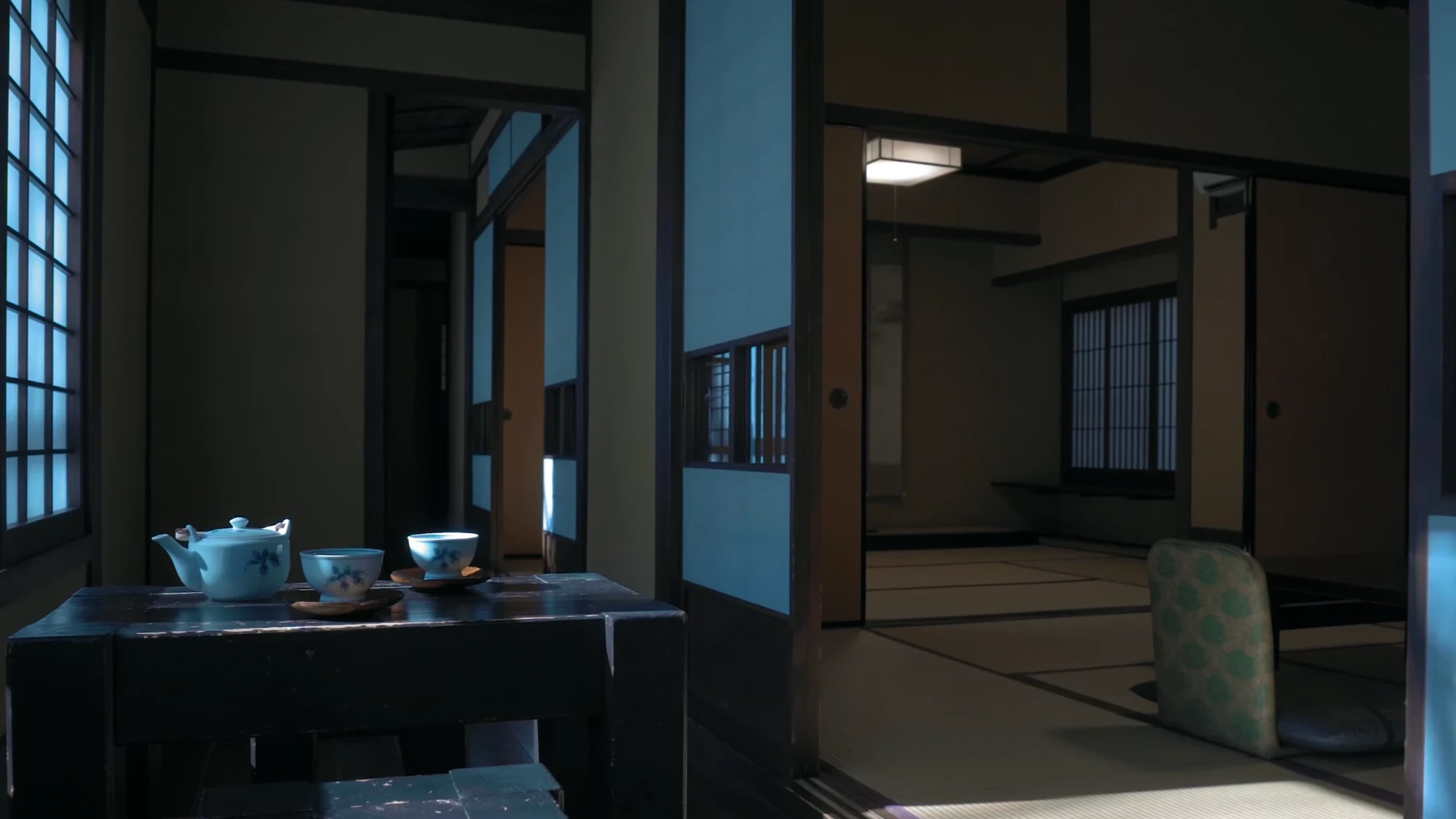
Spend the extra on the room or the meal. Not on both, and not on the view.
The next ¥600 (US$4): a fourth bath through Yamamizuki's day window, for the bather whose stamps ran out before their enthusiasm. The next ¥3,000 to ¥5,000 (US$20 to $33): the step from the absolute floor to the famous-name entry rooms, Yamabiko's ¥17,000 or Yamamizuki's ¥18,000, buying celebrated water on home terms, the single best room upgrade in the field. The next ¥6,000 to ¥7,000: the leap to Shinmeikan's ¥19,800 floor, history included.
And the upgrade that costs nothing: the second night at the same modest inn, whose marginal price is just the room rate while its marginal value, the unhurried day, the dawn circuit twice, the excursion, exceeds every purchase above. Spend up that ladder in order, stopping wherever the budget stops, and every yen lands where the village returns it best, which is the entire craft this page exists to teach.
What not to cut
The two-meal plan, first: a room-only booking in a village with few dinner seats is false economy. The tegata, second, obviously — at ¥1,500 it is the great equaliser, the same three famous baths for the ¥12,727 room and the ¥122,700 suite alike.
And the overnight itself, last: the budget traveller's real advantage is time — being present at 7 am and 10 pm, when the day-trip flow is gone and the village belongs to whoever slept there, regardless of what their room cost. There are no hostels in the association's roster; the design code and inn economics never made room for a backpacker tier, so the practical floor is a modest ryokan, not a bunk.
The false economies, priced
Three savings reliably cost more than they save, and the budget page is where they should die. Room-only booking, the classic: striking the meals saves a few thousand yen and strands you at seven in a village whose independent dinner seats are few, reservation-bound and early-closing; the kaiseki you cut was the evening, and its replacement is a konbini-less walk.
The cheapest bed outside the valley costs you the evening, which was the point.
Skipping the tegata: ¥1,500 saved, until two door-fees at the visitor-reported band consume most of it and the third bath, the sticker, the stamp souvenir and the return-visit option are gone; the pass is the cheapest complete product the village sells, and the budget traveller is precisely who it was built for.
And day-tripping to save the room: the time audit on the worth-it page prices this one, five-plus transit hours buying four village hours, the lanterns and dawn circuit unbought at any price; the floor room at ¥12,727 is the cheapest ticket to the village's best hours, and no bus schedule sells those separately. The pattern under all three: Kurokawa's budget traps are all subtraction traps, attempts to remove a piece of a bundled product whose bundle is the value.
The tier's winning move is always addition at the floor, the cheap room plus the pass plus the walk, which buys the whole village minus only the thread count.
The tegata: the great equaliser, in full
Budget Kurokawa works entirely because the famous baths cost the same for everyone, and that is the tegata's doing. The 入湯手形 (nyūtō tegata) costs ¥1,500 for an adult and ¥700 for a child (about US$10 / US$4.70), confirmed on the association's own page, and carries three stickers good for any three of the twenty-five scheme baths between 8:30 and 21:00. It is valid six months from purchase — an unfinished pass may be used on a return visit — and is one pass per person, not shareable. The ¥12,727 room and the ¥122,700 suite hold the identical pass and bathe in the identical rotenburo; the water plays no favourites with the room rate.
Two of the stickers can go on baths and the third — the green sticker — on food or a souvenir. And one percent of all tegata sales funds landscape and conservation work, so even the cheapest visit pays a little into the scenery. Buy it at any member inn or the 風の舎 (Kaze-no-ya) house.
The baths a budget guest still gets
The point of the equaliser is worth making concrete: every famous bath is on the tegata regardless of your room. 山みず木 (Yamamizuki) offers the finest riverside setting; 新明館 (Shinmeikan) the hand-dug cave bath; ふもと (Fumoto) the 1.5 m standing bath among eight; やまびこ (Yamabiko) the largest open-air Senninburo; いこい (Ikoi), the only Kurokawa inn on the 日本の名湯秘湯百選 list, its thirteen baths; and 美里 (Misato), the only inn whose sulphur water changes colour.
A guest paying ¥12,727 for a six-mat room at Genka can stamp their pass at all of these across a visit, for the same ¥1,500 the villa guest pays. Spend the three stamps on contrast — a riverside bath, a cave, a colour-changing sulphur tub — and the budget stay reaches exactly the baths that make Kurokawa famous, which is the whole strategy in one sentence.
The water is free to every room
The waters the budget guest bathes in are the same plural set every guest gets, because Kurokawa has no single spring type — each ryokan owns its own source. Per the Japan Spa Association's designation profile, the five hamlets of the 郷 do not share a water: Kurokawa proper is simple and chloride; Tanoharu, Manganji and Oda are bicarbonate; Shirakawa is sulphur; the area record lists four families in all.
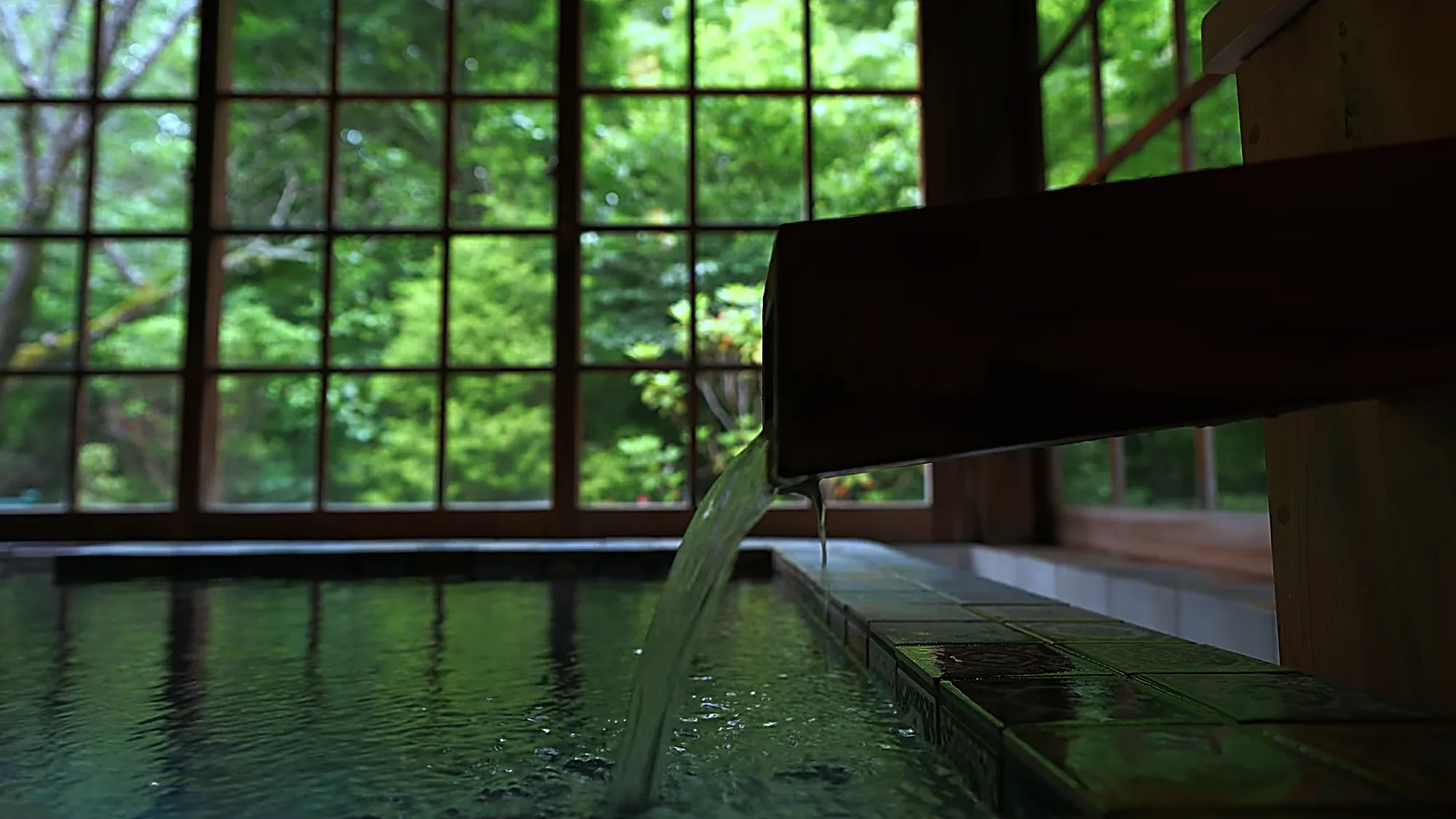
No inn charges its own guests for its own water. The cheap room bathes identically.
A piece of honesty the association volunteers: nearly every inn is genuinely free-flowing from source (源泉かけ流し), but because the source runs hot, many add water (加水) to reach temperature, which does not change the mineral content or the designated effects. The official 適応症/禁忌症 registers 日本温泉協会 publishes by spring type are official designations, not medical advice; consult a physician for any condition. None of this water quality tracks the room rate — the modest inn's source is as real as the villa's.
Buying the pass, the visitor code, and paying
A few practical budget notes. Buy the tegata at your inn or the 風の舎 (Kaze-no-ya) house — no office queue — and carry cash, which still rules the small inns and shops; card acceptance is inconsistent and unpromised inn by inn, so a budget traveller who assumes cards can be caught out.
The village's published code costs nothing to keep and protects the free pleasures a budget stay leans on: non-smoking outside designated areas, no drones, no picking plants, no roadside parking, towel out of the bath, and photography prohibited in the open-air baths. The free things are genuinely free — riverside footbaths through the day, the Jizō shrine, the lantern-lit lanes in season — and they are, for a budget guest, half the trip.
Retire the finished tegata at the Jizō hall, each inn's stamp a record of a stay that cost a fraction of the suite and reached the same water.
The tightest budget: single baths and day use
For a traveller on the very tightest budget who cannot stay over, single-bath day entry exists, though it surrenders the village's best hours. Without the tegata, a single bath is widely reported at roughly ¥500 to ¥800 — a visitor-reported range we have not been able to confirm on the association's own pages, so treat it as indicative and expect it to vary by inn.
The ¥1,500 pass still pays for itself by the third bath, so even a frugal day visitor usually buys it. Day-use baths keep posted hours, close for cleaning, and supply almost nothing — carry a small towel, your own soap, and coins for the entry boxes.
But the honest budget advice remains the overnight: the modest inn's included dinner and the dawn bath are the value, and a day trip trades them away to save a room rate that was the cheapest part of the trip anyway.
A private bath without the villa price
The one luxury a budget guest might miss — a bath to themselves — is cheaper here than the room rates suggest. Most inns rent kashikiri (貸切) private baths by the hour, typically for a modest fee, so a private soak is available even to someone in a six-mat room elsewhere. The standout is 黒川荘 (Kurokawa-sō), which gives its guests three private baths free with a reservation — a genuine private-bath experience without a villa's price.
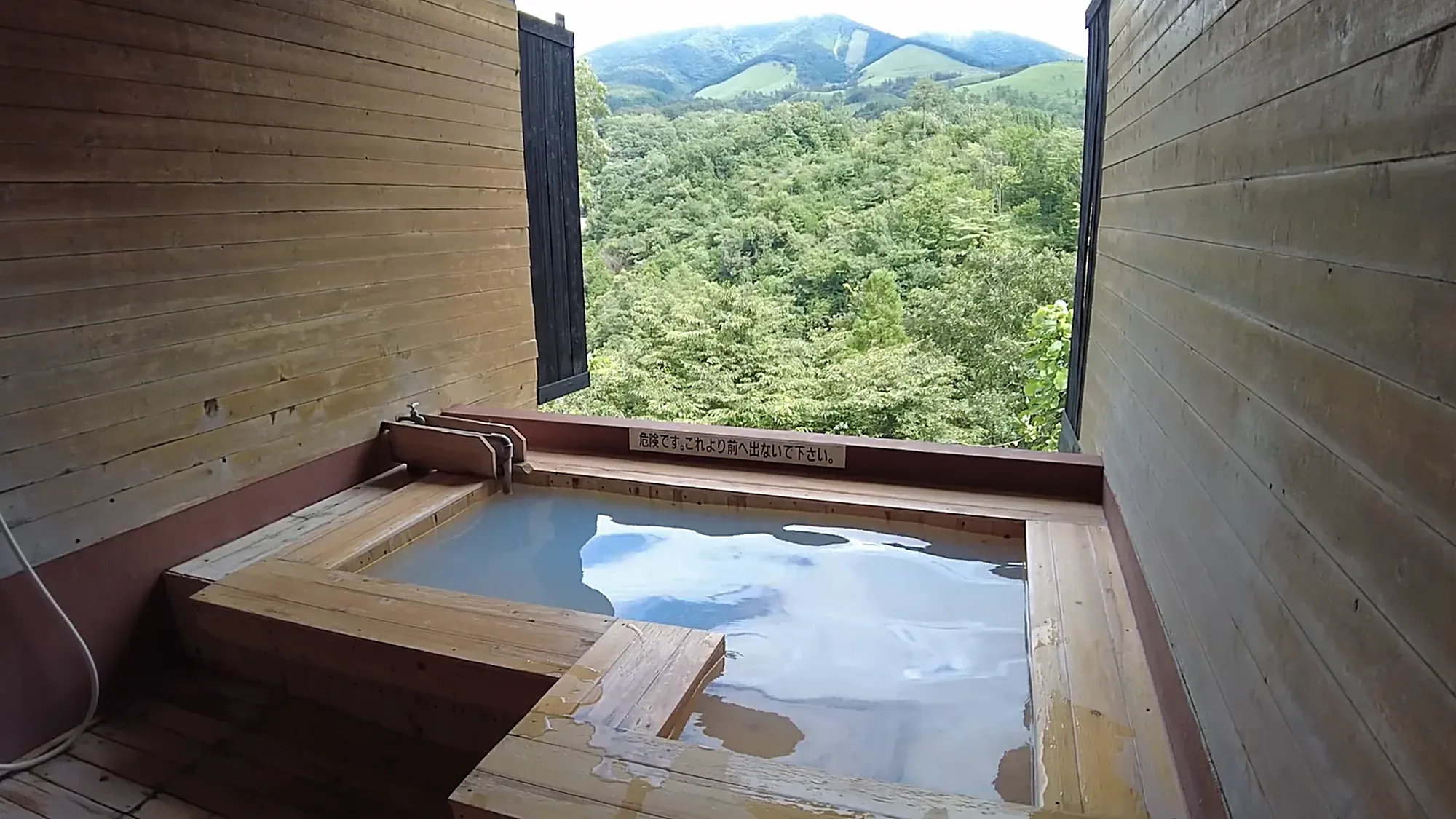
A booked hour costs a fraction of a room that comes with its own.
This also matters for anyone with a tattoo: the association sets no village-wide ban and publishes no inn list, routing each question to the individual inn, so we name none, and a booked kashikiri bath sidesteps the policy question entirely. Konyoku (混浴) mixed baths survive at several inns with separate changing rooms and, at some, women-only hours — 奥の湯 reserves certain mixed baths for women from about 8 to 10 pm. Privacy, in short, is one of the few premium features the budget tier can reach cheaply.
Free Kurokawa, which is most of Kurokawa
Count what costs nothing here, because the list is the village's secret subsidy to modest travellers. The lanes themselves, authored over decades into one of Japan's loveliest walking environments, are free. The two illumination seasons are free: Yuakari's bamboo lanterns from late December to the end of March, and the Kasa Andon parasols from June through September, both simply present in the streets after dark for anyone standing in them.
The Jizo shrine at the village centre, holding the headless statue the whole place grew around, is free, and so is the walk to it. The three marked walking routes from the information house are free. The river is free, the steam is free, and the dusk hour when the day visitors leave, which we keep calling the best thing in the village, costs precisely the price of being present.
The only fee the village levies on any of it is behavioural, the visitor code: keep the lanes smoke-free outside designated corners, take your rubbish, leave the plants and the private gardens alone. A budget guest who honours that code owns as much of Kurokawa's actual product, the atmosphere, as anyone in the forest suites, which is a strange and wonderful property of a place whose whole economy is atmosphere.
The free village a budget stay leans on
Half of what makes a budget Kurokawa stay feel rich costs nothing, and it is worth naming because it is the real return on the overnight. Free riverside footbaths run in the village centre through the day. The Jizō hall at the centre, tied to the founding legend, is free to visit — and it is where the custom is to retire a spent tegata.
The evening stroll through the lanes, in the inn's provided yukata, is free and is the village's signature scene. And the two lantern illuminations are free to view: Yuakari (湯あかり) runs roughly December 20 to March 31, the lanes and the Tanoharu River lit nightly from dusk to about 10 pm by handmade Minamioguni bamboo lanterns; the summer 傘あんどん (Kasa Andon) runs June 1 to September 30.
A budget guest who arrives mid-afternoon and stays the night gets all of this at no cost beyond the room — which is precisely why the overnight, not the room rate, is the value.
Eating well on the budget tier
The included kaiseki is the modest tier's quiet bargain, because the village has few free-standing dinner seats and inns cook for their own guests at one seating — which is exactly why the two-meal plan is the default and a room-only booking is false economy. The meal is mountain kaiseki: Aso 赤牛 (akaushi) red beef, grilled 山女 (yamame), 団子汁 (dango-jiru), mountain vegetables, with Kumamoto's 馬刺し on many menus.
For a cheap lunch out, the association's directory lists thirteen places — the red-lantern counter diner すみよし食堂 serves country cooking from local rice and vegetables, and 白玉っ子 (Shiratamakko) makes shiratama from stone-milled Aso mochi rice — while the between-baths snack circuit runs to dorayaki at どらどら and soy-milk soft-serve at とうふ吉祥. Several take the tegata green sticker, so the budget traveller's third stamp can buy the snack the day would otherwise cost extra.
Getting there cheaply
The approach is a real budget line, because there is no train station and the highway bus is the practical way in. The association's matrix puts Fukuoka at 2 hours 45 minutes by direct bus and Kumamoto at about 3 hours, with the nearest railheads at JR Aso and JR Hita, each about an hour out by car. Fares are not printed on the access page, which links out to each operator, so confirm the current fare when you book — the Fukuoka one-way runs on the order of a few thousand yen.
On the Kumamoto side the last local-bus leg ends at 南小国町役場前 (Minamioguni town hall), ten minutes short of the village by car, so arrange the inn's pickup rather than a late taxi. With the 2026 Kumamoto earthquake having thinned some regional services, check the association's live weather-and-traffic page before relying on a specific cheap run.
Getting there from further afield, on a budget
For a budget traveller routing through Kyushu, the association's matrix reaches beyond Fukuoka and Kumamoto, though every approach spends the better part of a day in transit. From Nagasaki, JR かもめ to Saga then the 九州急行バス toward Kōsoku-Kiyama and the highway bus; from Kagoshima, the Shinkansen to Kumamoto in about fifty minutes, then the three-hour Crossing Bus; from Miyazaki, a highway bus of nearly four hours via Kumamoto; and from the Ōita side, the once-daily Kyushu Crossing Bus through Beppu and Yufuin.
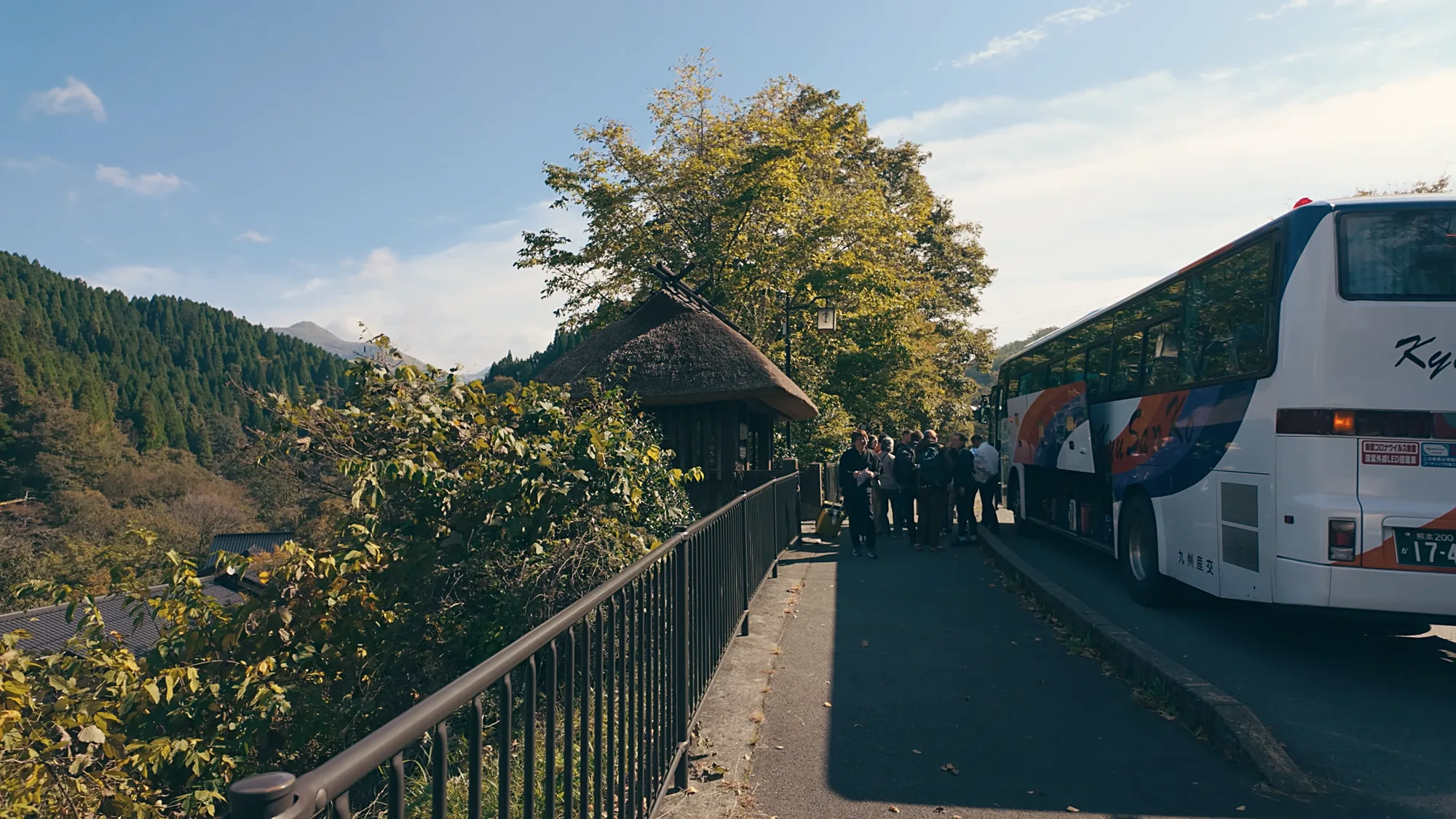
The coach is the cheap way in, and on this route it is also the easy one.
The bus is cheaper than a car for a solo budget traveller, but a car unlocks the surrounding hamlets' cheaper pensions — so the budget calculus of transit and lodging is linked, and worth working out together rather than separately.
The wider district, for cheaper beds
If the village's own floor is booked, the surrounding hamlets are where a budget bed can still be found. The 南小国温泉郷 counts fifty-three lodgings and roughly 2,300 beds across five hamlets — a figure often misquoted as Kurokawa's own, when Kurokawa's association has thirty inns and the tegata scheme twenty-five baths.
Pensions and farm stays in Minamioguni's surrounding hamlets and along the bus road are reported to undercut the village and suit drivers who accept a five-to-fifteen-minute hop to the lanes — though these sit outside the association's roster, so confirm price and existence inn by inn rather than on our word. Two neighbouring hamlets are worth knowing anyway: 田の原温泉, a 湯治場 for some three hundred years, and 満願寺温泉, with its river bath. The district is the budget overflow when Kurokawa proper is full.
The cheapest months to come
Timing is the budget traveller's biggest lever after the room itself. Spring (April–June) is the year's most available and gentlest-priced season — even the famous houses show midweek openings — while winter and the November foliage weekends are the tightest and dearest, wanting a booking two to four months out.
The village sits at about 700 m (2,300 ft) and runs three to five degrees cooler than the lowlands, so the shoulder months are comfortable for bathing without the peak-season crush. Midweek in almost any season is meaningfully cheaper and the rooms actually exist, where weekends never release them. The one hard exception is Golden Week in late spring, which books and prices like November. The budget play, in a line: modest inn, midweek, shoulder season, tegata for the baths.
Budget by season: when the floor is highest and lowest
The tier's prices move less than the famous rooms', but its value moves with the calendar, and the budget traveller should ride the swing deliberately. The tier's absolute best month is any green-season midweek, May, June or September, when the twelve doors sit open days ahead, the bands rest at their floors, and the village's free layer, lanes, river, parasol lanterns from June, performs identically for every wallet.
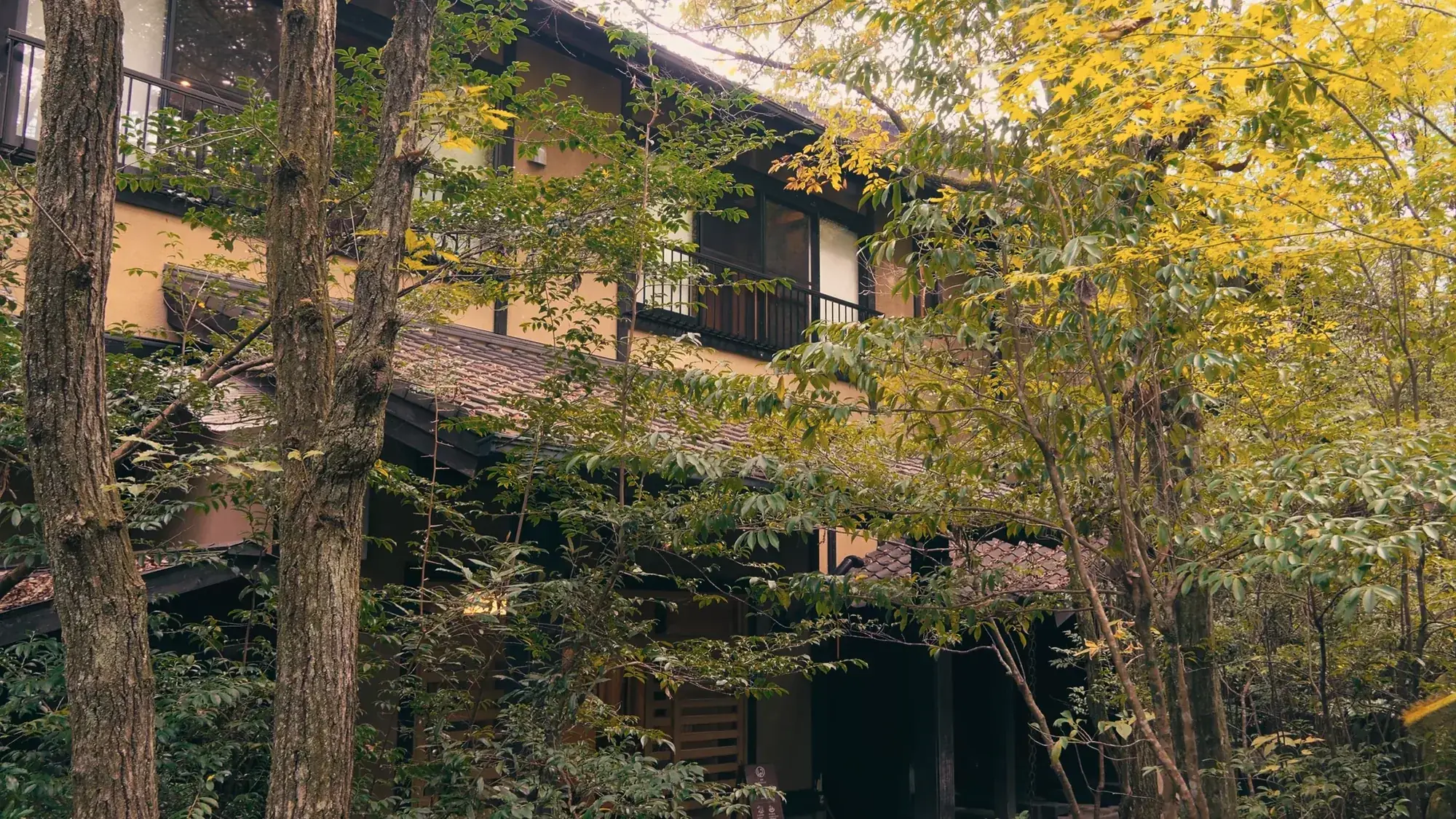
The floor rate roughly doubles in leaf season. Nothing about the water changes.
Winter is the tier's best-value peak: the famous rooms surge for Yuakari weekends while the modest tier barely moves, so the budget guest watches the same lanterns and bathes the same steam at the year's widest discount to their neighbours; January and February midweeks are the play.
November is the tier's fight: the cheap doors clear first for foliage weekends, since budget demand is the most price-driven demand, so the floor must be booked as early as the famous rooms or taken midweek. And the two Japanese peaks, Golden Week and Obon, are the tier's honest no: floors firm up, minimums appear, and the arithmetic that makes the tier sing goes quiet; the adjacent weeks restore it whole.
One seasonal note unique to the floor: the smallest houses, four rooms at Genka's scale, feel weather more than the grand ones, a February corridor at a modest inn being an honest degree colder than a renovated one, so winter budget bookers should pack the extra layer the rate did not include and count it, fairly, in the price.
The fortieth-anniversary year
A budget visit in 2026 shares in a notable year at no extra cost: the 入湯手形 began in 1986, making 2026 its fortieth anniversary, with the association running a fortieth-anniversary programme from July 1, 2026 to March 31, 2027. The pass that made the village's baths equally accessible to every room — the very mechanism the budget strategy depends on — is the thing being celebrated.
The ¥1,500 a budget guest spends on the pass is the same ¥1,500 the villa guest spends, and in the fortieth year it buys the same anniversary disc, stamped inn by inn. There is no premium tier of the tegata; the equaliser is, fittingly, celebrating forty years of being an equaliser.
Budget booking craft
The tier books differently from the famous rooms, and four crafts compound. Book direct, first and always: Nanjoen's listing says outright that direct phone or web booking is cheapest, the directory publishes every phone number, and platform margins bite hardest, proportionally, at the floor. Ride the midweek release: the budget rooms that vanish for November Saturdays sit open on the neighbouring Tuesdays, and the tier's price barely moves midweek while the experience improves.
Exploit the fortnight window: cancellations return to calendars in the last two weeks before peak dates, and small houses resell by phone first, so the polite call ten days out finds rooms the internet says are gone. And filter before falling in love: the solo-travellers facet decides which floors accept one guest, the cards facet decides whether the cash machine question matters, and both cost one click on the directory against an evening of wrong-tree correspondence.
One craft to refuse: chasing unlisted cheaper beds in the wider valley on the strength of rumour, which this page declines to sell because the record declines to price it; the sourced budget floor is in the village, on the lanes, with dinner, and the twelve doors above are its address list.
The cash plan for the floor
Budget travel runs on payment certainty, and the tier's cash question deserves a plan rather than a shrug. The documented facts: the directory's card-acceptance facet exists because acceptance varies by house, which cuts both ways at the floor, where the smallest inns are the likeliest cash-only doors; the shop directory publishes no payment terms at all; and the association's own FAQ fields the questions about ATMs and currency exchange in the village, which confirms the questions are common and the answers local, though our reading did not capture them, so this page will not guess at machine locations.
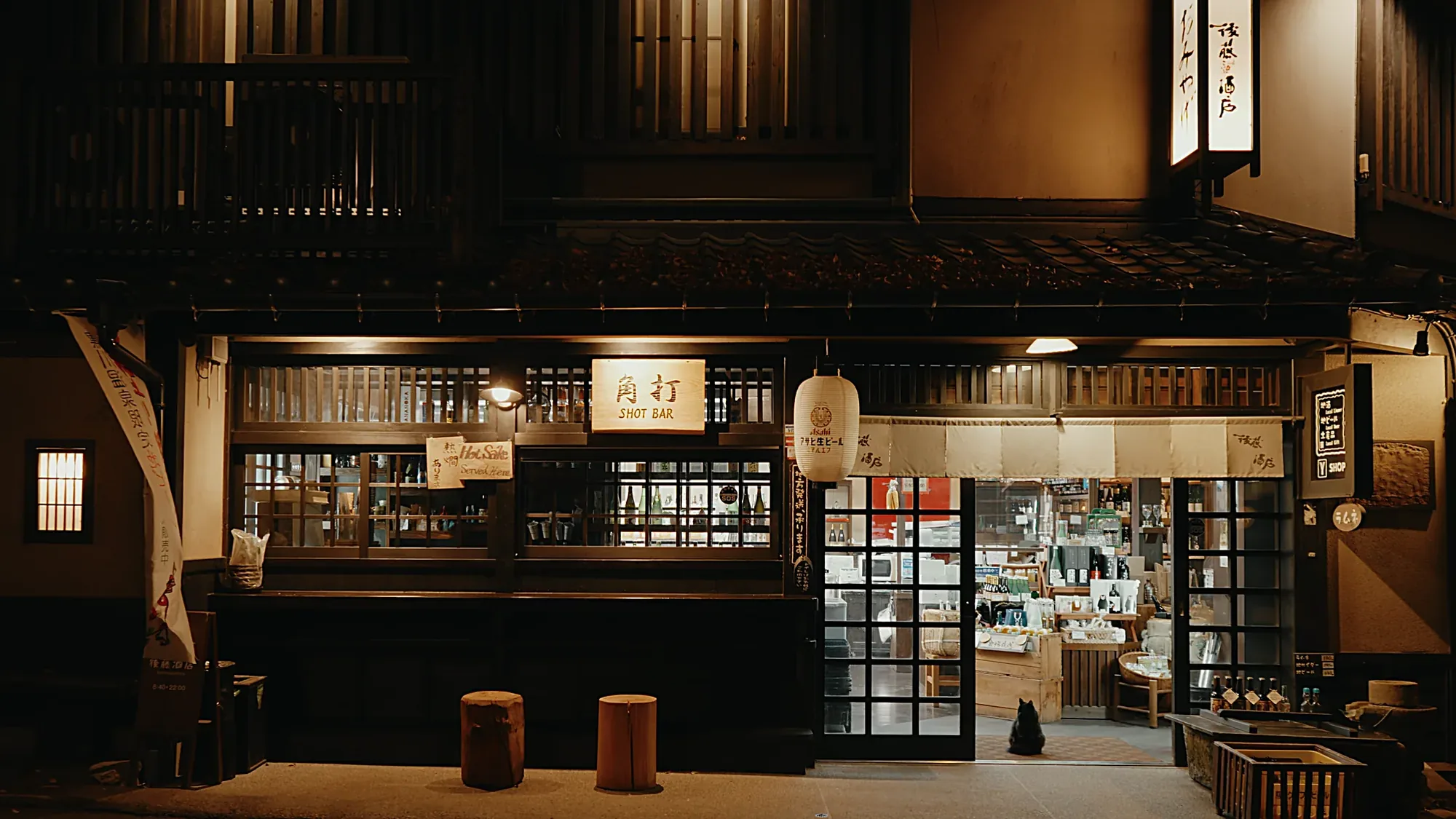
Bring cash. Several of the places you will actually want still prefer it.
The plan that removes the risk entirely: arrive carrying the trip's cash, the two-night budget total above minus the room if you prepaid it, in mixed notes with a deliberate weight of coins, since baths, boxes and counters run on hundreds of yen. Confirm your inn's card position in the booking exchange, one line, and treat any yes as convenience rather than plan.
And if the cash runs low mid-stay, ask at Kaze-no-ya rather than wandering, because the information house answers the village's practical questions daily and this is among them. The floor's economics are gentle; its payment rails are traditional, and the traveller who arrives funded never notices either fact.
Solo on a budget: the tier's hardest and best case
The solo budget traveller faces the village's steepest structural headwind and, solved, its purest reward, so the case deserves its own instructions. The headwind: per-person pricing means no room-share dilution, some houses take couples and groups only, and solo acceptance where offered can carry a premium, which is why the directory's solo-travellers facet is this traveller's first click rather than an afterthought.
The instructions: filter for solo acceptance; open with the floor cluster, where Genka's four rooms and Yusai Bekkan's annexe put the village's cheapest beds in play; book midweek in a green month, where solo rooms release most freely; book direct and say solo plainly, since a small house's yes often depends on the night's exact mix; and budget the tegata plus one kashikiri hour, the private soak pricing at ¥2,000 (US$13) regardless of party, as the trip's single indulgence.
The reward: the solo budget trip is the village at its most essential, one person, three stamps, a counter seat at the farmhouse kitchen, the dawn circuit alone on the bridges, no negotiation between anyone's preferences and the day. Kurokawa's marketing imagines couples; its structure, small rooms, counter seats, a pass sized to one hand, quietly serves the single traveller as well as any destination in Kyushu, and at the floor rates above, few trips in Japan return more village per yen to one person than this one.
Why there is no hostel: the design story
The absence of a backpacker tier is not an oversight; it follows from how the village rebuilt itself. The modern village began from failure — the 1964 Yamanami Highway brought a boom that faded — and in the lean years the third-generation owner of 新明館 dug a cave bath by hand, aged twenty-four, with a chisel, over about three and a half years (the inn's history records the feat without naming him, and neither do we).
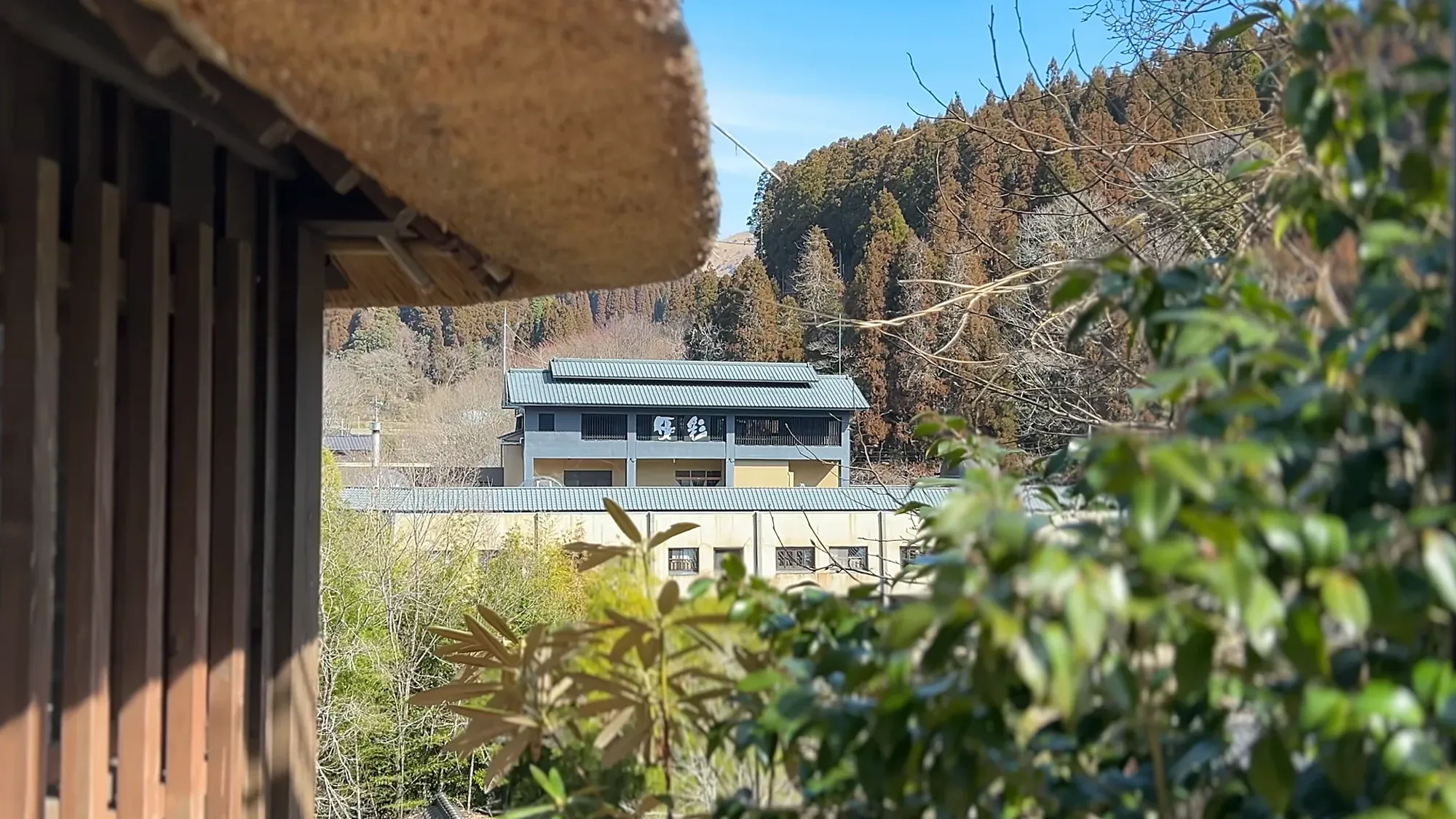
The village agreed on what it would look like. A bunk block was never going to clear that.
From the 1980s the innkeepers took roughly two hundred signs down off the lanes together, enforced natural materials, and bound the village to the slogan 黒川温泉一旅館 — "the whole village, one inn." A design code that governs signage, materials and scale, held by thirty inns in concert, never left room for a bunk-bed economy: the floor is a modest ryokan because the village decided, deliberately, that it would be.
Until the year 2000 Kurokawa's name did not even appear on the local newspaper's prefectural map — the obscurity, and the coherence that replaced it, are two sides of the same choice.
The budget answer, in one passage
The compressed version, for the reader who needs it now: budget Kurokawa means the twelve directory doors under ¥20,000 (US$133) per person with dinner and breakfast included, anchored by Genka's ¥12,727 (US$85) four-room floor at the village's dead centre, with famous names, Yamabiko, Yamamizuki, Shinmeikan, opening in the same band.
Add the ¥1,500 (US$10) tegata for three open-air baths and one sticker treat, ride the bus, ¥1,600 to ¥3,400 (US$11 to $23) each way from Aso or Kumamoto, book direct and midweek, and refuse the three false economies, room-only, pass-skipping and day-tripping. The all-in one-night figure lands near ¥21,000 (US$140) from Kumamoto; the two-night version near ¥38,000 (US$253).
Everything the village is famous for, the lanes, the lanterns, the water, the dusk turn, is either included or costs coins, because Kurokawa's product is atmosphere, and atmosphere, uniquely among luxury goods, has no budget edition.
Tips
Book the cheapest central inn over a nicer outlying one; location is the budget traveler's luxury here.
Travel midweek; the same rooms run meaningfully cheaper and actually exist.
Confirm the two-meal plan; room-only in Kurokawa is a dinner problem, not a saving.
Ask modest inns about free family baths; several match the luxury feature quietly.
Spend the savings on the tegata and one splurge bath repeat; the water is the point.
Frequently asked questions
Can you visit Kurokawa Onsen on a budget?
What is the cheapest way to stay in Kurokawa?
Are cheap ryokan in Kurokawa worth it?
Does budget lodging include meals?

Verified by The Japan Onsen Society
Show all sources
Verified July 7 to 16 and September 6–7, 2026 by The Japan Onsen Society. The floor (お宿玄河 ¥12,727, four rooms), the ¥13,000–16,000 inns, Nanjōen's direct-booking note, and the Noshiyu correction (¥24,000–32,000, not budget) are the association's own member listing. Surrounding-hamlet pensions and the no-hostel point are scoped to the association's roster ; bus services are perishable under the 2026 earthquake reductions.
お宿玄河 ¥12,727 (4 rooms) · 優彩別館 ¥13,000 · やまの湯/樹やしき/瀬の本高原 ¥16,000 · 南城苑 cheapest by direct booking · のし湯 ¥24,000–32,000 → 黒川温泉観光旅館協同組合 oyado list kurokawaonsen.or.jp/oyado/ → verified Sep 7, 2026
VERIFY:
Surrounding-hamlet pensions/farm stays: confirm existence and price direction inn by inn
(Honest length note: the sourced budget tier is a handful of named inns plus the strategy; taken to its ceiling without inventing a backpacker economy the village does not have.)
Noshiyu characterization (modern-simple, budget-friendly) per current listings
Free family baths at modest inns — confirm examples before implying prevalence
Surrounding-hamlet pensions/farm stays: confirm existence and price direction
"No hostels in the village" — confirm no new entrants
Restaurant-scene-thin-at-dinner claim current
USD conversions assume ~¥150/$1. Update ¥→USD at publish.
Konyoku (mixed) baths with women-only hours (about 8–10 pm) → 奥の湯 (Okunoyu, the inn's own site) — https://www.okunoyu.com/ — verified Sep 6, 2026
Full member-inn price ladder (Genka ¥12,727 floor to Gekkoju ¥122,700 ceiling), per-inn descriptions, the Noshiyu correction (¥24,000–32,000), Nanjōen direct-booking note, 30 inns → 宿泊 (黒川温泉観光旅館協同組合 oyado list, official) — https://www.kurokawaonsen.or.jp/oyado/ — re-verified Sep 7, 2026
Tegata mechanics (¥1,500/¥700, three stickers, six-month validity, 8:30–21:00, 25 baths, one per person, green sticker, 1% conservation levy) → 入湯手形 (組合, official) — https://www.kurokawaonsen.or.jp/tegata/ — verified Sep 6, 2026
Access matrix and journey times, nearest stations Aso and Hita, the town-hall last-leg gap, the few-dinner-seats point, the visitor code, the 源泉かけ流し / 加水 disclosure, altitude and seasonal timing → アクセス・よくある質問 (組合, official) — https://www.kurokawaonsen.or.jp/access/ + https://www.kurokawaonsen.or.jp/faq/ — verified Sep 6, 2026
Live service status under the 2026 Kumamoto earthquake reductions → 天気・交通情報 (組合, official) — https://www.kurokawaonsen.or.jp/weather_traffic/ — check every publish
Restaurant directory (13 places to eat; すみよし食堂, 白玉っ子, どらどら, とうふ吉祥; green-sticker shops) → お店 (組合 omise directory, official) — https://www.kurokawaonsen.or.jp/omise/ — verified Sep 6, 2026
Per-hamlet spring map, four area spring families, official 適応症/禁忌症, 53 lodgings / 2,300 capacity district figure, 田の原温泉 and 満願寺温泉 → 温泉地詳細 record + 南小国温泉郷 国民保養温泉地 profile (日本温泉協会) — https://www.spa.or.jp/search_p/detail_p/?F_ID=430260 + https://www.spa.or.jp/kokumin/1131/ — verified Sep 6, 2026
The 1964 Yamanami Highway boom that faded, the hand-dug cave bath, ~200 signs removed, the 黒川温泉一旅館 slogan, obscurity until 2000 → 新明館の歴史 (Shinmeikan) + 黒川温泉について (組合) — https://shinmeikan.jp/history/ + https://www.kurokawaonsen.or.jp/about/ — verified Sep 6, 2026
Related guides
Where to Stay
Where to Stay: Ryokan Guide
Every Kurokawa bed is a ryokan with dinner, from ¥12,727 to ¥122,700. Choose by setting and budget; the tegata gives everyone the baths.
Where to Stay
Best ryokan
Ranking the inns misleads: the tegata gives you the other baths anyway, so the real question is which room, in which setting, at which price.

Where to Stay
Kurokawa Onsen: The Complete Guide
A wooden pass buys three baths from twenty-five. The innkeepers agreed, decades ago, to look like this.