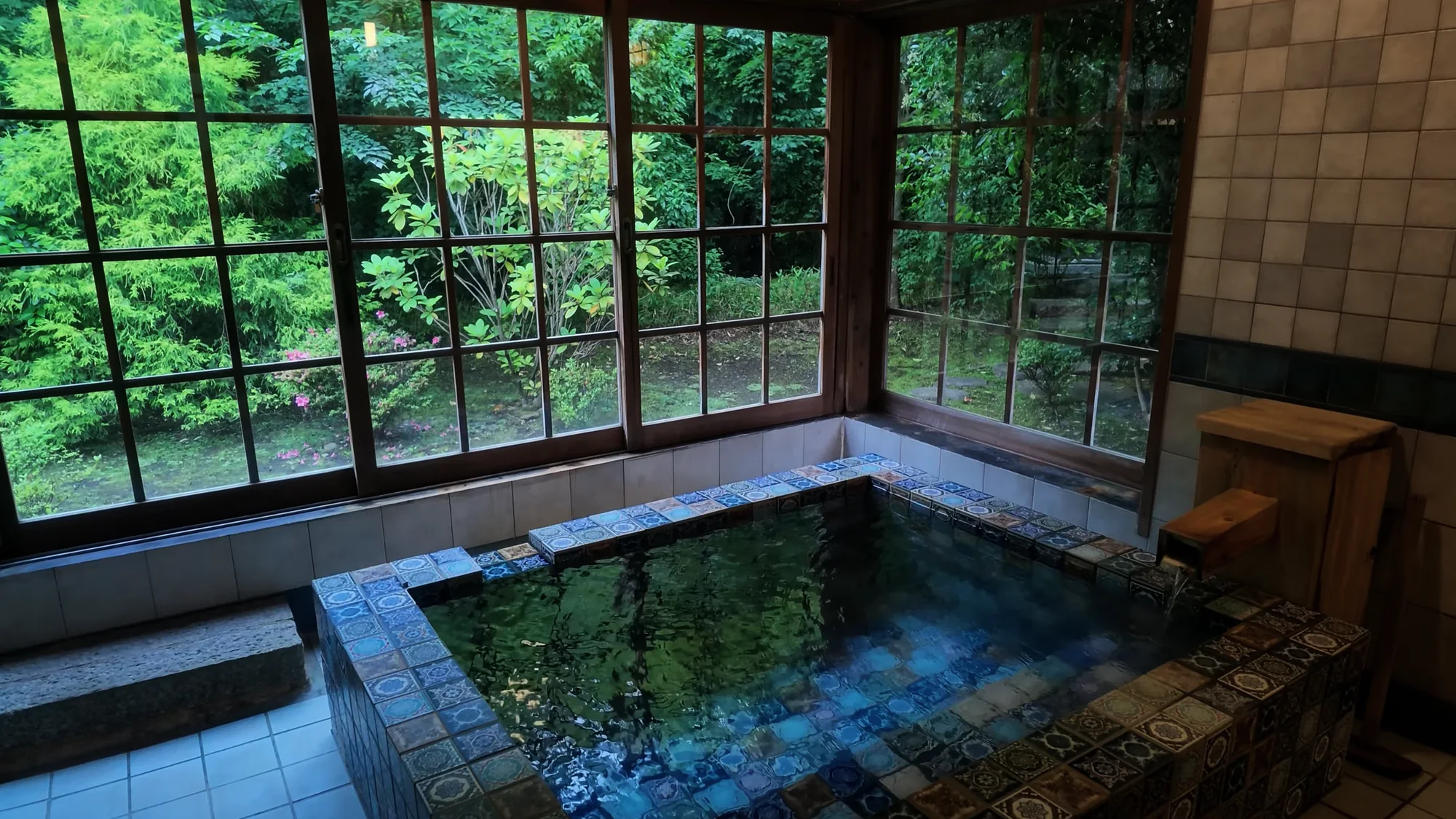
The two kinds of private
Kashikiri baths come two ways, hourly or attached, and the difference decides the booking. The hourly kind is a standalone bath, often open-air, that the inn locks for your party for a set block — usually 40 to 60 minutes — at roughly ¥1,000 to 2,500 (about US$7 to 17) per visitor reports. The attached kind is a guest room with its own rotenburo on the balcony or in a garden, yours around the clock at a higher room rate.
Hourly suits a one-time private soak inside a normal stay; attached suits honeymoons, tattooed travellers who would rather skip the shared-bath question entirely, and anyone who wants a soak in the dark at 2 am. General bathing etiquette lives on the JOS hub; the short version for a private bath is that the pre-wash rules still apply.
The private-bath answer, in one passage
Kurokawa handles private bathing three ways, and all three are bookable by an ordinary traveller. The cheapest is an hourly kashikiri block at a normal inn; the one rate we can fully source is Yamamizuki's ¥2,000 (about US\$13) for fifty minutes, with visitor reports putting the village's general band near ¥1,000 to ¥2,500. The best value is Kurokawa-so, where three private baths come free to staying guests with a reservation, on a ¥26,273 (US\$175) two-meal rate.
The most complete is a room with its own bath: Konoyu keeps nine rooms with private valley-view rotenburo in its ¥24,000 to ¥35,000 (US\$160 to \$233) band, and Yamamizuki's own chart shows nine bath-equipped rooms among its twenty-one. Book attached rooms when you book the stay; claim hourly blocks early on the day.
The vocabulary of private water
Four Japanese terms govern the category, and booking precision improves the moment you use them correctly. 貸切風呂 (kashikiri-buro) is the rentable private bath, the metered or reserved block this page centres on; 家族風呂 (kazoku-buro), the family bath, is the same object in its traditional name, and hearing it from an older inn signals the same product.
客室露天風呂 (kyakushitsu rotenburo) is the in-room open-air bath, the attached category, and the phrase to use when that is specifically what you want, since a room with a bath, お風呂付き, may mean an indoor tub. 内風呂 (uchi-buro) is that indoor tub, lovely and not a rotenburo, the distinction the five-mistakes section above turns on.
Deploy them in the booking sentence and ambiguity collapses: kashikiri-buro no yoyaku wa dekimasu ka, can a private bath be reserved; kyakushitsu rotenburo tsuki no heya wa arimasu ka, is there a room with its own open-air bath. The terms also unlock the directory, whose facets map to them exactly, private bath to kashikiri, private open-air bath to the in-room rotenburo, rooms with bath to the indoor tubs.
Ten minutes with four words, and every chart, facet and phone call in the category reads clearly, which is the cheapest upgrade this page can sell.
Where to look: the sourced options
Three sourced options anchor the search, and one of them is the single best fact on this page. Kurokawa-sō (黒川荘) gives guests three private baths free with a reservation, in the association's own listing, alongside private dining rooms — which makes it the strongest value in the village for anyone whose priority is privacy rather than a villa budget (its rate sits around ¥26,273 per person with two meals).
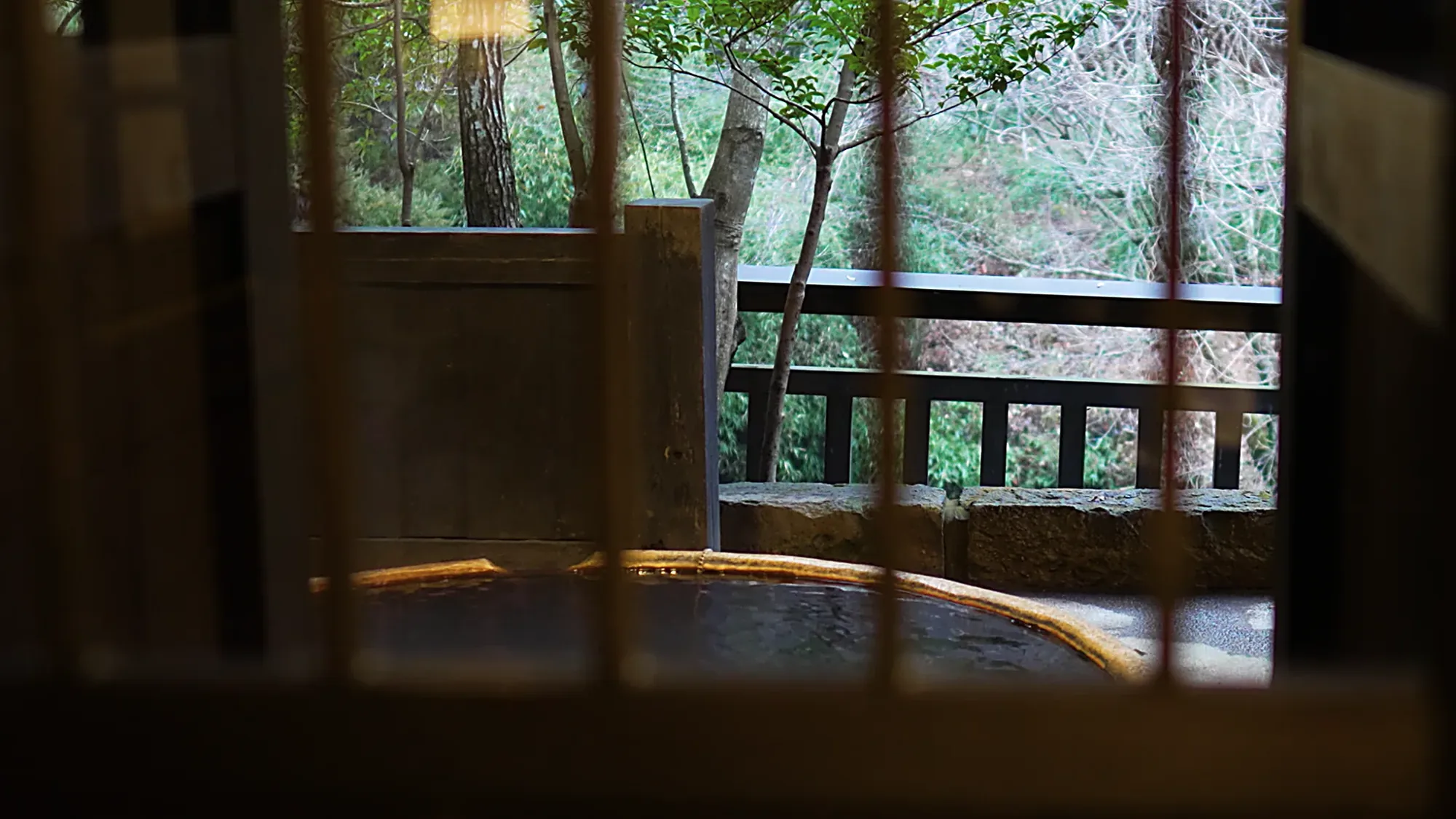
Private water is published by fewer inns than the booking sites imply.
Kōnoyu (こうの湯, ¥24,000–35,000) keeps nine guest rooms with their own open-air bath looking over the satoyama from high ground just outside the centre — the village's cleanest route to an in-room rotenburo. Fumoto + Rokuan (ふもと旅館, ¥20,000–26,000), in the middle of the village, runs a cluster of baths that includes private-use options, and its bath house and annexe were renovated in August 2024.
Beyond these three, the association's member list carries a "private open-air bath" filter among its eleven booking facets; use that filter to find the current room categories rather than trusting a fixed list, because which inn carries the facet sits behind the association's interface and we do not assign it to named inns here. Inventory is small everywhere — usually a handful of rooms per inn — so these categories sell out first.
The one fully documented example: Yamamizuki's Saotome
Because hourly kashikiri details are usually locked in Japanese booking pages, it is worth walking through the one bath whose terms we can document end to end, as a template for what to expect elsewhere. Yamamizuki's private bath, the Saotome, is a spacious hinoki-cypress bath with its own generous washing area, and it prices at ¥2,000 (about US\$13) for a fifty-minute block.
Staying guests may book it in advance, a courtesy day visitors do not get; the inn asks day users to enquire on the day at its Inoya cafe reception instead. Time it carefully, because the windows are real: the inn's own spa page gives staying guests 15:00 to 21:00 with a last entry at 20:00, while the association's inn page lists 14:00 to 21:00 and notes that from 21:00 the bath reverts to the women's indoor bath for house guests.
Two official sources, two start times; we print both and suggest you confirm the one that matters when you book. The lesson generalises across the village. A kashikiri is a scheduled object with a fixed block, a last-entry cutoff, different rules for guests and day visitors, and a second life outside its private hours. Ask those four questions of any inn's private bath and you will have learned everything the booking page would have told you.
The other sourced route: a room where the bath comes with the key
Between the hourly block and the luxury suite sits the room with its own bath, and here the sourced picture is better than the English-language one. Konoyu's nine valley-view rooms are the known flagship, but Yamamizuki's own room chart shows how deep the category runs at a single inn: of its twenty-one rooms in nine types, nine come with a bath attached, spread across five types, from the C-type rooms on the stream with their rustic indoor baths to the Fugetsu suite and the double-bedded Suichiku and Hanamizu rooms.
That is a major riverside inn where nearly half the keys open a room with private water, at bands starting well below the luxury tier. The general rule it proves: in-room baths in Kurokawa are not a villa exclusive but a room category at ordinary famous inns, found reliably through two tools, the association directory's rooms-with-bath and private-open-air-bath filters, and each inn's own room chart, which Japanese ryokan publish in far more detail than their English booking listings carry. When a chart shows a bath icon on a room type, that is the primary source; book the type, not the promise.
Inside the one published room chart: five ways to own water
Yamamizuki's chart, the category's single fully published example, rewards a type-by-type reading, because its five bath-equipped room types are really five different private-water products, and the taxonomy transfers to every inn whose chart you will read in Japanese. The C type, five rooms strong, is the classic: stream-facing tatami rooms with wood decks and rustic indoor baths, the bath as a window seat on the river, and the chart's own note that each room's bath differs slightly, which is the small-inn signature no chain can fake.
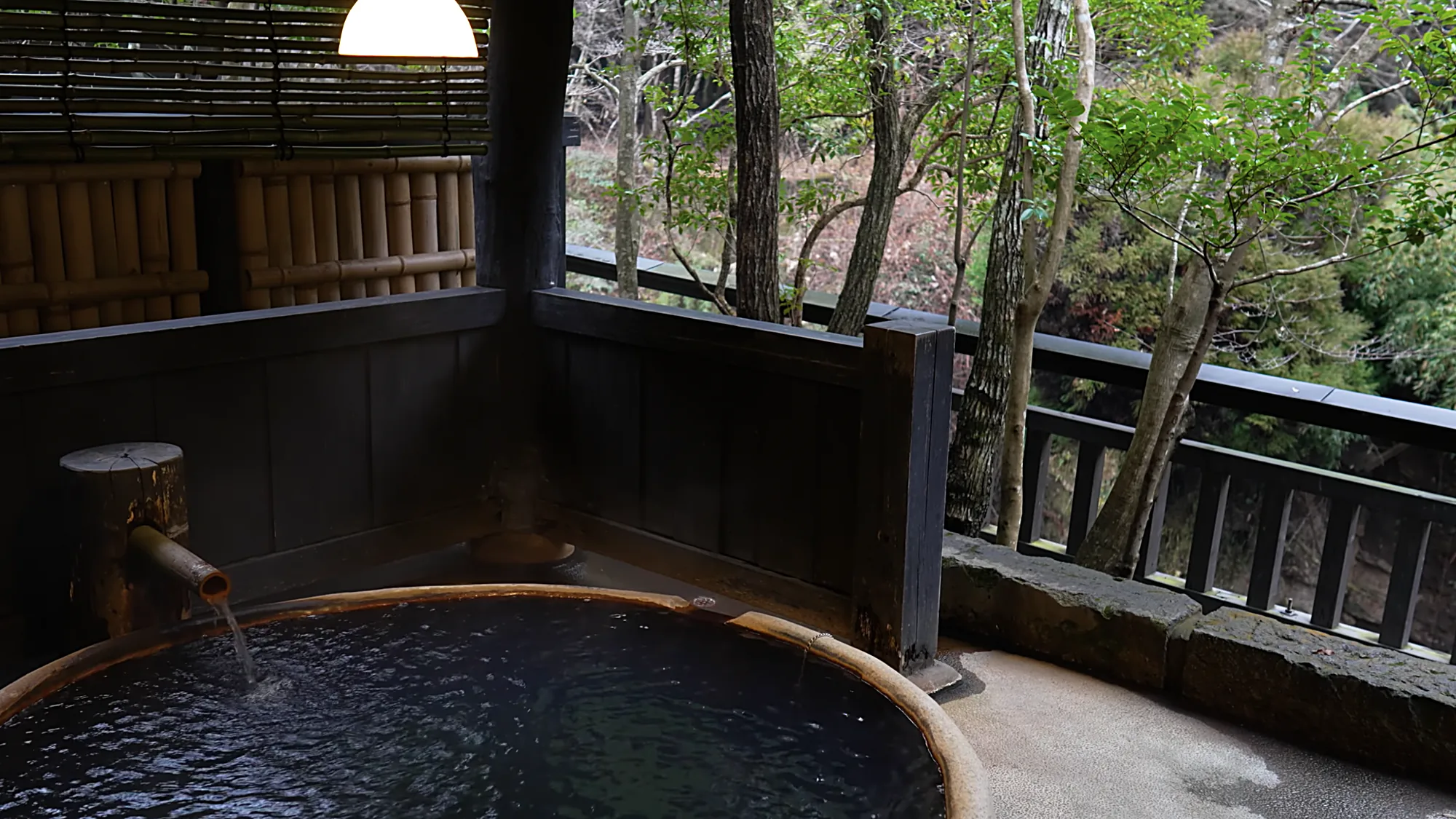
One inn prints the whole chart. Most of the valley leaves you to ask.
The single G-type room turns inward instead, a courtyard-facing room whose shadowed indoor bath the chart describes as carrying its own distinct atmosphere, privacy squared, for guests who want the water without even a view's company. The Fugetsu suite stacks the amenities, western sitting room, ten-mat tatami room, twin bedroom and bath together, the family-or-celebration format where the private water is one room of several.
And the Suichiku and Hanamizu types pair double and twin bedrooms with baths, the couple's format, compact and complete. Five types, nine rooms, one inn, and the general lesson for the category: in-room water in Kurokawa is not a single product at a single price but a small menu, view-led, privacy-led, space-led or couple-led, and the chart, not the booking engine's thumbnail, is where the menu is printed. Ask any inn for its chart, read it with this taxonomy, and the right room names itself.
Hourly kashikiri at ordinary inns
Most of the village's thirty inns keep at least one family bath. Some open it to day visitors for a fee; others reserve it for house guests. Inns post a sign (kashikiri, or 貸切) at the door, and asking at check-in is the reliable method: slots are commonly first come, first served, and the evening blocks go quickly. Reckon on roughly ¥1,000 to 2,500 for the hour , a visitor-reported band we cannot yet pin to a primary.
Fifty minutes, minute by minute
The kashikiri block is short enough to waste by fumbling, so here is the hour used well. Arrive five minutes early; the handover between parties is part of the schedule, and the previous party's punctuality is a courtesy you will want returned. Minutes one to ten belong to washing, the full pre-bath ritual at the private washing stations, unhurried because nobody waits behind you, which is for many bathers the block's first luxury.
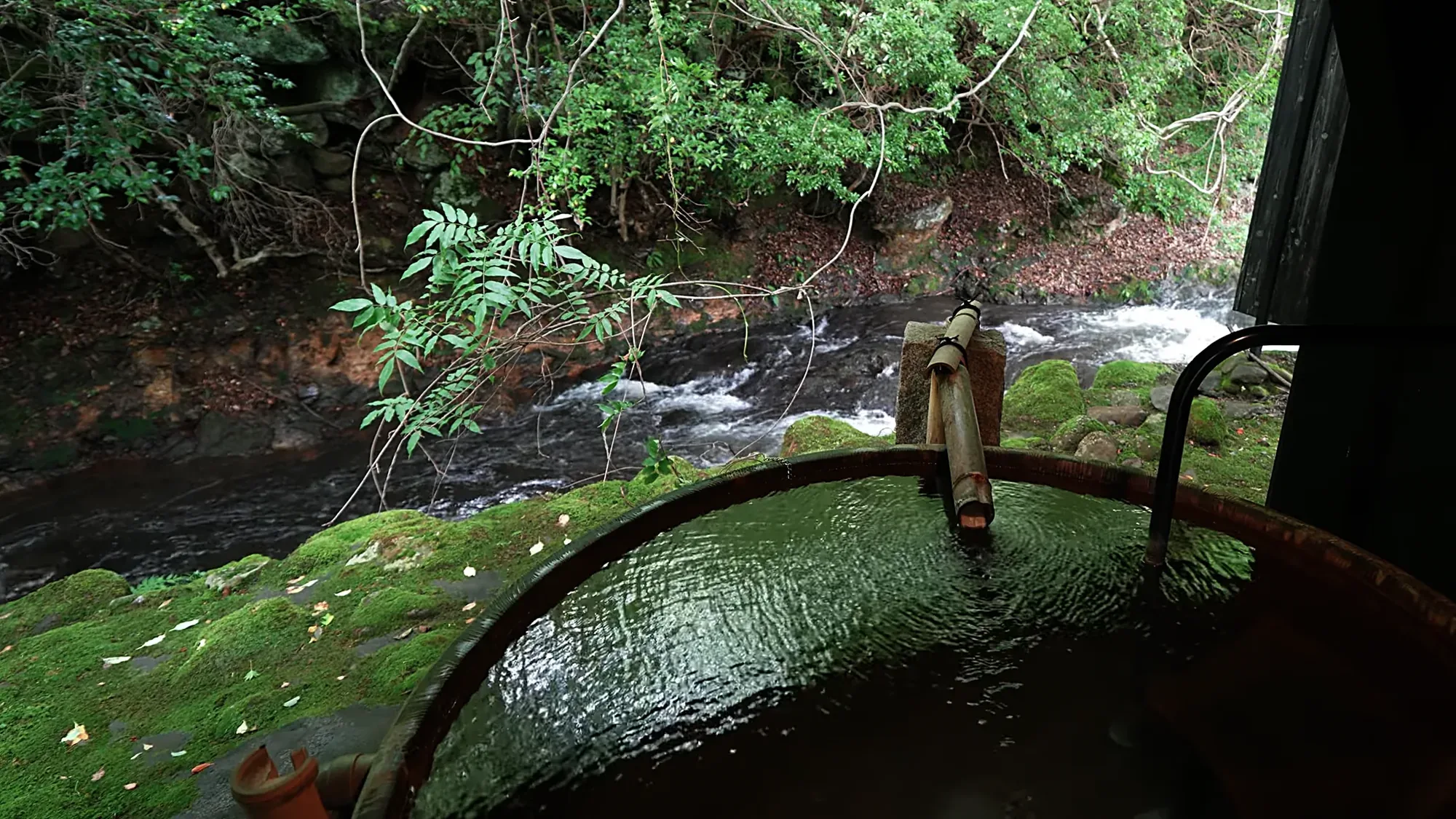
Fifty minutes is longer than it sounds and shorter than you want.
Minutes ten to thirty-five are the soak proper, best taken in two or three immersions with rim-sitting between, the pacing that lets a fifty-minute block deliver more actual bathing than a rushed single simmer; this is where the documented hinoki tub earns its wood, cypress holding heat gently and smelling of it.
Minutes thirty-five to forty-five are the wind-down, the last immersion, the cool rinse if you take one, and the small tidying that leaves the bath as found, taps off, basins righted, which private-bath culture treats as part of the rental. The final five minutes are for dressing and the handover, out on time, keys or door as instructed.
Two refinements complete the craft: book the block that fits your dinner seating with an hour's margin, and bring only what the hour needs, towels, water, hair ties, since the private room's clock does not pause for forgotten kit. Fifty minutes, used like this, outperforms two rushed hours of shared bathing, which is the category's honest arithmetic.
The private-bath evening, timed
Private bathing rewards choreography, because it must fit around the one immovable event of a ryokan night, dinner. The rhythm that works: arrive mid-afternoon and take your inn's shared or tegata baths first, while the kashikiri calendar is still open; claim or confirm your private block for the first slot after your dinner seating ends, typically an hour and a half after it begins; then let the private bath be the evening's second act, dark, quiet, and unhurried, with the lanes' lanterns on the walk if the bath sits apart from the main building.
Families should invert it, taking the private block before dinner while small bathers are still awake and agreeable, and couples celebrating something should ask one more question at booking, whether a late block exists, because the last slot of the night, steam under cold air with the village asleep, is the one the whole category exists for.
At inns where the bath reverts to single-gender use later in the evening, as Yamamizuki's does at 21:00, the late-block question answers itself; at Kurokawa-so, where the three private baths are free with a reservation, the only currency is the calendar, so reserve at the same moment you book the room.
House rules of the locked door
Privacy changes the audience, not the standards, and the category's etiquette is the shared bath's plus stewardship. The pre-wash is not waived by the lock: wash before entering exactly as in any onsen, at the private washing stations the better kashikiri provide, because the tub's water serves the next party and the inn's pride. Soap, shampoo and towels stay out of the tub itself, same as everywhere.
Time discipline is the category's own addition, the block ending when it ends, with the handover courtesy the schedule depends on; running long is not a luxury, it is the next party's loss. Leave-as-found is the second addition: taps closed, basins righted, stools returned, the small resets that private-bath culture treats as included in the rental, and which inns notice with real warmth when foreign guests perform them unprompted.
Families add supervision, the locked door making parents the lifeguards, hot inflows and stone edges unchanged by privacy. And the photography question resolves sensibly: the village-wide ban protects other bathers, so the locked private bath is the one place a discreet photo of the tub, not the people, before bathing, is generally tolerated, though an inn's posted rule outranks this paragraph.
The category's rules summarise to one sentence: behave as if the owner were watching fondly, because in a thirty-inn village where every bath is somebody's family asset, they effectively are.
What private costs, in practice
An hourly bath adds around ¥1,000 to 2,500 to a stay. A room with its own rotenburo pushes the nightly rate up the association's per-person band — which runs from ¥12,727 at the smallest inn to ¥122,700 at the most expensive — typically into the ¥24,000-and-up range for the in-room-bath houses. In between sits the useful compromise: a standard room plus one booked kashikiri hour, or a stay at Kurokawa-sō, where the private baths are free — both deliver the private-soak memory without the suite price.
The private-water price ladder, end to end
Assembling every sourced number in the category yields a ladder any budget can board. Rung zero costs nothing beyond the room: Kurokawa-so's three private baths, free to staying guests with a reservation, on a ¥26,273 (US\$175) two-meal rate, the category's outright value anomaly.
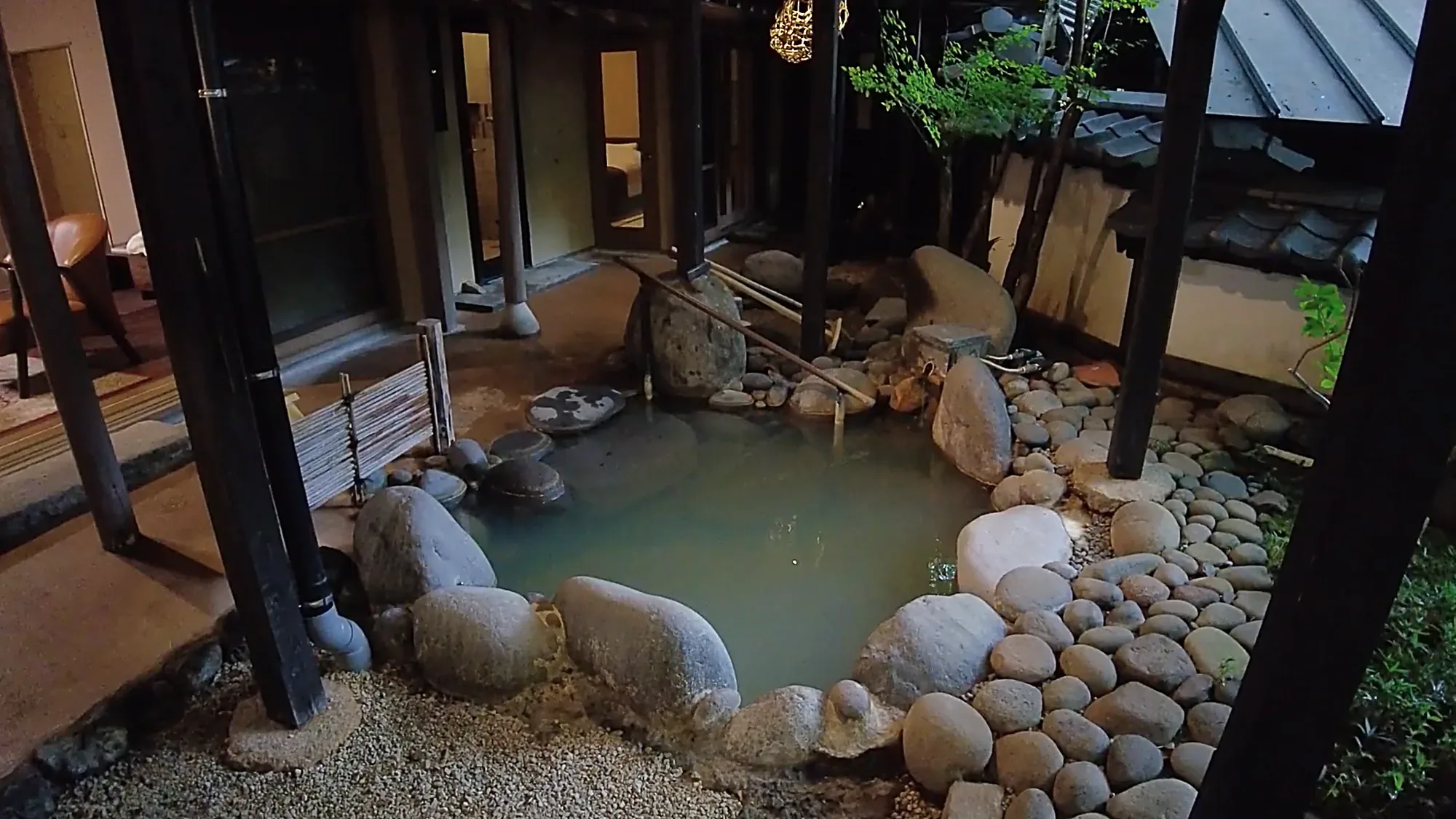
From a booked hour to a room that never gives the water back.
Rung one is the metered hour: ¥2,000 (US\$13) for fifty minutes at the documented example, with the visitor-reported village band of ¥1,000 to ¥2,500 (US\$7 to \$17) still flagged as unpinned; split between a couple, the documented rate prices the private hour at ¥1,000 a head, less than most single bath entries anywhere in Japan.
Rung two is the in-room bath at an ordinary famous inn, where the cost is the spread between an entry room and a bath-equipped type inside one band, Yamamizuki's ¥18,000 to ¥45,000 (US\$120 to \$300) containing both ends of that arithmetic, and the exact per-type premium living in each inn's plans rather than any published table, which is why we state the mechanism and not a number.
Rung three is Konoyu's dedicated category, nine valley-view rotenburo rooms inside ¥24,000 to ¥35,000 (US\$160 to \$233). And the ladder's top, the villa tier's all-private world, belongs to the luxury page. The ladder's practical reading: private water in Kurokawa starts at free and stays affordable two rungs up, which is the fact the category's reputation for extravagance most needs correcting.
Private water for one
The category's quietest use case is the solo bather, and it deserves explicit encouragement because solo travellers routinely assume the private bath is not for them. It is. The metered hour has no minimum party; ¥2,000 (US\$13) buys one person the same fifty minutes it buys four, and a solo soak in a hinoki tub with the door locked is arguably the purest version of everything this village sells, no negotiation, no audience, no schedule but the water's.
The free-with-reservation baths at Kurokawa-so extend the same welcome, one guest being a party. For solo travellers with tattoos, the private hour is the association's own suggested route made personal; for solo women, it adds a layer of ease some shared rotenburo evenings lack; and for the solo introvert, it converts the day's most social activity into its most restorative one.
The one caution is proportional cost, the hour pricing the same regardless of heads, which the solo budget simply absorbs as the trip's one deliberate luxury. Pair it with the tegata's shared circuit, stamps for the famous settings, the locked hour for the soul, and the solo Kurokawa trip stops being the compromise version of a couples' itinerary and becomes its own complete form, which, walking home alone through the lanterns afterward, you will not need this page to confirm.
Matching the private bath to the party
Different parties want this page for different reasons, and the sourced answers differ too. Couples want the attached room, and the honest advice is to spend on the room category rather than the inn's fame; a bath on your own balcony at a quiet inn beats a famous shared bath on a schedule.
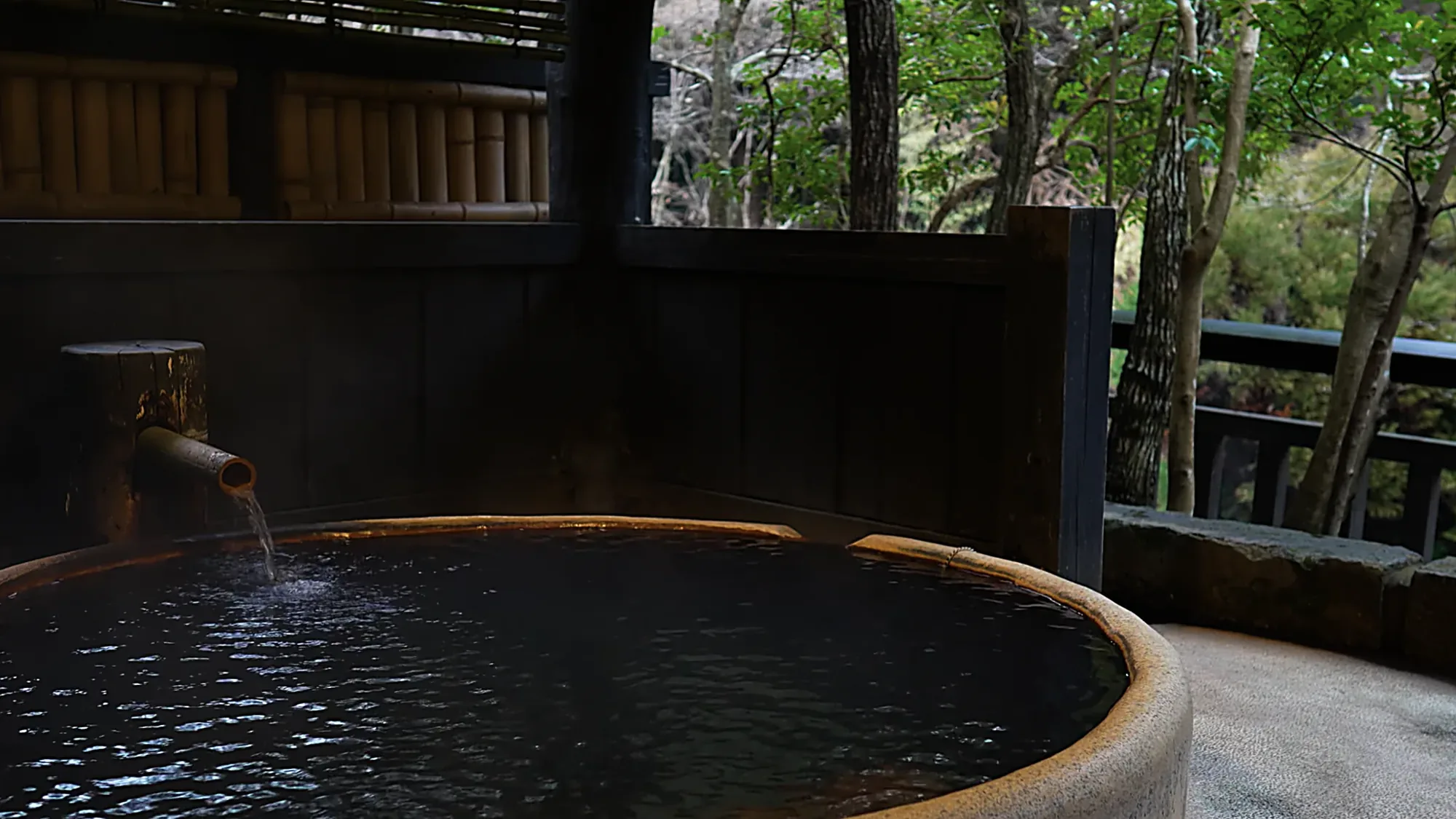
Two people, or a family of four, are not the same booking.
Families want the hourly block, which every inn understands as the family solution, and should say the children's ages when booking so the inn sets expectations about supervision rather than discovering surprises. Tattooed travellers want either, and should read our tattoo guide for the association's own confirmation that the kashikiri is the officially suggested route.
Travellers with mobility needs should start from the association directory's barrier-free filter, and know that the association's public FAQ fields questions on wheelchair loan; the specific arrangements sit behind its enquiry process, so ask there rather than assume, and favour inns whose baths sit inside the main building over those reached by garden paths and steps.
In every case the same booking sentence does the work: say who is bathing, when you want the water, and whether privacy or access is the point. Kurokawa's inns have answered each version of that sentence for decades.
The private bath through the seasons
The category's value moves with the calendar, and matching the private format to the month sharpens every booking above. Winter is the in-room bath's season without rival: the walk to any shared rotenburo is the cold's toll, and a room whose bath waits behind the shoji pays that toll once, at booking; the metered kashikiri also peaks in winter utility for families, one warm hour against the ice with nobody's small shoulders exposed longer than necessary.
Spring flatters the stream-facing types, the C-class rooms' deck baths taking the meltwater soundtrack at full volume, and the season's easy bookings make the bath-equipped categories, first to vanish in peak months, genuinely obtainable. Summer inverts the clock: the in-room bath earns its keep at dawn, before the heat, and again late, under cicadas, while the midday hours the shared circuit loses to temperature cost the private guest nothing, the bath simply waiting.
And autumn is the view-room's fortnight, a private bath under turned maples being the single most contested product in the village, booked months out by people who learned this paragraph the expensive way. The cross-season constant is reversion: private baths that convert to house use in the evening, as the documented example does at 21:00, keep the same clock all year, so the late-night in-room soak remains the attached room's exclusive in every month. Book the format to the season and the premium stops being a splurge and becomes the trip's best-priced comfort.
One booking, written out in full
To close the machinery into a single artefact, here is the complete private-water booking message, assembled from every section above, ready to adapt. "Hello. I would like to reserve a room for two adults on [date], one night, with two meals.
If available, we would prefer a room with its own open-air bath (kyakushitsu rotenburo tsuki); if none is available, a room with a bath, and we would like to reserve the kashikiri-buro for the evening of our stay, ideally the first block after dinner. We arrive by the bus reaching Kurokawa Onsen at [time]; we understand you may meet the stop. One of us has a small tattoo and we understand private baths are the suggested arrangement.
Thank you." Every clause is load-bearing: the party and meals fix the plan class, the room-category vocabulary prevents the indoor-tub surprise, the kashikiri request lands while the calendar is open, the bus line triggers the shuttle, and the tattoo sentence, where relevant, completes the disclosure the association's process expects, all in one message an innkeeper can answer in one reply.
Send it through the inn's own site, the association's enquiry form, or read it slowly down the phone; the format survives all three. A category this page has spent thousands of words mapping ultimately compresses to that paragraph, which is the point of the mapping: private water in Kurokawa is not a negotiation, it is a well-formed sentence, and now you have it.
Five mistakes when booking private water
The category's small print catches the same travellers every season. First, rooms with a bath and rooms with a private open-air bath are different things, and the association's directory filters them separately; an indoor hinoki tub is a lovely thing that is not a rotenburo, so filter for the facet you actually mean.
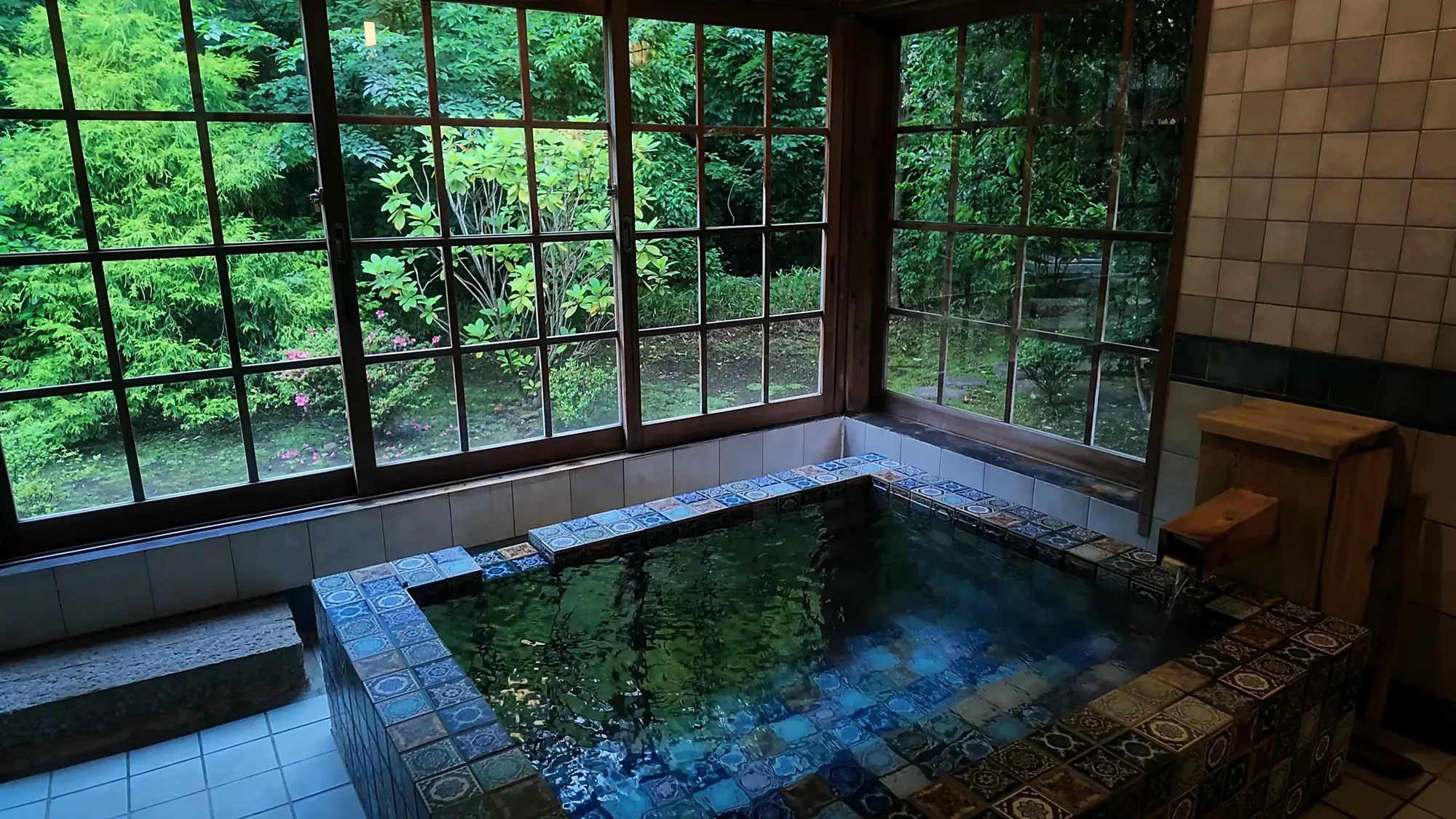
The commonest mistake is booking the hour before you know the bath.
Second, do not assume day access: some inns rent kashikiri blocks to day visitors and some reserve them for house guests, and even the documented example splits the two, with staying guests booking ahead at Yamamizuki while day users must ask at the cafe on the day. Third, at the free-with-reservation inns, the reservation is the price, so make it when you book the room rather than at check-in, by which time the evening blocks may be gone.
Fourth, respect the calendar of reversion: a private bath that becomes the women's indoor bath at 21:00 is not late-night private water, so if the midnight soak is the dream, that requires a room with its own bath, not an hourly block. Fifth, in winter, ask where the private bath physically is; an open-air kashikiri reached across a garden is glorious in steam and character-building in sleet, and inns will tell you honestly which walk you are buying.
None of these are traps, exactly. They are the details of a system built by thirty independent houses, and one clarifying question at booking dissolves each of them.
Kashikiri and the Nyūtō Tegata
The ¥1,500 (about US$10) tegata covers the shared rotenburo circuit, not private baths, and the two pair well: hop the famous baths by day, keep the private hour for after dinner. Tattooed visitors can run it in reverse — kashikiri as the default, shared baths only where an inn's own policy allows, since the association publishes no per-inn tattoo list.
When shared beats private: the honest counter-case
A page this enthusiastic owes you the argument against itself. The shared circuit holds three advantages no locked door matches. Variety first: the tegata's three stamps sample three different waters, settings and formats for ¥1,500 (US\$10), while the private hour is one bath, however good, and the village's documented range, cave to pond to river, lives almost entirely on the shared side.
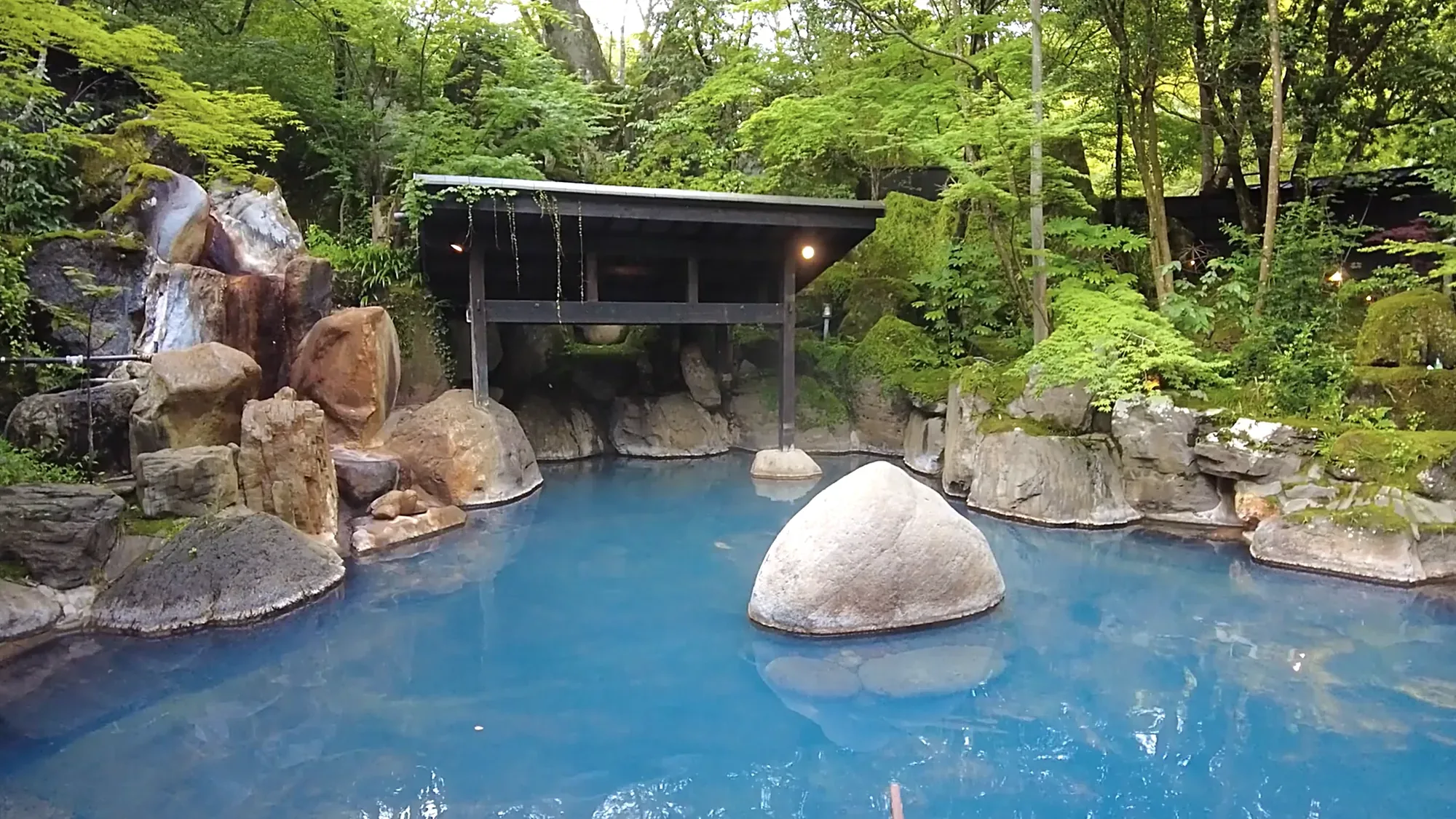
The best pools in the valley are shared ones. That is not a coincidence.
Scale second: the Senninburo's space, the long riverside pools, the theatre of steam moving over big water, are experiences the kashikiri format physically cannot contain; a private tub is intimate by definition and small by consequence. And company third, the underrated one: shared bathing is the village's social fabric, the murmur of other bathers, the local grandmother's nod, the sense of joining a practice older than tourism, and travellers who privatise every soak leave having bathed in Kurokawa without ever quite bathing with it.
The synthesis this site actually recommends is the blend: the shared circuit for the famous settings and the culture, the private hour for the evening, the couple, the child, the ink or the introvert, each format doing what the other cannot.
Readers who arrived here planning an all-private trip should book one shared stamp anyway, at the Senninburo for space or the cave for strangeness, and decide the ratio for themselves; the village built both systems, and it built them to be used together.
Tips
Reserve room-attached baths at the time of booking; they are the first category to sell out.
Claim hourly bath slots at check-in, and take an early-evening or post-dinner block.
Confirm whether your inn's kashikiri is included in the room rate or charged per use.
Traveling with children? Hourly family baths are the standard local solution, and inns expect the request.
In winter, ask for a covered or indoor private bath option; open-air tubs at outlying inns can be a cold walk.
Frequently asked questions
Which Kurokawa ryokan have rooms with private open-air baths?
How much does a private bath cost in Kurokawa Onsen?
Does the Nyūtō Tegata pass include private baths?
Are private baths in Kurokawa suitable for tattooed visitors?

Verified by The Japan Onsen Society
Show all sources
Verified July 7 to 16 and September 6–7, 2026 by The Japan Onsen Society. Kurokawa-sō's three free private baths, Fumoto's private-use baths and August-2024 renovation, and the per-person price band are the association's own member listing (K5); Kōnoyu's nine in-room-bath rooms are from kashikiri-onsen.com. The hourly kashikiri band is visitor-reported . The "private open-air bath" facet is citable as a filter; per-inn facet assignment is not — not stated for named inns.
Kurokawa-sō 3 free private baths · Fumoto private-use baths + Aug 2024 renovation · price band ¥12,727–122,700 · the "private open-air bath" filter → 黒川温泉観光旅館協同組合 oyado list kurokawaonsen.or.jp/oyado/ → verified Sep 7, 2026
Kōnoyu: 9 rooms with private valley-view open-air baths → kashikiri-onsen.com
VERIFY:
Kounoyu: nine rooms with open-air valley-view baths (kashikiri-onsen.com; confirm on inn's official site)
Hourly kashikiri range ¥1,000–2,500 and typical 40–60 min blocks (explore-kumamoto cites the range; confirm at 2–3 named inns)
Fumoto Ryokan private-use bath details and day-visitor access
Yamamizuki current stay/bath configuration
Whether the tourist information center maintains a public kashikiri list (plausible; confirm)
Share of the ~30 ryokan offering family baths ("majority" — soften if unconfirmable)
USD conversions assume ~¥150/$1. Update ¥→USD at publish.
山みず木 温泉 (Yamamizuki, spa page) - the Saotome private bath, ¥2,000 per 50 minutes, guest window 15:00–21:00, day-use via the Inoya cafe, verified August 18, 2026
黒川温泉観光旅館協同組合 山みず木 (association inn page for Yamamizuki) - the 14:00–21:00 listing, last entry 20:00, the 21:00 reversion to a women's indoor bath, and the guests-may-prebook rule, verified August 18, 2026
山みず木 お部屋 (Yamamizuki, room chart) - twenty-one rooms in nine types with nine bath-equipped rooms across five types, verified August 18, 2026
黒川温泉観光旅館協同組合 お宿一覧 (member inn directory) - Kurokawa-so's three free reservable private baths, the rooms-with-bath, private-open-air-bath and barrier-free facets, re-verified September 7, 2026
黒川温泉観光旅館協同組合 よくある質問 (official FAQ) - the kashikiri-as-suggested-route tattoo answer and the wheelchair-loan question fielded through the association's enquiry process, verified September 6, 2026
Related guides
Where to Stay
Where to Stay: Ryokan Guide
Every Kurokawa bed is a ryokan with dinner, from ¥12,727 to ¥122,700. Choose by setting and budget; the tegata gives everyone the baths.
Where to Stay
Best ryokan
Ranking the inns misleads: the tegata gives you the other baths anyway, so the real question is which room, in which setting, at which price.

Where to Stay
Kurokawa Onsen: The Complete Guide
A wooden pass buys three baths from twenty-five. The innkeepers agreed, decades ago, to look like this.