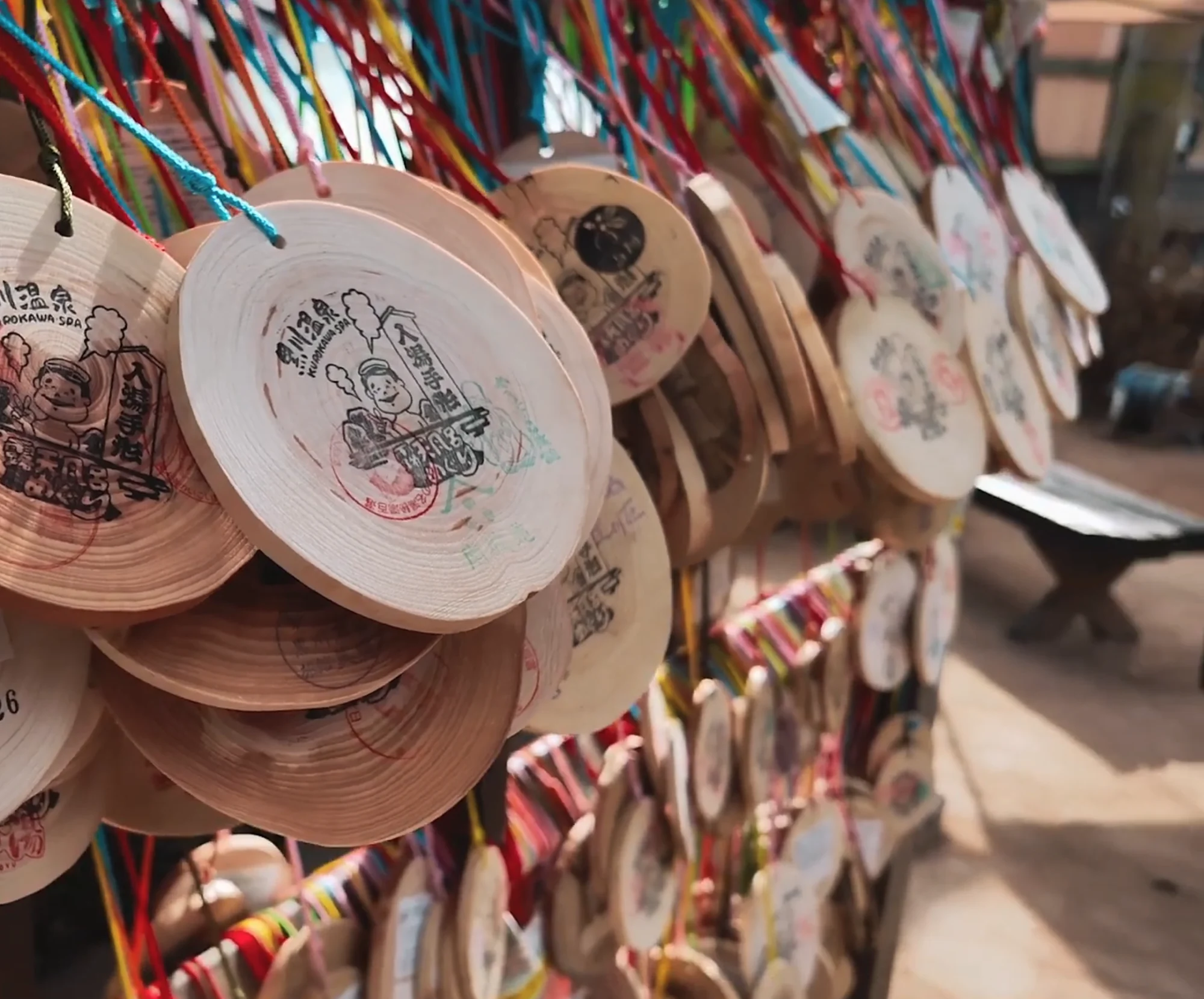
Every onsen town has baths. Kurokawa turned its baths into a game, and the tegata is the playing piece. More than a discount ticket, it is the physical form of the agreement that saved the village in the 1980s, when the ryokan association decided every inn would open its outdoor baths to every other inn's guests. Understanding how it works, and the handful of unwritten rules around it, is most of what separates a smooth Kurokawa day from a frustrating one.
What the tegata actually is
The pass is a disc of local Oguni cedar about the size of a drink coaster, branded with the village crest and strung on a cord so you can carry it like a talisman, which is roughly what it is. The name means "bathing pass" in the old style: tegata were the wooden permits Edo era travelers carried through checkpoints, and the reference is deliberate. You are being issued papers for a small, steamy country.
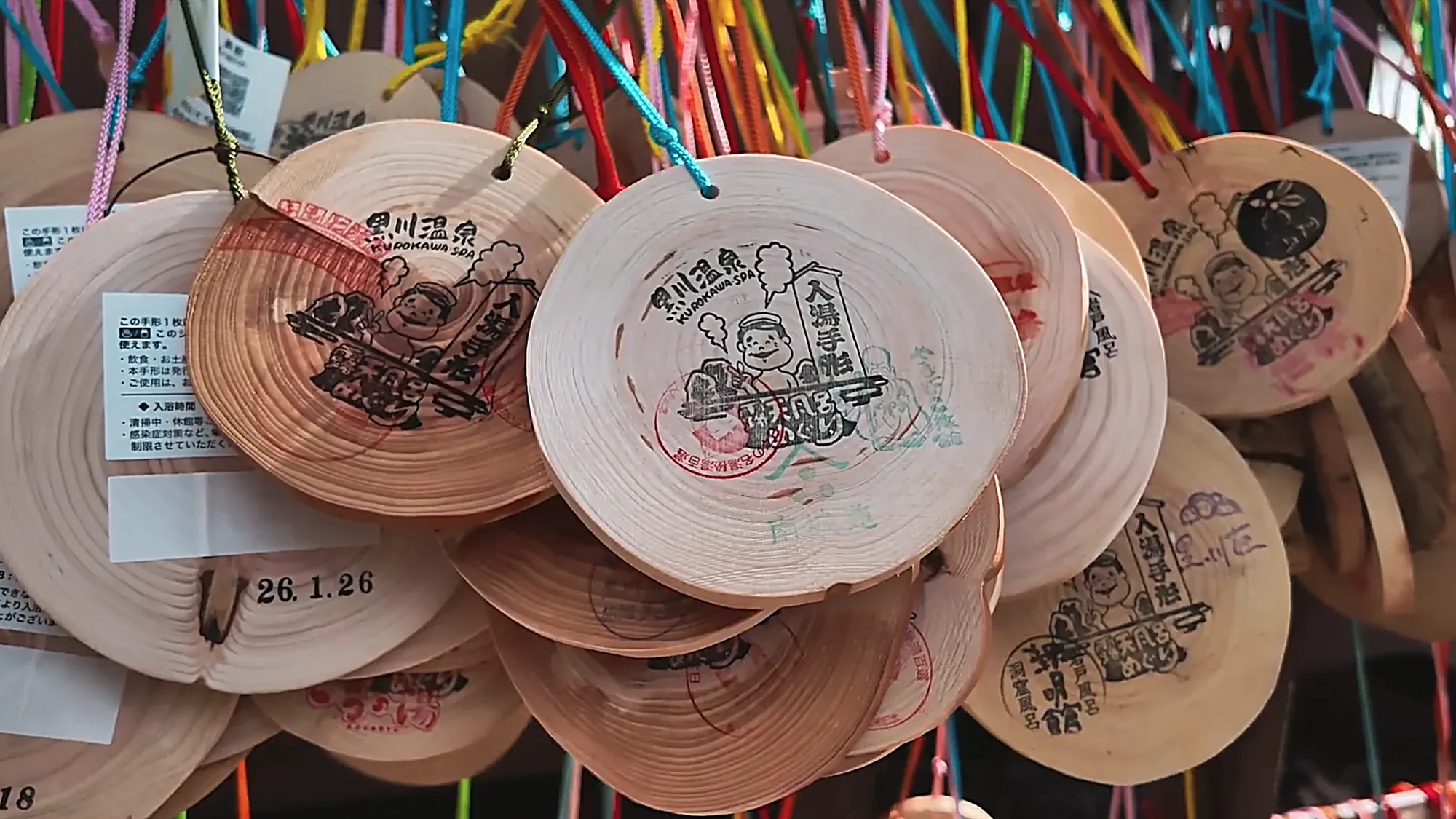
A cedar disc, drilled once, on a coloured cord.
On the reverse are three round stamp spaces. At each participating ryokan you hand the disc to the front desk, they peel one sticker or stamp one space, and point you to the baths. Three baths, any participating inns, any order, any pace. The six month validity is not a gimmick: locals genuinely use leftover stamps on later visits, and an unfinished tegata in a kitchen drawer is one of the more reliable ways Japan convinces people to return to Kurokawa.
When the stamps are gone, the disc is yours to keep. Each ryokan carves its own stamp, so a finished tegata comes home as a small, personalised record of exactly where you bathed, which is the souvenir the village means it to be. One percent of every pass sold, the association notes, goes back into the village's landscape and nature conservation, so the token is also a small contribution to the forest you have just been bathing in.
The object is deliberately plain and deliberately durable. There is no app, no QR code and no plastic card, just cedar, a cord and three spaces for stamps, which is part of why a spent tegata reads as a keepsake rather than a receipt.
Bath-hopping passes are rare enough elsewhere in Japan that Kurokawa's is often described as the original, or the only one of its kind; we have not found a primary source that settles the claim, so take the superlative loosely and the object at face value. What is certain is that the disc, and not any single bath, is the thing the village is known for.
Where does the pass come from, and why does one percent matter?
The tegata was not a marketing idea bolted onto a finished resort. It came out of a practical problem during the village's revival, and understanding that is most of why it feels different from a tourist-board discount card.
When Kurokawa's innkeepers set about rebuilding the village's fortunes, not every inn could carve or plumb an open-air bath of its own; the valley is steep and some sites would simply not take one. The shared pass was the answer.
By agreeing that a guest of one inn could bathe at another, the association let the whole village trade on the baths that did exist, so that a small inn without a rotenburo was no longer shut out of the thing visitors came for. The pass was a way of pooling scenery. It began in 1986, and 2026 marks its fortieth year, which the association is marking with an anniversary programme running from mid-2026 into 2027.
That origin still shapes what the token is. It is not a coupon; it is a share in a common asset. The clearest expression of that is the one percent of every tegata sale the association returns to the village's landscape and nature-conservation work. Buy the pass and a sliver of the price goes back into the trees, the riverbanks and the lanes that make the baths worth visiting in the first place, which closes a small loop between what you came to see and what keeps it there.
It is worth holding both facts together, because they explain the village's whole character. The baths are shared because sharing them was the only way a poor, remote spa could compete. The look of the place is maintained, in part, with money the baths themselves generate. The wooden disc in your hand is the visible edge of an arrangement that runs deeper than a day's bathing.
The pass also sits at the centre of the idea the village sells itself on, that the whole of Kurokawa is one inn: the lanes its corridors, the separate ryokan its guest rooms. A guest of that imagined single inn would naturally be free to use any of its baths, and the tegata is what makes the metaphor literally true for an afternoon. Buy the disc and you are, briefly, a guest of the whole village rather than a customer of one house, which is a different and better feeling than a discount card was ever going to manage.
The economics of the disc
Follow the ¥1,500 and the tegata reveals itself as a small, elegant piece of economic machinery. Each stamp carries roughly ¥500 of bathing value to its holder, but its value to the village is distributional: the pass converts one purchase at one front desk into visits, and spending, at up to three other businesses, which is why the scheme's real constituency was always the small inn and the corner shop rather than the famous houses that would draw visitors anyway.
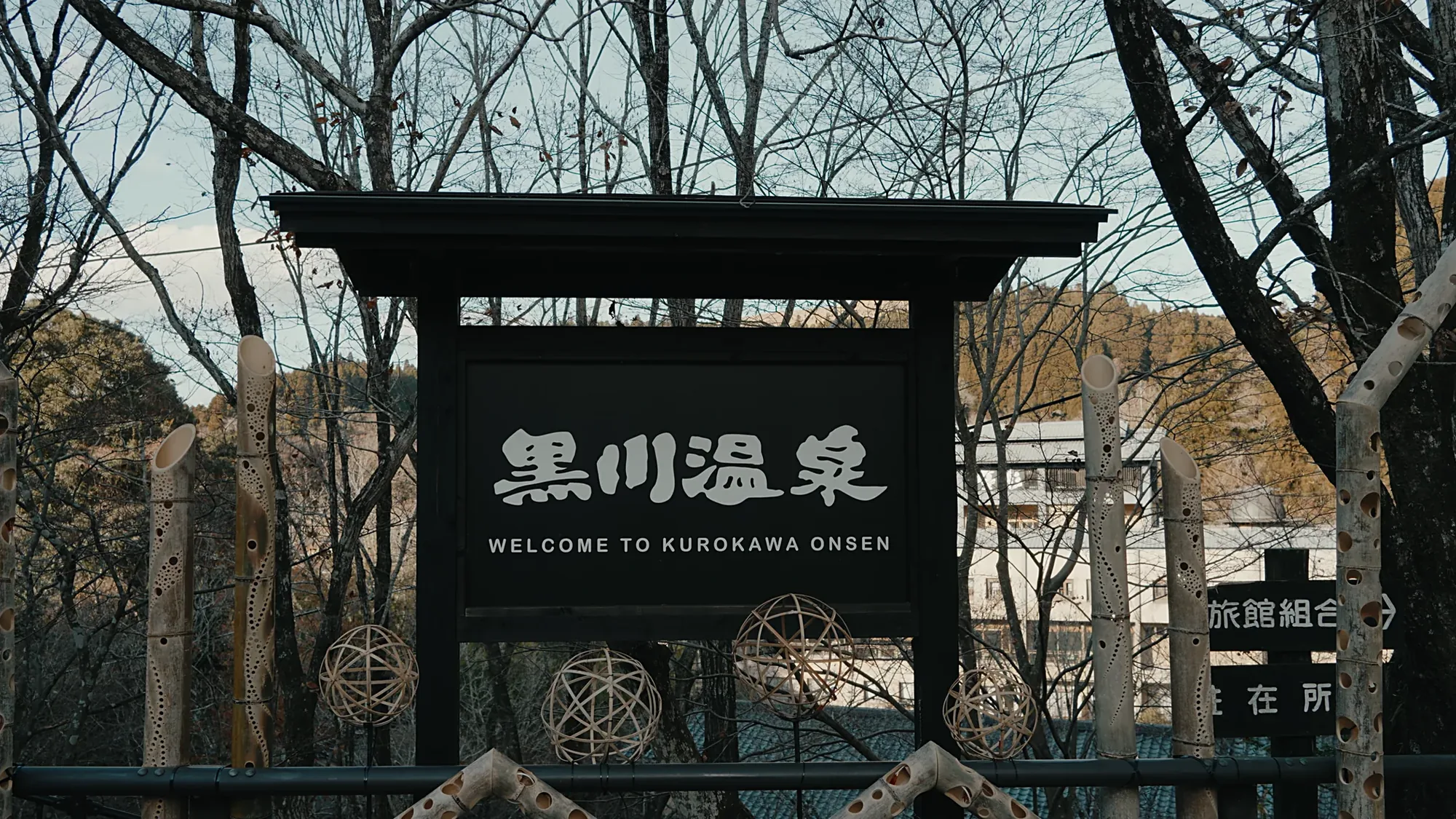
Thirty inns, one association, and a pass that works only because they all agreed to it.
The green sticker extends the same logic to nineteen counters, from a beekeeper's soft-serve to a potter's shelf, moving a slice of every pass into the shopping lanes. One percent of every sale is returned, by the association's own statement, to landscape and nature-conservation work, which prices the scenery into the product at fifteen yen a disc; forty years of discs is a forest budget.
Even the anniversary is economically legible: a programme running July 2026 through March 2027 is a season-spanning incentive, built to move visits into the pass's fifth decade. And the six-month validity is the quietest device of all, converting unspent stamps into deferred visits rather than refunds, a return-customer engine made of cedar. None of this diminishes the romance of the object; it explains it. The disc feels generous because it is engineered to be, and the engineering has held for forty years.
What the fortieth year adds
The pass's fortieth anniversary is not a footnote to this page; it is a nine-month window that changes what a 2026 or early-2027 tegata is. The association's programme runs from July 1, 2026 to March 31, 2027, spanning a full Kasa Andon summer, an autumn, and an entire Yuakari season, and while the published record we have read carries the window rather than the contents, the structural facts are already worth acting on.
A disc bought inside the window is, whatever else the programme brings, a fortieth-year tegata, which for the collectors the earlier section described makes this the most datable disc since the first ones in 1986. Visits inside the window should include one extra check, the association's own site, where programme instalments will surface first and in Japanese; five minutes with a browser translator the week before travel is the whole diligence required.
And travellers already choosing between this year and next have been handed a tiebreaker by the calendar itself: the same village, the same water, the same three stamps, but a year the association has chosen to mark. Institutions this small rarely reach forty in working order. The disc in your hand this year is the anniversary edition of an idea that saved a village, and that is worth knowing as you hand it across the first front desk.
Where and when do you buy the tegata?
Buy the tegata at Kaze-no-ya, the ryokan association's information house in the middle of the village, or at the front desk of nearly any member inn; the price is the association's own ¥1,500 for an adult and ¥700 for a child. Overnight guests usually buy theirs at check-in. There is no reservation, no ID and no timed entry. It is a cash-and-carry purchase, and cash is the safe assumption everywhere in Kurokawa, though a few businesses now take cards cashless acceptance is not something we can confirm across the village.
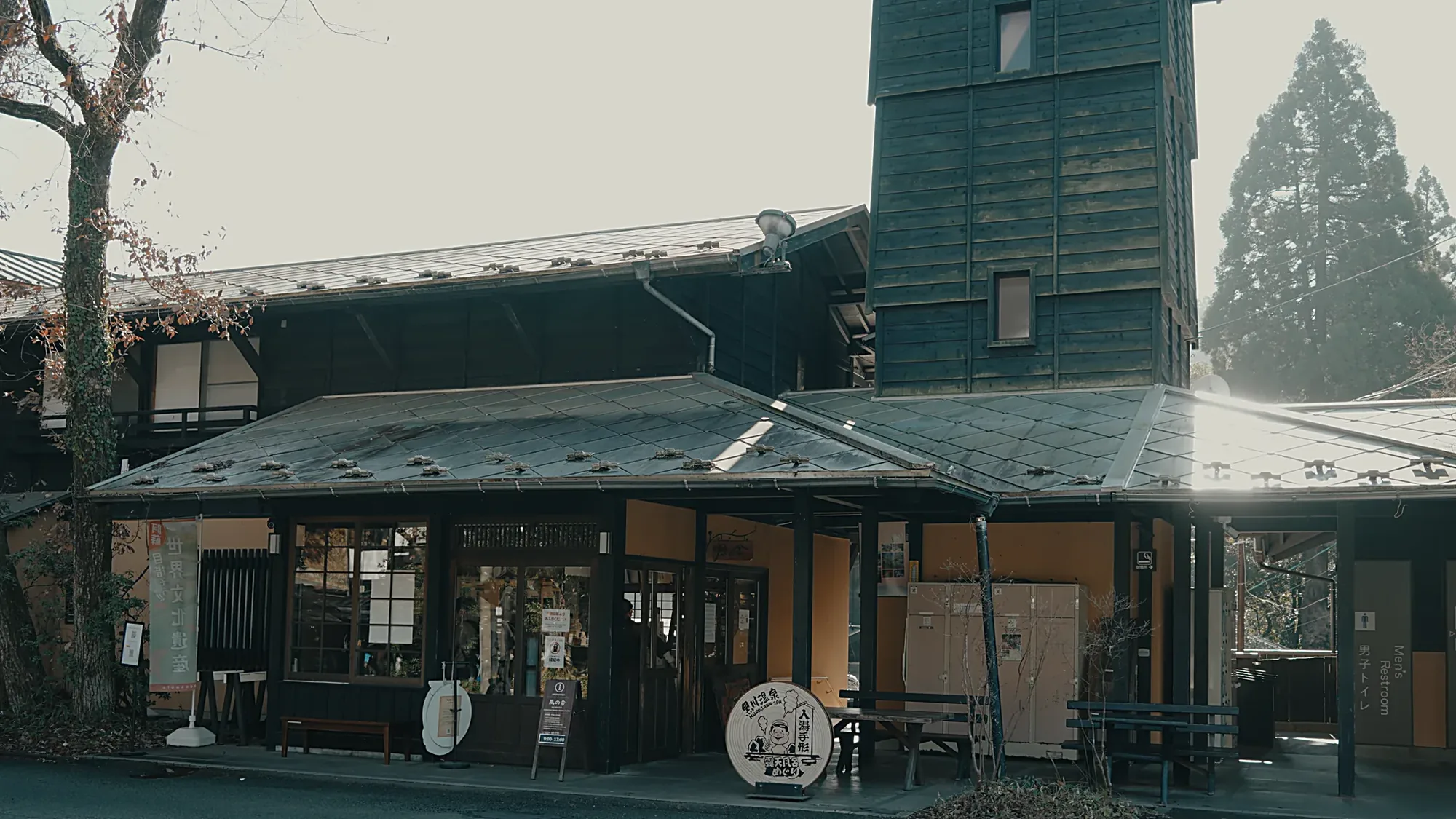
The association office sells the pass and posts the day's bath board.
Timing matters more than buying. Pass bathing is a daytime activity: the window runs 8:30 to 21:00, but every inn sets its own hours within that, closes its bath for cleaning, and reserves it for staying guests at certain times, particularly in the evening. Kaze-no-ya posts a daily board showing which baths are open, and the smart routine is to check it first and plan your three around what is actually open rather than a list from the internet.
Twelve stamps: the group's tegata
Parties multiply the pass's logistics, and a little coordination keeps a group's afternoon from dissolving into negotiation. A party of four holds twelve stamps and one shared clock, and the workable pattern is a fixed first bath for everyone, the board consulted together at Kaze-no-ya, then a deliberate split: the endurance bathers take the full circuit while the rest convert stickers at the sweet counters, reconvening at a named bridge at a named time.
Because the pass is strictly one per person and unshareable, there is no lending a spare stamp to the keen member of the party; what there is instead is the sticker's flexibility, which lets differently inclined members spend the same purchase differently without anyone eating a loss.
Groups should also respect the machinery they are loading: a rotenburo built for quiet absorbs four bathers gracefully and twelve as an occupation, and the association's code reserves the right to refuse entry when a bath is crowded, so large parties do the village and themselves a service by staggering arrivals at the famous doors rather than processing through as a bloc.
The group prize at the day's end is real, though: a table at a lane counter, twelve stamps spent, everyone's disc different, which is the tegata functioning at full social capacity.
Children and the pass
The child tegata at ¥700 (about US\$4.70) covers ages three through twelve, children below junior high school age, and the one-pass-per-person rule applies to them the same as to adults: a family of four needs four discs, not two. That sounds strict until you watch it work.
Children collect the stamps with a seriousness adults rarely manage, and the food sticker exists partly for them; a child who has had enough hot water after one bath can spend a remaining stamp on soft-serve or dango and count the afternoon a complete success.
For families, the practical pattern is one shared plan and individual discs: everyone takes the same first bath, the endurance bathers take a second and third, and the rest of the party converts stamps to snacks along Kawabata-dori. The pass has no age minimum stated for the baths themselves, but Japanese bathing culture expects small children to be accompanied, quiet and washed before entering, exactly as their parents are, and a rustic riverside rotenburo with stone steps asks for a firm hand on small swimmers.
Where that sounds like more supervision than relaxation, the family answer is a private kashikiri bath booked by the hour, covered in our private baths guide.
How does a tegata day actually run?
The rhythm is simple once you have seen it, and worth laying out because a first-timer can lose half a day getting it wrong.
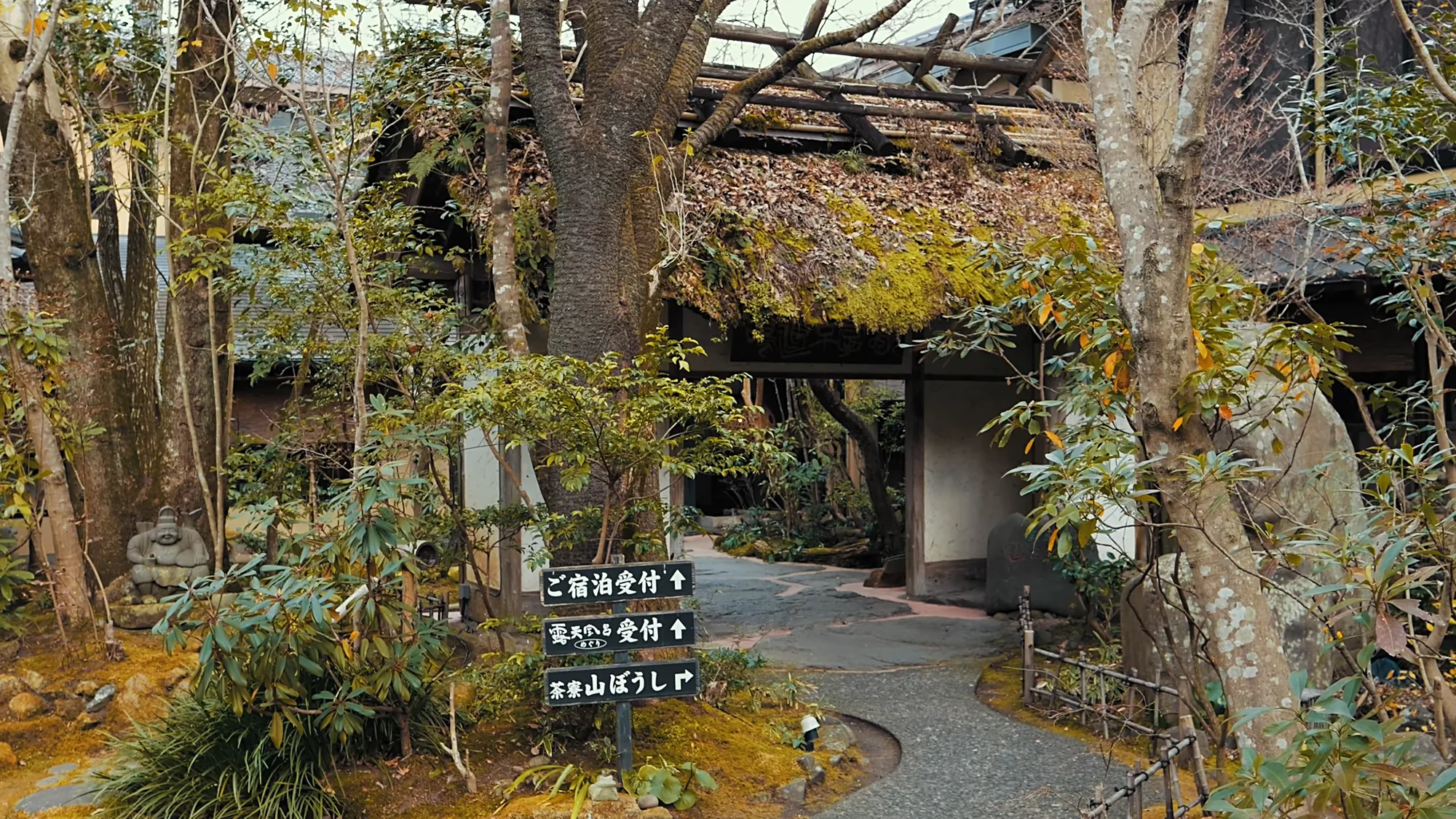
Two receptions at every inn: one for guests, one for bathers.
You start by getting the disc, either at check-in if you are staying or at Kaze-no-ya if you have come for the day. Then you go and read the daily board. This is the step visitors skip and regret: the board at Kaze-no-ya shows which of the enrolled baths are open that day and which are closed for cleaning or held for staying guests, and it changes daily, so any plan made from a website is already out of date. Pick your baths off the board, not off the internet.
From there it is a walk. Most of the enrolled baths sit within about ten minutes on foot of the centre and a few further out, so a sensible three is two central baths and one that justifies the longer stroll, rather than three that scatter you across the valley. Bathe in the late morning and the early-to-mid afternoon. This is the single most useful thing to know about the pass: it is a daytime one by design.
As the afternoon wears on, the inns begin closing their baths to outside bathers and turning them over to the guests staying the night, so a stamp you leave until five o'clock may find the door shut.
At each inn you hand the disc to the front desk. They take one of the three stamps and point you to the bath. There is a small courtesy to the exchange, since you are being let into a working inn rather than passing a turnstile, and a nod and a word of thanks is the whole of it. You wash before you get in, soak, dress, and move on.
Three unhurried baths with a walk and a snack between them is a genuinely full afternoon, and most people find two or three is the honest limit before the heat catches up with them.
When the last stamp is taken the disc is spent, and yours. If you run out of daylight or appetite before the third, the six-month validity means the last stamp simply waits for your next visit. Nothing about the tegata rewards rushing, and the village is quietly built so that it does not.
The pass's clock, season by season
The tegata's terms never change; the day around them does, and each season re-times the same three stamps. In winter, compress the circuit into the warm middle of the day, favour short exposed approaches and sheltered formats, and finish early, because the lanes belong to the lanterns after dark and the baths to the sleeping guests; the disc's six-month patience means a two-stamp winter day is a plan, not a failure.
In spring, the circuit is at its most even, no hour punishes and no bath overheats, so spring is the season to attempt the full contrast triad in one unhurried arc. In summer, start at the 8:30 bell, when the highland night still cools the water's edge, spend the sticker at the soft-serve counters through the punishing middle, and reserve any third soak for the last comfortable hour of the afternoon.
In autumn, daylight is the currency, so bathe the riverside settings while the colour holds and let the enclosed formats take the dark hours; the season's crowds also make the board-first rule absolute, since the famous doors close for capacity exactly when the foliage is best. Four seasons, one disc, and the only constant is the opening move: read the board, then spend.
Checking what is open before you walk
The tegata system publishes its own daily truth, and using it is the difference between a smooth circuit and a wasted walk up a steep lane. The association posts each day's bath availability, the same information as the board at Kaze-no-ya, on its own bathing-status page, and inns drop off it for cleaning days, private bookings, weather and maintenance without notice or apology.
Baths close for cleaning, for weather, and for no stated reason. Check before you walk up.
Since the 2026 Kumamoto earthquake the association has also run a live weather-and-traffic page, and individual inns post their own operating notices, so the careful order on the morning of a visit is: the traffic page for whether the buses are normal, the bathing page for which doors are open, then the day's plan drawn from what both actually say.
None of this takes five minutes, and it replaces the most common tegata complaint, the bath that was closed when you arrived, with the quiet satisfaction of a plan that already knew.
Reading the daily board
The tegata system's most underused component is its information layer, and learning to read it takes two minutes. The association posts, both on the physical board at Kaze-no-ya and on its bathing-status page, which of the scheme's baths are receiving day bathers today, and the notations matter: a bath can be closed for its cleaning rotation, closed for a private booking, closed for weather, or simply closed early as the inn turns to its evening guests, and none of these is announced anywhere else in English or Japanese.
The board's practical grammar: check it before buying nothing, but before planning anything; treat a listed closure as final for the day rather than knocking hopefully; and read the pattern as well as the day, because a bath closed this morning for cleaning is often the freshest water in the village by mid-afternoon.
Day visitors should photograph the board on arrival, the one wholly legitimate use of a camera in the tegata system, and re-check the online mirror before any long walk to an outlying door. The board is also the honest answer to the circuit's oldest complaint, the closed bath at the lane's end: the information was posted at the centre of the village all along, and the visitors it disappoints are, almost always, the ones who did not look.
How do you choose your three baths?
The choosing is the pleasure, but a little structure helps. Think in contrasts rather than rankings: one riverside bath for the classic Kurokawa scene, one cave or rock bath for the drama, and one quiet outlier where you might have the water to yourself.
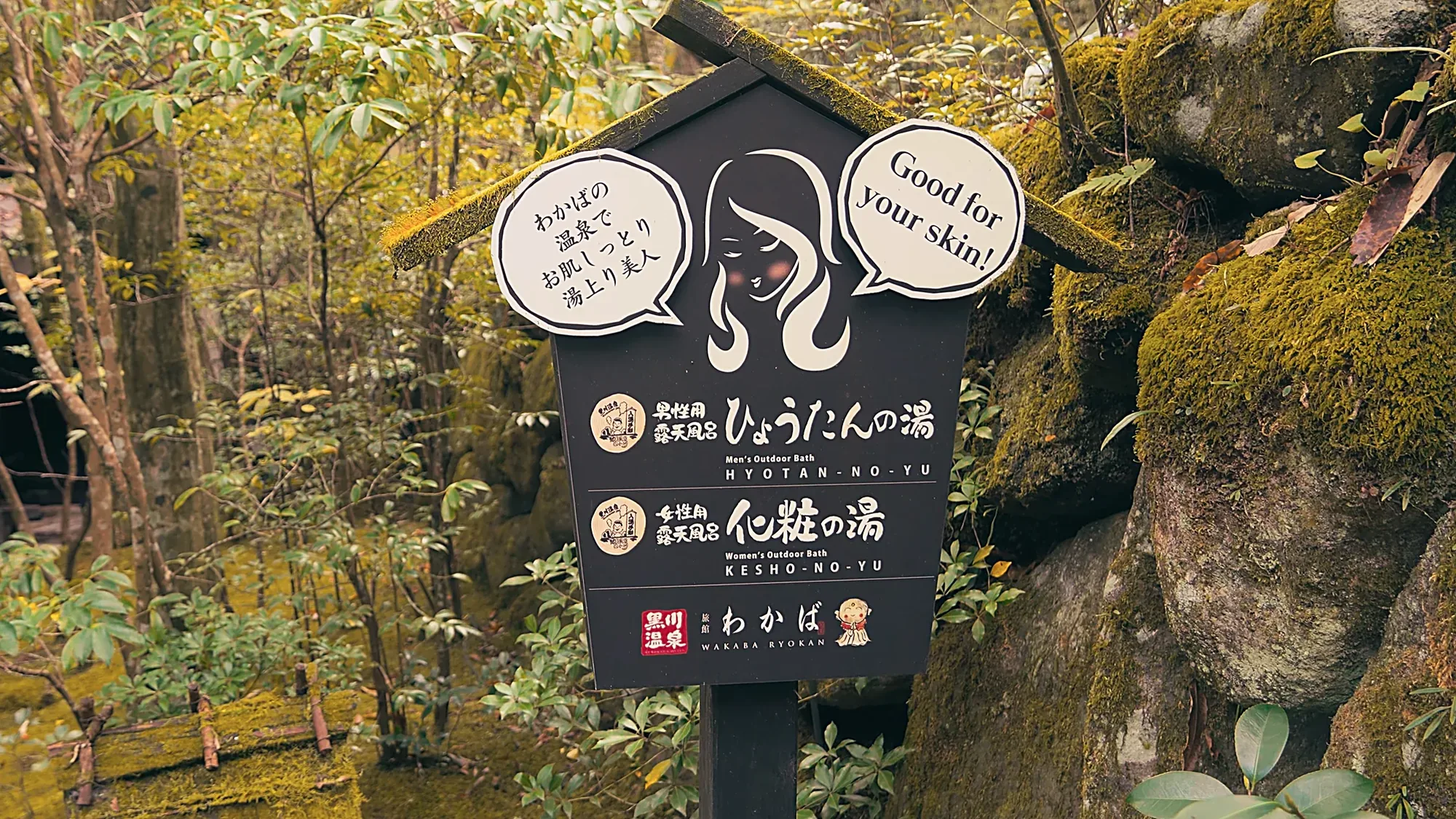
The roundel beside each name is what the pass opens.
In practice most people build their three around a famous name or two, Yamamizuki's forest-and-riverside bath or Shinmeikan's hand-dug cave among them, and then leave room for whatever the daily board says is open on the day. Which specific baths are worth your stamps, inn by inn, is the whole subject of our best-rotenburo guide, so we send you there for the comparison rather than repeat it here.
Two practical notes shape the choice. First, distance: most of the baths cluster within about a ten-minute walk of the centre, but a few of the best, Yamamizuki among them, sit outside it; Yamamizuki runs a free pickup from the Kurokawa Onsen bus stop if you give your arrival time when you book. Second, gender and privacy: most tegata baths are gender-separated, a few are mixed with bathing wraps or women's-only hours, and the arrangement is posted at each door. The mixed-bathing details are in our private and mixed baths guide.
Nine documented stamp targets, and the art of combining them
The rotenburo guide ranks the baths; this section solves the tegata's own puzzle, which is combination. Three stamps are a set, not a list, and the village's documented bath facts sort into combinations with distinct characters. The nine targets our sources pin: Shinmeikan's hand-dug cave; Yamabiko's Senninburo, the village's largest open-air pool; Fumoto's 1.5 m (4.9 ft) standing tachiyu among its eight baths; Kurokawa-so's bath before the Byobu-iwa rock face; Misato's colour-changing sulphur water; Ichinoi's yunohana-flecked sulphur; Okunoyu's pools in their 2,000-tsubo grounds; and Yamamizuki's paired riverside baths, the men's Yukoku-no-yu and the women's Mori-no-yu down its forest path.
Build the triad by what you want the afternoon to be. The contrast classic: one cave, one river, one pond, Shinmeikan, Yamamizuki, Yamabiko, the set that samples the village's three great formats in three hours. The chemistry flight: Misato's shifting white, Ichinoi's floating flakes, and any clear simple-spring bath as the control, three visibly different waters that turn the walk into the waters page made flesh.
The novelty set: the tachiyu you stand in, the cave you crouch in, the Senninburo you float in, three postures of bathing no other village can stage. The quiet set: Okunoyu's grounds, Kurokawa-so's rock face, and whichever riverside bath the daily board shows least busy, for bathers whose priority is absence of company. And the family set: the Senninburo's space, the tachiyu's spectacle, and a third stamp held loose for the soft-serve conversion. Two rules govern all of them.
The board at Kaze-no-ya overrules any plan, since a closed door beats a printed intention; and distance is a fourth member of every triad, so pair the outlier Yamamizuki with two central stamps rather than with Okunoyu's eastern end, unless the walking is the point. Choose the set, check the board, and let the disc do what it was designed for, which is to make the choosing half the pleasure.
Collecting the stamps
Because each ryokan carves its own stamp, the tegata doubles as the village's only collectible, and a small collecting culture has grown around that fact. A finished disc records exactly which three houses you chose, in their own marks, which makes two finished discs from two visits non-identical objects and a drawer of them a bathing autobiography.
Collectors' practicalities: the disc photographs beautifully and legally, since the camera ban guards the baths, not the pass, so the lane-side portrait of the day's disc is the sanctioned souvenir shot; children's ¥700 discs stamp identically, so a family's set records the whole party; and the wooden face takes ink stamps cleanly enough that the stamps at Kaze-no-ya and elsewhere in the village, where offered, extend the record beyond the three official marks. The disc's afterlife is yours to choose.
Keep it whole as the object it is; spend its last sticker on a later trip inside the six months; or follow the custom visitors describe, which we still flag as unconfirmed on the association's own pages, of retiring a spent disc at the Jizo hall in the centre, where the village's story began.
However it ends, the collecting logic explains a design decision that looks like sentiment and works like strategy: a pass you keep is an advertisement that lives in your house, and thirty different stamps mean the collection is never finished.
What are the rules while you bathe?
The tegata buys entry, not residency, and a handful of rules keep the system working. Bathe before lunch or in the mid-afternoon rather than at the dinner hour, when the inns turn inward to their staying guests. Wash before you get in, as at any onsen; several tegata baths are rustic rotenburo with minimal washing stations, so a quick rinse from the provided bucket is the accepted standard. Bring a small towel, since rentals and purchases run a few hundred yen an inn and add up across three baths.
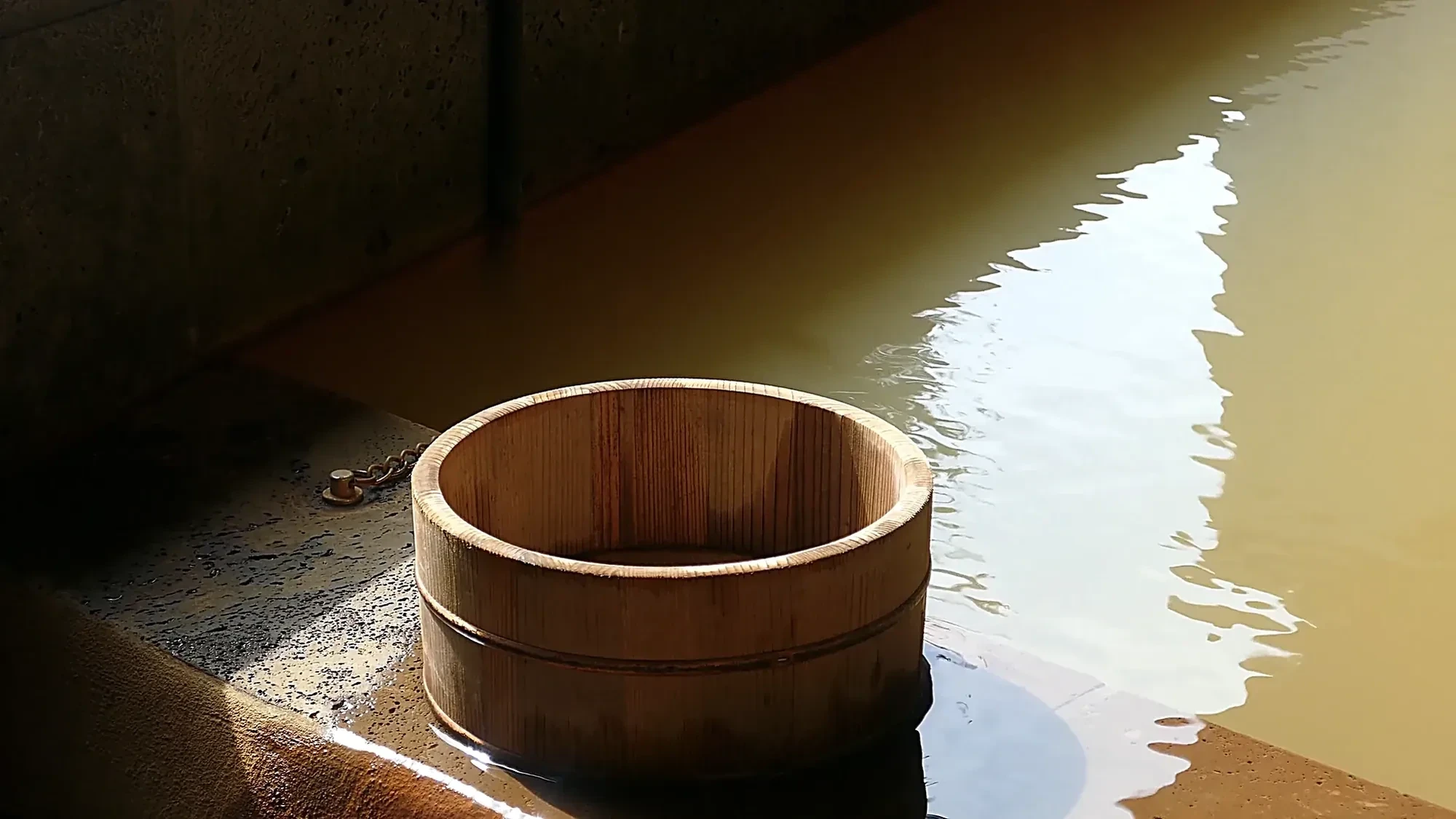
Rinse at the bucket before you get in. Every bath in the village expects it.
Two rules the association states outright. Photography in the open-air baths is prohibited in principle, so keep phones and cameras out of the changing rooms and the water entirely. And do not carry outside food or drink into the baths. Beyond that, treat the exchange at the front desk as the small courtesy it is: you are a guest in someone's working inn, not a customer at a turnstile. Our etiquette guide covers the full bathing how-to.
Can you spend a stamp on food instead?
Yes, and it is a genuinely useful option that most visitors never hear about. The three stamps do not all have to become baths. The association runs the tegata so that one of your three can instead be spent on food or a small souvenir at a participating shop or inn, the so-called two-baths-plus-one arrangement. It is an option, not the rule, and the default remains three baths, but it is the sensible move if your feet or the clock give out after two soaks.
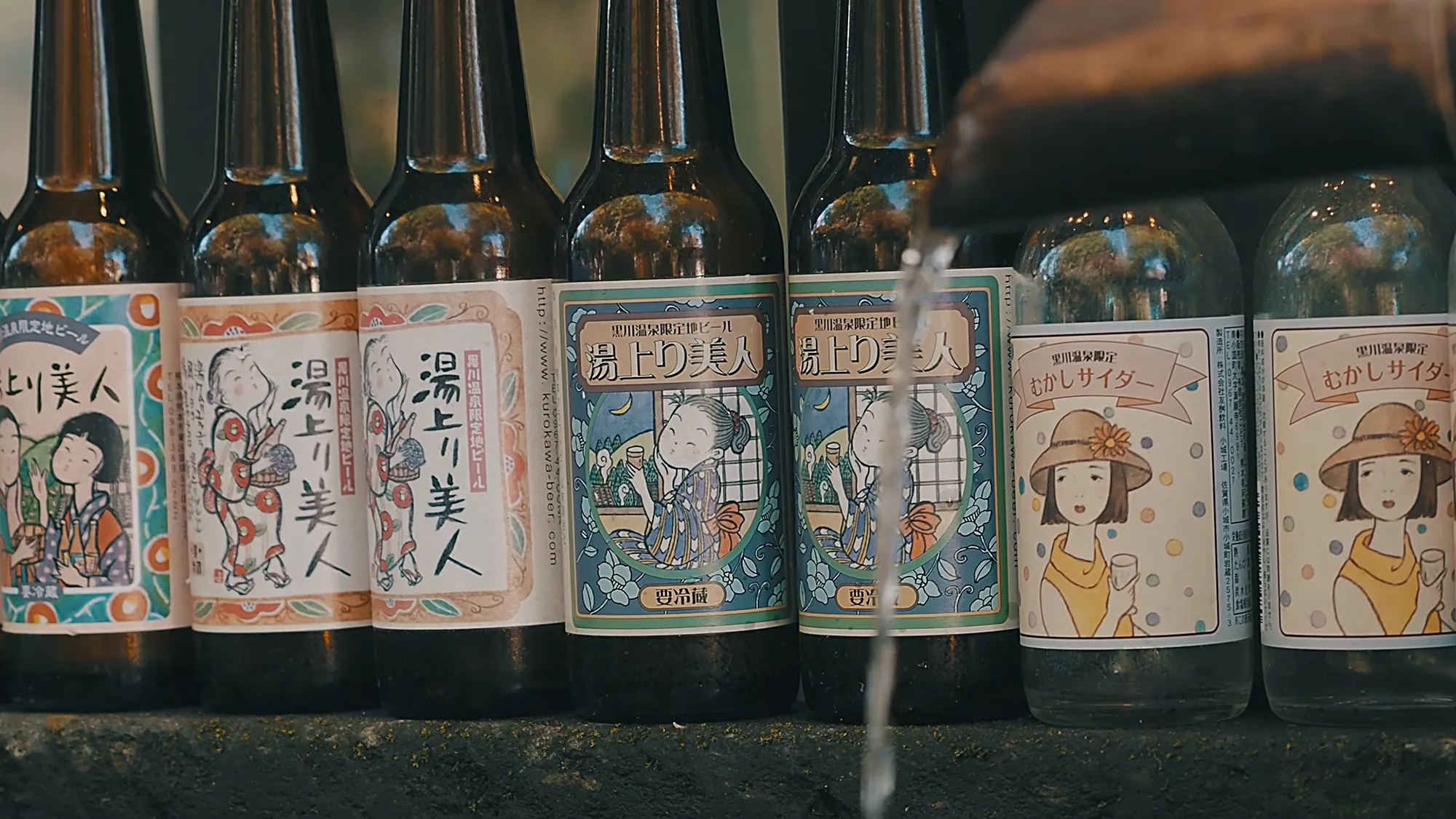
A stamp also buys something from the shops. Most people use all three on baths.
The roster of places that take a stamp is its own small tour of the village's makers. Among them the association lists honey soft-serve at Sugi Yohoen, dango at the tofu shop Kissho, a rich Jersey-milk soft-serve at Yama no Ibuki, a highball at the izakaya Irori-ya, and a branded hand towel at Shinmeikan, with more besides across roughly nineteen shops and inns in all. The redeemable item and the opening hours are set by each shop, so the daily board at Kaze-no-ya, or the association's own list, is the way to see what is available on the day.
There is a quiet logic to this worth noticing. A pass that could only buy baths would send every holder to the same two dozen doors; a pass that also buys a soft-serve or a cup of sake spreads a little of each visitor's spending across the shopkeepers who keep the lanes alive. It is the same instinct as the shared baths themselves, that no single business in Kurokawa does well unless the street does.
If you are travelling with someone who does not bathe, or with children who tire of onsen faster than you do, the food stamp turns the tegata from a bathers-only ticket into something the whole party can spend.
The green sticker, shop by shop
The association publishes the full roster of businesses where the tegata's food-and-souvenir sticker can be spent, together with what each one offers and when. It deserves reprinting in full, because the list is a better portrait of the village's small economy than any essay: nineteen shops and inns, from a beekeeper's soft-serve to a potter's shelf, each having decided what one wooden stamp is worth at their counter.
Where | What the sticker buys | Hours |
Sugi Yohoen 杉養蜂園 | Honey soft-serve ice cream | 9:15–17:30, open year-round |
Au Pan & Coffee | Donut (brown sugar or cinnamon) or a KUROKAWA ONSEN BLEND drip-coffee bag | 9:00–16:00, closed Thu and Fri |
Hidamari no Ie 陽だまりの家 | Chocolate-banana smoothie, or tacos (2 pieces) | 10:00–16:00, irregular holidays |
Miyagedokoro Machiya みやげ処町屋 | Grilled-leek miso or charbroiled-garlic miso, 100 g (3.5 oz) | 9:00–18:00, closed Wed |
Tsukemonoya no Otsukemono つけものやのおつけもの | Tsukudani preserve, one of eleven varieties | 9:00–18:00, closed Wed |
Sake no Yado 酒の宿 | Hotarumaru cider and Kumamon cider | 9:00–18:00, closed Wed, may close early |
Tofu Kissho とうふ吉祥 | Two dango skewers with tea, or soft-serve with one skewer | 10:00–17:00, irregular holidays |
Yama no Ibuki 山のいぶき | Jersey-milk soft-serve (black-tea blend, milk, or black tea) | 9:00–17:00, closed Wed and Thu |
Irori-ya いろり家 | A highball | 18:00–22:30, closed Wed |
Igozaka Toan いご坂陶庵 | A ceramic cup or small appetizer dish, your choice | 9:30–12:00, irregular holidays |
Waroku-ya わろく屋 | A small draft beer, takeaway | 11:00–16:00, closed Thu |
Kurokawa-do 湯旅屋 黒川堂 | A yu-mikuji water-revealed fortune slip plus two bath-powder packets | 9:30–12:00 and 13:00–17:30, no fixed closing day |
Rekishi no Yado Okyakuya 歴史の宿 御客屋 | A small draft beer or a hot coffee | 8:30–20:00 |
Shinmeikan 新明館 | An original face towel with the inn's mark | During bathing hours |
Sato no Yu Waraku 里の湯 和らく | An original black-cat towel | During bathing hours |
Yamamizuki 山みず木 | Inoya blend coffee, iced or hot | 10:00–15:00, during bathing hours |
Ikoi Ryokan いこい旅館 | Kumamon cider with an onsen egg | 8:30–21:00, during bathing hours |
Ryokan Sanga 旅館 山河 | A seasonal fruit squash from house-made syrup | 11:00–15:00 and 17:00–21:00 |
Ryokan Wakaba 旅館 わかば | An original towel | 8:30–21:00, during bathing hours |
Each shop sets its own item and its own window, and the offerings change from time to time, so the association's tegata page and the board at Kaze-no-ya are the versions of record on the day. But the shape of the list is stable, and it tells you something the price alone does not: a single sticker is honoured equally by a ninety-second soft-serve stop and by the inn that started the village's revival, which is the one-ryokan idea working at the scale of a snack.
The sticker roster, read as a menu
The full nineteen-door redemption table above rewards a second, strategic read, because the items sort into tiers that suit different days. The refreshment tier is the biggest: four soft-serves, honey, Jersey two ways, soy milk, plus dango, shiratama, a smoothie, tacos and two draft beers, the natural conversions for a hot afternoon or a flagging third wind.
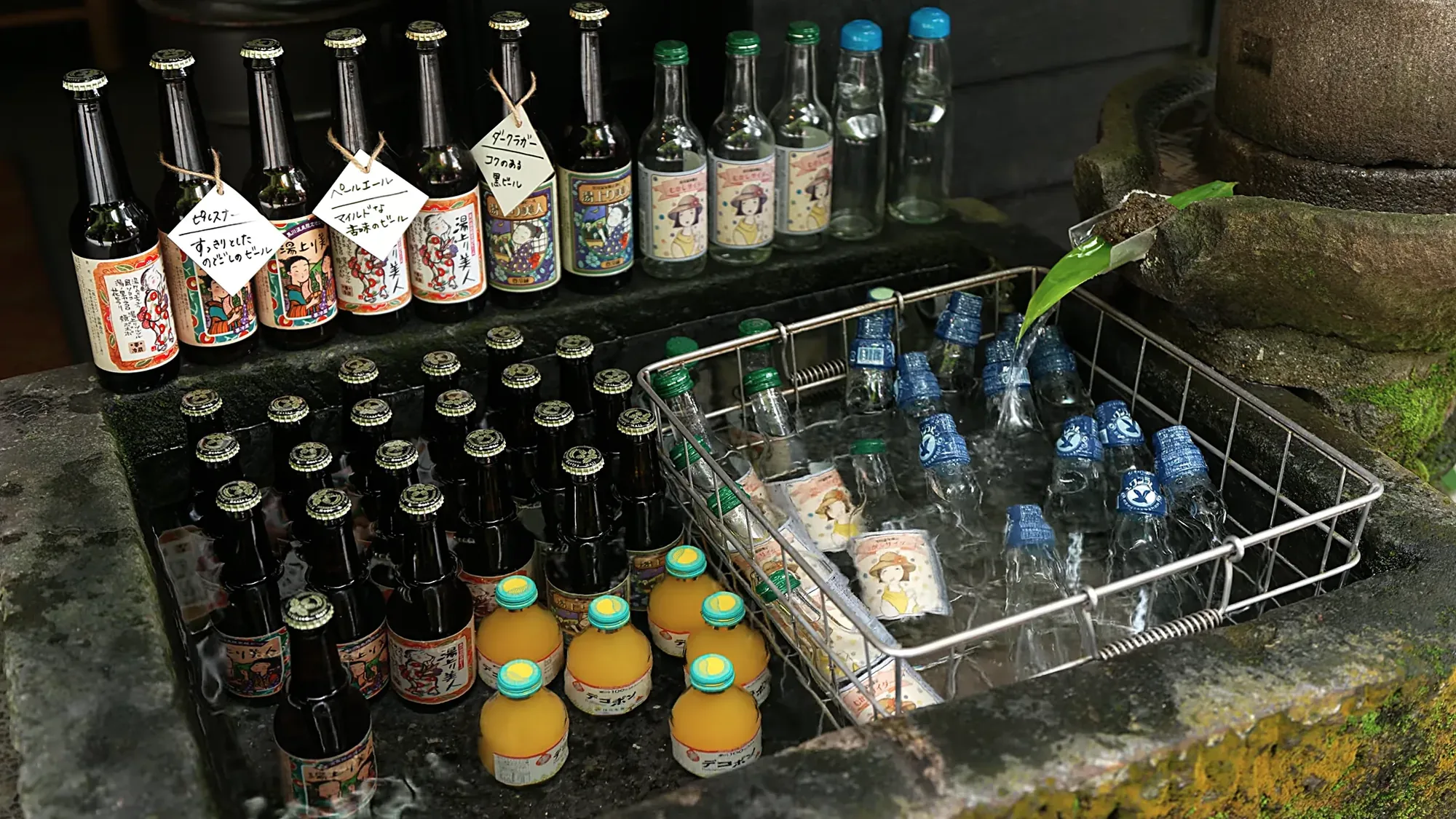
A stamp buys this too, if you would rather drink than bathe a third time.
The keepsake tier trades the sticker for objects: original towels at three inns, a ceramic cup or dish at the kiln shop, a fortune slip with bath powders at the outfitter, items that outlast the trip and pair naturally with a finished disc. The provisions tier converts the sticker into the suitcase: miso, tsukudani, cider, the pantry souvenirs.
And the evening tier is small but real, the highball at Irori-ya from 18:00 and the pours at Okyakuya until 20:00, the only sticker spending that survives past the baths' turn to their house guests. The strategic read: decide which tier your third sticker belongs to before the day starts, because the tiers keep different hours.
A morning-heavy plan suits the keepsakes, whose counters close earliest, the kiln shop by noon; an afternoon plan suits the refreshments, open through the soft-serve hours; and only overnight guests should bank on the evening tier at all. One sticker, nineteen doors, four tiers, one decision, which is exactly the kind of small, pleasant problem a holiday should consist of.
Reading the hours: how to spend the sticker well
A little scheduling turns the food stamp from an afterthought into the best part of the afternoon. The list divides into three rhythms.
The morning-and-midday shops close earliest. Igozaka Toan takes stickers only until noon, and Kurokawa-do splits its day around a lunch break, so if a hand-picked ceramic cup or a fortune slip that reveals itself in the bath water is the souvenir you want, spend that sticker before your second soak, not after your third. The daytime food shops, from the tofu maker to the Jersey soft-serve, run until 16:00 or 17:00, which matches the natural gap between baths.
And a small evening tier exists for overnight guests: Irori-ya's highball begins at 18:00, after the day-trippers have gone, and Okyakuya pours until 20:00, which makes the sticker one of the few tegata benefits that survives into the lantern hours.
Notice, too, the inns on the list. Five ryokan honour the sticker during their bathing hours, mostly with towels, coffee or an onsen egg, so a two-bath day can end with the third stamp spent at the same front desk that took your first. The stamp-for-a-towel trade at Shinmeikan or Wakaba has a quiet advantage over the edible options: it comes home. Between the personalised bath stamps on the front of the disc and a village towel earned with the back, the tegata's souvenir logic completes itself without a single extra purchase.
One caution keeps the plan honest. These windows are each shop's own published hours, and villages of this size close irregularly, for weather, for a funeral, for a delivery that did not come. The stamp never expires faster than the pass does, so if a door is shut, the sticker keeps. Six months is long enough to forgive any closed Wednesday.
Is the tegata worth it?
For anyone planning two baths or more, almost certainly. The pass is ¥1,500, and paying at the door instead runs an approximate ¥500 to ¥800 a bath, a range that comes from visitor reports rather than a source we can stand behind, so treat it as a rough guide and confirm at each inn . On those numbers a third bath is roughly where the pass overtakes per-door entry, but we would rather not lean hard on a figure we cannot yet source, and the saving was never the real reason to buy one.
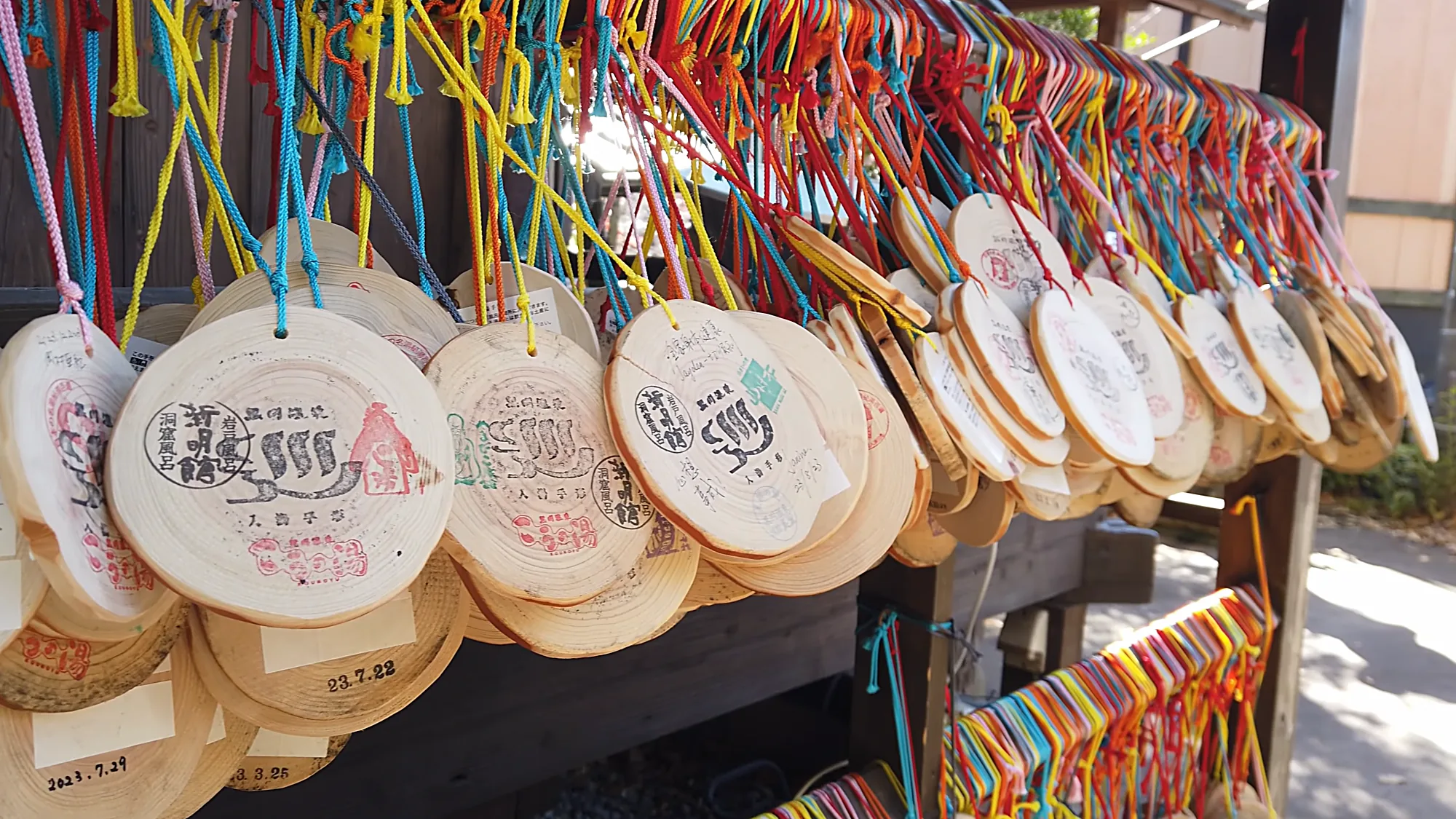
Spent passes, hung at the office. Each one is three baths.
The honest case for the tegata is permission. It converts a village of private inns into a single public landscape you are free to wander, and an afternoon spent following it from one inn's water to another's, yukata against the steam, is the whole argument for coming to Kurokawa rather than somewhere easier to reach.
The travellers who can skip it are the two who came for one specific inn's own baths and mean to stay in them, and anyone on so tight a half-day that a single well-chosen bath is all there is time for. Everyone else should buy the disc.
The four ways into Kurokawa's water, priced
The tegata is the famous route into the village's baths, but the record prices four routes, and knowing all four makes the pass's value concrete. Route one, the tegata: ¥1,500 (US\$10) for three baths, or two baths and a sticker item, the default for any visitor taking more than one soak.
Route two, single entry at the door: a visitor-reported ¥500 to ¥800 (US\$3 to \$5) per bath that we still cannot pin to a primary, with one fully sourced data point, Yamamizuki's ¥600 (US\$4) day window from 10:00 to 15:00, sitting exactly inside that band. On those numbers the pass overtakes door prices at the third bath and roughly matches them at the second, which is why the one-bath visitor is the only one who should skip it.
Route three, the kashikiri hour: ¥2,000 (US\$13) for fifty private minutes at the documented example, a different product entirely, privacy rather than variety, and the route the association itself suggests when shared bathing does not fit. Route four, the staying guest's key: free run of your own inn's baths, morning and night, included in the room rate, which for a guest at eight-bath Fumoto or thirteen-bath Ikoi is a bathing itinerary before a single stamp is spent.
The optimal Kurokawa bathing budget, priced end to end, is therefore an overnight stay plus one tegata: roughly ¥1,500 above the room buys the village-wide layer on top of the inn's own, and every route above it, the second disc, the private hour, the extra door fees, is elective depth rather than necessity.
Three boundary questions, answered plainly
Does the tegata work at Jizo-yu and Ana-yu? No. The two public bathhouses at the village centre are kyodo-yokujo, the town's communal baths tied to the founding legend, outside the association's twenty-five-bath scheme; they run on their own modest terms, coins rather than stickers.
Does it work in the other hamlets? No again: the scheme is the Kurokawa association's, covering its member inns' rotenburo, and the wider five-hamlet spa area, Tanohara, Manganji, Oda and Shirakawa, bathes on its own local arrangements. Treat the disc as the village's key, not the valley's.
Can I buy tomorrow's pass today? The validity clock runs six months from purchase, and the association sells at every member inn and at Kaze-no-ya daily, so there is no advantage to advance purchase and no published mechanism for it; buy on arrival, first bath within the hour. The one purchase-timing rule that matters is per-person presence, a disc for each bather, children included, bought where the party actually is.
The pass, answered in one passage for the second-time reader
For the reader who has absorbed everything above and wants the operating summary: the nyuto tegata is a ¥1,500 (US\$10) cedar disc, ¥700 (US\$4.70) for children aged three to twelve, sold at Kaze-no-ya and every member inn, carrying three stickers valid six months, each redeemable at one of twenty-five open-air baths or, for one of the three, at nineteen food and souvenir counters.
Bathing runs 8:30 to 21:00 with per-inn variation, the daily board says which doors are open, one disc serves one person, photography stays out of the baths, and one percent of the price funds the landscape you bathe in. Spend the stamps for contrast, read the board before walking, keep the disc, and come back for the stickers you did not use.
Is the tegata accessible, and what should you bring?
A few practicalities save trouble. Bring a small towel, because many of the tegata baths are rustic rotenburo that do not supply one and buying or renting at each door adds up over three baths. Bring cash. Remember that the pass is one per person and cannot be shared, so everyone in your party needs their own, children included at the ¥700 rate. And keep phones and cameras away from the water, since photography in the baths is not allowed.
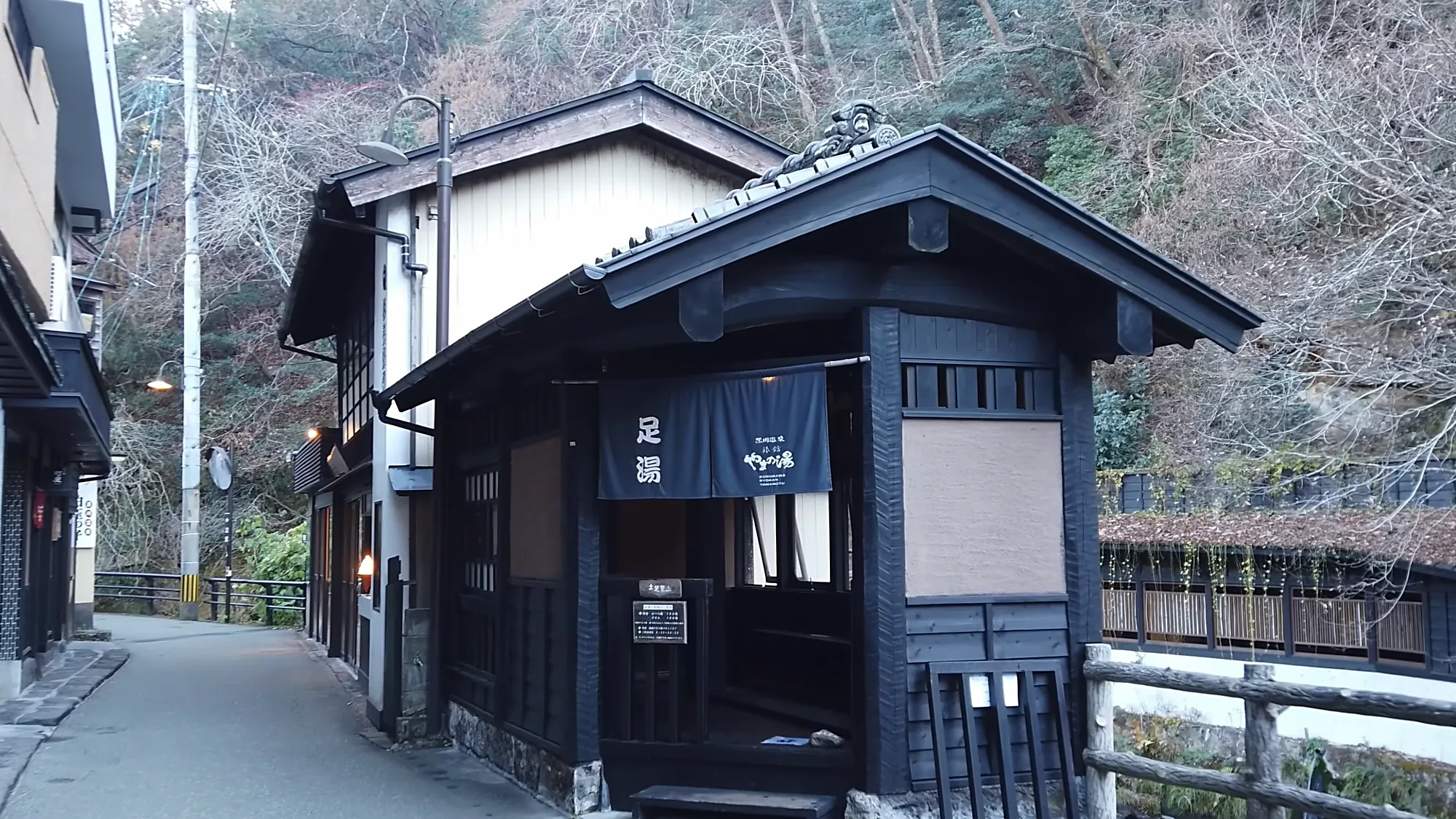
The footbaths cost nothing and need no pass.
Accessibility is harder to answer in the round, because the baths differ so much. Many are reached by stone steps down to a riverbank, and a genuinely rustic rotenburo is not built for step-free access, so a traveller with mobility needs is best served by choosing baths deliberately rather than hopping at random.
The association's own FAQ is the place to start: it fields questions on matters like wheelchair loan, luggage storage and umbrella loan, though the specific arrangements sit behind its enquiry process rather than a printed list, so we point you there rather than state answers we cannot yet source . If one inn's bath matters to you, a short message to the association or the inn before you travel is the surest way to know what is possible.
Frequently asked questions
How much is the Kurokawa Onsen tegata pass?
How long is the tegata valid?
Can day trippers use the tegata?
Do all Kurokawa ryokan accept the tegata?
What happens to the tegata when it is used up?

Verified by The Japan Onsen Society
Show all sources
Verified July 7 to 16 and September 6, 2026 by The Japan Onsen Society.
Tegata price, validity, hours, the one-per-person rule, the two-baths-plus-one option, the 1% conservation share, the 1986 origin and 40th anniversary, per-inn stamp designs and the redemption-shop list → 黒川温泉観光旅館協同組合 (Kurokawa Onsen Ryokan Co-operative Association) → https://www.kurokawaonsen.or.jp/tegata/ → verified in a rendered browser Sep 6, 2026 (K1)
Per-inn bath detail: Fumoto's 1.5 m standing bath and eight baths, Yamabiko's largest rotenburo, Okunoyu's ~2,000 tsubo, Kurokawa-sō's folding-screen rock, Ikoi's thirteen baths and sole Secret-Springs listing → 日本温泉協会 (Japan Spa Association) spring-area record → https://www.spa.or.jp/search_p/detail_p/?F_ID=430260&pg=0 → verified Sep 6, 2026 (K9)
The shared-bath scheme, 25 baths across 30 member inns, and the founding-legend context → 黒川温泉観光旅館協同組合 → https://www.kurokawaonsen.or.jp/about/ → verified Sep 6, 2026 (K2)
Currency: USD figures use ¥150 = US$1 as of Sep 6, 2026, rounded for planning.
A note on what we could not confirm: the beauty-bath (Bijin-yu) billing often attached to Ikoi is not described in the association's own listing, so we flag it rather than assert it; and an older national designation profile still prints the tegata at ¥1,200, superseded by the association's own ¥1,500, which is the figure we follow.
黒川温泉観光旅館協同組合 入湯手形 (Kurokawa Onsen Ryokan Co-operative Association, tegata page) - the full 19-business sticker-redemption roster with items and hours, the child price and age band, one-per-person rule, and the daily bathing-availability pointer, verified August 18 and September 6, 2026
黒川温泉観光旅館協同組合 お店一覧 (shop and restaurant directory) - cross-reference for the sticker-accepting shops' self-descriptions and phone numbers, verified September 6, 2026
黒川温泉観光旅館協同組合 天気・交通情報 (live weather and traffic page) - the morning-of status check; perishable by design, cited as a pointer rather than for any fixed fact
日本温泉協会 温泉地詳細[黒川] (Japan Spa Association, spring-area record) - the nine documented stamp targets: the cave, Senninburo, tachiyu, Byobu-iwa, Misato, Ichinoi, Okunoyu's grounds, verified July 7 and September 6, 2026
山みず木 温泉 (Yamamizuki, spa page) - the named riverside pair, the ¥600 day window and the ¥2,000 kashikiri hour in the four-routes pricing, verified August 18, 2026
日本温泉協会 国民保養温泉地 南小国温泉郷 (designation profile) - Jizo-yu and Ana-yu as communal bathhouses outside the scheme, and the five-hamlet boundary, verified September 6, 2026
Related guides
The Baths
The waters
Kurokawa has no single water. Each inn owns its source, so bath-hopping is chemistry-hopping — sulphur, chloride and bicarbonate within one lane.
The Baths
The Best Open-Air Baths (Rotenburo)
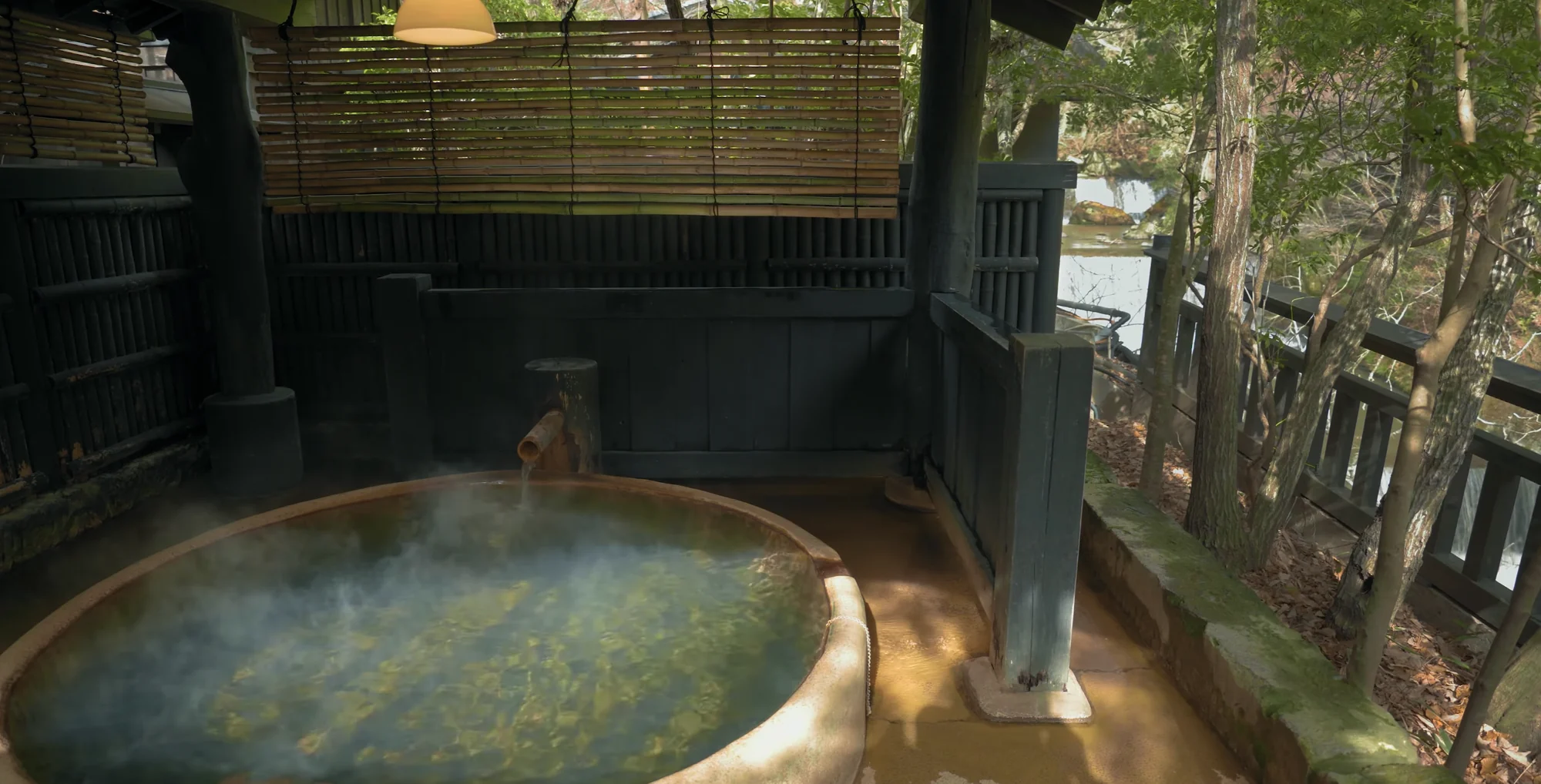
The tegata buys three of twenty-five open-air baths. Choose for contrast — a river, a cave, a pond — not three of the same.

The Baths
Kurokawa Onsen: The Complete Guide
A wooden pass buys three baths from twenty-five. The innkeepers agreed, decades ago, to look like this.