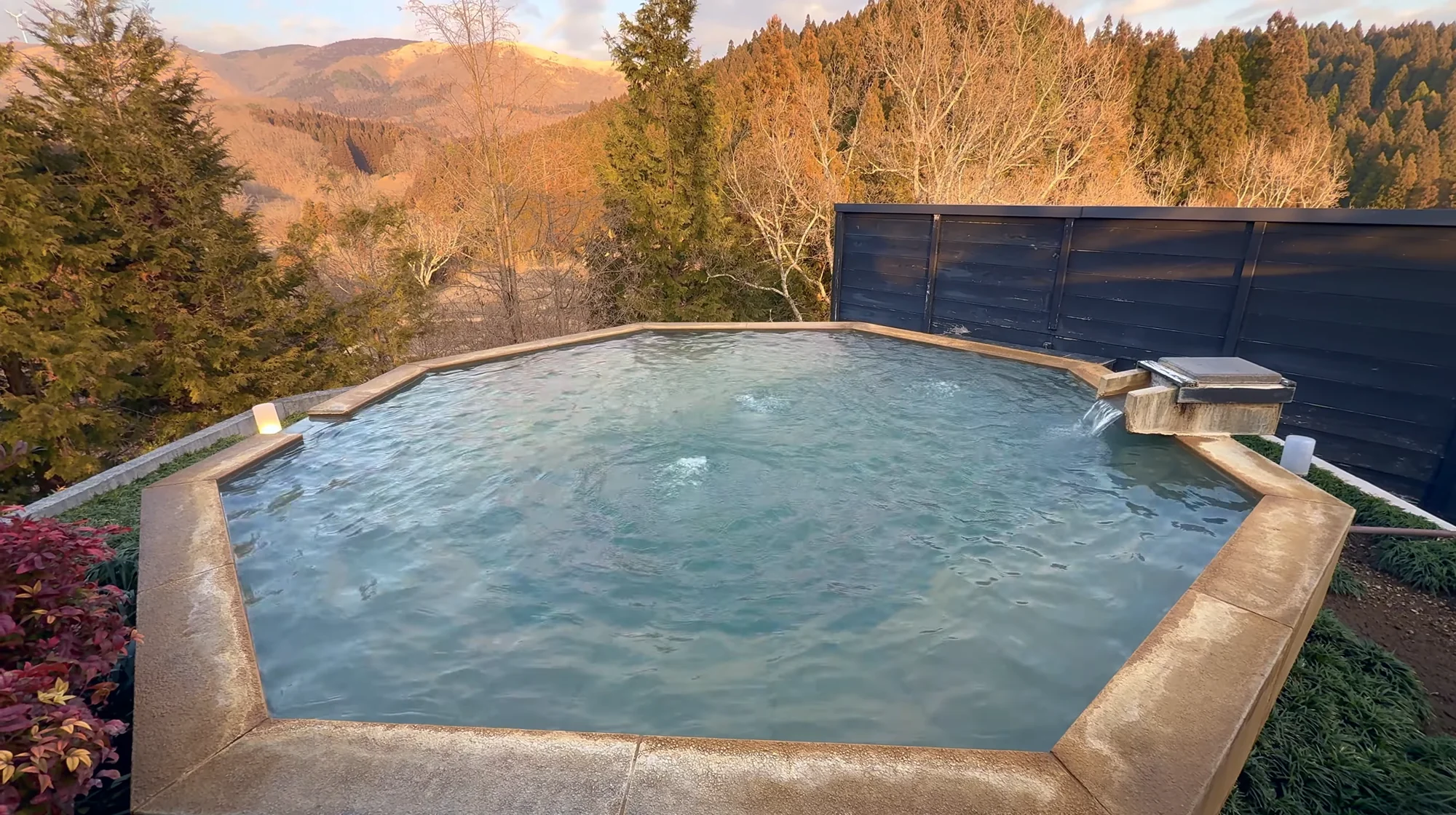
The colour, mapped
Altitude sequences the season, and the association is explicit that the village's colour runs late October to mid-November, weeks behind the lowland front because Kurokawa sits near 700 m (2,300 ft). September belongs to late green and grasses silvering on the caldera rim, the quiet prelude and a fine month for crowd-averse bathers.
October turns the high country — the Kujū flanks, the Senomoto highlands, the Yamanami Highway's roadside theatre — making it the driver's month while the village itself stays mostly green below. Early-to-mid November is the main event down in the gorge: maples and mixed hardwood over the Tanoharu, red and gold hanging directly above the riverside rotenburo, the forests the 1980s revival replanted doing exactly what their planters intended. Late November then strips fast toward winter's bare branches, a brief, underrated austerity window before Yuakari's lanterns take over the aesthetics in December.
The two autumns: October's high country, November's gorge
Autumn arrives in this landscape twice, at two altitudes, and treating the season as one event is the planning error behind most disappointed foliage trips. The first autumn belongs to the high country: through October the grasslands and ridgelines above the village turn ahead of the valley, the caldera's pampas grass stands at silver full height, and the Yamanami Highway runs through colour while the lanes below are still holding late green.
October in Kurokawa is therefore the driver's and walker's month, its centrepiece the road and the grassland rather than the village itself, with Senomoto, listed first among Kumamoto's hundred green landscapes, doing its best work in the slanting light. The second autumn is the one on the postcards: by the association's own calendar the gorge colours run from late October to mid-November, when the maples over the river reach the riverside baths and the village finally wears the season at home.
The practical consequences are two. A trip that can only come in early October should structure itself around the heights and treat any valley colour as a bonus; a trip aimed at the village's own peak aims for early-to-mid November and books accordingly.
And a trip with the luxury of choosing should notice that the two autumns barely overlap, which means the perfect version is a season-spanning pair of visits, or failing that, the single week where they hand over, around the turn of the month, when the high country is finishing and the gorge beginning, and one rental car can drive from the last of one into the first of the other in an afternoon.
The forest that colours is a made thing
The single best fact about a Kurokawa autumn is that the forests colouring above the baths were planted on purpose. The modern village began from failure: the 1964 Yamanami Highway brought a boom that faded, and in the lean years the third-generation owner of 新明館 dug a cave bath by hand, aged twenty-four, with a chisel, over about three and a half years — the inn's history records the feat without naming him, and neither do we.
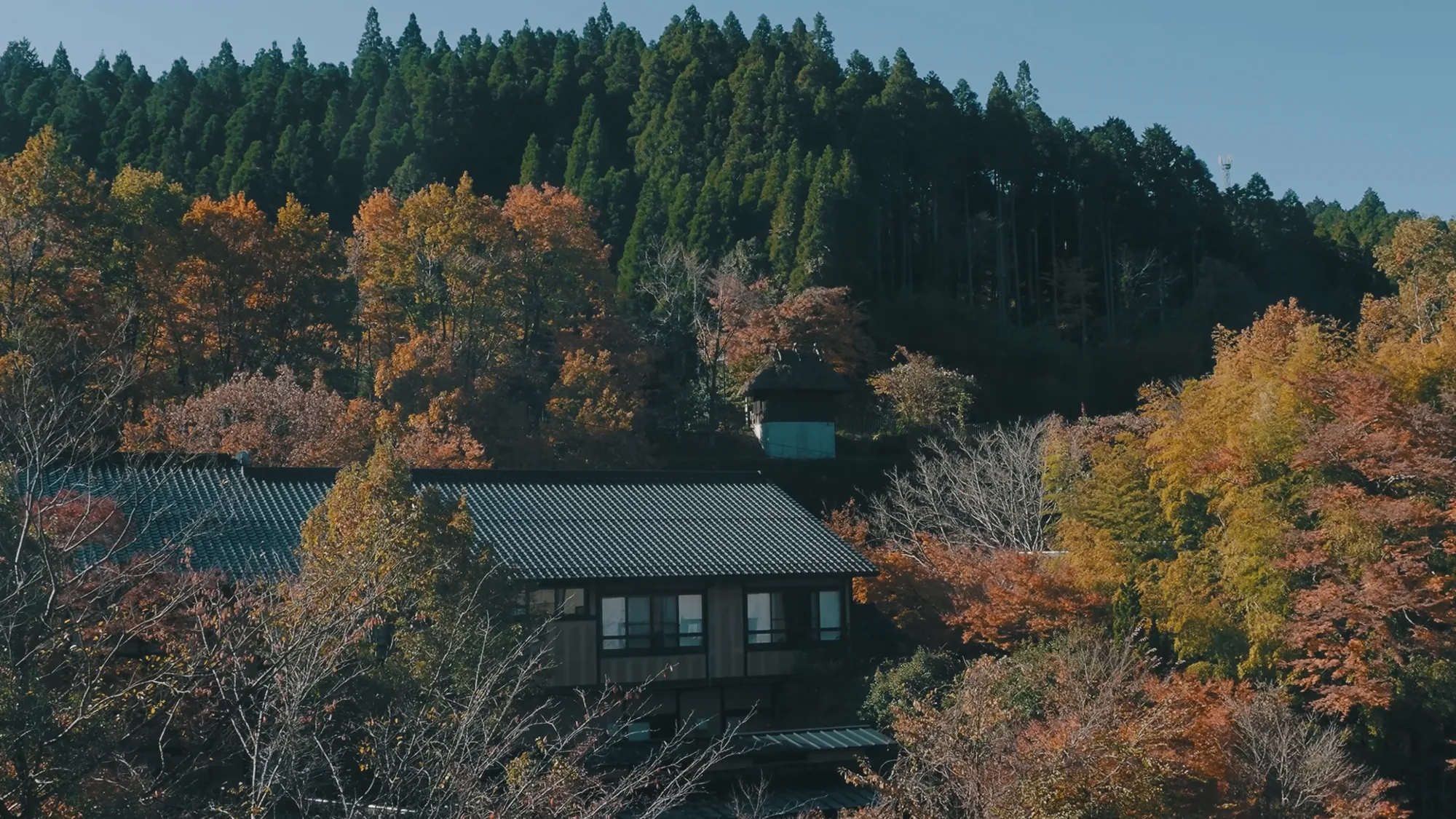
None of this colour is accidental. The trees were planted to do exactly this.
From the 1980s the innkeepers took roughly two hundred signs down off the lanes together, enforced natural materials, and replanted the valley over three decades — the very hardwoods that now turn red and gold over the Tanoharu — working to the founder's philosophy, 「あるがままの自然」, "nature as it is." The slogan became 黒川温泉一旅館, "the whole village, one inn." November's most photographed scene is, precisely, a curated landscape doing what its planters intended.
The caldera's own autumn
The village gorge peaks in November, but the high country turns first, which makes October the driver's autumn. The Japan Spa Association's profile names the sights: the caldera-rim panorama at Daikanbō, the walk-behind curtain of Nabegataki, and 瀬ノ本高原 (Senomoto highland), ranked first among Kumamoto's hundred green landscapes, with the 九重連山 (Kujū range) colouring on its flanks.
Further out lie 七滝 (Nanataki) and 夫婦滝 (Meotodaki) falls, the 清流の森 forest with its 雀の地獄 rock formations, and the ペトログラフ押戸石 (Oshitoishi petroglyph stones). Two neighbouring hamlets reward an autumn detour: 田の原温泉 has been a 湯治場 — a cure resort — for some three hundred years, and at 満願寺温泉 you bathe in the river itself, beside the thirteenth-century temple 満願寺. Route in via the Yamanami Highway in late October for the high-country preview while the village below stays green.
The wider district in colour
Kurokawa is the best-known name in a five-hamlet district, and autumn's clear high country makes the rest of it worth a drive. The 南小国温泉郷 counts fifty-three lodgings and roughly 2,300 beds across those hamlets — a figure often misquoted as Kurokawa's own.
Each carries its own water, per the Japan Spa Association: 田の原, 満願寺 and 小田 are bicarbonate; 白川 is sulphur. Two reward an autumn detour: 田の原温泉 has been a 湯治場 — a cure resort — for some three hundred years, and at 満願寺温泉 you bathe in the river itself, in a stone-enclosed open-air bath on the bank of the 志津川 beside the thirteenth-century temple 満願寺; the stream holds オキチモズク, a protected natural monument.
Neither is on the Kurokawa tegata, and both are the quiet counterpoint to a full foliage-weekend village. In a November when the village's own beds are booked months out, the surrounding hamlets are also where a late plan can still find a room within reach of the colour, if not inside the gorge itself.
The colour drives, in order
For drivers, autumn is a sequence rather than a place, and the sourced landmarks put it in order. Late October belongs to the high country: the Yamanami Highway's crossing of the Senomoto highland, the grassland ranked first among Kumamoto's hundred green landscapes, going gold as the grasses cure, with the Kuju range's ridgelines colouring behind it.
Early November hands the show to the village gorge itself, and the drive shrinks to the ten minutes of valley road around Kurokawa, best taken slowly at the day's edges. And through the season one dated, sourced curiosity waits for a detour: the cosmos garden in the wider valley blooms in autumn and only in autumn, a hillside of pink over the fields that is a bare paddock the rest of the year, which is why we warn against it in every other season and point to it in this one.
The honest sequencing advice is to match your route to your week: an October trip should arrive via the highlands and let the village be green, while a November trip should skip nothing, because the gorge is the destination and the highland gold is already going over.
Bathing under the trees
November bathing is the year's most complete: air cold enough for real contrast, water framed by colour, and the riverside register — Yamamizuki's woods, the gorge-side pools — at maximum setting-value per tegata stamp. Daylight soaks jump the priority order this one season: take the famous outdoor baths in mid-morning or mid-afternoon light and leave the enclosed and night bathing for after dark, inverting the summer rule.
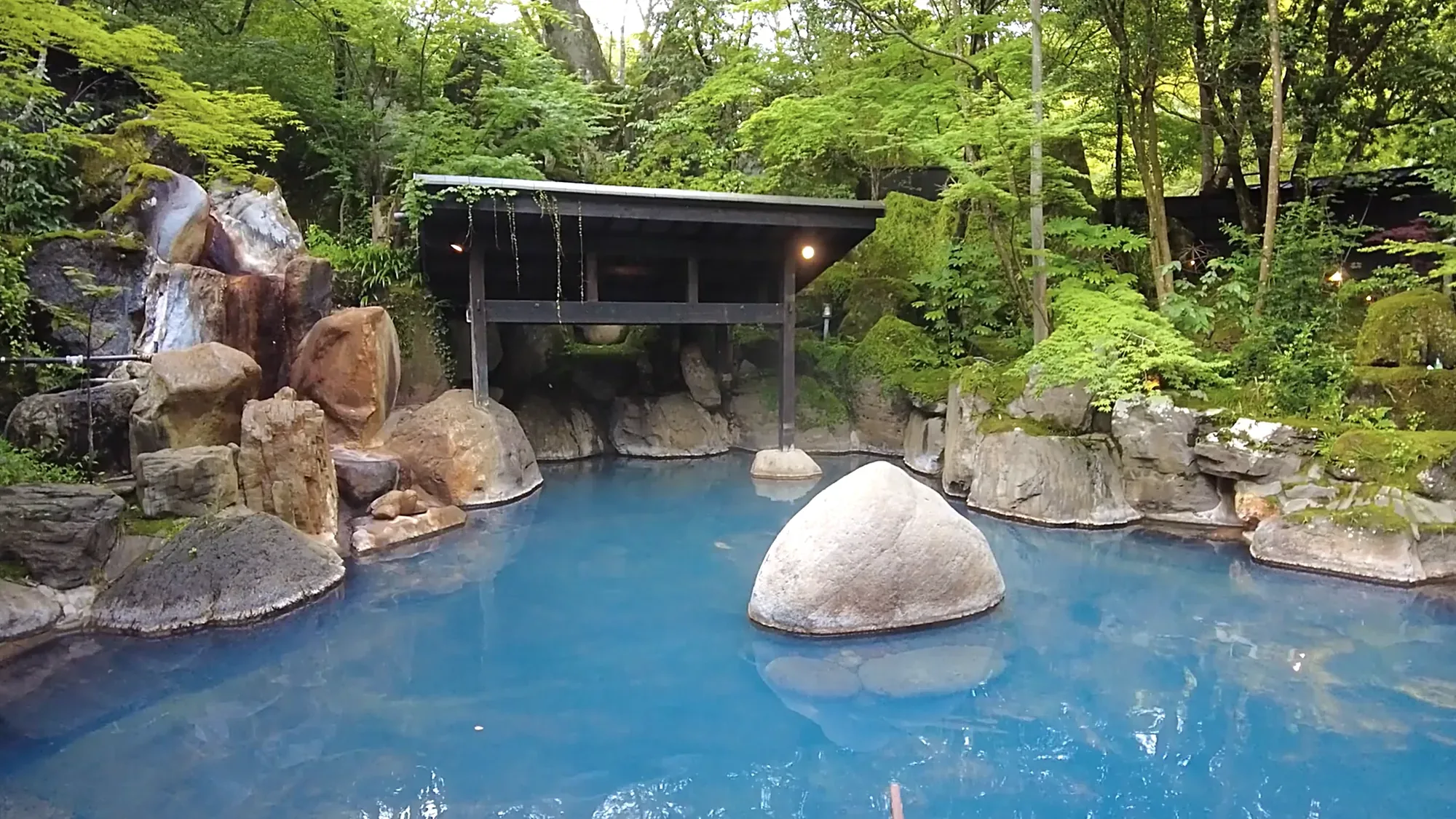
The open-air baths sit under the same canopy. That is the whole argument for October.
Dawn adds mist over the river as the temperature drops, autumn's quiet answer to winter steam. As always, the camera stays out of the baths themselves; the colour photographs from the bridges and lanes, not the pools.
Which baths hold the colour
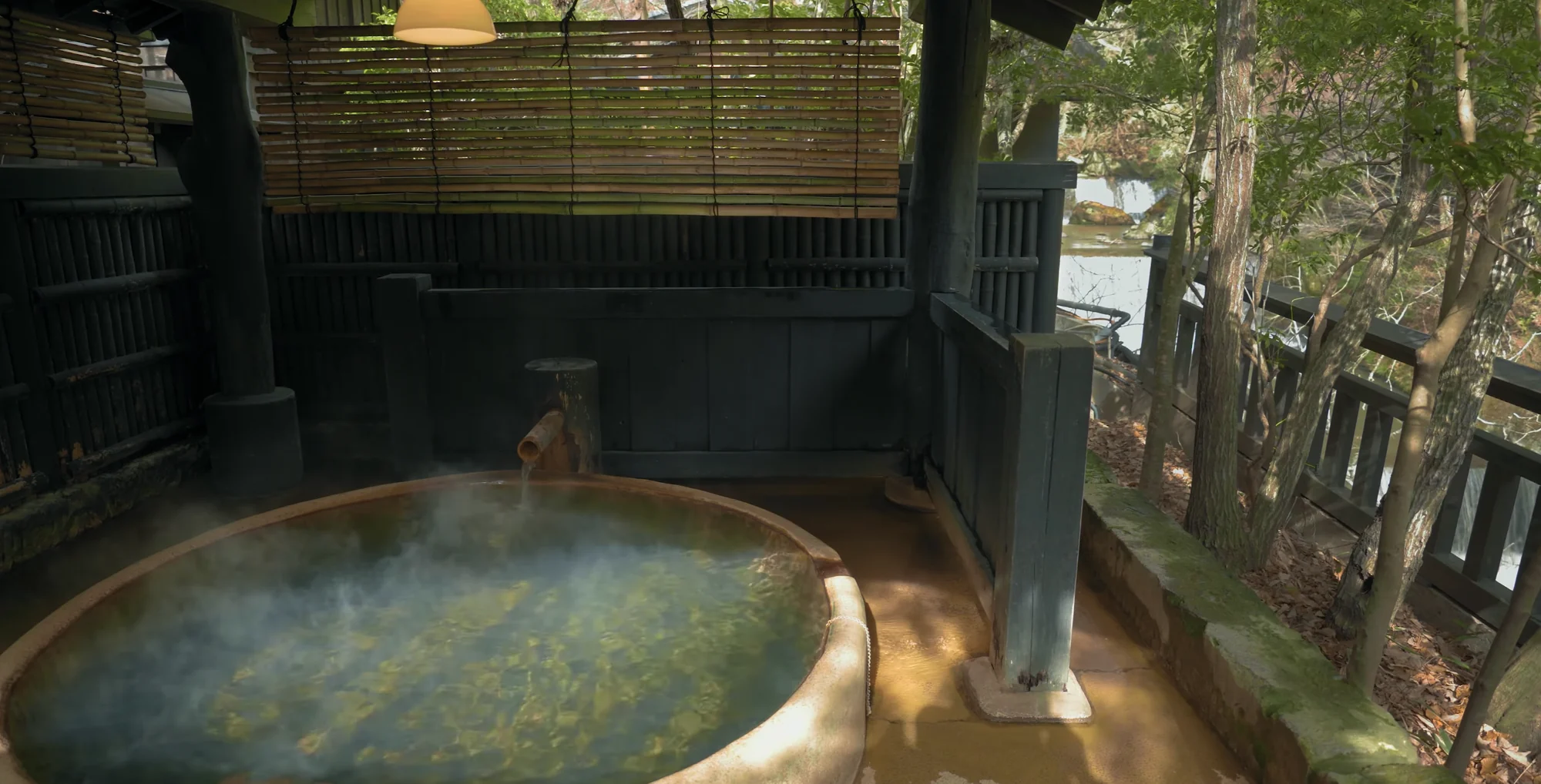
The riverside baths gain the most in November, and the association's own descriptions point the way. 山みず木 (Yamamizuki) is a single quiet inn built along the mountain stream — the finest riverside setting, and never better than under red maples. 旅館奥の湯 (Okunoyu) sits in roughly 2,000 tsubo of grounds. やまびこ旅館 (Yamabiko) has the village's largest open-air Senninburo.
For contrast on a cold morning, 新明館 (Shinmeikan) holds the hand-dug cave bath and ふもと旅館 (Fumoto) a 1.5 m standing bath (立湯) among its eight baths. いこい旅館 (Ikoi) is the only Kurokawa inn on the 日本の名湯秘湯百選 list, with thirteen baths, and 和風旅館美里 (Misato) the only inn whose sulphur water changes colour.
Take the famous outdoor baths in daylight this one season and leave the enclosed and night bathing for after dark, inverting the summer rule — and keep the camera out of the baths themselves; the colour photographs from the bridges, not the pools.
The water under the leaves
The autumn colour hangs over water that is worth understanding, because Kurokawa has no single spring type — each ryokan owns its own source. Per the Japan Spa Association's designation profile, the five hamlets of the 郷 do not share a water: Kurokawa proper is 単純温泉 (simple) and 塩化物泉 (chloride); Tanoharu, Manganji and Oda are 炭酸水素塩泉 (bicarbonate); Shirakawa is 硫黄泉 (sulphur); the area record lists four families in all.
A piece of honesty the association volunteers: nearly every inn is genuinely free-flowing from source (源泉かけ流し), but because the source runs hot, many add water (加水) to reach temperature — which, it says, does not change the mineral content or the designated effects.
The official 適応症 (indications) and 禁忌症 (contraindications) 日本温泉協会 publishes by spring type — sulphur for chronic eczema, chloride for cold sensitivity, simple springs for insomnia, with contraindications for acute febrile illness and serious heart, lung or kidney disease — are official designations, not medical advice; consult a physician for any condition.
The waters' official register, in full
Because autumn's daylight baths invite longer soaks, the official register is worth stating fully. The Japan Spa Association publishes 適応症 (indications) and 禁忌症 (contraindications) by spring type: for sulphur, atopic dermatitis, psoriasis vulgaris and chronic eczema; for chloride, cuts, poor peripheral circulation, sensitivity to cold and dry skin; for simple springs, autonomic instability, insomnia and depressive states.
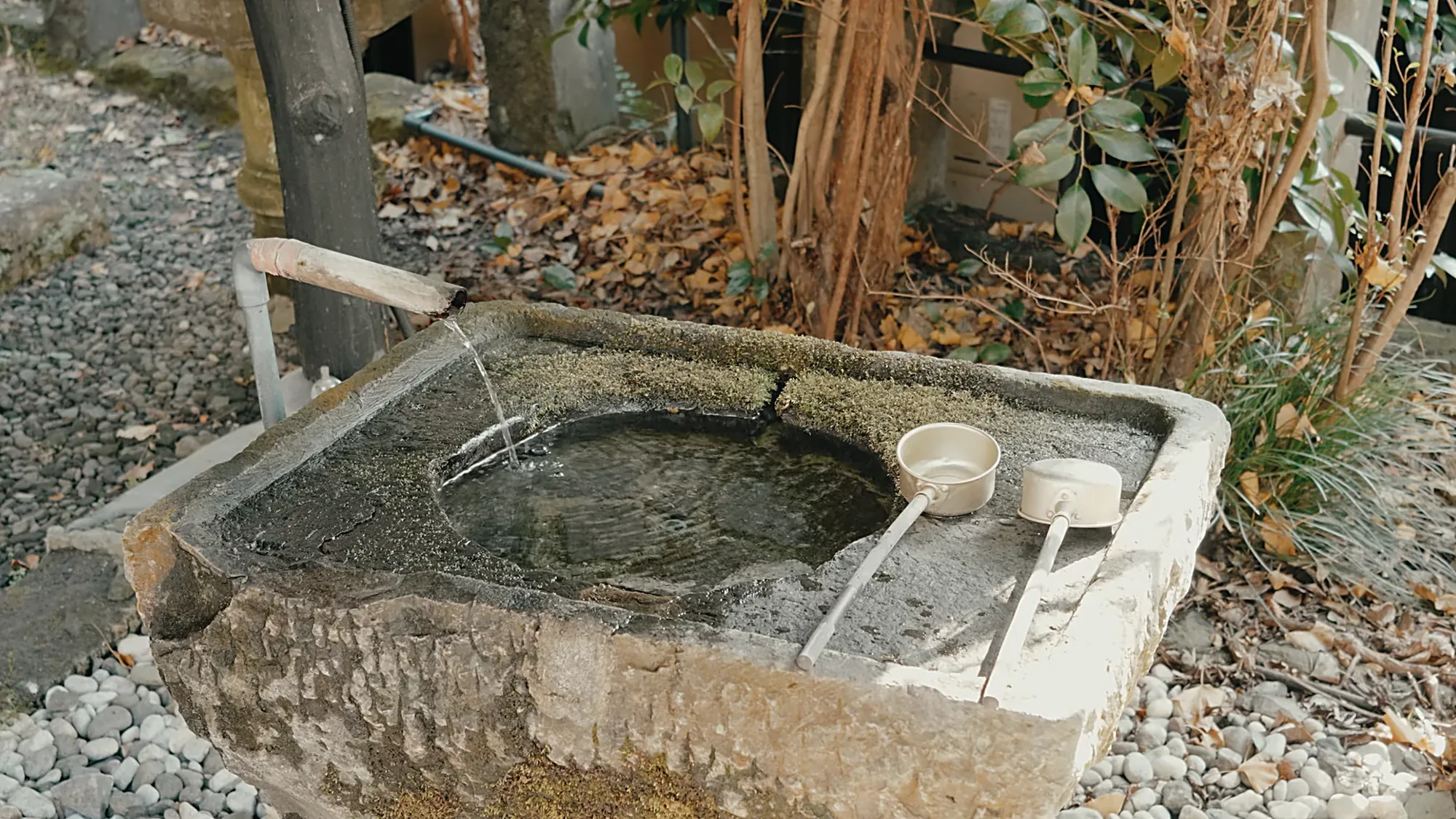
The register does not change with the leaves. The water is the constant here.
The official contraindications include acute illness with fever, active tuberculosis, advanced malignancy, severe anaemia, and serious heart, lung or kidney disease, along with the acute worsening of a chronic condition. These are the official Japanese designations for the spring type, attributed to 日本温泉協会 — not medical advice and not a treatment claim. A long, cold-air soak under red maples is a pleasure, not a therapy; anyone with a health condition should consult a physician, and the register is offered as transparency.
Mixed and private baths, and the tattoo question
Autumn's daylight-bathing priority makes the private baths useful for a coloured soak on your own schedule. Most inns rent kashikiri (貸切) private baths by the hour, and 黒川荘 (Kurokawa-sō) gives its guests three private baths free with a reservation. Konyoku (混浴) mixed baths survive at several inns, entered from separate changing rooms and, at some, with women-only hours — 奥の湯 (Okunoyu), on its own site, reserves certain mixed baths for women from about 8 to 10 pm. On tattoos, the association sets no village-wide ban and publishes no inn list, routing each question to the individual inn, so we name none; a booked kashikiri bath is the reliable route, and a private riverside bath under November colour is one of the season's quiet luxuries.
The tegata, spent on colour
Autumn's daylight baths are the season's prize, and the pass is how you reach them. The 入湯手形 (nyūtō tegata) costs ¥1,500 for an adult and ¥700 for a child (about US$10 / US$4.70), confirmed on the association's own page, and carries three stickers good for any three of the twenty-five scheme baths between 8:30 and 21:00 — a window that, in November, you spend more of in daylight than any other season, to catch the colour.
It is valid six months from purchase — an unfinished pass may be used on a return visit — and is one pass per person, not shareable. The third, green sticker buys food or a souvenir at a participating shop.
Two quieter facts: one percent of all tegata sales funds landscape and conservation work in the village — including the very forests that colour each November — and each inn carries its own stamp design. Buy it at any member inn or the 風の舎 (Kaze-no-ya) house.
What a bath costs, and buying the pass
If an autumn day runs past three stamps, single-bath entry fills the gap: without the pass, a bath is widely reported at roughly ¥500 to ¥800 — a visitor-reported range we have not been able to confirm on the association's own pages, so treat it as indicative. The pass at ¥1,500 pays for itself by the third bath, and its six-month validity means an unspent November stamp is a reason to return.
Buy the tegata at your inn or the 風の舎 (Kaze-no-ya) house — no office queue — and carry cash, which still rules the small inns and shops; card acceptance is inconsistent and unpromised inn by inn. Day-use baths keep posted hours and close for cleaning, with each day's availability posted, so check the board before planning a daylight foliage soak at a specific bath.
The green sticker's redemption shops
The tegata's third — green — sticker is where the pass meets the shopping street, and autumn's short days make an afternoon stop between daylight baths natural. It is redeemable at roughly nineteen named businesses: a honey soft-serve at 杉養蜂園 (Sugi Yōhōen), a Kumamoto beekeeper seventy years in operation; dango and soy-milk soft-serve at とうふ吉祥 (Tōfu Kissho); a Jersey-milk soft-serve at 湯音 (Yune); a highball at the late-opening いろり家 (Irori-ya); a branded towel at 新明館 (Shinmeikan); ceramics at いご坂陶庵, pickles at 平野商店, sake at 酒の宿, and bathing goods at 黒川堂.
Opening hours are thin in the shop directory; the tegata page carries hours for the sticker-accepting businesses, so cross-reference the two. The pass and the lanes are one system, and a foliage afternoon is the time to use it.
An autumn visit in the tegata's fortieth year
Autumn 2026 carries a small extra reason to come: the 入湯手形 began in 1986, making 2026 its fortieth anniversary, and the association is running a fortieth-anniversary programme from July 1, 2026 to March 31, 2027 — a window that spans the whole foliage season.
The pass that turned thirty rival inns into one network, and returns one percent of every sale to the village's own landscape and conservation work — the work that keeps the very forests colouring over the baths — is the object the anniversary marks. A tegata stamped inn by inn across a foliage visit, in the pass's fortieth year, is a better record of the trip than any photograph the rules let you take of the baths.
An autumn day, planned for the light
Autumn inverts the village's usual clock, because this is the one season when daylight, not lamplight, carries the show. The plan that uses it: breakfast early and walk the lanes before ten, when low sun comes down the gorge and the bridges are empty of everyone but photographers. Spend the late morning on the season's premium stamp, a riverside rotenburo under the turned canopy, and take the second bath mid-afternoon when the light goes amber.
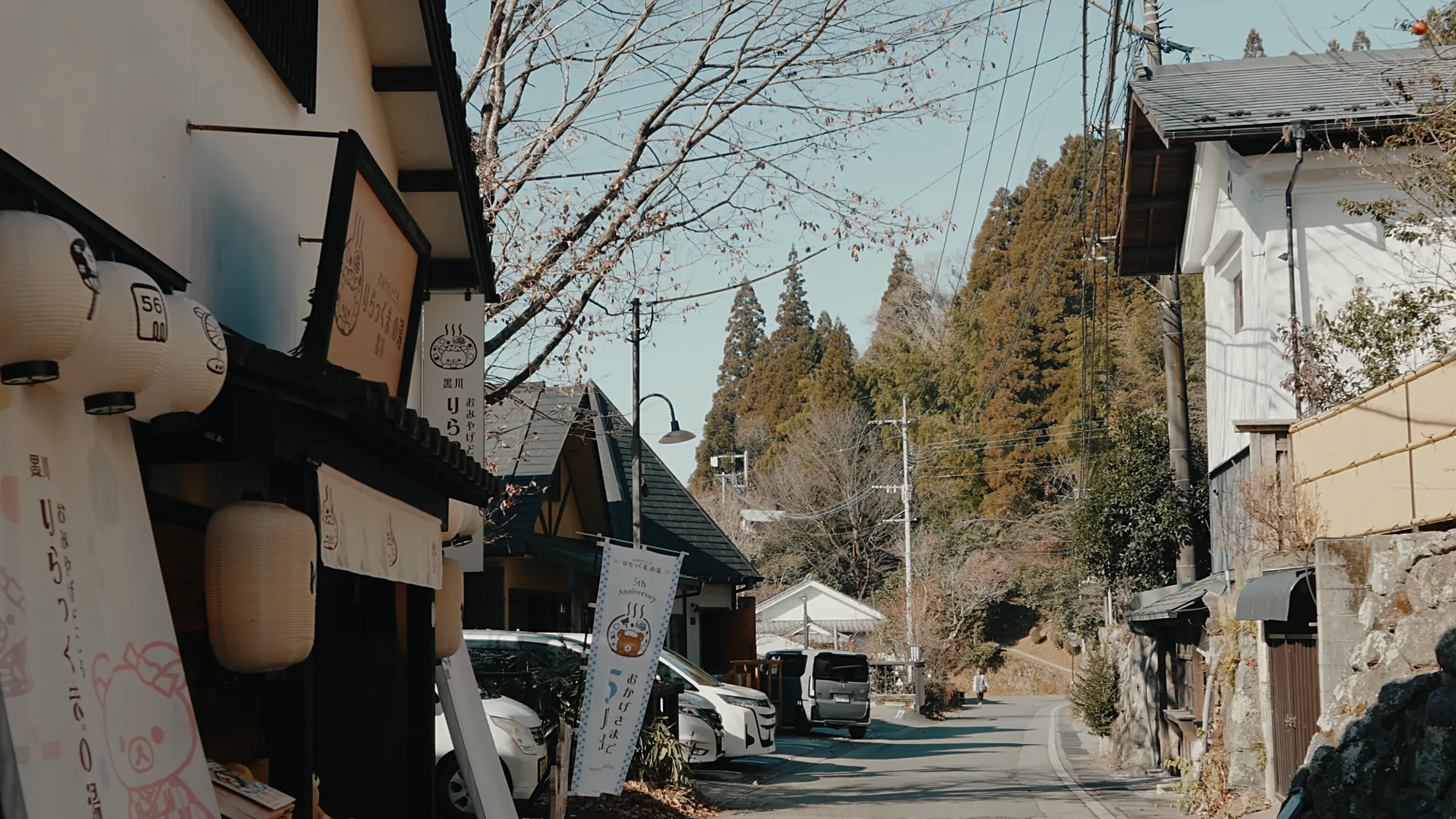
The valley light is short in October. Plan the walk for the morning.
Save errands, shops and the dessert circuit for the flat hours around noon. As the temperature falls with the sun, the village runs its shoulder-season evening, dinner, a lane walk in real cold, a last indoor or sheltered soak, and dawn the next morning delivers autumn's secret, mist rising off the Tanohara as the cold air meets the warm river, the season's quiet answer to winter steam.
Photographers should note what the light does to the village's own palette: the carved-wood signage, dark timber and earth tones that the design code enforces were chosen to sit under exactly these colours, and early November is when the whole authored composition, forest above, village below, resolves the way its planners intended.
A November foliage day, composed
The village's peak-colour day rewards choreography, because the light, the crowds and the baths all move on schedules you can plan against. Take the first bath early, at your own inn or the first tegata door of the morning window, when the low sun is still working through the leaves and the overnight guests have the pools nearly alone; morning is also the frost hour in November's second half, when colour and first ice can share a frame.
Spend the late morning walking the river stretch while the light is still angled, because midday flattens foliage everywhere and the gorge is no exception; that flat hour is the correct slot for lunch and the craft shops. The early afternoon belongs to the day's main soak, and in this season the choice is explicitly scenic: pick the bath under the trees, riverside or gorge-side, and let the season do what the village's whole format was built for, colour overhead, steam on the water.
As the afternoon ages, the day visitors begin draining toward their buses, and the last daylight hour, colour going copper in the low sun, is the finest walking of the autumn day; be on the lanes for it, not in transit.
Dusk closes the show early, there being no illumination season in autumn, and hands the evening to the inn: the harvest draft of the kaiseki calendar, the year's most confident produce, and an after-dinner sky that the early dark and highland air make genuinely worth stepping out for. Then the late soak, under bare stars and hanging leaves. Few days in Japanese travel are this easy to compose this well.
The booking arithmetic
November's first two weekends are, with Yuakari Saturdays, the tightest bookings of Kurokawa's year: two to four months' lead for the field, more for the famous houses. The escapes are honest and effective — midweek stays under the same trees at gentler rates, the late-October shoulder with high-caldera colour on the drive in, or late November's bare-branch quiet.
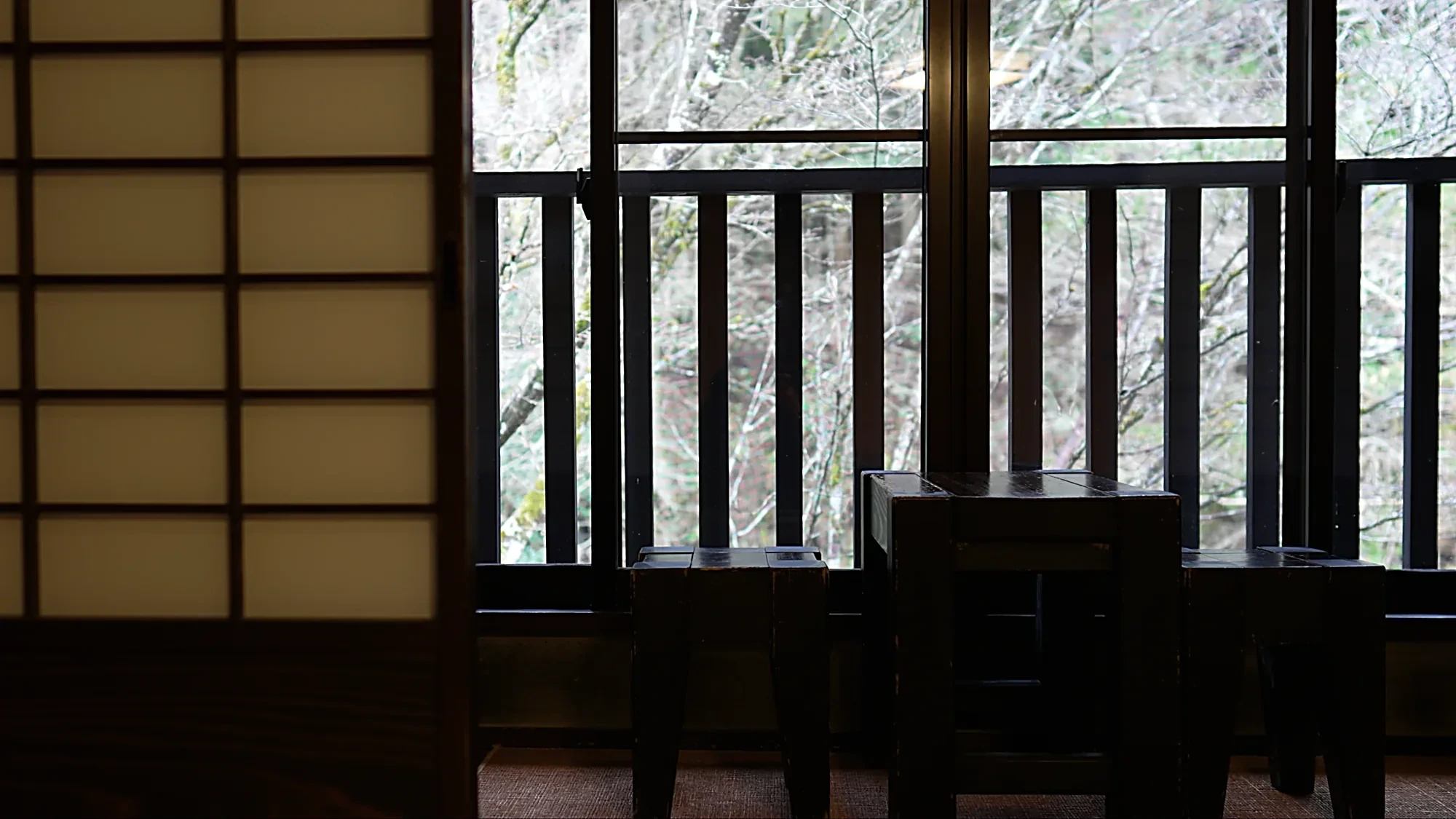
Six months out, and the arithmetic still does not work in your favour.
Book the bus alongside the room, because autumn fills the handful of daily Fukuoka departures too, and re-check the association's live traffic page: the 2026 Kumamoto earthquake has thinned some regional services, and a foliage weekend is the worst time to discover a cancelled run .
Where to stay, and the booking arithmetic in full
November's first two weekends are, with Yuakari Saturdays, the tightest bookings of Kurokawa's year, and the association's price list shows the range you are competing for — per person, one night with two meals, tax excluded. It runs from ¥12,727 at the four-room お宿玄河 (Genka), the smallest and cheapest, to ¥122,700 at 月洸樹 (Gekkoju), the most expensive — nearly ten times the floor across thirty inns, with the middle around ¥18,000–27,000, where 山みず木, 新明館, ふもと, 美里 and いこい fall.
For a foliage weekend, plan two to four months ahead for the field, more for the famous houses; the honest escapes are a midweek stay under identical trees, the late-October shoulder, or late November's bare-branch quiet. There are no hostels in the roster; even the floor is a real ryokan, and the ¥1,500 tegata gives that room the same coloured baths as the villa.
Booking the peak honestly
November is the year's most contested booking window, and this site's standing advice sharpens here into specifics. The pressure is structural: the gorge's peak spans perhaps three weekends, the village's inns are small, several are tiny, a single group booking can close a four-room house, and the Fukuoka bus runs a handful of reserved departures whose seats sell out in exactly the weeks the beds do. So the November rules are these.
Book months ahead for a weekend, or convert to midweek, where the same peak colour costs less pressure at every layer, rooms, buses, bath queues and lane space alike. Book the bus with the bed, in the same planning session, because in this season the seat, not the room, is routinely the scarce commodity.
Hold the dates loosely against the season itself: the peak's exact week moves with the year's weather, the association's own late-October-to-mid-November band is the honest range, and a trip pinned to one weekend is a bet, while a trip with a day's flex on either side is a plan.
And if the calendar refuses all of it, remember the two adjacent bargains: the late-October handover week, when the heights still carry colour and the village books easier, and the post-peak window in mid-to-late November, when the crowds break, the fallen colour carpets the lanes and riverbanks for a few days, and the village exhales into early winter. The peak is worth its trouble. The shoulders of the peak are worth more than most travellers ever discover.
The village autumn fills, in numbers
Autumn is the season Kurokawa comes closest to full, so it helps to know the true size of the place the crowds press against. The ryokan association counts thirty member inns; the bath-hopping scheme covers twenty-five open-air baths; and the wider 南小国温泉郷 (Minamioguni hot-spring district) holds fifty-three lodgings and roughly 2,300 beds across five hamlets — three figures often muddled, each true of a different thing.
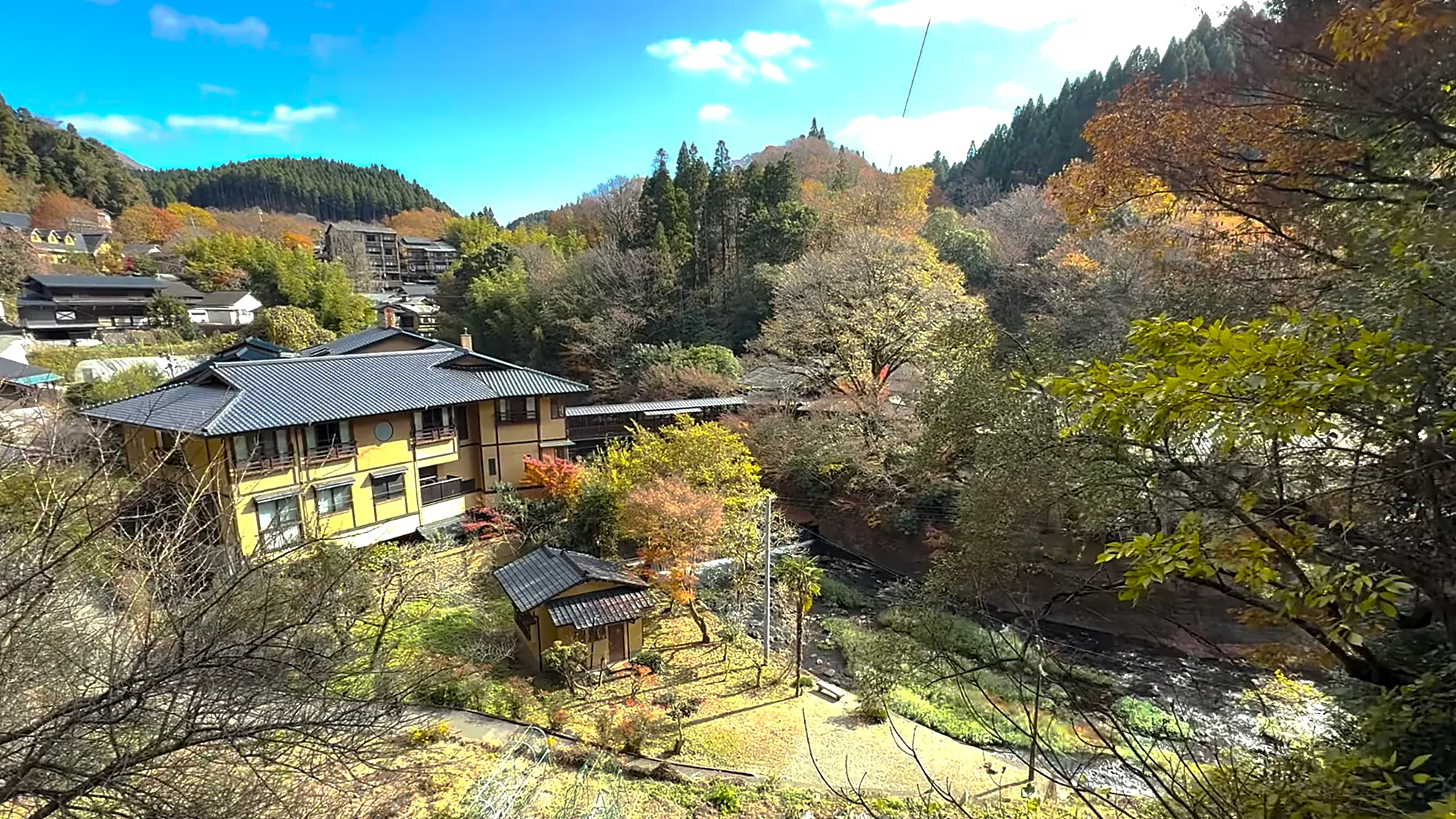
Thirty inns, a fixed number of rooms, and one month everyone wants.
The village sits at about 700 m (2,300 ft), on the highland skirt between the outer rim of the Aso caldera and the 九重連山 (Kujū range), on the uppermost reaches of the 筑後川 (Chikugo River); the stream through the lanes is the 田の原川. It runs three to five degrees Celsius (about five to nine Fahrenheit) cooler than the Kumamoto lowlands, which is exactly why its colour arrives weeks behind the lowland front.
There is no train station and, by design, no convenience store, and until the year 2000 Kurokawa's name did not appear on the local newspaper's map of Kumamoto Prefecture at all. A village that sleeps only a few hundred is why a November foliage weekend books out months ahead.
Getting there, when autumn fills the buses
Autumn fills the handful of daily approaches as tightly as it fills the rooms, so the journey wants booking alongside the inn — and there is no train station. The association's matrix puts Fukuoka at 2 hours 45 minutes by direct highway bus and Kumamoto at about 3 hours, with the nearest railheads at JR Aso and JR Hita, each about an hour out by car. On the Kumamoto side the last local-bus leg ends at 南小国町役場前 (Minamioguni town hall), ten minutes short of the village by car, so arrange the inn's pickup — never more important than on a dark, cold November evening.
And because the 2026 Kumamoto earthquake has thinned some regional services, re-check the association's live weather-and-traffic page before a foliage weekend, when a cancelled run is hardest to absorb; fares are not on the access page, which links out to each operator.
Getting there from further afield
For travellers building a foliage weekend into a wider Kyushu route, the association's matrix reaches beyond Fukuoka and Kumamoto, and every approach reinforces the need to book ahead in November. From Nagasaki, the route runs JR かもめ to Saga, then the 九州急行バス toward Kōsoku-Kiyama and the highway bus onward; from Kagoshima, the Shinkansen covers Kagoshima-Chūō to Kumamoto in about fifty minutes, then the three-hour Crossing Bus; from Miyazaki, a highway bus of nearly four hours reaches Kumamoto first; and from the Ōita side, the once-daily Kyushu Crossing Bus threads Beppu and Yufuin into the village.
Each spends the better part of a day in transit, so a foliage visit that depends on catching the colour at its two-week peak is a trip to lock — buses and beds together — months out.
The driver's autumn: the highway's best month
If Kurokawa has a single season that justifies renting a car, it is this one, because autumn's first act plays out at driving scale. The Yamanami Highway, the 1964 road that began the village's modern story, crosses its finest weeks in October: the grassland country at full height, the ridgelines turning, the five peaks of Aso on one horizon and the Kuju range on the other, and the road itself doing the sightseeing continuously in a way no list of stops reproduces.
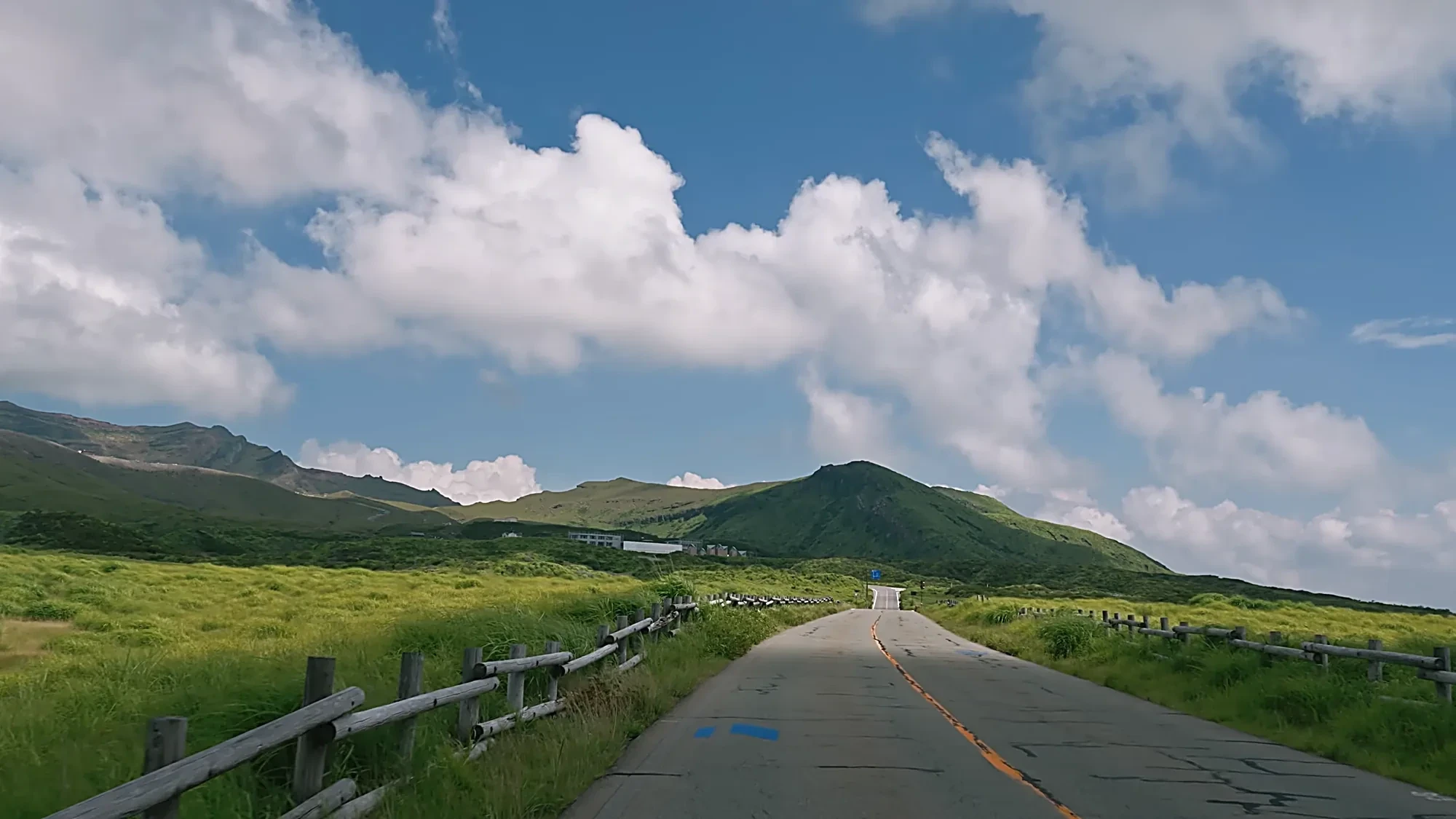
The drive in is the part of autumn that nobody books and everybody remembers.
The autumn driving day builds itself from pieces this site has already priced and placed: Senomoto's grassland as the essential pull-over, the caldera rim country for the long views and an akaushi lunch, Manganji's temple and river pool as the contemplative detour on the way home, and the return timed, as every Kurokawa excursion should be, to the pre-dinner bath. Three seasonal cautions ride along.
The light goes early, so autumn drives start in the morning, not after lunch; the scenery days should float to the trip's clearest sky, with the village day held for cloud; and the roads carry the season's traffic on peak weekends, one more argument for the midweek trip the booking section already made.
Carless travellers lose less of this than they fear: the Kyushu Odan bus rides the same country on its ordinary schedule, and a window seat on the Yufuin leg in late October is, mile for mile, among the best-value sightseeing in Kyushu. But drivers get the stops, and in October the stops are the point.
The table in autumn
Inn kitchens tend to peak alongside the trees — mushrooms and chestnuts, fattened river fish, new rice, and the Aso akaushi beef arriving in hotpots as the nights cool (a general characterisation of the season's kaiseki rather than a sourced menu). If any one season justifies trading up an inn tier for the kitchen alone, autumn is the candidate; ask what the kitchen is leaning into when you book.
The table, beyond the seasonal kaiseki
Autumn's inn kaiseki leans into mushrooms, chestnuts and new rice, but the village's own directory is worth an autumn lunch beyond the room. The association lists thirteen places to eat. Akaushi, Aso's red beef, anchors it — 褐 (-aka-) is a reservation-only akaushi house, わろく屋 (Waroku-ya) an akaushi specialist in a relocated Meiji-era farmhouse — and とうふ吉祥 (Tōfu Kissho) builds tofu around an irori hearth with its own soy-milk soft-serve; うな北 is an eel restaurant with takeaway; 豚皇 (TONKOU) is reservation-only, its evening course for overnight guests only.
The between-baths circuit runs to dorayaki at どらどら and shiratama at 白玉っ子 (Shiratamakko), and the village closes early — いろり家 (Irori-ya) is one of the few places open late, and takes the tegata green sticker, as do named shops for a honey soft-serve at 杉養蜂園 or a branded towel at 新明館. Dinner itself is almost always at the inn, cooked for its own guests at one seating.
Photography, and what to shoot instead
Autumn brings more cameras than any season, so the one firm rule bears repeating: photography in the open-air baths is prohibited in principle across the whole village, an association rule, and it matters most in the mixed baths, where phones stay in the changing room entirely.
The colour photographs beautifully from elsewhere — the bridges over the Tanoharu, the lanes, the footbaths, the shopfronts — and the village's coherence is itself the shot: no neon, no oversized signage, natural materials and earth tones, the result of the innkeepers taking roughly two hundred signs down off the lanes in the revival years. Shoot the village and the gorge, not the pools, and the pictures will look like the place rather than an intrusion into someone's bath.
Photographing the turn
Autumn is the village's most photographed season and the one where craft most separates the frames. The subject hierarchy is worth stating plainly: the singular Kurokawa picture is not a hillside of colour, which every mountain town in Japan can offer, but colour meeting water, maples over the river, leaves against steam, the reds working against the village's own palette of dark wood, earth tones and stone that the design code maintains as a permanent backdrop.
That backdrop is the local advantage; the code's subdued browns and greys do for foliage what a gallery wall does for a painting, and compositions that include the village's fabric, eaves, lanterns unlit, the lanes' timber, outperform pure-nature frames here. Work the edges of the day, early and late, when the low sun turns the gorge translucent, and treat midday as the scouting shift.
Respect the two boundaries this site repeats everywhere: bathers and bath interiors are never subjects, however glorious the overhanging maple, and drones stay grounded without permission, November skies included. The bath-adjacent shot that is legitimately available is the empty rotenburo where an inn permits it, asked for at the desk, never assumed.
And the photographer's booking advice doubles the general one: the peak's light is best on the shoulders of the day, which only staying guests own, so the November overnight is not a comfort choice but a technical one. The day-tripper photographs the village at its flattest hours and leaves before its best. The staying guest gets the first frost on the first light, and that is the picture.
What autumn asks you to pack
The season's range is the widest of the year, and the packing follows. Early October can still serve highland summer at midday and single digits Celsius by night, so the kit is layers rather than weight: a real jacket for dawn and evening, lighter wear beneath for the walking hours, and shoes that handle wet leaves on stone lanes, which are their own gentle hazard once the maples begin to drop.
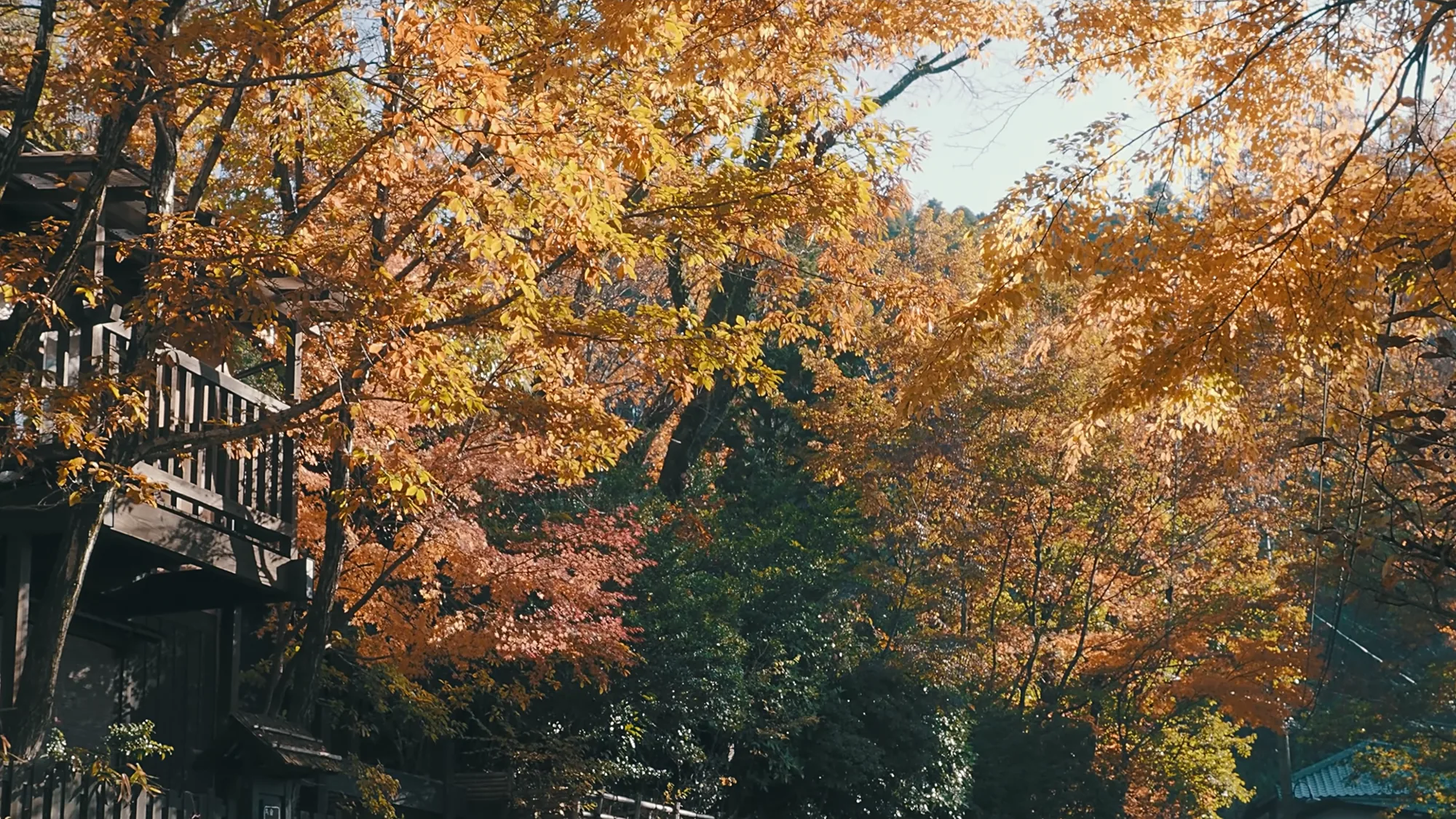
Warm enough at noon, cold on the walk back. Pack for both, not the average.
By mid-November the gorge is rehearsing winter, and gloves for the evening lane walks stop being optional. Two autumn-specific additions earn their space: a small daypack for the drives, since the highland stops are cold, windy and worth lingering at, and whatever camera you actually use, because this is the fortnight the village photographs best in daylight and the bath-photography ban makes the bridges, not the pools, your gallery.
Yukata still work between baths as always; the inns' padded jackets cover the shoulder-season transfers, and your own coat extends the comfortable range for the after-dinner walk that this season, more than any other, rewards.
Between the colour and the lanterns
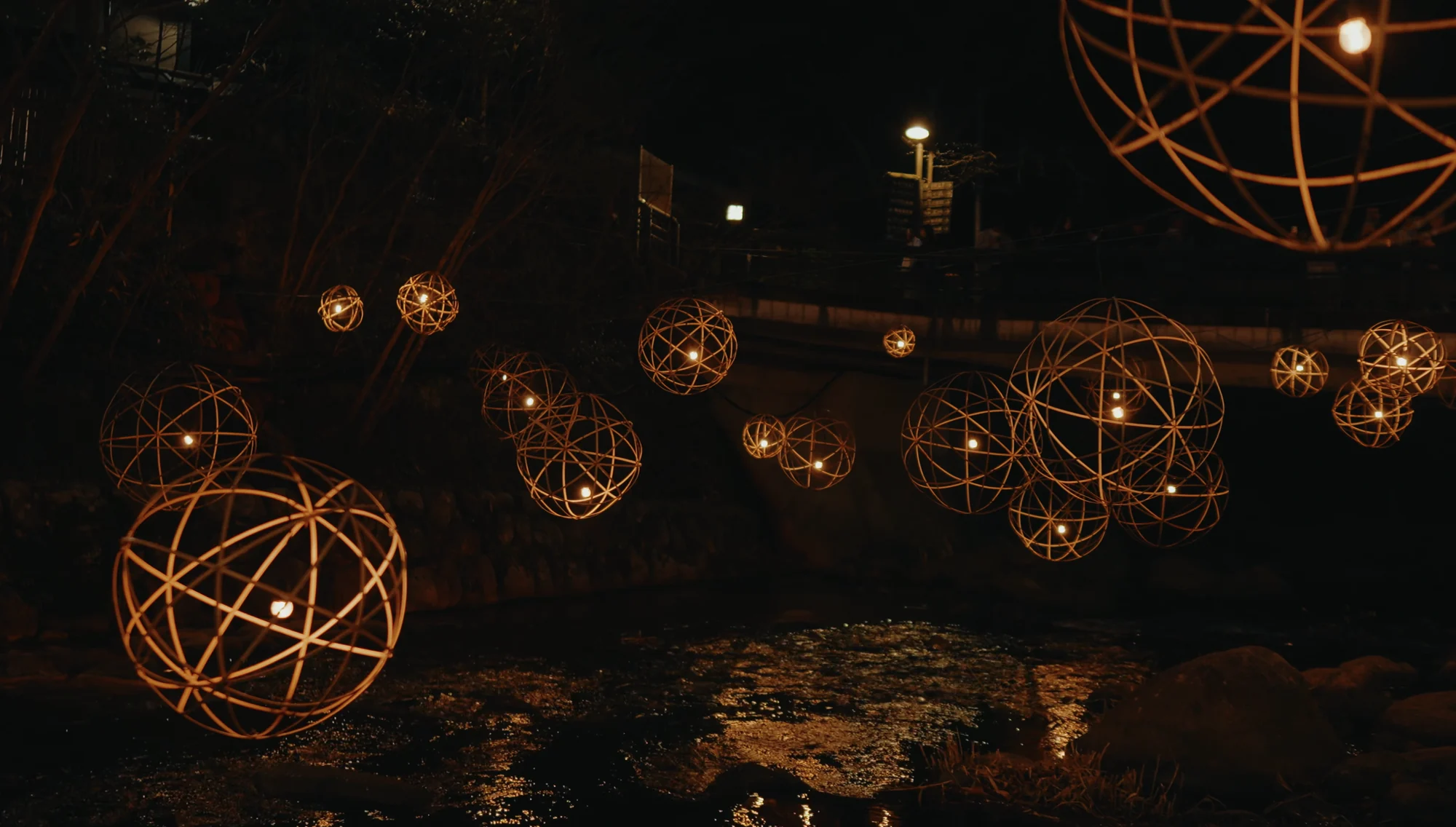
Autumn ends where the village's winter show begins, and the handover is worth timing. Late November strips the gorge fast toward bare branches — a brief, underrated austerity window — and then, from about December 20, Yuakari (湯あかり) takes over the aesthetics: the lanes and the Tanoharu River lit nightly from dusk to about 10 pm by handmade Minamioguni bamboo lanterns, temari spheres and roughly two-metre pillars, free to view, through to the end of March.
A visit in the last days of November may catch bare branches by day and the first Yuakari nights after dark. The summer counterpart, 傘あんどん (Kasa Andon), runs June 1 to September 30. Both obey the village's design code — bamboo and lamplight, never floodlight — the same restraint that governs the coloured lanes by day.
The season without lanterns, and why that is not a loss
Autumn is the one stretch of the calendar outside both illumination windows, Kasa Andon closing September 30 and Yuakari not opening until December 20, and honest guidance should name what that means: the village's evenings in October and November are dark in the old way. What replaces the lanterns is worth having on its own terms.
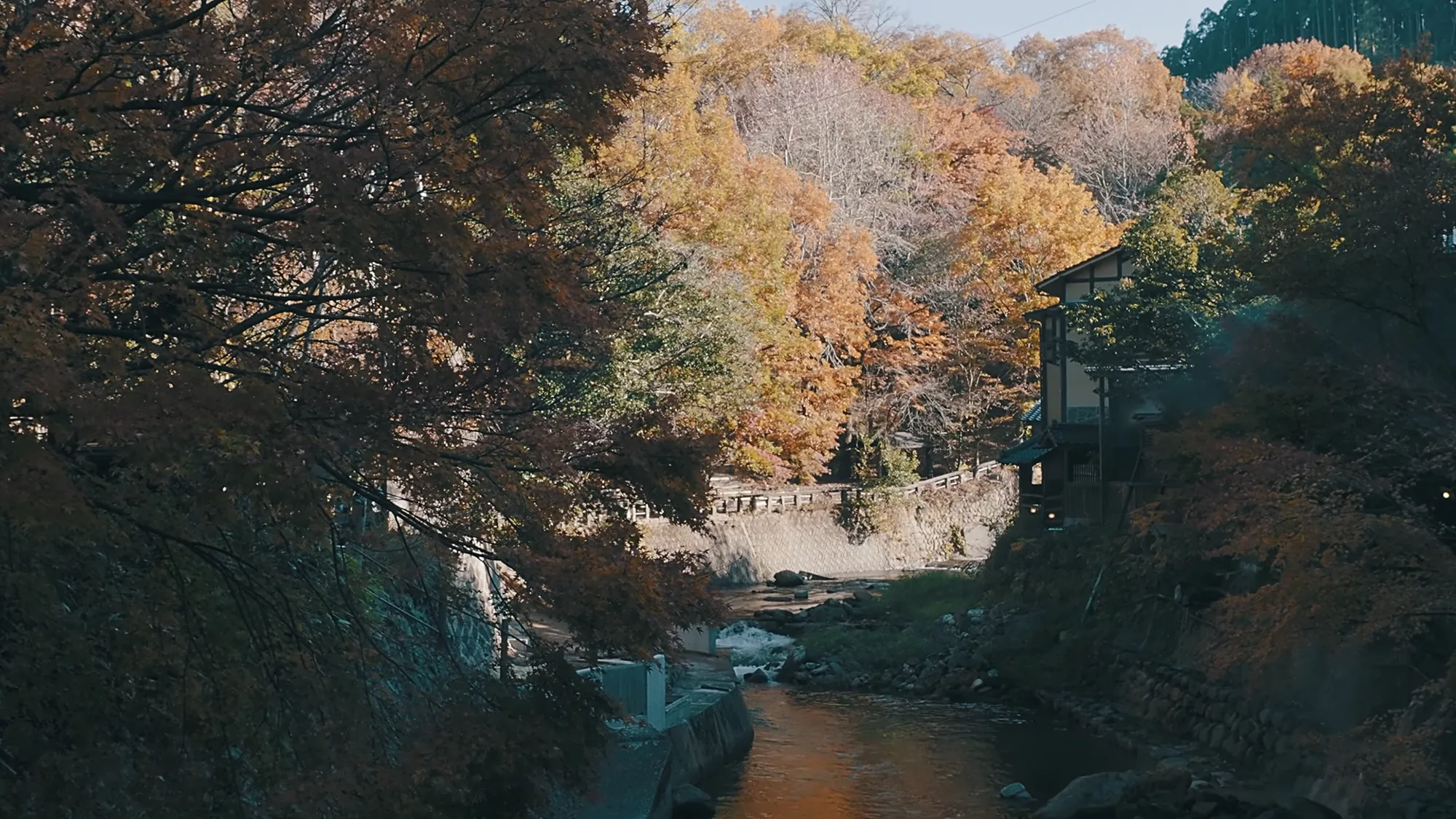
No lanterns in October. The gorge is doing the work instead.
The early dusk moves the village's rhythm an hour toward the hearth, dinner feels earlier and longer, and the after-dinner walk trades engineered light for the darkest skies of the year, the highland air sharpening toward winter and the stars carrying the show that the lanterns carry in other months; the neighbouring hamlets' inns sell that sky explicitly, one listing promising a natural planetarium, and autumn is when the claim is strongest.
The dark also concentrates the season's pleasures into daylight, which suits autumn's actual product, colour, better than any other season's: nobody comes to November for its evenings, and the village spends them the way it spent them for centuries, in the bath, at the table, and asleep early enough to be first into the morning pools. Travellers who need an evening event should aim their trip at the light seasons on either side.
Travellers who take autumn on its own terms get the year's best days attached to its quietest nights, and many of them come home reporting that the unlit village after dinner, river running, leaves rattling, no glow anywhere but the inn windows, was the moment the place felt oldest and most itself.
The visitor code, in leaf-fall season
Autumn's crowds make the village's published code matter more, not less. From the association's own pages: the onsen town is non-smoking outside designated areas; sort and carry out your waste; no drones without prior permission — a real temptation over a coloured gorge, and a firm no — do not pick plants or foliage; do not enter private land; parking is limited and there is no roadside parking; keep your towel out of the bath water; and entry may be refused when a bath is crowded, which in November it will be.
Add the bath-hopper's kit, because day-use baths supply almost nothing: a small towel, your own soap, and coins for the entry boxes. The custom at the end of the circuit is to retire the spent tegata at the village's Jizō hall rather than pocket it.
Autumn's verdict, and the altitude rule that governs it
Ranked against the year, autumn is the village's daylight champion and its most demanding booking, and the verdict splits cleanly by traveller. For photographers and first-order scenery seekers, early-to-mid November midweek is the year's best answer, taken with the booking discipline above. For drivers and walkers, October is the underrated prize, the high country's month, easier to book and grander in scale.
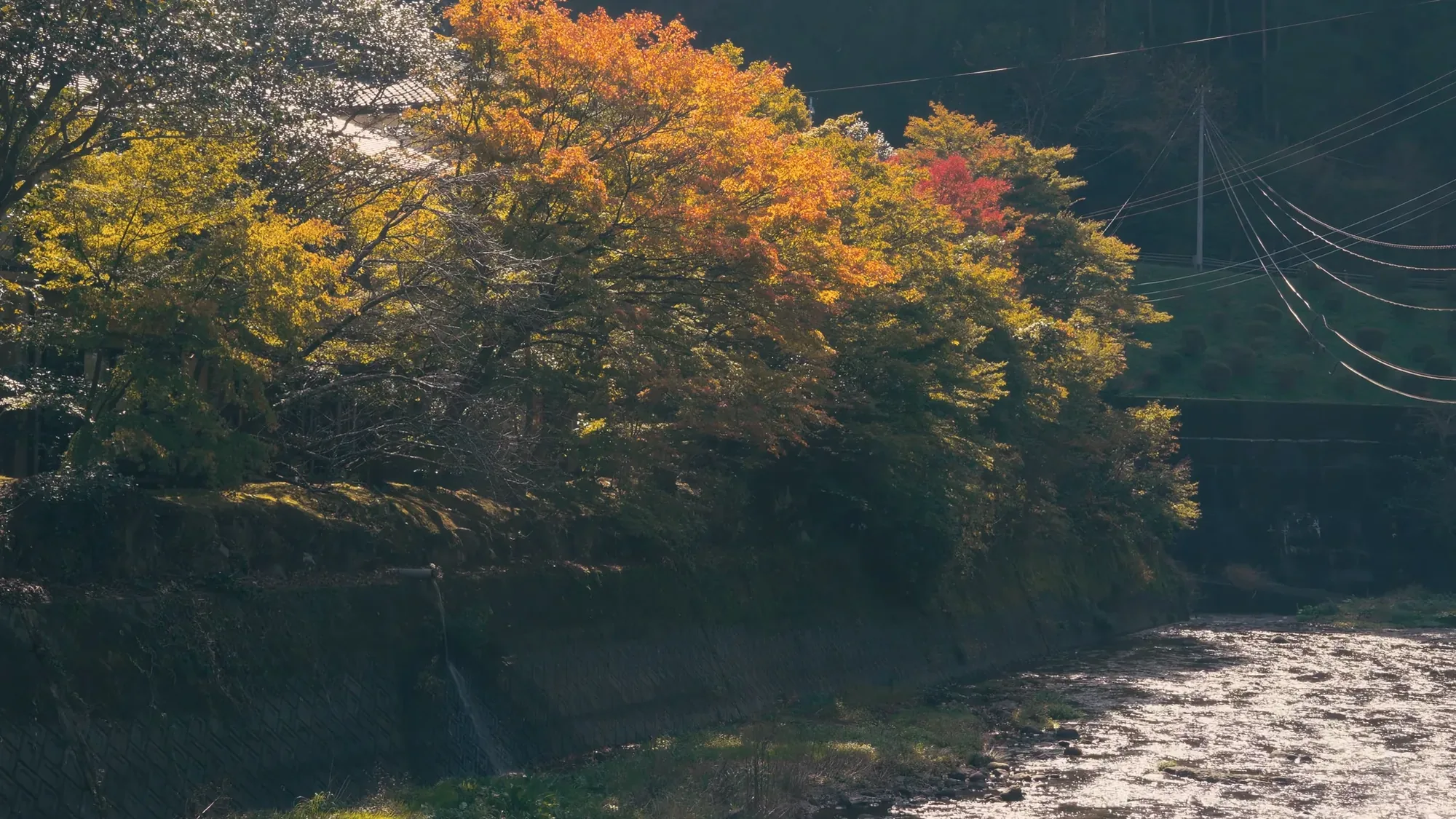
Colour arrives at the ridge first and works down. Height tells you the week.
For bathers pure and simple, autumn is merely excellent, the air cooling toward the bath's ideal interval, while winter remains their season. And for value, autumn is the wrong question: its pleasures are exactly the ones the calendar prices, and the green months next door sell the same water for less.
Underneath every version sits the one rule that governs all Kurokawa seasonal planning, worth restating as the season's closing tool: the village runs at 700 m (2,300 ft), 3 to 5°C (5 to 9°F) behind the lowlands, so every foliage map, forecast and city-based instinct arrives here a week or two early.
Calibrate to the altitude, aim by the association's own late-October-to-mid-November band, hold a day of flex, and the season will meet you where the maps said it would not. The travellers who miss autumn here mostly did not miss the season. They missed the altitude, and the fix, unlike the peak weekend rooms, is free.
One last pairing seals the plan: check the association's live weather and traffic page in the final week, as for every season in the earthquake era, and let the daily bathing board choose the day's scenic soak, since November's most beautiful bath is simply whichever riverside door the board says is open under the best tree that morning.
Tips
Book November's first two weekends 2–4 months out, or take Tuesday–Thursday under identical trees.
Spend daylight on the riverside rotenburo this season; the colour is the ceiling.
Drivers: route in via the Yamanami Highway in late October for the high-country preview.
Ask kitchens what the autumn menu features when booking; the season rewards the question.
Pack for real cold by mid-November; the gorge starts rehearsing winter early.
Frequently asked questions
When is fall foliage in Kurokawa Onsen?
How far ahead should I book autumn in Kurokawa?
Is October good for Kurokawa?
What makes autumn bathing special here?

Verified by The Japan Onsen Society
Show all sources
Verified July 7 to 16 and September 6, 2026 by The Japan Onsen Society. The late-October-to-mid-November colour window and the altitude are the association's own; the autumn menu is a general characterisation, marked , and current bus schedules are perishable under the 2026 earthquake reductions.
Autumn colour late October to mid-November (later than the lowlands) · about 700 m → 黒川温泉観光旅館協同組合 FAQ kurokawaonsen.or.jp/faq/ → verified Sep 6, 2026
Live weather / traffic + 2026 earthquake service reductions → 組合 kurokawaonsen.or.jp/weather_traffic/ → perishable, re-check
VERIFY:
Foliage timing against Kumamoto/Oita foliage reports each season
Autumn kaiseki menu specifics (mushroom/game/new rice) — general, soften if unconfirmed
USD conversions n/a
Autumn colour late October to mid-November and the altitude/differential, the visitor code, the 源泉かけ流し / 加水 disclosure, the access matrix and journey times, nearest stations Aso and Hita, the town-hall last-leg gap, the few-dinner-seats point, seasonal/illumination dates → アクセス・よくある質問 (黒川温泉観光旅館協同組合, official) — https://www.kurokawaonsen.or.jp/access/ + https://www.kurokawaonsen.or.jp/faq/ — verified Sep 6, 2026
Live service status under the 2026 Kumamoto earthquake reductions → 天気・交通情報 (組合, official) — https://www.kurokawaonsen.or.jp/weather_traffic/ — check every publish
Tegata mechanics (¥1,500/¥700, three stickers, six-month validity, 8:30–21:00, 25 baths, one per person, green sticker, 1% conservation levy, per-inn stamps) → 入湯手形 (組合, official) — https://www.kurokawaonsen.or.jp/tegata/ — verified Sep 6, 2026
Per-inn descriptions (Yamamizuki, Okunoyu ~2,000 tsubo, Yamabiko Senninburo, Shinmeikan cave, Fumoto 立湯 + 8 baths, Ikoi 名湯秘湯百選 + 13 baths, Misato colour-changing) and the ¥12,727–¥122,700 price band, 30 inns → 宿泊 (組合 oyado list, official) — https://www.kurokawaonsen.or.jp/oyado/ — re-verified Sep 7, 2026
Restaurant and shop directory (13 places to eat; reservation-only 褐 and TONKOU; TONKOU dinner for overnight guests; いろり家 open late; green-sticker shops) → お店 (組合 omise directory, official) — https://www.kurokawaonsen.or.jp/omise/ — verified Sep 6, 2026
Per-hamlet spring map, four area spring families, official 適応症/禁忌症, 53 lodgings / 2,300 capacity, the caldera-and-valley sights (Senomoto first of Kumamoto's hundred green landscapes, Daikanbō, Nabegataki, 七滝, 夫婦滝, 清流の森, ペトログラフ押戸石), 田の原温泉 and 満願寺温泉 → 温泉地詳細 record + 南小国温泉郷 国民保養温泉地 profile (日本温泉協会) — https://www.spa.or.jp/search_p/detail_p/?F_ID=430260 + https://www.spa.or.jp/kokumin/1131/ — verified Sep 6, 2026
The 1964 Yamanami Highway boom that faded, the hand-dug cave bath, ~200 signs removed, the valley replanted over three decades, the 黒川温泉一旅館 slogan, the design philosophy 「あるがままの自然」, obscurity until 2000 → 新明館の歴史 (Shinmeikan) + 黒川温泉について (組合) — https://shinmeikan.jp/history/ + https://www.kurokawaonsen.or.jp/about/ — verified Sep 6, 2026
Konyoku (mixed) baths with women-only hours (about 8–10 pm) → 奥の湯 (Okunoyu, the inn's own site) — https://www.okunoyu.com/ — verified Sep 6, 2026
Related guides
When to Visit
Best time to visit
Kurokawa has no bad season; what changes is contrast, colour, and competition for beds in a village of thirty small inns.
When to Visit
Winter
The baths were built for cold air. Winter supplies it, adds the lanterns, and thins the day crowds.
When to Visit
Spring
Kurokawa off-duty: the baths still hot, the lanes empty on a Saturday, and rooms bookable in weeks rather than months.

When to Visit
Summer
Hot springs in August sound odd until altitude enters it: at 700 m the evenings cool, the dawns are cold, and only midday asks patience.
When to Visit
The Best Open-Air Baths (Rotenburo)
The tegata buys three of twenty-five open-air baths. Choose for contrast — a river, a cave, a pond — not three of the same.
When to Visit
Day trips
Kurokawa sits on the shoulder of a great caldera. Within an hour lie a walk-behind waterfall, a rim view, and an active crater.