
The heat, honestly
Midday in high summer is warm enough that a 42°C (108°F) soak takes commitment, and pretending otherwise serves no one. The village's answer is scheduling. The classic rhythm inverts toward the day's edges: the serious bathing at dawn and after dinner, and the midday hours given to shade, cafés, soft cream and excursions.
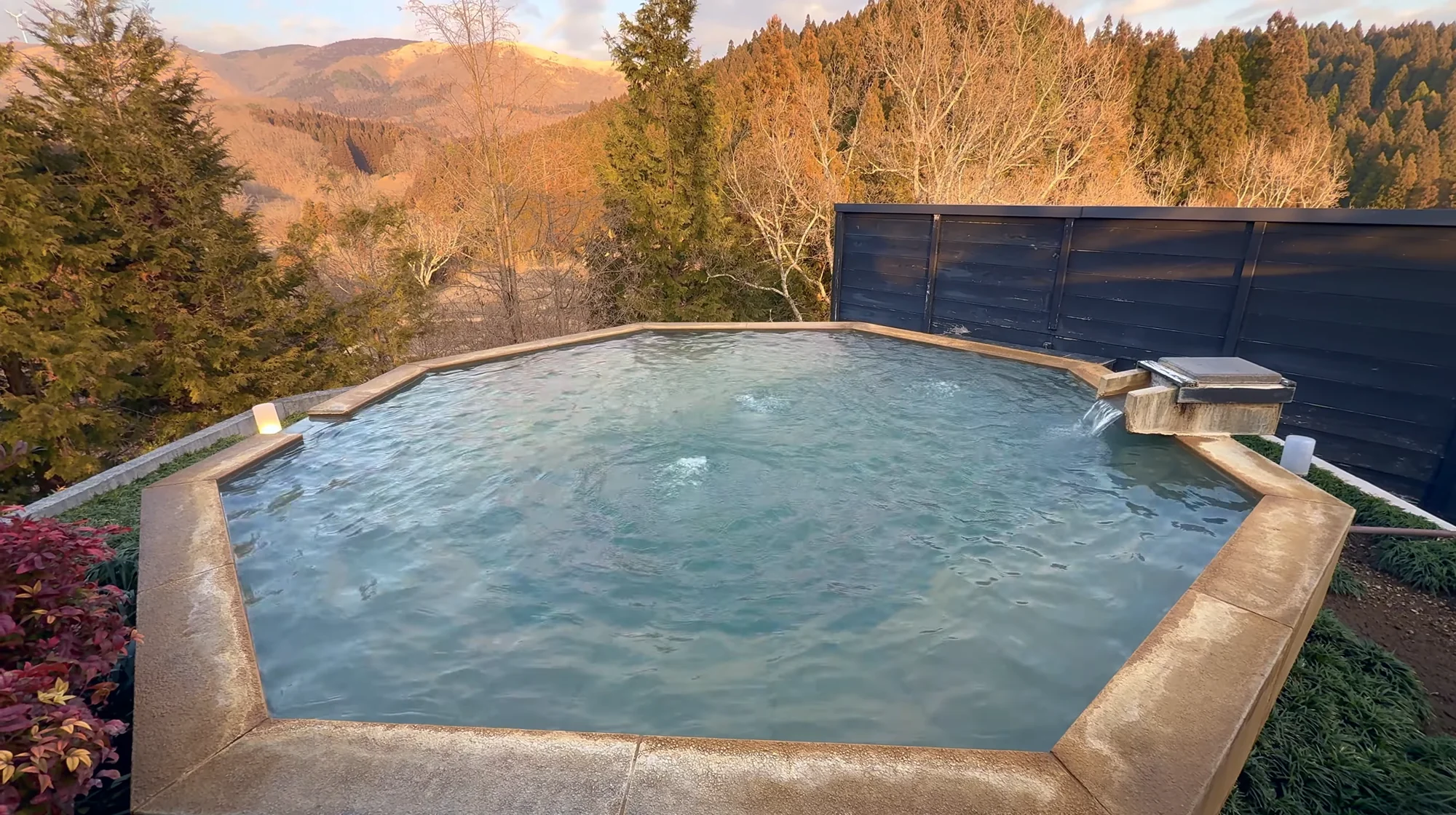
The altitude is what makes this work — the association's own figure of three to five degrees below the lowlands means the evenings genuinely cool, and the night rotenburo under cicadas is summer's version of the winter steam scene, different theatre on the same stage. Dawn is the sleeper: cold enough for real contrast, empty, and the river loud before anyone is up.
The 700-metre advantage: what altitude buys in July
The physical case for highland summer deserves its own passage, because it is the season's quiet product. At about 700 m (2,300 ft), with the air running 3 to 5°C (5 to 9°F) below the lowlands, the village spends July and August in a different climate from the cities that feed it: the days are warm rather than punishing, and the evenings and nights genuinely cool, in the exact weeks when Fukuoka and Kumamoto stew in the heat-island nights that make urban Japanese summers infamous.
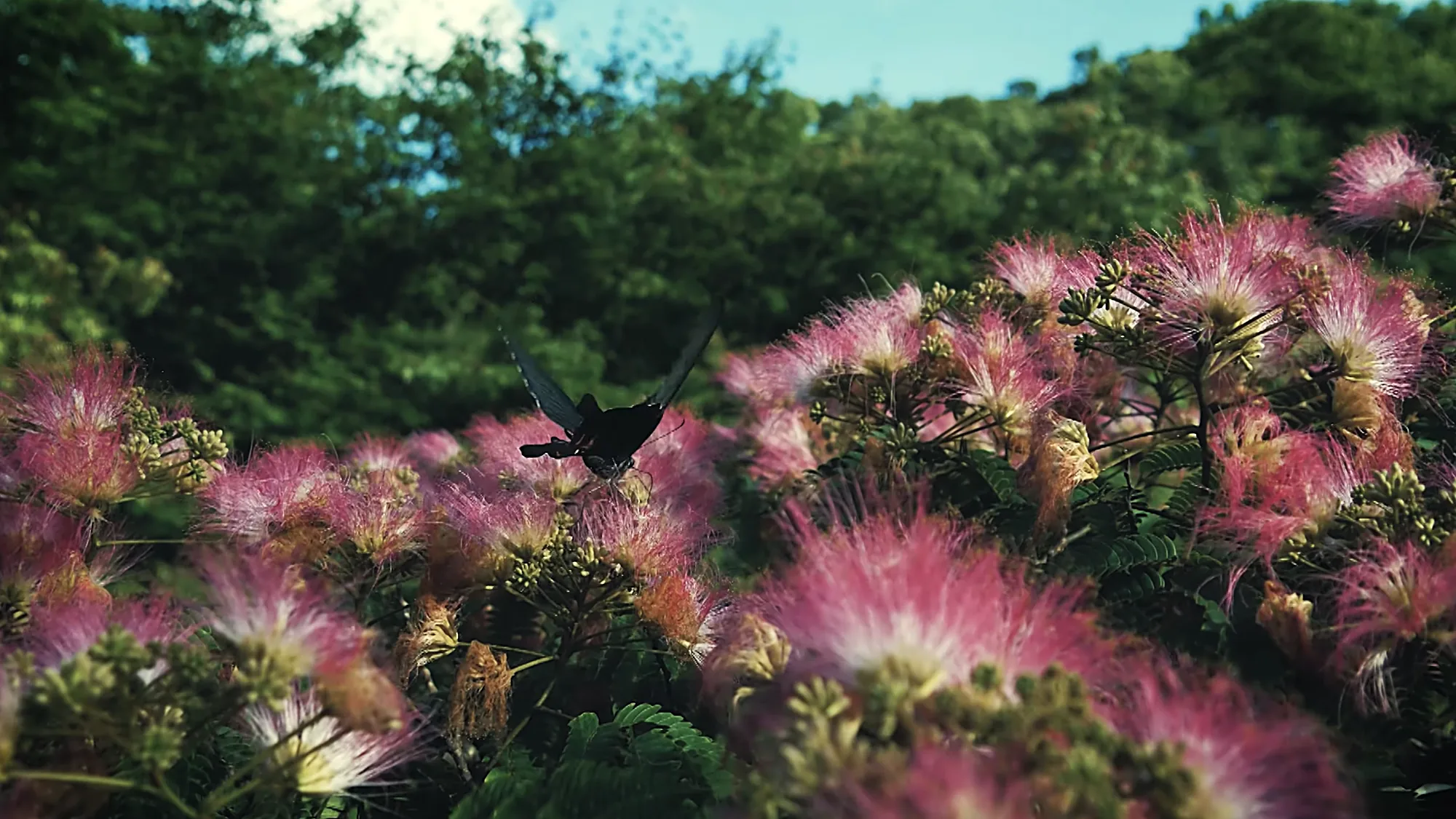
Seven hundred metres up, and the summer arrives about three weeks late.
Three consequences follow for the traveller. Sleep, first: the highland night does what no hotel air conditioner quite manages, and the difference in morning energy compounds across a multi-day trip. Bathing, second: the evening air's coolness restores the water-air interval that makes an open-air bath work, which is why the summer soak belongs to the day's edges and why it succeeds there completely.
And itinerary logic, third: the village makes an ideal recovery station inside a larger Kyushu summer trip, two highland nights laundering the fatigue of the lowland cities on either side, a role the access matrix's routings from every corner of the island make practical.
The altitude also explains the season's one honest warning: midday sun at elevation is strong, the walking day needs a hat and water like anywhere in a Japanese summer, and the heat strategies above are edits, not exemptions. But the headline holds. In the season when most of Japan's travel is an exercise in heat management, this valley starts every day several degrees ahead.
August, honestly: the one true peak
August is summer's complication and the year's single hardest crowd month, and this page owes it plain arithmetic rather than mood. The school holidays run its length, Obon compresses the nation's travel into its middle weeks, and a village of thirty small inns meets that surge with the same bed count it has in February, so the pressure lands everywhere at once: rooms price up and sell out, the reserved bus departures fill, the lanes carry their densest foot traffic, and the tegata's famous doors run their longest queues.
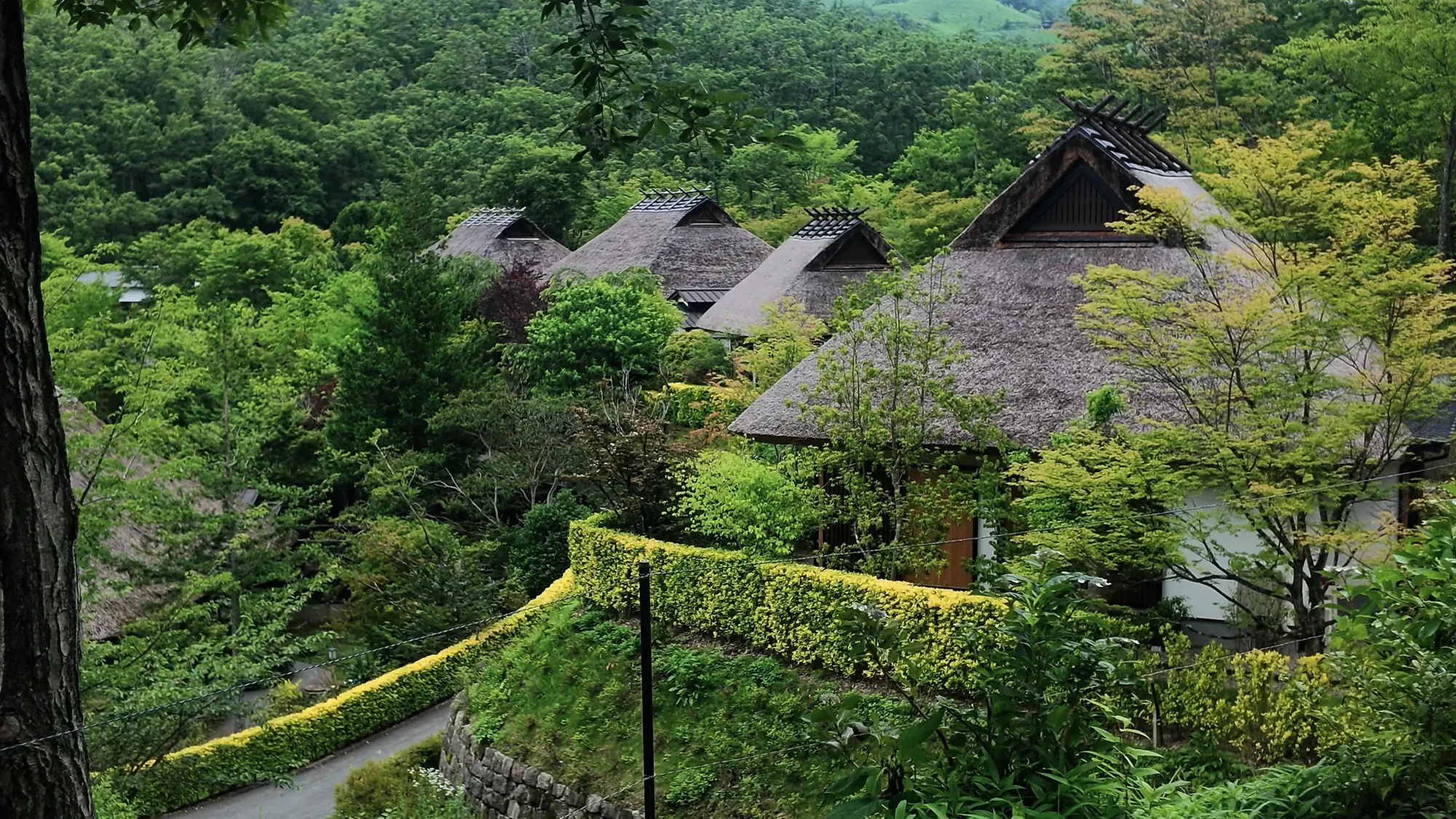
August is the one month the village genuinely fills. Plan around it or into it.
The strategies are the standard ones, applied firmly. Book far ahead or aim at the month's fringes, early August before the Obon build or the last week as the holidays release; work the midweek slots even inside the peak, which breathe noticeably easier than the weekends; run the day's bathing at the edges, dawn and evening, where the crowds thin twice over, once by schedule and once by heat; and hold the kashikiri hour as the peak season's pressure valve, the one bath no queue can reach.
Or exercise the calendar's best trick: shift to September, which keeps the parasols to the 30th, keeps the warmth, drops the crowds, and stands, as this site has argued elsewhere, as the most underrated month on the village's calendar. Families locked to the school holidays should take August with both hands and the strategies above; it remains a fine trip. Everyone else should notice that summer in Kurokawa is three months long, and only one of them is crowded.
June and the rain, taken on their own terms
June is the month English-language guides skip and the month this valley quietly suits. The rainy season's front sits over Kyushu through its weeks, and the instinct to avoid it misreads what a bathing village is: rain costs Kurokawa its excursions and pays the difference back into its core product, baths under rain at their atmospheric best, lanes rinsed and empty between showers, the green season at its deepest saturation, and the covered, hearth-lit indoor layer of shops and kitchens doing exactly what it was built for.
The calendar sweetens the case: Kasa Andon opens June 1, so even early June evenings carry the parasols, and the month's bookings are among the year's most relaxed, the same rooms and the same kaiseki at green-season ease. The practical method for a June trip is the wet-weather order this site set out in the activities guide, run for consecutive days: baths and village on the rain days, the caldera and grassland excursions floated onto whichever day the front lifts, and no plan pinned to any particular sky.
Pack the compact umbrella, accept one damp walk as part of the genre, and note the season's one genuine caution, that heavy-rain events can disrupt mountain roads and bus schedules, which folds June into the same morning ritual as every other month, the association's live weather and traffic page before the day commits. Travellers who need guaranteed sun should aim elsewhere in the calendar. Travellers who like their onsen towns moody, green and half-empty have June, and mostly have it to themselves.
Kasa Andon: the summer lanterns
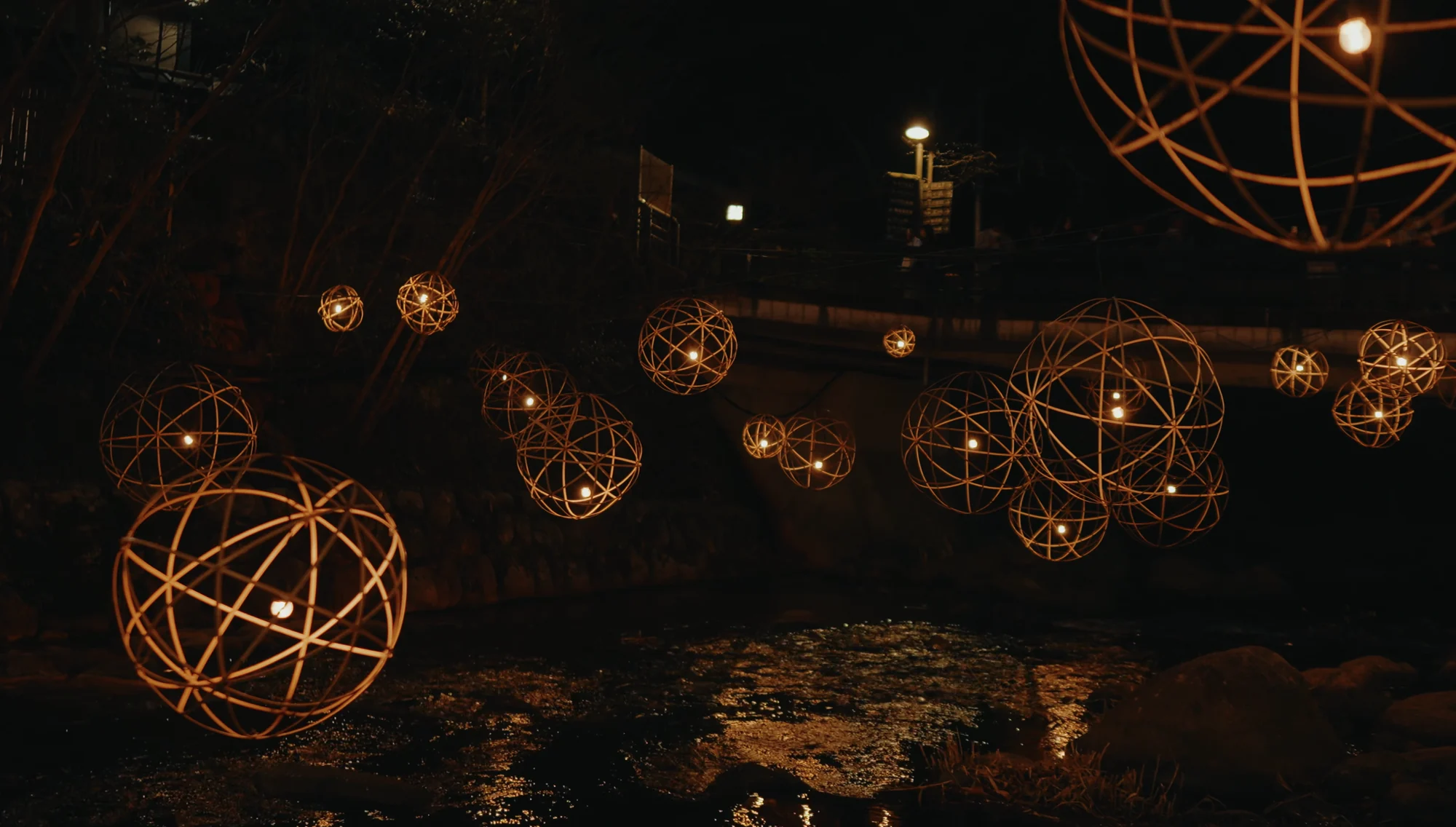
Most visitors think Kurokawa's lantern nights are a winter thing. They are not only that. From June 1 to September 30 the village runs Kasa Andon (傘あんどん), a summer illumination that pairs 旅傘 travel-parasols with 鞠灯籠 bamboo ball lanterns along the lanes — the warm-season counterpart to the winter Yuakari, and, like it, kept to the village's natural-materials design code rather than the LED spectacle a resort would reach for.
It is barely mentioned in English, which is precisely why it belongs here: it means a summer evening in Kurokawa has an act of its own, a lit walk between a dusk bath and a night one, and not merely a wait for the heat to break. Pair it with the post-dinner stroll and the season stops being the off-season.
Kasa Andon: the summer evenings, lit
Summer owns the second of the village's two illumination seasons, and its dates and terms deserve the same exactness this site gives the winter one: Kasa Andon runs June 1 to September 30, 2026, nightly, free of charge, the lanes and riversides set with lantern-lit paper parasols through the whole warm season.
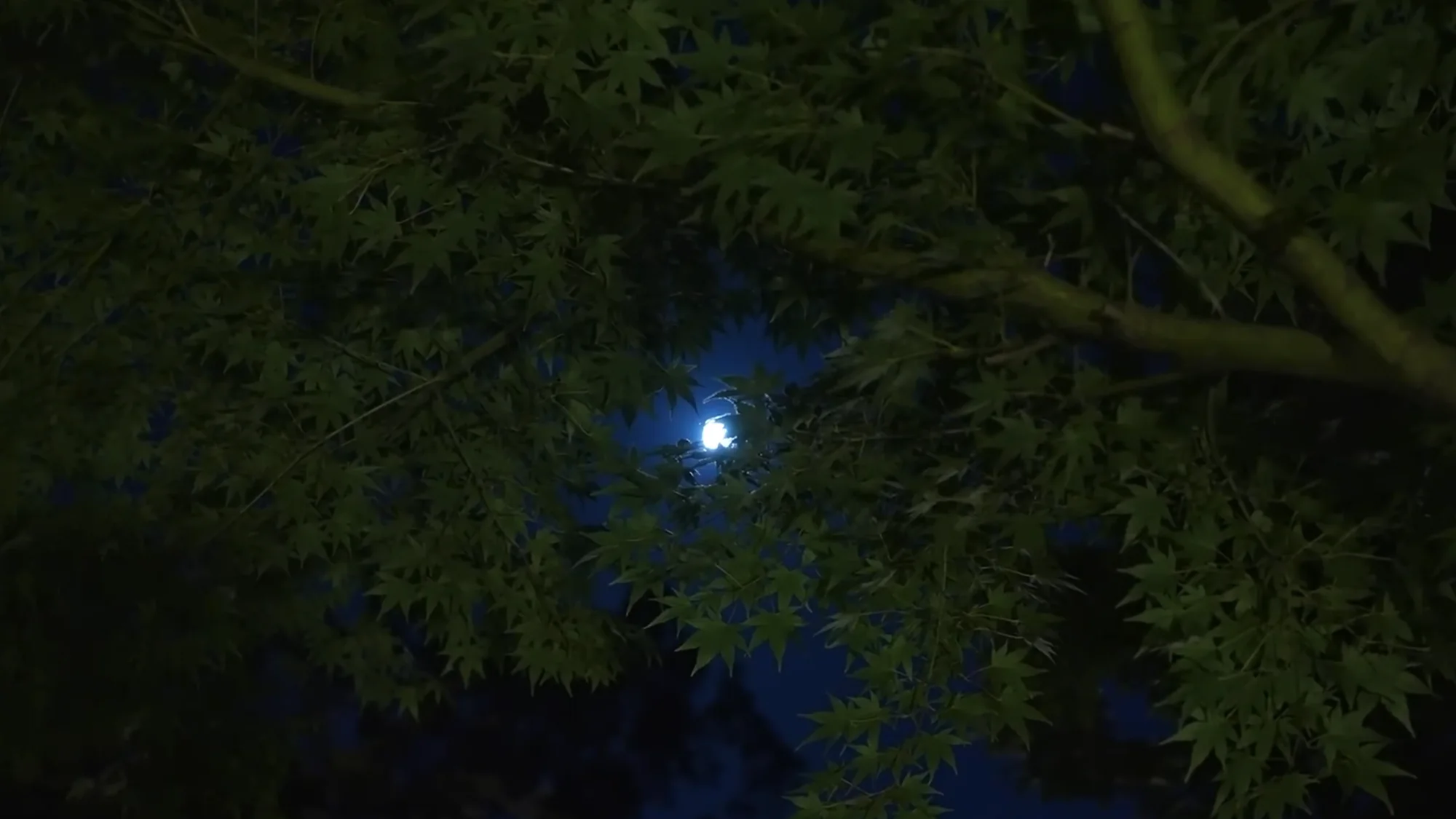
The summer lanterns are a quieter affair than Yuakari, and locals prefer them.
As with its winter sibling, the standing nature of the event is the planning gift, four months in which no date misses it, and the evening rhythm is where the value concentrates. The parasols come into their own in full dark, which summer delays: the show's best hours start later than Yuakari's, after the long dusk, which suits the season's rescheduled day perfectly, dinner first, then the walk, then the late soak.
The conduct clauses carry over unchanged, no drones without permission, no smoking on the lanes, cameras nowhere near the baths, and the photographic advice inverts the winter version: where the lanterns reward stillness and steam, the parasols reward colour and reflection, their painted faces working against the dark wood and the river, and a warm evening lets a photographer linger in shirtsleeves through exposures that January makes an endurance sport.
The deeper point repeats across both seasons because the village designed it to: the illumination is the argument for sleeping here. Day visitors leave before the parasols matter; staying guests get them as the nightly closing ceremony of the rescheduled summer day, and a June or September midweek books gently enough that the whole arrangement can be had at the year's easiest prices.
Fireflies and the early-summer window
From June into early July, fireflies are reported along the darker river margins on humid, windless nights — a modest spectacle best caught away from the lane lamps (a visitor observation we have not tied to an official source). Paired with rain-glossed lanes and the emptiest weekday rooms of the warm half-year, early summer is the sleeper booking for travellers who like their villages moody and private, and the rains themselves suit Kurokawa's covered-walkway, indoor-outdoor bathing rhythm better than they suit most places.
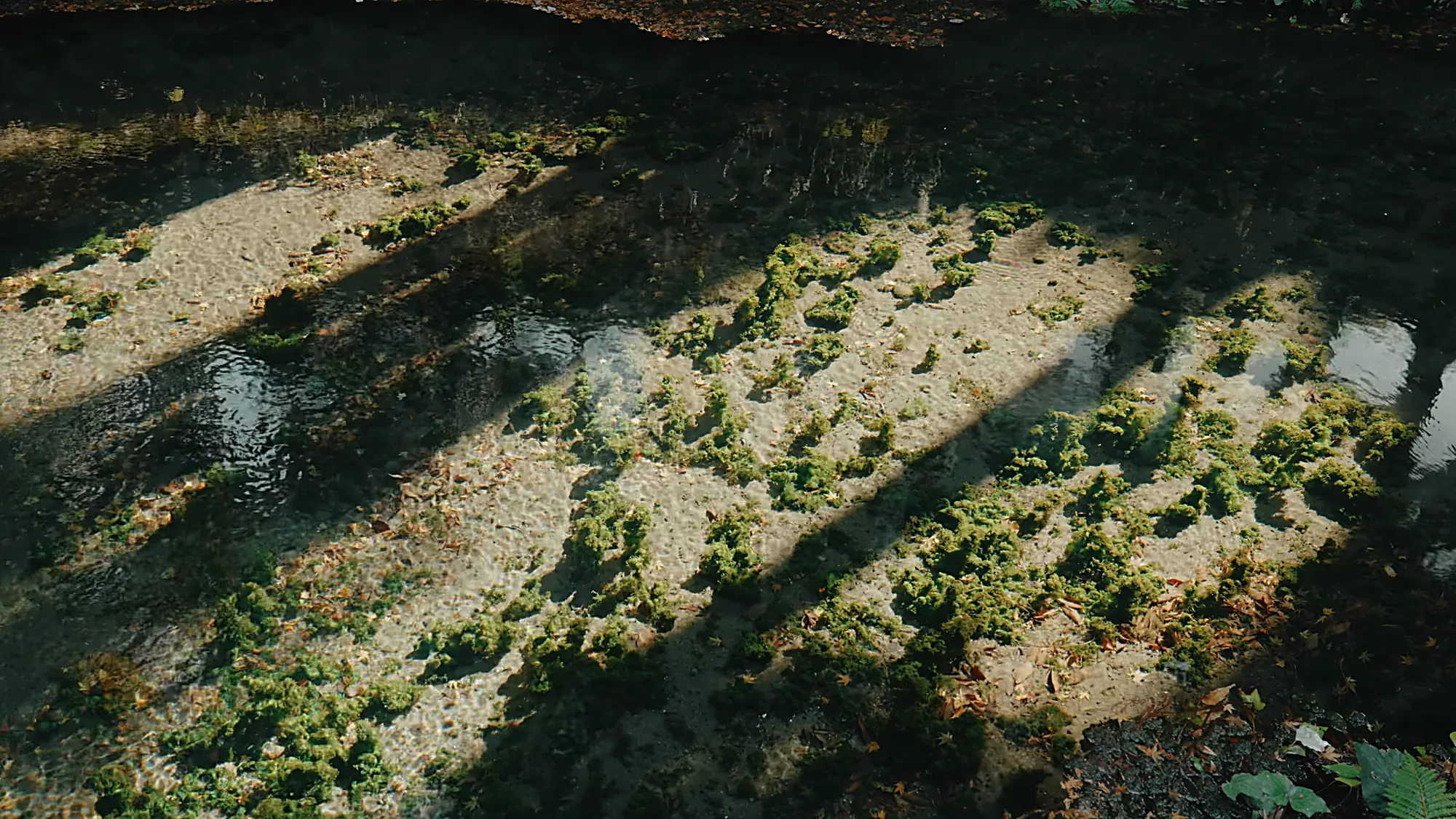
Fireflies work a narrow window, and they want water this clean.
The caldera at full green
July and August are the Aso grasslands' peak, and Kurokawa is a base for them: Daikanbō's rim panorama over the green caldera floor, the Senomoto highlands on the road toward Yufuin, and Nabegataki's walk-behind water curtain at its most photogenic against summer foliage (advance reservation required; see the day-trips page).
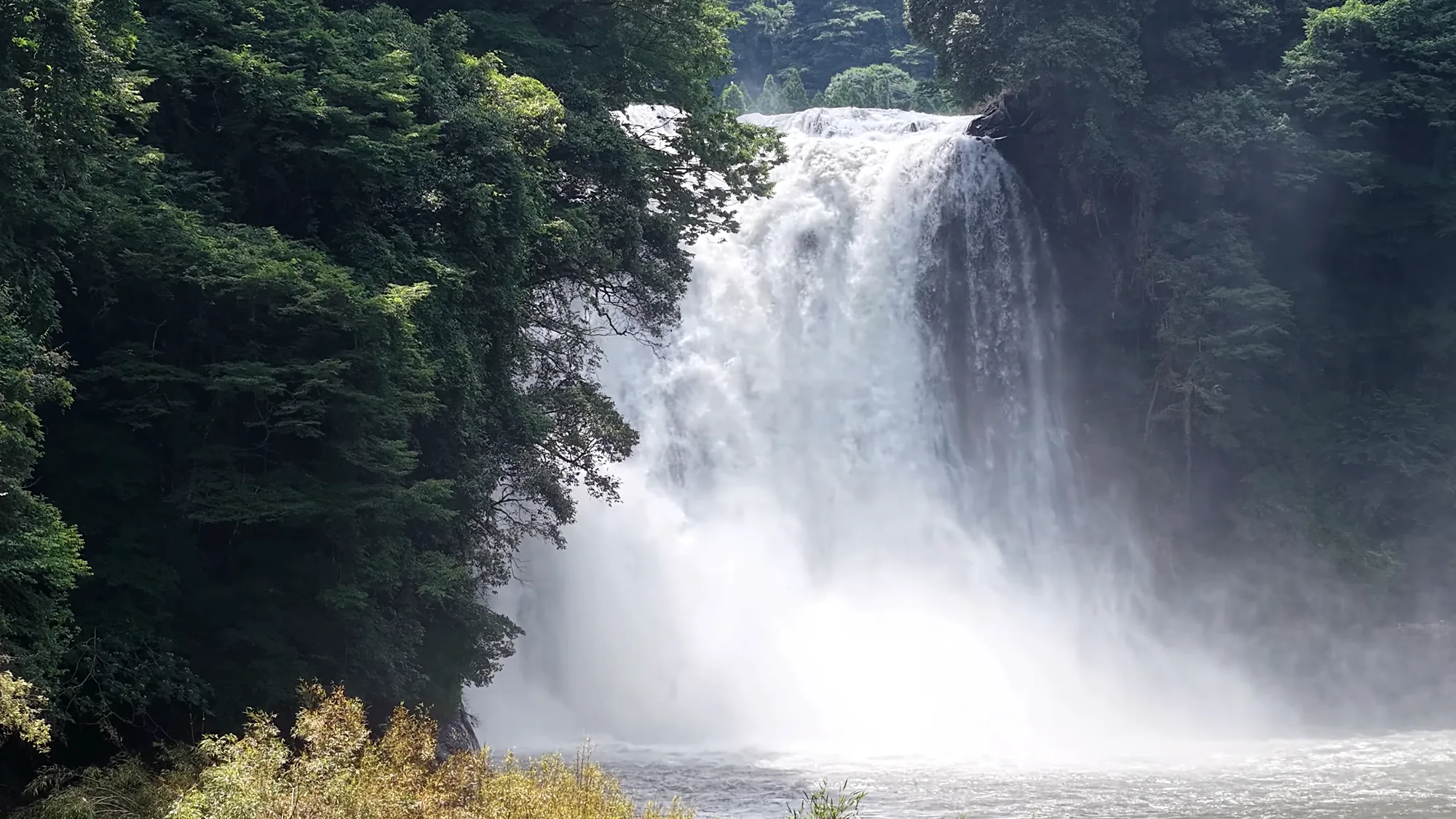
The caldera at full green is a different landscape from the one on the postcards.
Drivers get the season's full value; bus travellers can still anchor on the Ōdan route's scenic crossings, though those services are thinner under the 2026 earthquake reductions — check the association's live traffic page before relying on a specific run . The correct summer day: excursion out by mid-morning, back by late afternoon, then bath, dinner, the lantern walk, and a last bath.
Green-season excursions: the region at full growth
Summer turns the village's excursion field to its maximum green, and the day-trip menu reorders accordingly. The caldera country is the season's centrepiece: the grasslands climb toward their full height across the summer, the pastures run at their most theatrical, and the Yamanami Highway and Senomoto grassland, first among Kumamoto's hundred green landscapes, deliver the drives and pull-overs that October will later do in gold, here in deep green under towering cloudscapes.
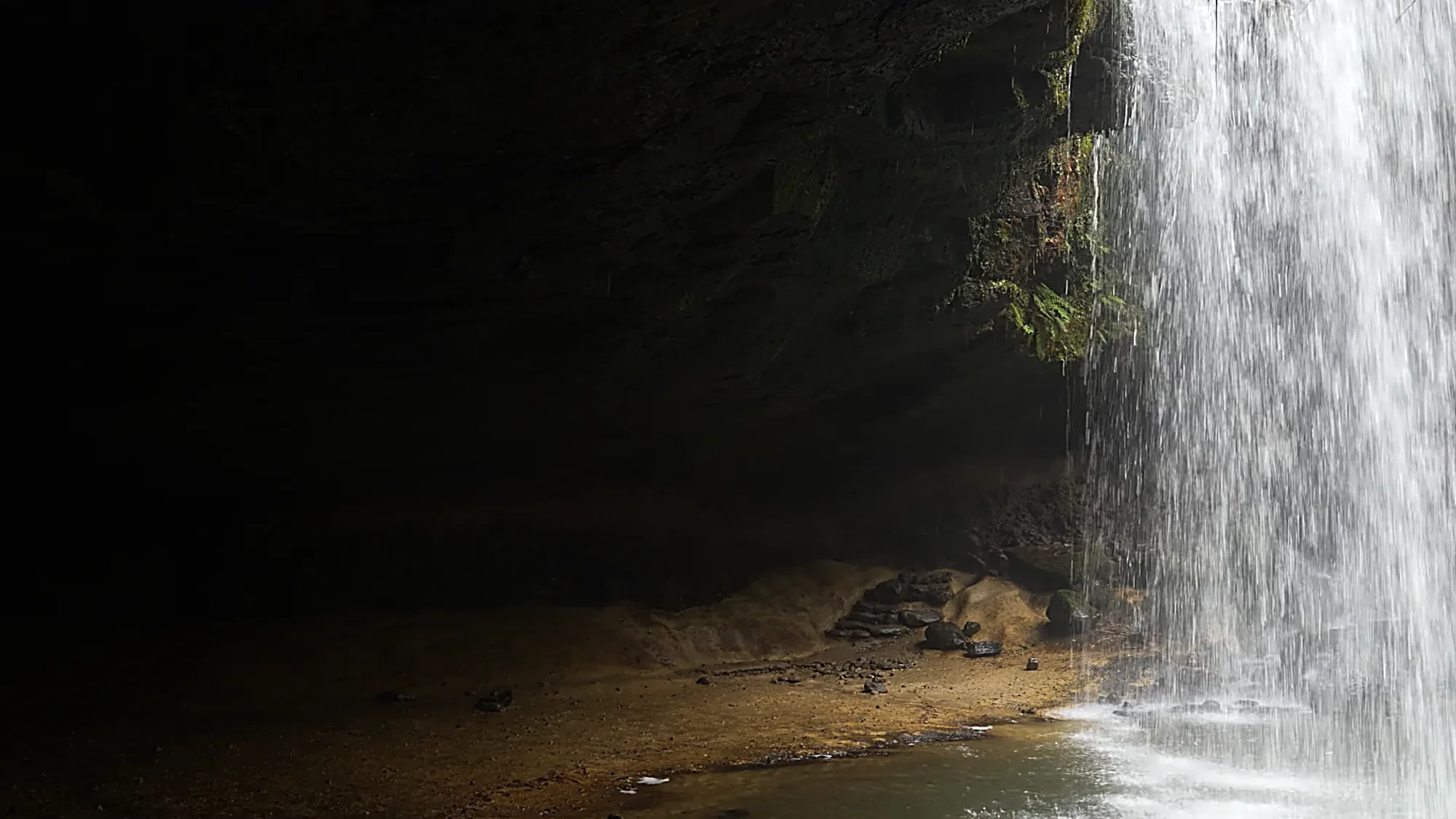
You can stand behind this one. It is the best half-day the region offers.
The micro tier inside the township suits the season equally: Manganji's river pool sits at its most inviting in the warm months, the running water doing naturally what the village's tubs do by geology, and the temple's shade makes the contemplative half-day a hot-afternoon refuge as much as a cultural stop. Families gain the season's free amenity, the river itself, whose shallows, sticks and currents entertain children at a price no attraction matches, under the standard mountain-water supervision.
Two seasonal disciplines govern the whole field. Weather volatility rises with the heat, afternoon build-ups over the caldera being routine, so summer excursions start early and aim to be back for the pre-dinner bath with margin; and the clear-day rule inverts from autumn's version, the mornings being summer's reliable window and the afternoons its gamble. Riders of the Odan line get the same green at bus-window scale on the ordinary schedule. The excursions do not compete with the village's rescheduled day; they slot into its morning half, and the parasols are waiting when they return.
Crowds and booking
July runs quiet outside weekends; August lifts with school holidays and Obon, the season's one hard peak, booked well ahead and priced accordingly. Even an August midweek stays manageable by the standard of a winter Saturday. Pack light layers for the cool evening, real sun cover for midday, and drink more water than usual between soaks — summer bathing dehydrates quietly, and the river does the village's air-conditioning only after dark.
The summer day, rebuilt around the heat
Summer does not cancel the bathing village; it reschedules it, and the visitors who thrive here in July and August are the ones who accept the season's edit. The day's prime bathing moves to its edges. Dawn is summer's secret hour: the highland night has done its cooling work, mist holds in the gorge, and the first soak of the day, taken before breakfast at your own inn, delivers in July the same water-air interval that makes winter famous, at the small price of waking with the birds.
The tegata circuit then runs on a morning schedule, first stamp at the 8:30 opening, second before noon, so the walking happens before the day's full weight arrives. Midday belongs to shade and the lanes' cool economy, the soft-serve and cider counters, the hearth lunch taken indoors, the kiln shelves, the river's shaded benches, and to the nap that ryokan afternoons were invented for.
The heat breaks with the light: by late afternoon the altitude reasserts itself, the evening bath recovers its pleasure, and the village's engineered second act, the parasol illumination, gives the after-dinner hours a destination the daytime never had. Structured this way, a summer day here contains as much bathing as a January one, differently distributed, plus a season-specific luxury no winter day offers: the long, warm, unhurried evening outdoors, in a village that has arranged light, food and open doors for exactly that hour. Fight the heat's schedule and summer here is merely pleasant. Adopt it, and the season argues for itself.
The summer stamp clock
The tegata's mechanics reward a summer-specific schedule. The bathing window opens at 8:30, and in July and August that first hour is the day's best bathing full stop: the highland night has pulled air temperatures down, the water's heat reads as contrast rather than excess, and the famous baths are empty because the day visitors are still on buses. Take stamp one then.
Take stamp two in the late afternoon as the heat breaks, at a sheltered or forested bath where shade does half the cooling. And in between, do what the village's own economy suggests: the green sticker's redemption list is heavy with exactly the things a hot afternoon wants, honey soft-serve, Jersey soft-serve two ways, soy-milk soft-serve, cold cider from the sake shops, so midday is when the food sticker earns its place in the system.
Overnight guests add the true summer luxury after dinner, the inn bath under cicadas with the parasol lanterns on the walk home. Day visitors should resist stretching the third stamp past late afternoon; summer or winter, the evening baths turn toward staying guests, and the six-month validity means an unspent red sticker is a reason to return in the season when the same water steams.
Summer with children
School-holiday season is when the village's family systems earn their keep. The child tegata at ¥700 (about US$4.70) covers ages three through twelve, and summer is the easiest season to use it: shorter, cooler morning soaks suit small bathers, the footbaths handle the members of the party who have retired from full immersion, and the sticker converts any surplus stamp into the soft-serve that is, for a nine-year-old, the trip's actual highlight.
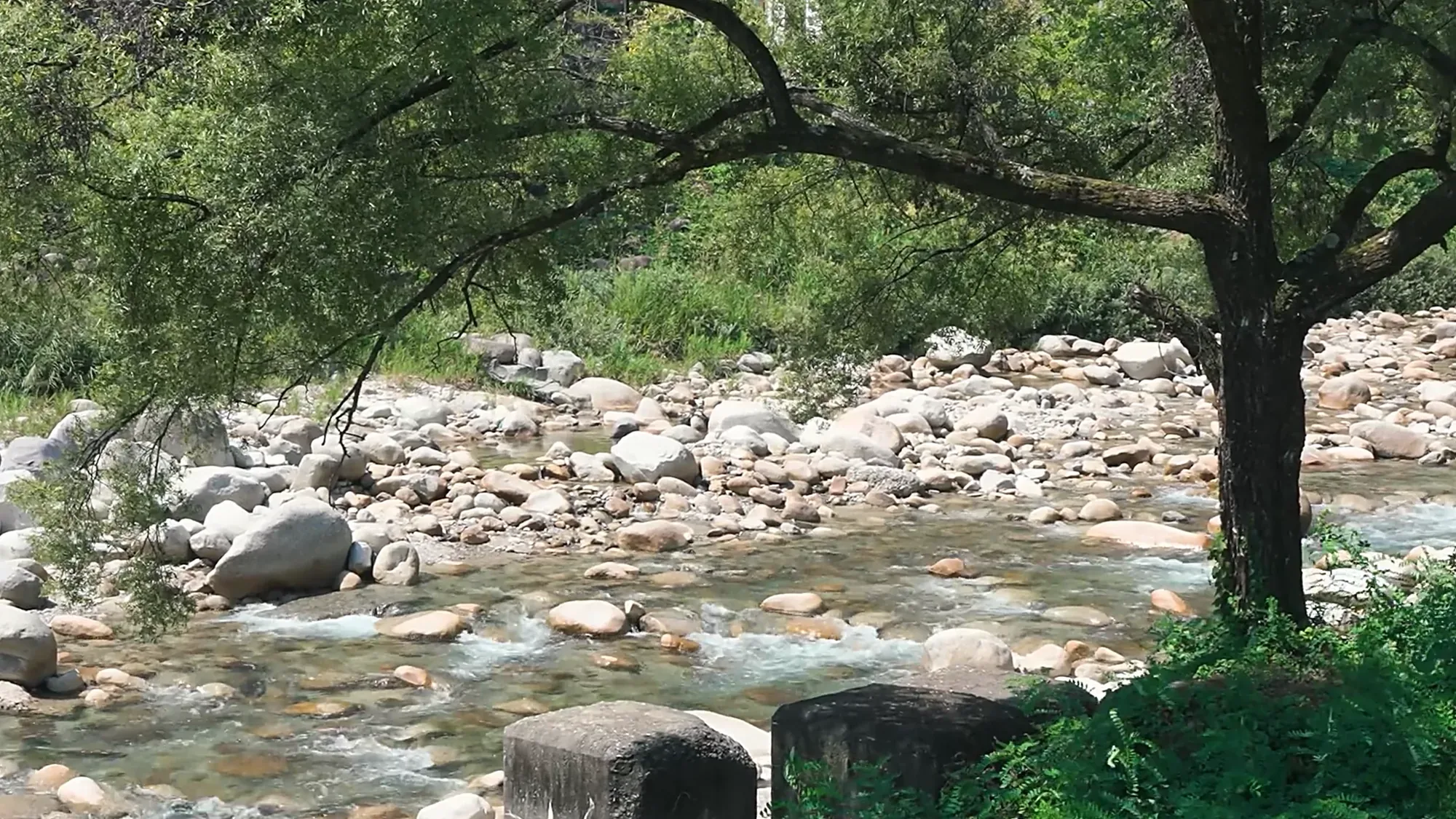
The river is the answer between baths, and it costs nothing.
The kashikiri hour remains the family's private option, best booked for the cool of late afternoon. Two summer-specific cautions round it out. Obon week compresses everything, rooms, buses and patience, so families tied to school calendars should book it far ahead or aim for July and early-August midweeks instead.
And the river that makes the village beautiful is a mountain stream, quick and stone-bedded; it is scenery and soundtrack, not a swimming hole, and the footbaths and baths are where the water and the children should meet. Within those lines, summer is quietly the village's most child-proof season: warm, bright, full of ice cream, and lit by parasols after dark.
The anniversary begins in summer
One dated fact gives the coming warm season a distinction no recent summer has had: the tegata's fortieth-anniversary programme opens on July 1, 2026, and runs to March 31, 2027, which means summer visitors are the first to see whatever the association stages for the milestone.
The pairing of dates is neat, the anniversary summer overlapping the Kasa Andon season almost exactly, so the village's least-sung months carry both the parasol lanterns and the fortieth year of the pass that built the town. We will not guess at the programme's contents beyond what is published, the window itself; but travellers choosing between an ordinary lowland summer itinerary and a highland detour now have one more argument for the detour, and it is stamped in cedar.
Summer's verdict, season against season
Set summer beside its rivals and its case is specific rather than general. Against winter, it loses the steam theatre and the lantern season's intensity and wins the long outdoor evenings, the green excursions and the gentler travel; the two seasons are the village's poles, and the ideal pair of visits takes both.
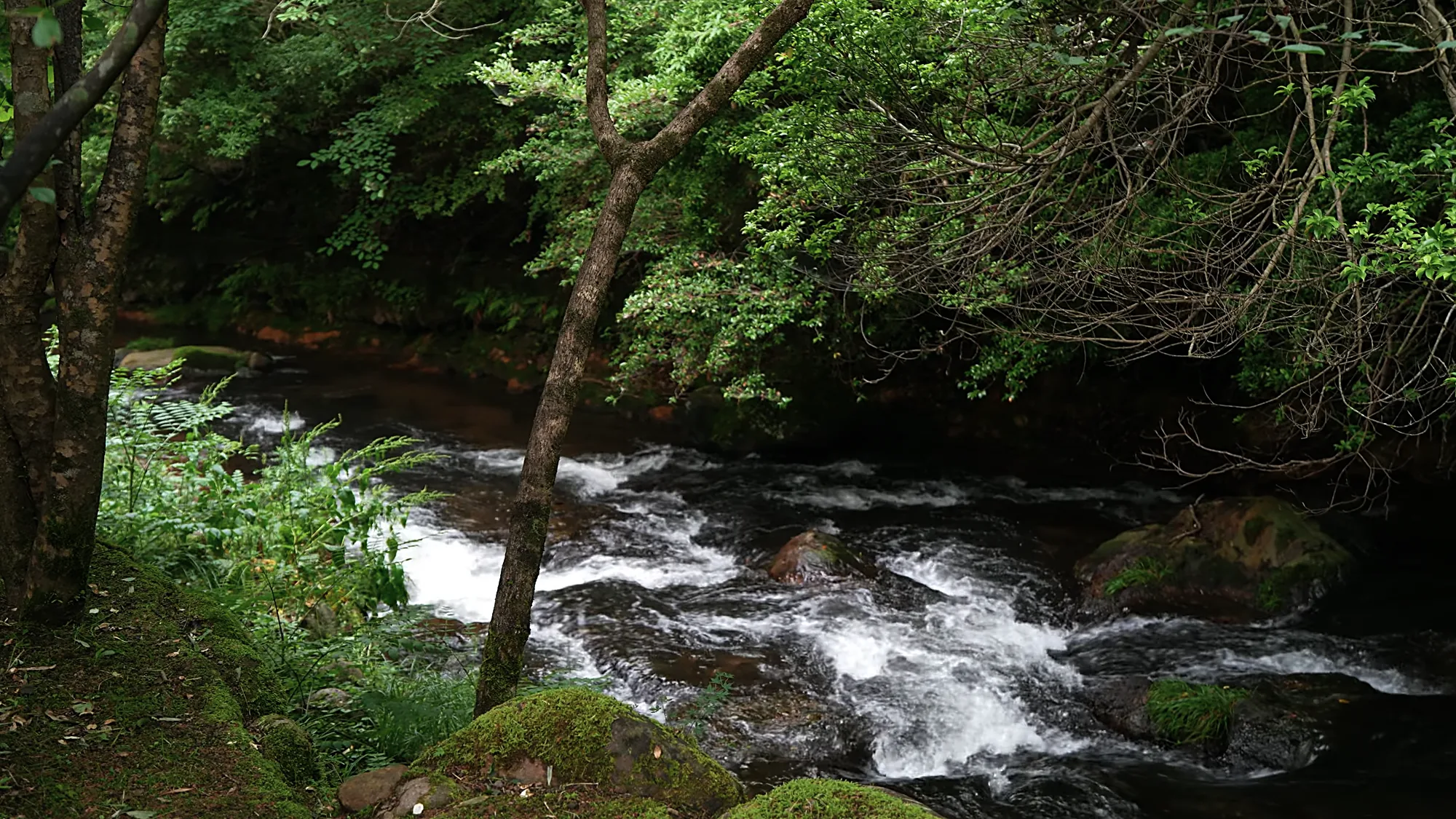
Summer is the season the valley is loudest, in every sense.
Against autumn, it concedes the year's best daylight scenery and answers with ease: no contested weekends outside Obon, no booking arms race, the same water and table at friendlier terms. Against spring, a local and likeable interlude, high summer is simply bigger, longer and better lit after dark.
Within its own three months the ranking is the practical finding: September first, the parasols to the 30th, the grasslands at height, the crowds gone, the most underrated slot on the calendar; June second, for the empty green weeks and the rain taken as atmosphere; August third, fine for those bound to it, managed with the strategies above, and cheerfully skipped by everyone else.
The composite verdict this site keeps reaching lands here too: summer is not the season you cross the world for, that is winter's and November's argument, but it is the season in which the village is easiest to have, most generous with its evenings, and coolest, in the literal sense, relative to everywhere its visitors come from.
A first-time trip planned for July, June or September midweek will meet Kurokawa relaxed, green, lit by parasols, and running several degrees ahead of the country below, which is a better introduction than most famous seasons anywhere provide.
Tips
Invert the day: bathe at dawn and after dinner, tour or idle through midday.
Catch Kasa Andon in the lanes after dinner (June 1 – September 30); it is summer's Yuakari.
Book Obon week far ahead or avoid it; the rest of August midweek is fine.
Reserve Nabegataki slots before summer weekends; the falls are the season's marquee day trip.
Drink more water than usual between soaks; summer bathing dehydrates quietly.
Frequently asked questions
Is summer too hot for Kurokawa Onsen?
When can you see fireflies in Kurokawa?
Is August crowded in Kurokawa?
What day trips pair with summer in Kurokawa?

Verified by The Japan Onsen Society
Show all sources
Verified July 7 to 16 and September 6, 2026 by The Japan Onsen Society. Altitude, the temperature differential and the Kasa Andon dates are the association's own; the firefly window is a visitor observation, marked , and summer bus schedules are perishable under the 2026 earthquake reductions.
About 700 m · 3–5 °C cooler than the lowlands · Kasa Andon (旅傘 + 鞠灯籠) June 1 – September 30 → 黒川温泉観光旅館協同組合 kurokawaonsen.or.jp → verified Sep 6, 2026
Nabegataki reservation + Ōdan scenic crossings + live traffic → 組合 kurokawaonsen.or.jp/weather_traffic/ → perishable, re-check
VERIFY:
Firefly season/locations (June–early July) — no official source found; kept as a flagged observation
Kasa Andon exact dates each season
Nabegataki summer reservation pressure and current system
USD conversions n/a
黒川温泉観光旅館協同組合 入湯手形 (Kurokawa Onsen Ryokan Co-operative Association, tegata page) - the fortieth-anniversary window opening July 1, 2026, the 8:30–21:00 bathing hours, the child price and age band, the sticker redemption list, and the pass mechanics behind the August strategies, verified August 18 and September 6, 2026
黒川温泉観光旅館協同組合 公式サイト (association home) - the Kasa Andon season, June 1 to September 30, 2026, nightly and free of charge, verified September 6, 2026
黒川温泉観光旅館協同組合 お店一覧 (shop directory) - the soft-serve and cider makers named in the midday economy, verified September 6, 2026
黒川温泉観光旅館協同組合 よくある質問 (official FAQ) - the 700 m altitude with its 3–5°C differential, the visitor code behind the evening-walk conduct, and the source-water disclosure behind the year-round bathing claim, verified September 6, 2026
黒川温泉観光旅館協同組合 アクセス (access matrix) - the reserved departures behind the August seat pressure and the island-wide routings in the recovery-station argument, verified September 6, 2026
日本温泉協会 国民保養温泉地 南小国温泉郷 (designation profile) - Senomoto's first-place listing among Kumamoto's hundred green landscapes and Manganji's river pool in the green-season excursions, verified September 6, 2026
黒川温泉観光旅館協同組合 天気・交通情報 (live weather and traffic page) - the rainy-season and earthquake-era service checks; perishable, re-check before travel
Related guides
When to Visit
Best time to visit
Kurokawa has no bad season; what changes is contrast, colour, and competition for beds in a village of thirty small inns.
When to Visit
Spring
Kurokawa off-duty: the baths still hot, the lanes empty on a Saturday, and rooms bookable in weeks rather than months.
When to Visit
Autumn
The forests the revival replanted turn above the baths; everyone knows, and the village sleeps only a few hundred.
When to Visit
Winter
The baths were built for cold air. Winter supplies it, adds the lanterns, and thins the day crowds.
When to Visit
Day trips
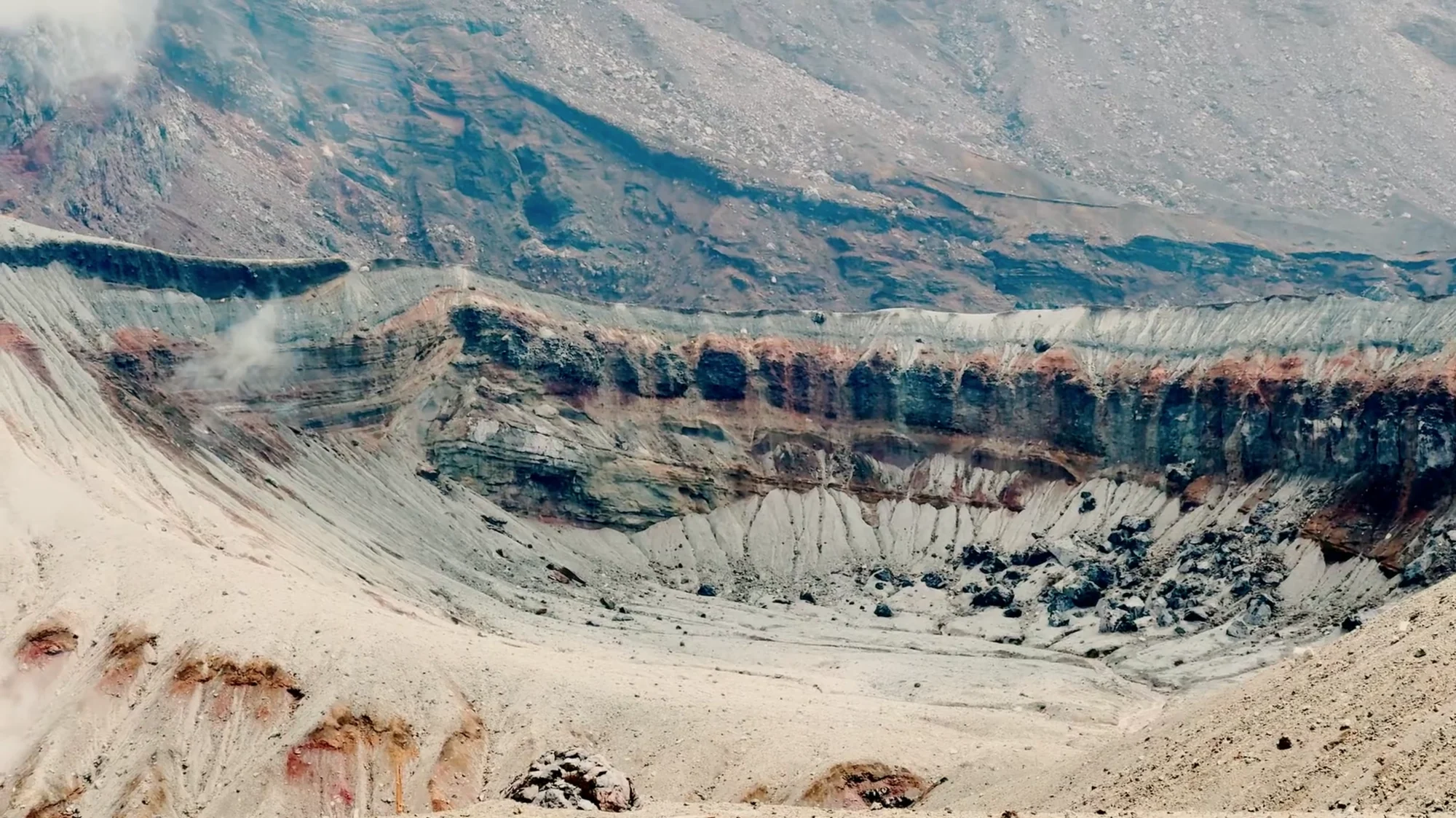
Kurokawa sits on the shoulder of a great caldera. Within an hour lie a walk-behind waterfall, a rim view, and an active crater.
When to Visit
Things to do
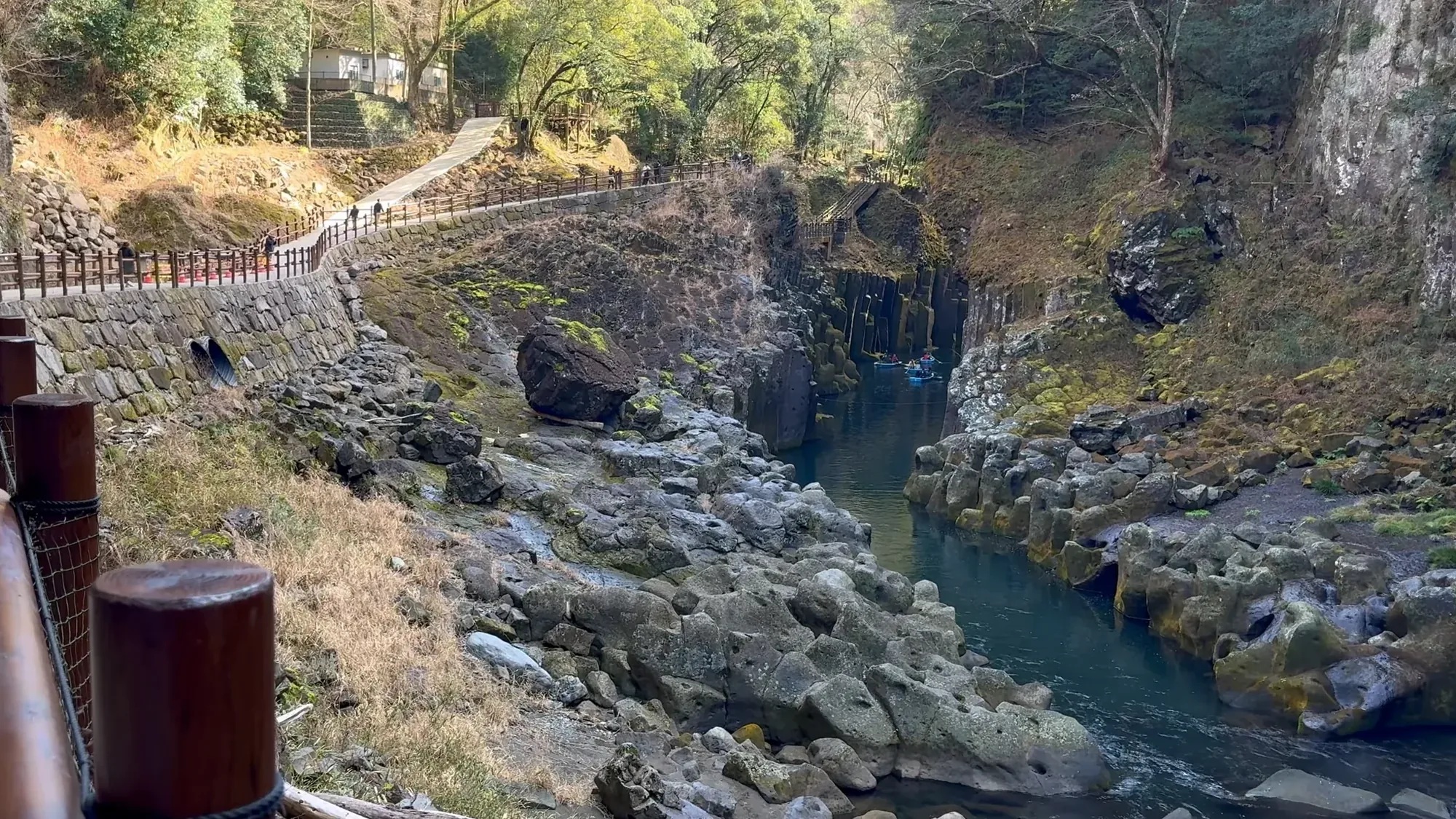
Asked what there is to do besides bathe, Kurokawa answers quietly: walk, snack, sit by the river, then look outward to the valley.