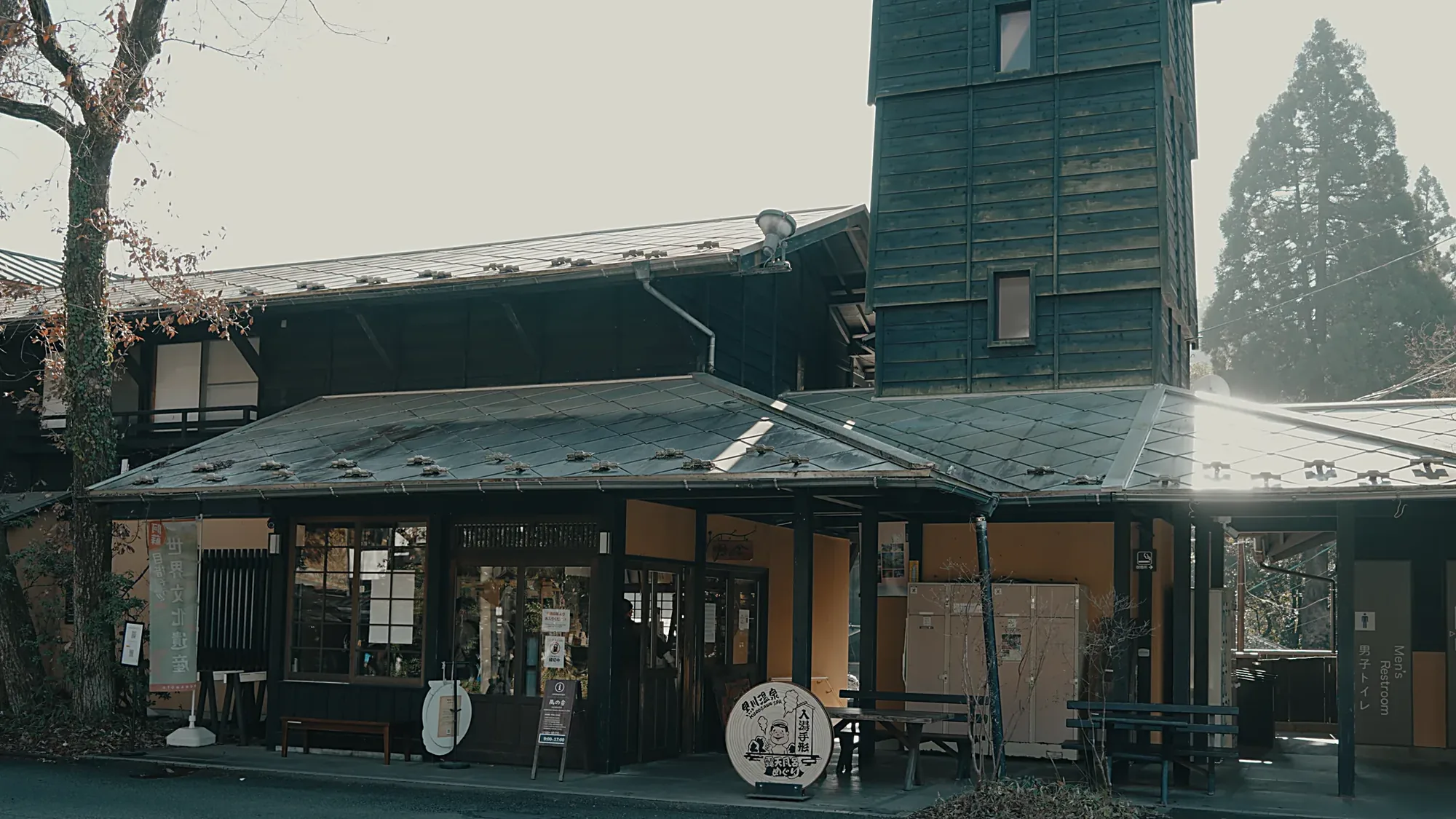
A town going under
Kurokawa entered the postwar era with hot water and little else. It was a remote cluster of inns in the Aso hills, with no rail line and no famous history, surviving on farm trade and small group banquets.
The 1964 opening of the Yamanami Highway brought a brief flush of drive-through visitors, then left the town stranded in the same obscurity, now with newer competitors. By the 1970s young successors were inheriting inns with shrinking books in a village with no obvious reason to visit.
How obscure? The association records the plainest possible measure of it: until the year 2000, Kurokawa's name did not appear on the local newspaper's map of Kumamoto Prefecture at all.
The conventional rescue of the era, concrete towers and banquet halls, was beyond the village's means. Its poverty turned out to be its luck, because it forced a different bet.
The first boom, and the lesson it taught
Kurokawa has boomed before, and the first boom is the half of the story the postcards skip. In 1964 the Yamanami Highway opened across the Kuju highlands, and as Shinmeikan's own history tells it, traffic poured past the valley's door. Inns filled, money arrived, and the village rode the road's novelty the way every roadside town in high-growth Japan did.
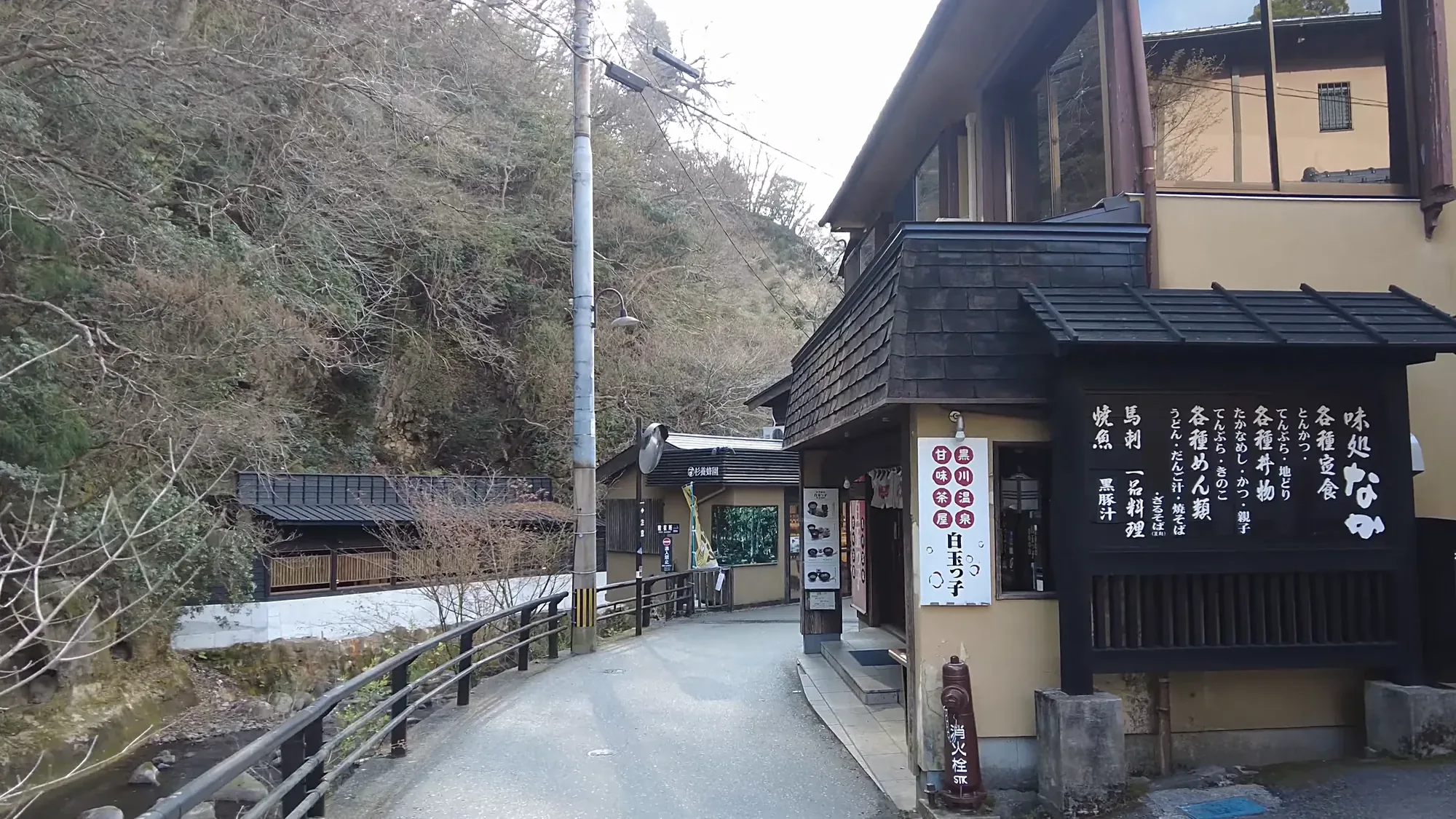
The first boom built the wrong thing. What replaced it is this.
Then the novelty wore off. The highway's traffic thinned, the tour flows found newer routes, and Kurokawa learned the lesson that would define everything after: borrowed traffic goes home.
A town whose custom depends on a road, a trend or a passing fashion has no custom of its own, only a temporary loan of someone else's. When the loan was called in, the valley's inns faced the emptiness with nothing distinctive to hold a traveller against the pull of bigger, brighter resorts.
It is worth sitting with how ordinary that position was. Hundreds of Japanese hot-spring towns stood exactly there in the 1970s, and most answered with concrete: bigger buildings, louder signs, banquet halls for the group trade.
Kurokawa's significance is that it eventually answered in the opposite direction, and the answer began not with a plan but with one stubborn project underground. The first boom's failure was the revival's precondition. A village that had already tried being convenient, and watched convenience evaporate, was psychologically ready for the harder argument that it should try being itself.
The man who dug
The third-generation owner of Yama no Yado Shinmeikan made the first move, and made it with a chisel. He was convinced that an extraordinary bath, not a bigger building, would bring travellers a railway never would.
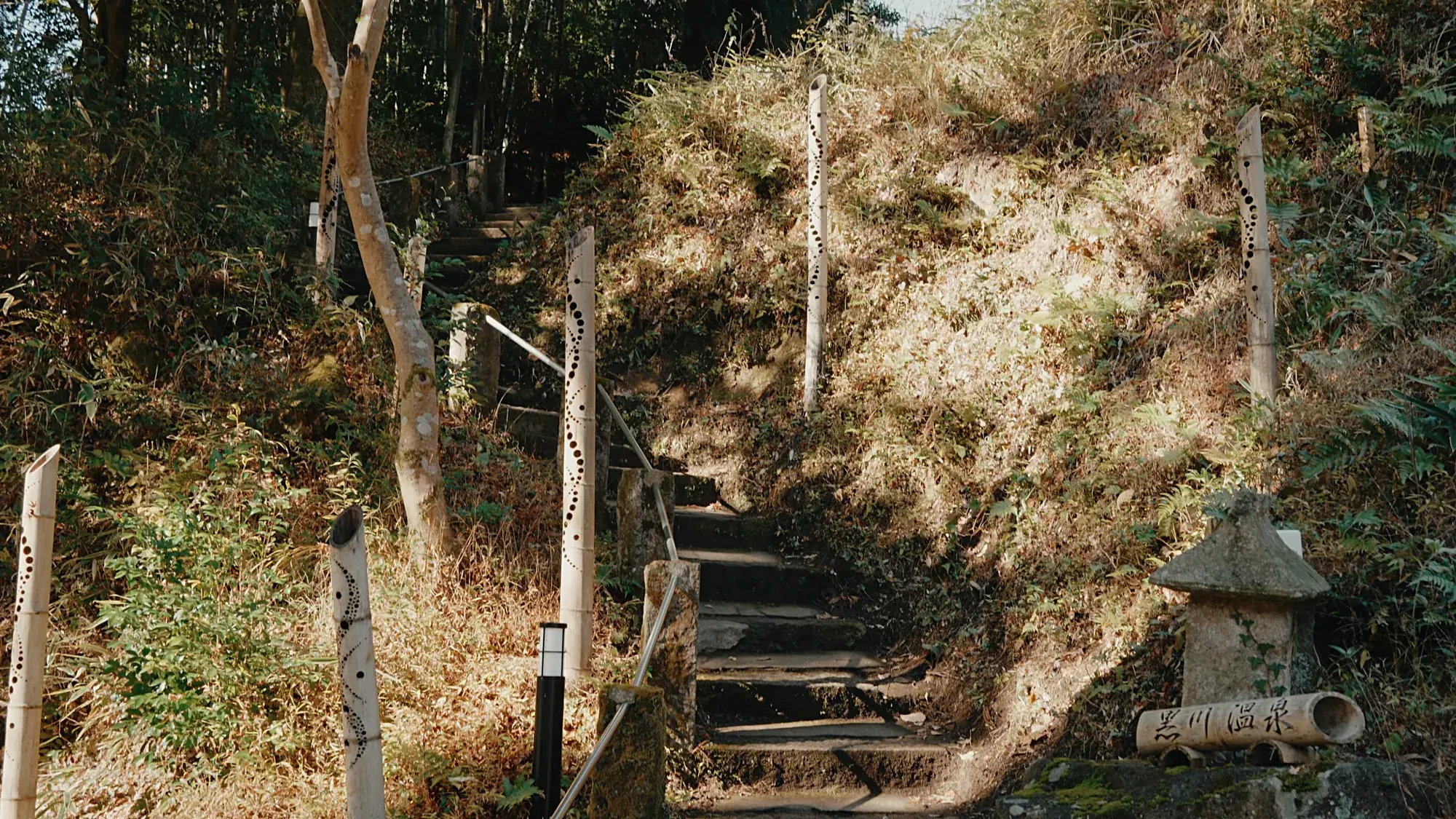
One innkeeper, one cave dug by hand, and a valley that copied him.
By the inn's own account he began at the age of twenty-four, hand-digging a cave bath into the rock behind his inn, working at it for about three and a half years until he had a tunnel he could flood with spring water.
It worked. People came for the strange bath in the mountains. Neighbouring inns answered with open-air rotenburo of their own, and a village of ordinary indoor baths became, one bath at a time, a collection of outdoor ones worth travelling for.
He is remembered as the father of the revival. A name for him circulates on the English internet, but the inn's own history tells the whole story without printing it, so neither do we. What he did leave in words is the phrase the village still builds by: 「あるがままの自然」 (aru ga mama no shizen), nature as it is.
Three and a half years with a chisel
The revival's founding act was manual. At Shinmeikan, the third-generation owner, then twenty-four years old, took a chisel to the rock face behind his family's inn and began digging a cave bath by hand. The work took roughly three and a half years.
By the inn's own account there was no budget for machinery and no certainty anyone would come. There was a young innkeeper's conviction that a bath carved into the living rock, filled with the valley's own water, would be something no highway town could copy.
Every account of Kurokawa's turnaround eventually returns to this image, and it deserves the weight. The cave bath established, in the most literal way possible, the principle the whole village would later adopt: value here would be made from the valley's own materials, rock, water, forest and labour, rather than bought from a catalogue.
It also established the revival's economics. A hand-dug cave costs years instead of yen, which meant the valley's poorest era produced its most durable asset, and the asset appreciated as every surrounding town's concrete depreciated.
Guests still queue for that cave today, tegata discs in hand, most of them knowing nothing of the chisel. They do not need to. The bath itself makes the argument the young owner was making half a century ago: that a small inn in a forgotten valley could build the one thing the big resorts could not, and that the building of it, slow, obstinate and by hand, was not a limitation of the method. It was the method.
The revolution of subtraction
What followed the cave was stranger than construction: a village improving itself by removal. In the years the revival gathered pace, the inns took down roughly two hundred signs, the billboards and neon and pointing arrows that every Japanese resort town had accumulated, and planted trees along the lanes and riverbanks where advertising had stood.
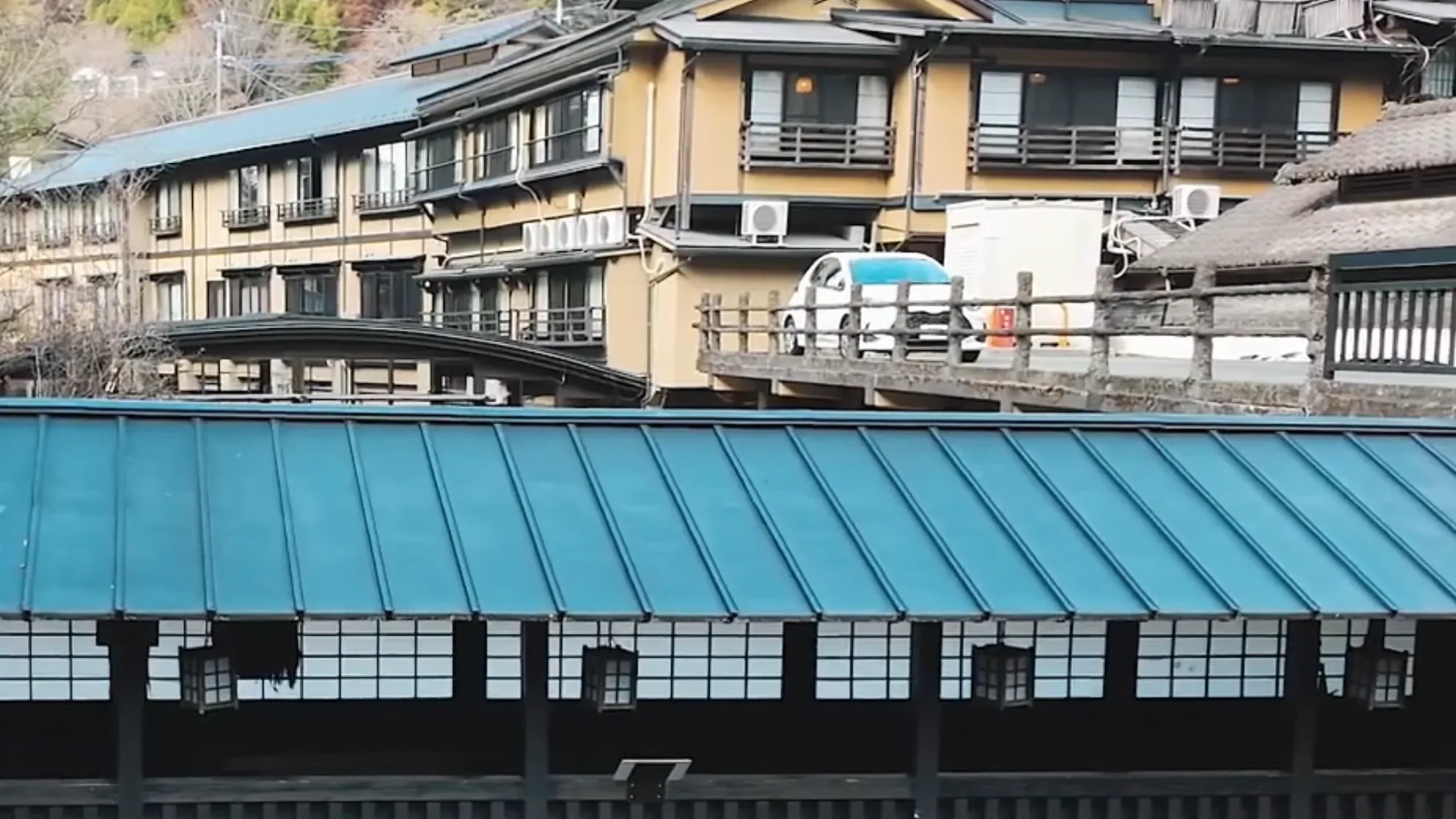
The revolution was subtraction: neon down, concrete out, signage agreed.
Shinmeikan's history gives the philosophy its name: 「あるがままの自然」 (aru ga mama no shizen), nature as it is.
The insight underneath is the one that still separates Kurokawa from its imitators. The removals were not aesthetic housekeeping. They were a redefinition of what the product was.
A sign war is an arms race in which every inn shouts louder and the street itself becomes the casualty. The village understood that the street was the attraction, that a guest at any single inn was really buying the whole valley's atmosphere, and that atmosphere is a commons, destroyed by exactly the individual promotion each inn had rational reason to buy.
So the village disarmed, together. Earth tones, wood, subdued lettering, trees where the billboards had been.
It is easy to admire the result and miss its difficulty. Every removed sign was one inn's marketing surrendered to the common good, a coordination problem most business districts never solve. Kurokawa solved it because the failed boom had taught everyone the alternative, and because the emerging idea of the village as one inn gave the sacrifice a logic. The lanes you photograph today are the visible residue of that decision, repeated a few hundred times.
Designing the stage
With the baths as the product, the village turned to the setting, and the work was as much subtraction as construction. Through the 1980s and 1990s the ryokan association agreed what Kurokawa would refuse: neon, garish signage, vending-machine clutter, anything out of scale with the forest.
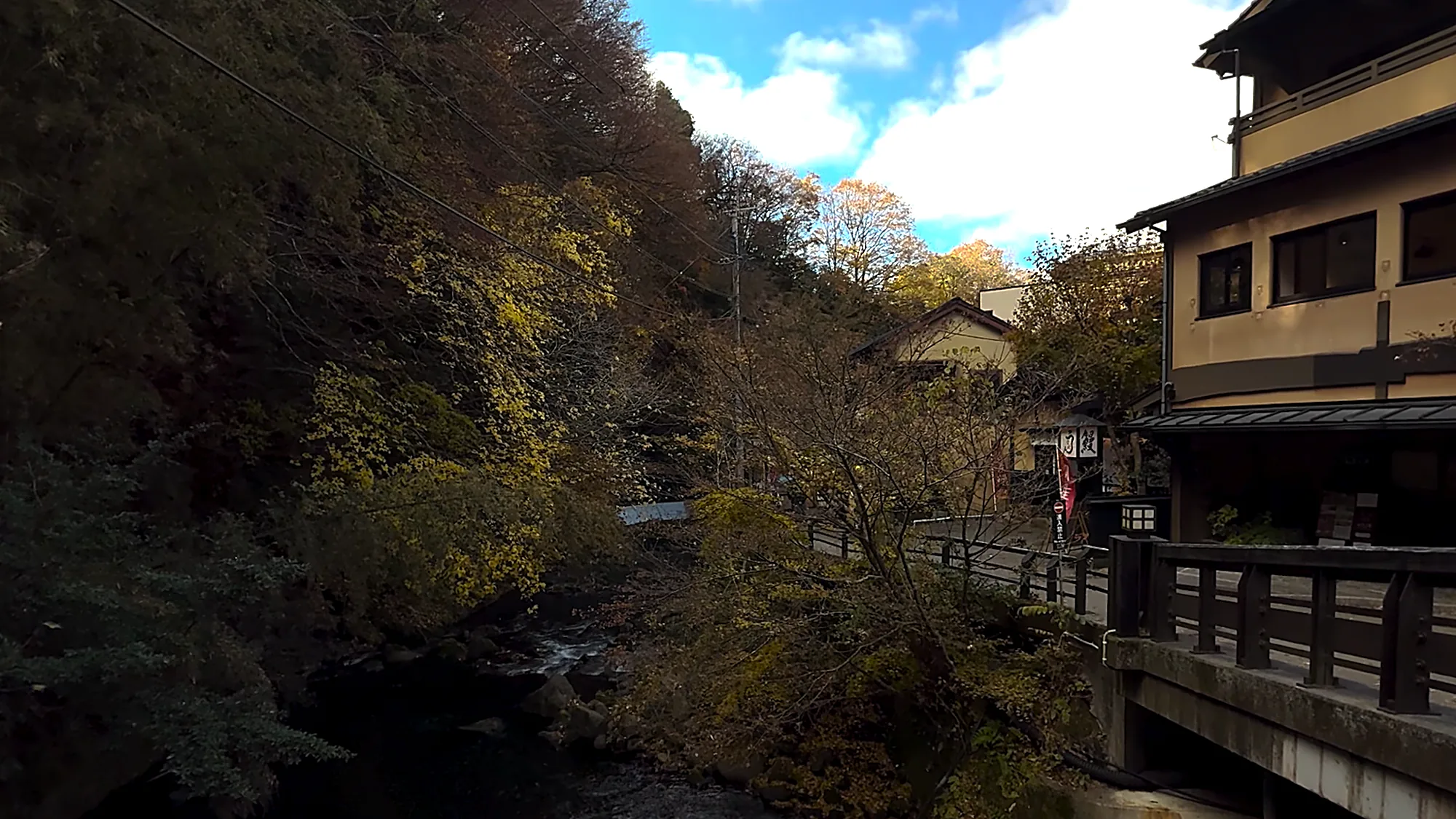
Every façade you can see was argued over. That is the point of the place.
In the single most concrete act of the campaign, the innkeepers took roughly two hundred signs down off the lanes together. What replaced them was uniform: carved wood, earth tones, natural materials.
Alongside the signs came the greening. The inns replanted the mountain-village scenery over three decades, rebuilding what the postwar years had thinned. The inn's own account records that replanting without giving a number, so we do not print one, however often a round figure is repeated elsewhere.
The result reads to a visitor as untouched and is precisely the reverse: a curated landscape, maintained by committee, that photographs like nostalgia and functions like brand architecture.
The village even regulates the soap and shampoo used in its baths, out of concern for the stream it sits above. The design code did not stop at what the eye can see.
The pass that made rivals partners
The institutional stroke came in 1986: the Nyūtō Tegata (入湯手形), a cedar disc that admitted its holder to any three rotenburo among the participating inns.
It sounds small. It reorganised the town. The pass converted competitors into a single network, spread visitors and their money through the whole village rather than concentrating them at a few famous doors, and gave Kurokawa the organising metaphor it still runs on.
The association states it precisely: 黒川温泉一旅館 (Kurokawa Onsen ichi ryokan), the whole of Kurokawa is one ryokan. In that image each inn is a 離れ部屋 (hanare-beya), a detached guest room, and the lanes between them are 渡り廊下 (watari-rōka), the connecting corridors of a single great inn.
Guests stopped choosing one inn's baths and started moving among them, which is exactly why bath quality village-wide, not any one property's, became everyone's shared asset.
Two details show how deliberately the system was built as culture rather than commerce. Each ryokan carves its own stamp, so a completed tegata is a personal record of where its holder bathed. And the association returns one percent of every tegata sale to landscape and nature-conservation work in the valley.
In 2026 the pass reaches its fortieth year, marked by a year-long anniversary programme.
1986: the pass that made the philosophy pay
Philosophy needs a mechanism, and the tegata was it. Created in 1986, at the exact height of the bubble economy when the rest of resort Japan was pouring marble, the bathing pass was designed, as Shinmeikan's history records, for the member inns that had no open-air bath of their own. Buy the wooden disc, and any inn's guest could bathe at the celebrated baths of any other.
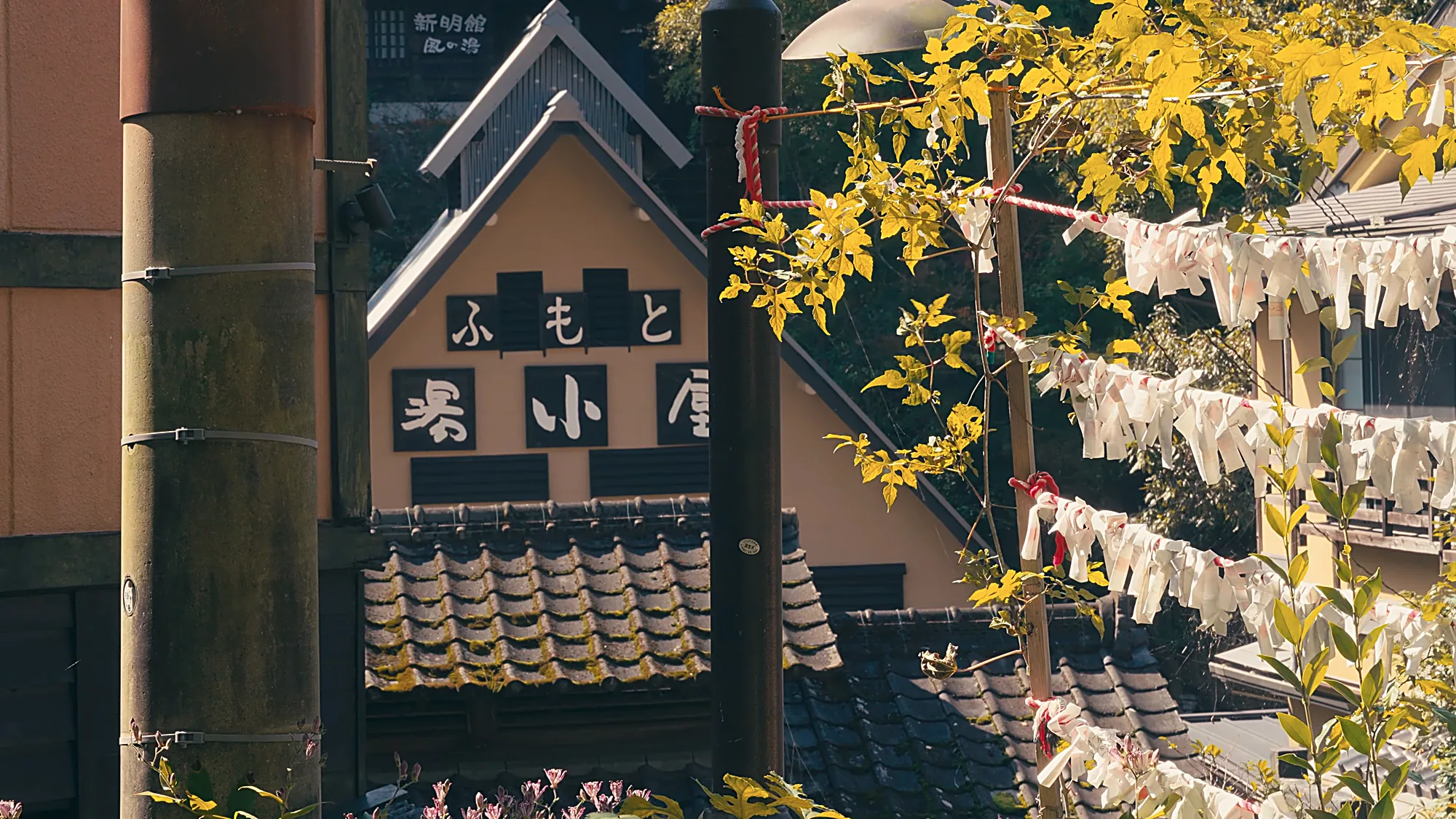
The pass turned a shared idea into shared revenue. That is why it survived.
The elegance takes a moment to unfold. In one move the pass converted the village's inequality, some inns rich in baths, others rich only in rooms, from a competitive fault line into a shared product.
It gave the smallest houses a stake in the grandest baths and the grandest houses a stream of visitors from the smallest. And it obliged every guest to walk the lanes between soaks, which turned the newly beautified street from scenery into infrastructure.
It also, quietly, priced the commons. Today one per cent of each disc funds the village's conservation, so the pass that sells the atmosphere also maintains it.
Institutions are the least photogenic part of any revival and usually the most decisive, and the tegata is the proof in cedar. Forty years on, with the association running the fortieth-anniversary programme from July 1, 2026 to March 31, 2027, the pass has outlived the bubble whose values it refused, most of the marble poured that decade, and every fashion cycle since.
Few pieces of Japanese tourism machinery from 1986 still run at all. This one built the town around itself.
One ryokan with thirty rooms: the metaphor as governance
The association states the village's organising idea in six characters: 黒川温泉一旅館 (Kurokawa Onsen ichi ryokan), Kurokawa Onsen is one ryokan.
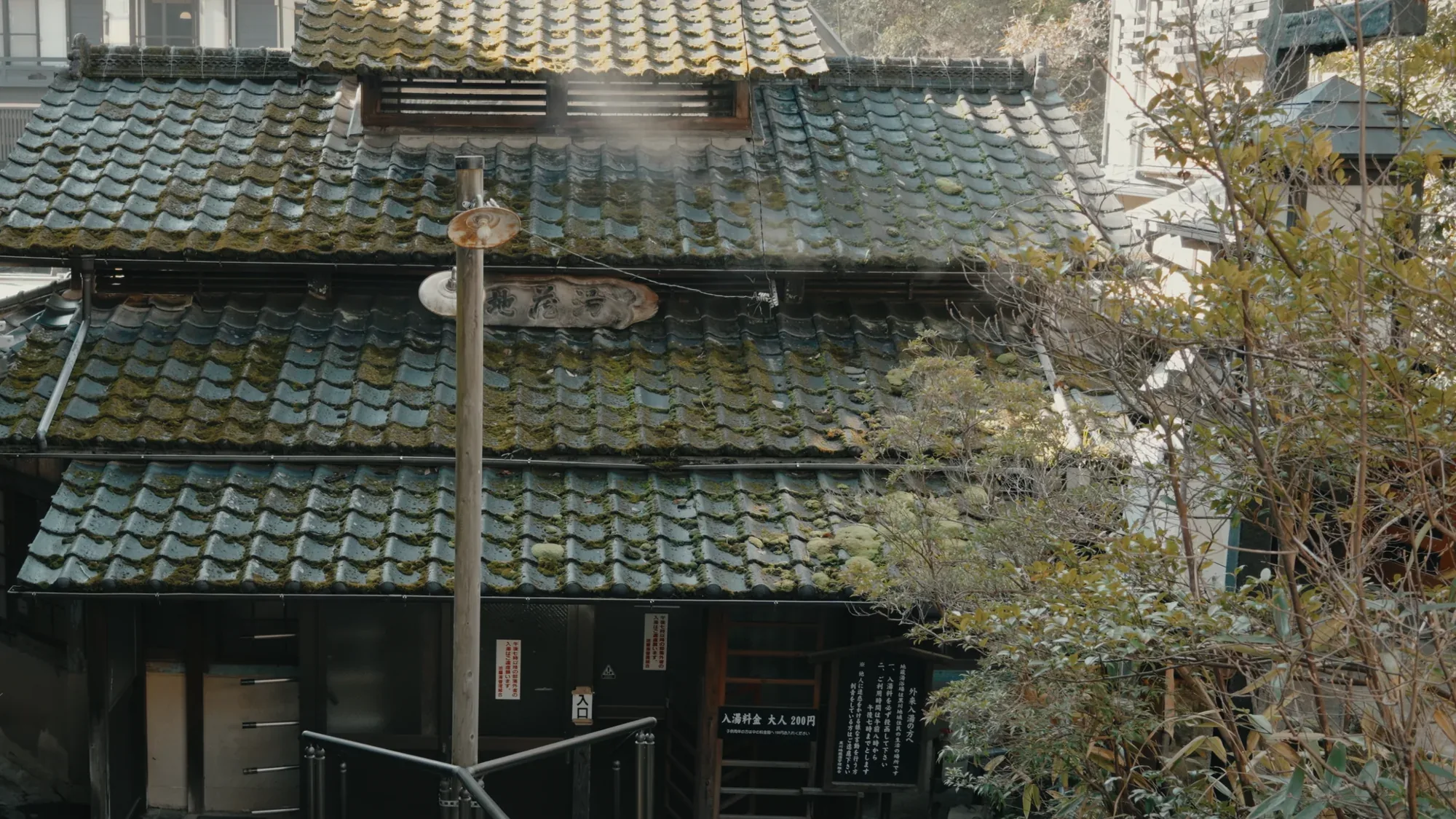
Thirty inns run as one, which is a governance model before it is a metaphor.
The elaboration is just as deliberate. The thirty member inns are the detached guest rooms, the hanare, and the lanes between them are the connecting corridors, the watari-rōka, of a single sprawling inn whose garden is the valley itself.
It reads like marketing poetry, and it is actually a constitution. Take the metaphor seriously and a series of governance conclusions falls out, each one visible in the working village:
If the inns are rooms of one house, they do not compete on the corridor. That is the sign-removal decision restated.
If the corridor belongs to every room, its upkeep is a shared charge. That is the conservation levy.
If a guest of one room is a guest of the house, every bath opens to every visitor. That is the tegata.
If the house is one, its standards are common property. That is why a design code can bind thirty separate businesses that anywhere else in Japan would be undercutting each other's paint jobs.
The metaphor even assigns the association its role: not a trade lobby but the front desk of the collective inn, publishing the directory, the access matrix, the daily bath board and the FAQ as one voice.
Plenty of destinations have slogans. Kurokawa has an operating metaphor that allocates costs, rights and duties, which is the difference between branding and constitution, and the reason the phrase has survived long enough to become the thing this site keeps quoting.
The legend the village keeps
Underneath the strategy runs an older story the association tells in full, and it is worth telling because the village still centres on it. Kurokawa's origin legend is the 首なし身代わり地蔵 (kubinashi migawari Jizō), the headless substitute-Jizō.
In it a poor salt-seller named Jinkichi, desperate to grant his bedridden father's wish for a melon, takes one that is not his. A landowner raises a blade to him, and a stone Jizō the boy had prayed to takes the blow, its head falling so that his does not.
The headless Jizō is later carried toward Higo by a travelling ascetic, Honda Katsujūtarō, and at Kurokawa the statue grows too heavy to move and asks, speaking, to be enshrined on the spot. A hall is raised, hot water begins to flow, and that, the legend says, is the founding of Kurokawa Onsen.
The substitute-Jizō is still enshrined at the centre of the village, and the two communal bathhouses tied to the tale, Jizō-yu and Ana-yu, still pour their own water at the humble end of the town's map.
A village that markets itself on design turns out to keep a genuinely old story at its heart, which is the opposite of the theme-park charge sometimes laid against it.
Before the revival: the valley's deep past
The revival story usually opens in the 1960s, but the valley it saved is much older, and the deep layers explain why there was something worth saving.
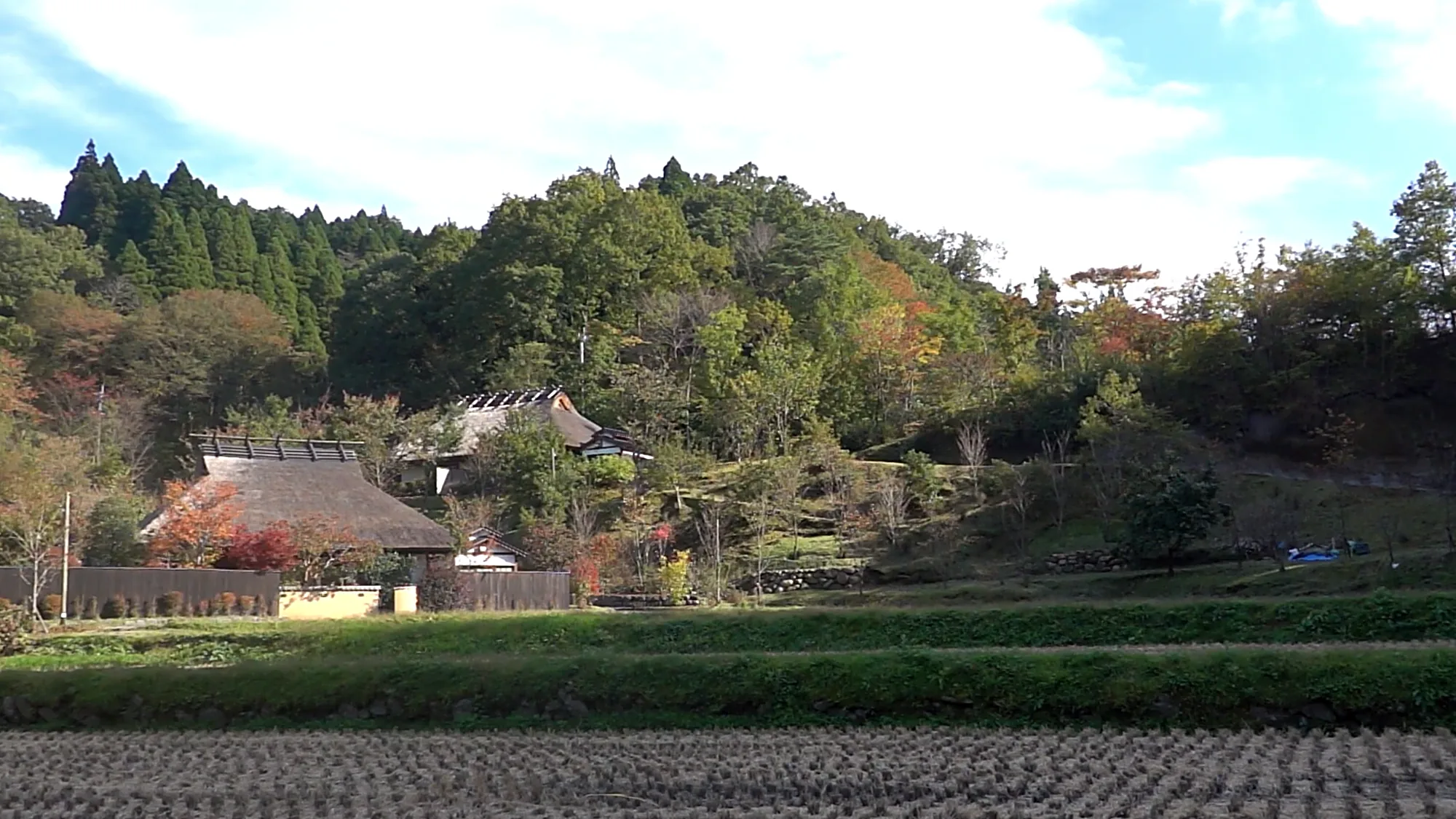
Before the inns, this was farming country that happened to have hot water.
The founding legend is the headless Jizō: a statue beheaded far away, the story runs, whose head was carried into these hills and set down here, and where it rested, hot water rose. The village's oldest baths still carry the association with the guardian statue, and the little Jizō shrine at the centre of the lanes remains the place where the tegata discs come home to rest.
Legends aside, the documented past is deep on its own terms. One hamlet over, Manganji's temple dates to the thirteenth century, founded under Hōjō Tokisada of the Kamakura shogunate's line, which means organised life beside these rivers predates every ryokan by half a millennium.
And in Tanohara, the neighbouring spring hamlet, the therapeutic-stay tradition, 湯治 (tōji), runs back some three hundred years, farmers and travellers coming to sit in the water for days at a time long before anyone spoke of tourism.
Read together, the layers say something important about what the revival generation inherited: not an empty valley, but a bathing landscape with legend, religion and medical custom already braided into it, thin on money and thick on meaning.
The revival's genius was never invention. It was recognising that the meaning was the asset, and that the meaning was still here, under the weeds, waiting for someone to stop paving over it.
Fame arrives
The initiatives of the 1980s and 90s compounded after 2000. Domestic magazines crowned the village, and weekend bookings began to outrun its thirty small inns.
the Michelin Green Guide Japan awarded Kurokawa two stars in 2009, a rating the Kyushu Tourism Promotion Organization calls exceptional for a hot spring town.
Today the village is spoken of as running near full overnight occupancy in peak seasons, and its model is studied by rural-tourism groups from across Japan. The same design logic now extends to its two seasonal illuminations, the winter Yuakari and the summer Kasa Andon, both bamboo and lamplight rather than LED.
One credential needs no hedging. Kurokawa anchors the government-designated 南小国温泉郷 (Minamioguni Onsen-kyō), a National Recuperation Hot Spring Area under the Environment Ministry, and stands on the 日本の名湯・秘湯百選 list, the Hundred Famous and Secret Hot Springs of Japan, both recorded on the spa association's own profile.
The lesson under the postcard: Kurokawa is not preserved. It is authored, continuously, by the people who almost lost it.
Invisible at home, famous abroad
The revival's timeline carries a detail so improbable the association itself tells it: until the year 2000, Kurokawa was absent from the prefectural tourist map.
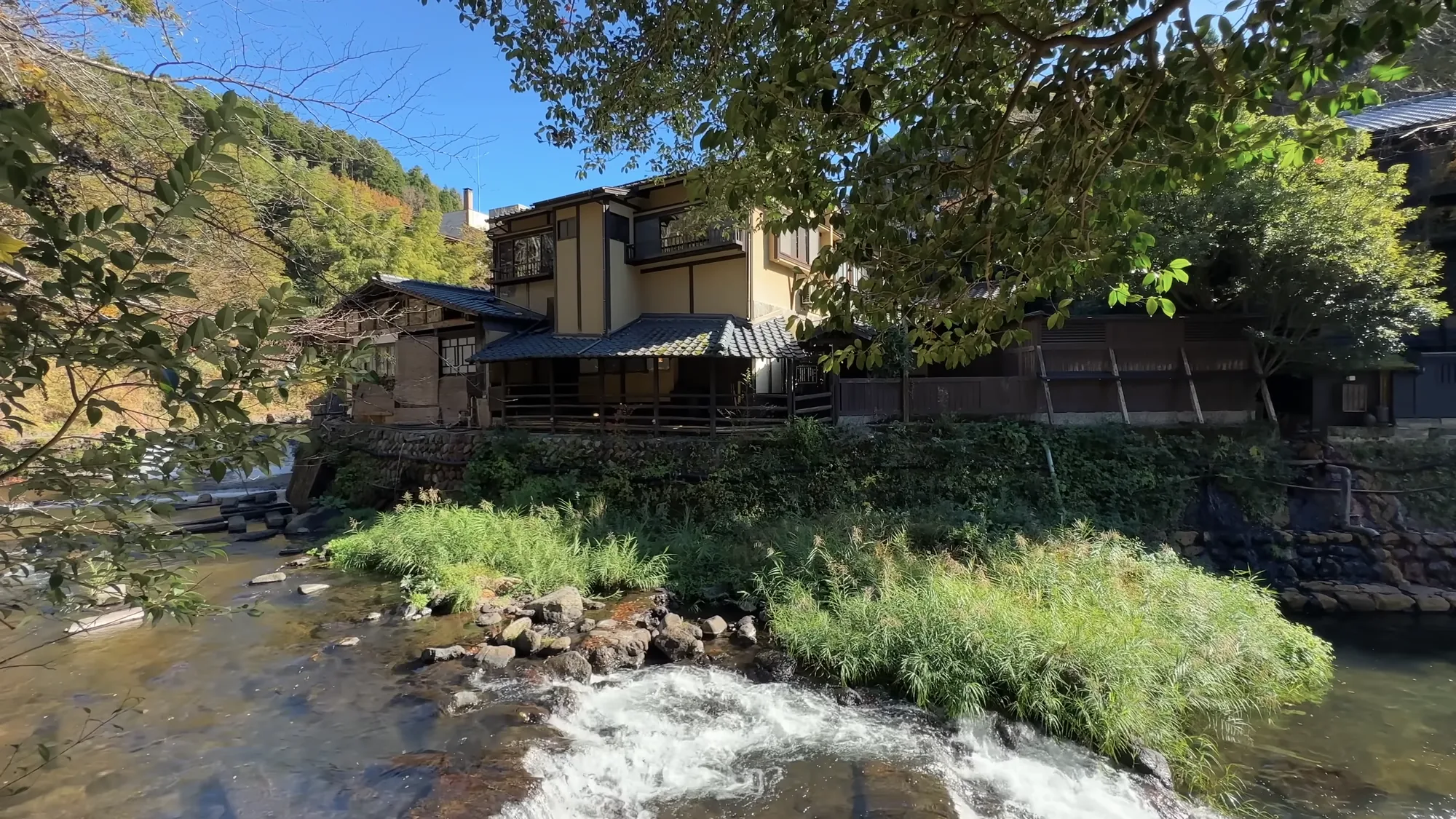
Foreign guidebooks found it before most of Japan did.
Through the decades the village was removing its signs, digging its baths and minting its pass, official Kumamoto did not list it as a destination at all. The work was done in administrative invisibility, for guests who found the place by word of mouth.
The recognition, when it came, arrived in layers. Inclusion on the map at the millennium. The travel press, domestic then foreign.
And beneath the fashion, the quieter institutional layer: the wider hot-spring township holds designation as a 国民保養温泉地 (kokumin hoyō onsen-chi), a national recreation spa area under the Ministry of the Environment's system, the state's formal acknowledgment that these waters and this environment merit protection as a therapeutic landscape.
The designation profile also records the earlier, more endearing cameo. Tanohara's old bathing hamlet served as a location in the Tora-san film series, Japan's long-running cinematic portrait of nostalgic backcountry, decades before the international press arrived.
There is a lesson folded into the sequence, and it is the one this page keeps finding: the village's fame followed its substance by about thirty years. Nothing about the lanes changed in 2000 except the map.
For the traveller this history has one practical residue worth naming. Kurokawa's institutions, the pass, the code, the association, were all built in the unfamous decades, for the village's own reasons. They are not performances for visitors, which is precisely why they are worth visiting.
The timeline, sourced line by line
Laid end to end, the documented story runs like this. Every line traces to a named source or carries its flag, which is more than most tellings of this story can say.
In legend — a headless Jizō asks to be enshrined and hot water rises, the founding the village still tells. The statue stands at the centre of the lanes today.
For centuries — Kurokawa is a farmers' spa in the Aso hills, unknown beyond its valley.
1964 — the Yamanami Highway opens, traffic finds the village briefly, and the boom does not last, by the plain account of Shinmeikan's own history.
The lean years after — that inn's third-generation owner, aged twenty-four, begins hand-digging a cave bath with a chisel, finishing roughly three and a half years later.
1986 — at the bubble's height, the association launches the Nyūtō Tegata, created so that inns without a rotenburo of their own could offer their guests everyone else's.
1980s–1990s — the innkeepers subtract roughly two hundred signs from the lanes, replant the valley, and codify the natural-materials look under the phrase nature as it is.
Until 2000 — the association notes the village is still absent from the prefectural newspaper's map.
After 2000 — national designation as a recuperation area and a place on the Hundred Famous and Secret Hot Springs list, both on the spa association's record.
2009 — two stars in the Michelin Green Guide Japan.
Ongoing — the two illumination seasons extend the design code into the dark.
August 2024 — a bath house renovated at Fumoto, showing the maintenance never stopped.
2026 — the tegata's fortieth year, marked by an association programme running into 2027.
The anatomy of the model
Strip the story to its mechanics and three moves explain why this revival worked where a hundred concrete-hotel rescues failed, which is why planners still come here to study it.
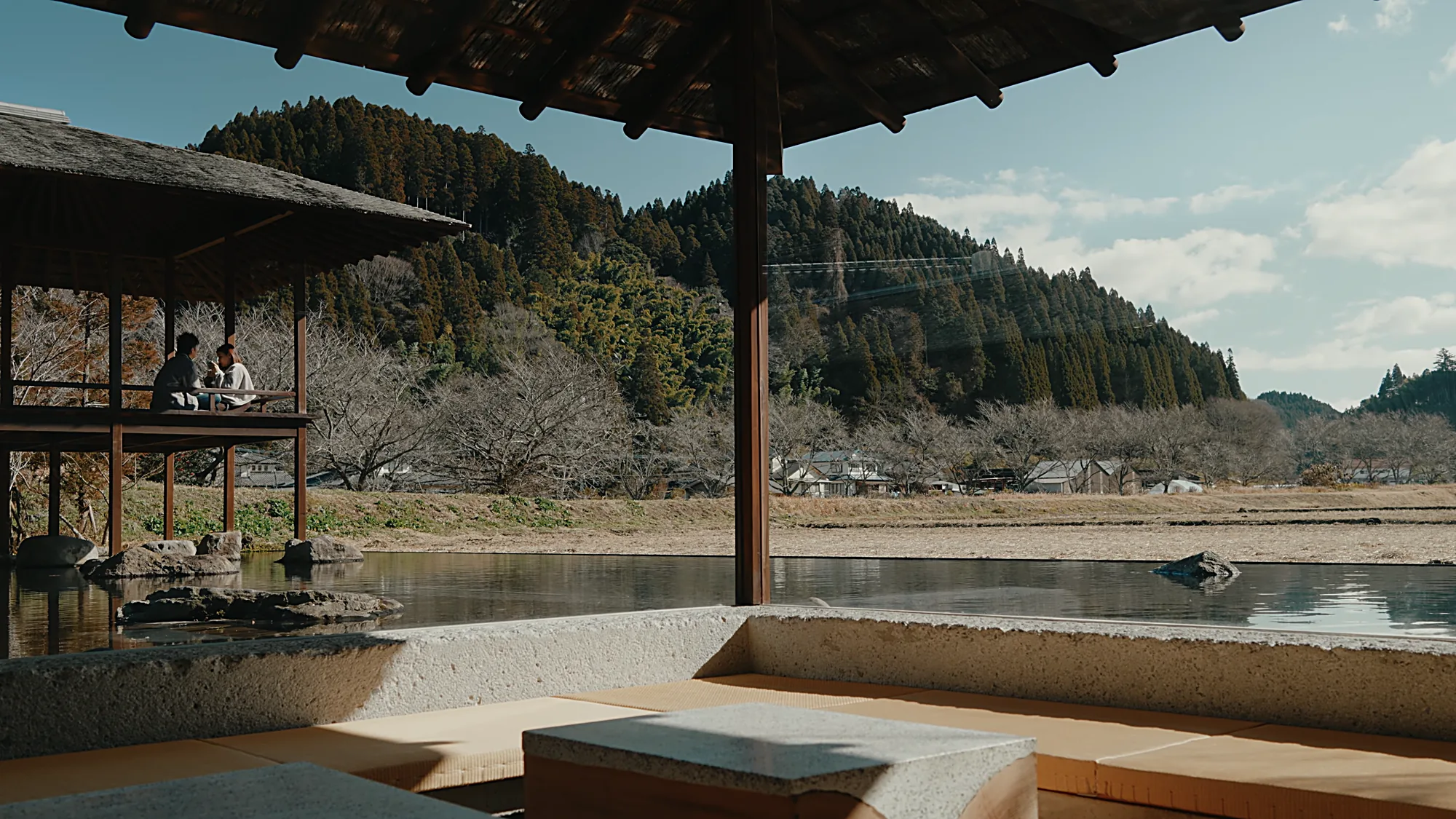
Shared water, shared rules, shared marketing. Remove any one and it stops working.
Product before plant. The cave bath proved that what travellers would cross Kyushu for was an experience, not a building, and it cost years of labour instead of debt.
Rivals into a commons. The tegata made every inn's bath partially everyone's asset, which meant a rising village lifted every book in it, and the smallest member, the inn that could not build a rotenburo at all, gained the most.
Subtraction as investment. Two hundred signs removed, materials standardised, a forest replanted. Spending whose entire return was atmosphere, the one product that cannot be copied by a competitor with better financing.
Notice what binds the three: each converts private interest into shared stock, labour into moat, restraint into brand.
And notice the governance that made them possible, an innkeepers' association small enough to agree and patient enough to hold the agreement for four decades, funded in part, to this day, by one percent of every wooden disc sold.
The model's honest lesson for other towns is uncomfortable. It required no genius and no fortune, but it required thirty owners to act like one, for forty years, and that is the scarce ingredient.
The parts of the story we cannot verify
A story this good attracts embroidery, and part of honouring it is saying plainly which famous details we searched for and could not source:
The name of the man who dug the cave. It circulates confidently on the English internet. His own inn's history page tells the entire story without printing it, and until a Japanese primary carries the name, neither will we.
A specific count of trees planted. Usually a large round number, it appears nowhere in the inn's account, which says only that the innkeepers replanted together. The number is unsourced and we leave it out.
That the village buried its power lines. Repeated in design write-ups for years, it appears in neither the association's materials nor the inn's history, and stays omitted.
That the village's baths span most of Japan's official spring types. Contradicted by the best available records, and we have removed it from every page.
None of these absences weakens the story. A young man dug a bath through rock for three and a half years, thirty rivals pooled their baths and stripped their own advertising off the lanes, and a village too obscure for its own prefecture's map became a national standard for what rural Japan can be. That is the documented version, and it needs no decoration.
The revival under stress: earthquakes and the long maintenance
A revival is only proven by what it survives, and this one has been tested twice in a decade.
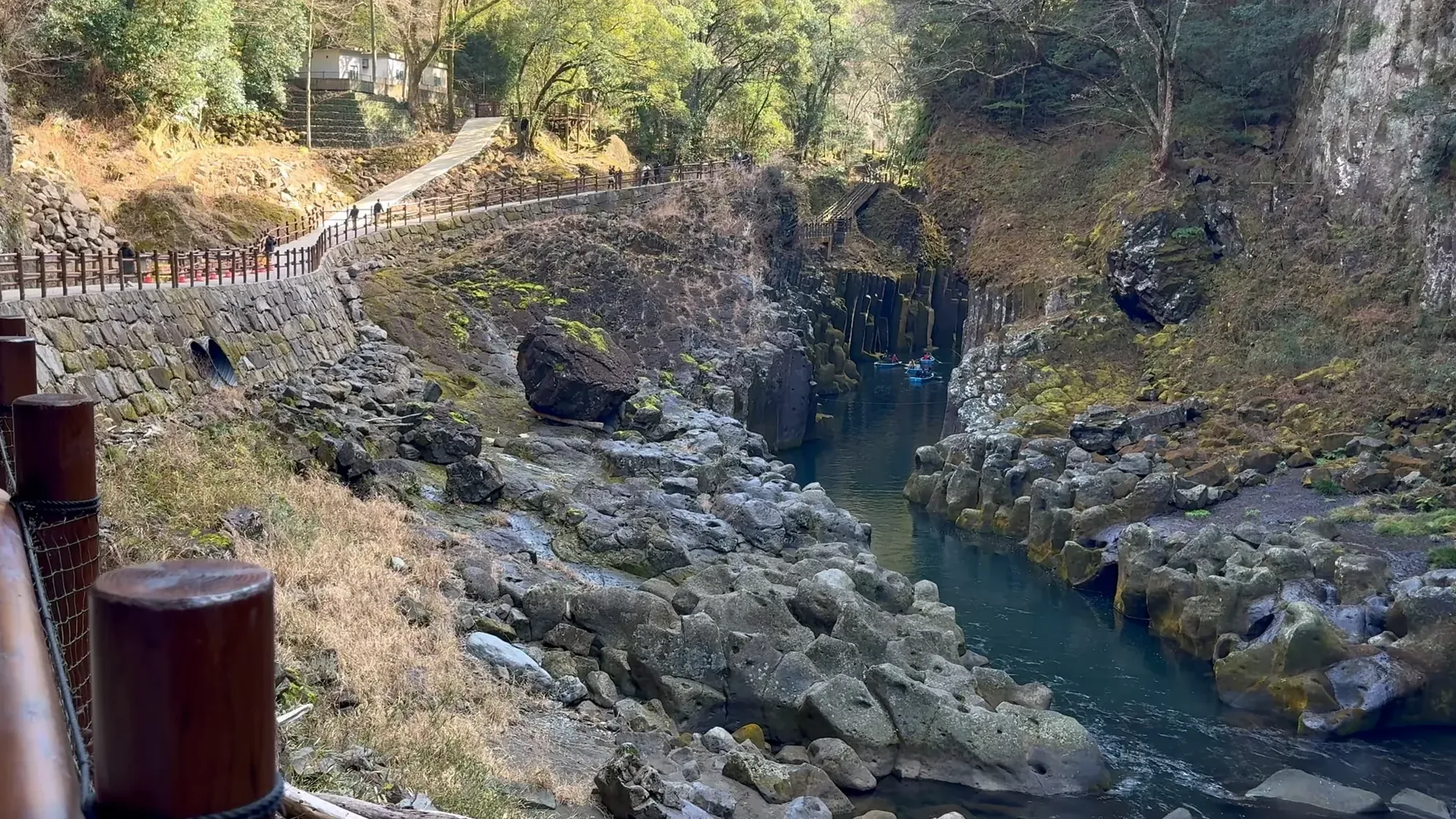
2016 broke roads and bookings. The model held; the maintenance never stops.
The 2016 Kumamoto earthquakes struck the prefecture hard, and the 2026 earthquake has again disrupted the region's transport, with some bus services reduced and the association publishing live weather-and-traffic updates, service revisions and per-inn operating notices through the recovery.
The village's response, both times, is the revival's character showing under load: information first, published plainly, and the collective machinery, one voice for thirty inns, doing exactly what it was built for.
The long maintenance continues underneath, of which the record offers a dated example. Fumoto's bath house and annexe were renovated in August 2024, one house's quiet reinvestment in the middle of the decade's difficulties.
This is the unglamorous half of the one-ryokan idea. A single inn can defer maintenance and hope. A village that has defined itself as one house cannot, because every fading facade is on the shared corridor. So the renovations roll on, inn by inn, the way the tree planting did, without ceremony.
Travellers reading this in the earthquake era should draw the practical conclusion the history supports: the village has been harder to reach at times, and it has never, in sixty years, responded to difficulty by lowering its standards.
Check the association's live page for the day's transport truth, book with confidence about the destination itself, and understand that arriving in a recovery year means seeing the revival's actual mechanism, cooperation under pressure, working in real time.
Walking the revival today
The whole history is legible on foot in an hour, which is the best way to read it.
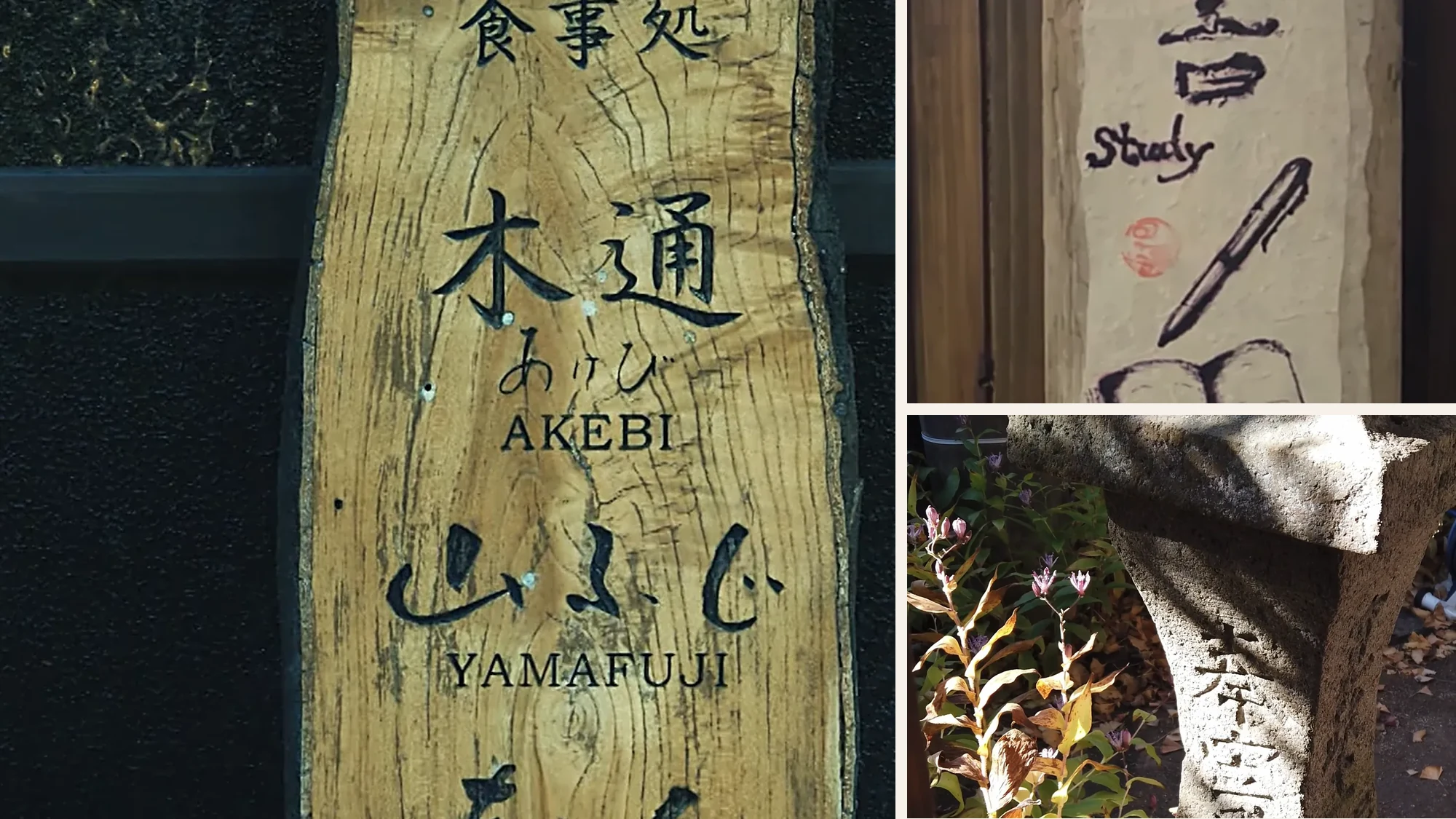
The agreement was never written as a rulebook. You read it in the signage, one board at a time.
The Jizō hall, at the centre. The headless statue of the founding legend is enshrined here, and spent tegata are, by visitor custom, retired here. Legend and modern system share one small building.
Any lane, reading the signage. Carved wood, uniform, unbranded. You are looking at the two-hundred-sign subtraction, or rather at what it left behind.
Kaze-no-ya, the association's information house. Watch the daily bath board being consulted. That board is the tegata network functioning, forty years on.
A bath at Shinmeikan. You are inside the revival's first artefact, the chisel marks still in the rock.
The valley over the roofs. Look up anywhere. The forest is the replanting, now old enough to pass as primeval.
After dark, in either illumination season. The bamboo lanterns of winter or the parasols of summer are the design code's newest clause, the same restraint extended into light.
Nothing on this walk is labelled as a monument, which is the point. The village's history is not displayed in Kurokawa. It is operating.
What the revival teaches, and what it cost
Kurokawa is now the case study, taught to onsen towns across Japan, and the teachable core fits in four lines:
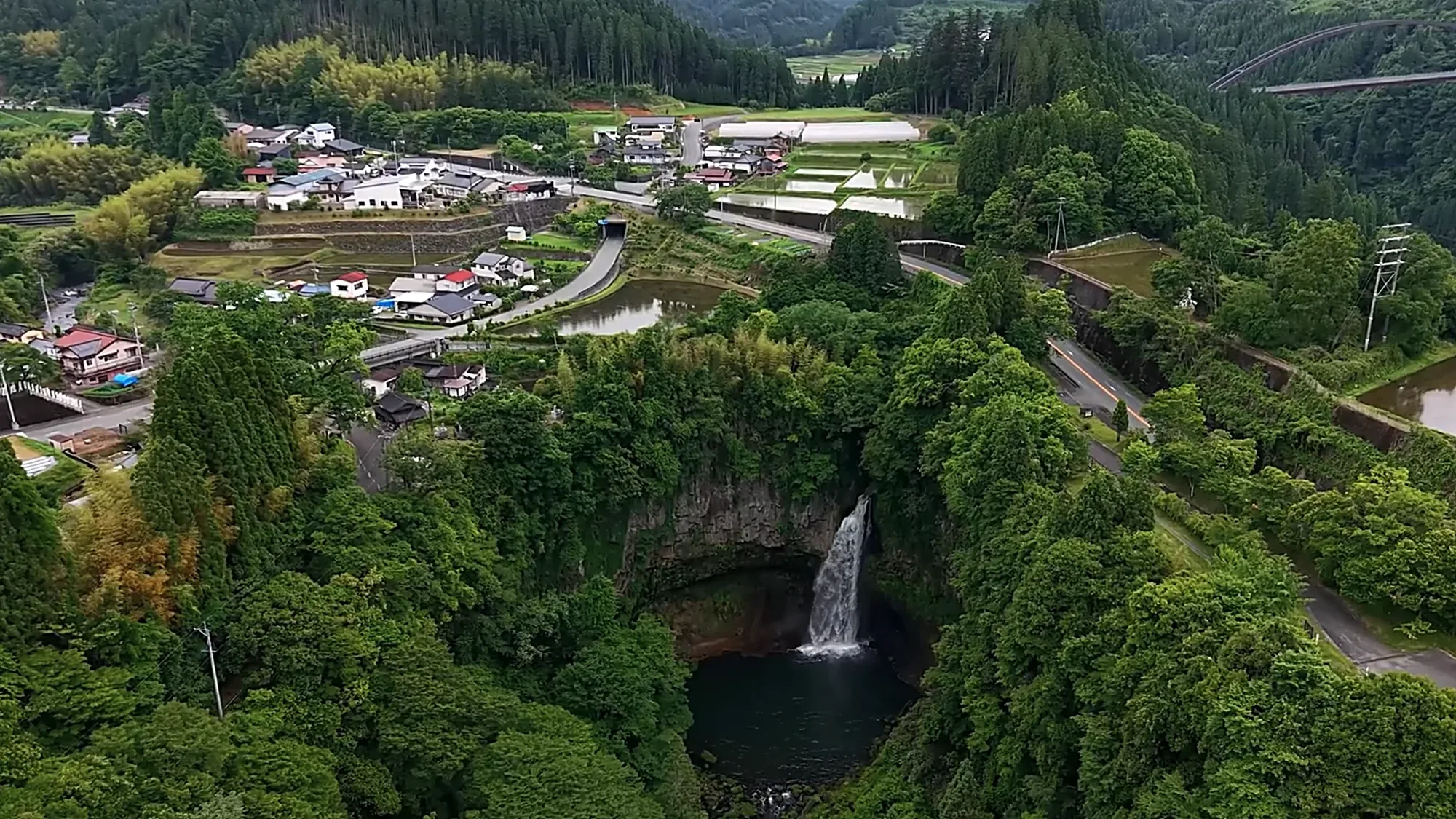
A hundred towns have tried to copy this. Almost none of them agreed to the rules.
Subtract before you add.
Build from the valley's own materials.
Pool what divides you.
Let the fame come late.
But an honest history should also count the costs, because the village paid three that the seminars skip.
It took a generation. Thirty years of unfashionable work before the map even acknowledged the place, which is a time horizon almost no struggling town, and no elected official, can genuinely commit to.
It demanded real sacrifice of individual advantage. Two hundred signs' worth. The coordination held only because the alternative had already failed in front of everyone.
It bound the village permanently. The design code, the pass and the one-ryokan constitution are not achievements to display but obligations to keep, renewed every time an inn repaints, replants or forgoes the bright sign that would surely catch a few more cars.
That permanence is what a visitor is actually walking through on the lanes. The village is not preserved, the way a museum street is preserved. It is maintained, decision by decision, by the same cooperative machinery that made it, now forty years old in its tegata form and older in spirit.
Sixty years ago this valley learned that borrowed traffic goes home. Everything since has been the patient construction of a place worth travelling to for itself, and the lanterns, the discs and the steam over the river are the running proof that the construction still holds.
Tips
Bathe at Shinmeikan's cave bath first; the revival's origin point is still a working bath (~¥600 / ~$4).
Notice the signage as you walk: uniform carved wood, no logos, the ordinance made visible.
Buy the tegata even for one bath; you are holding the 1986 turnaround in cedar form.
The used-tegata racks at the little Jizo shrine are the village's own archive of visits.
Pair this story with the Yuakari page in winter; the illumination is the design code's newest chapter.
Frequently asked questions
Why is Kurokawa Onsen so beautiful?
Who revived Kurokawa Onsen?
What is the idea behind the Nyūtō Tegata?
When did Kurokawa Onsen become famous?

Verified by The Japan Onsen Society
Show all sources
国民保養温泉地 designation + 名湯・秘湯百選 + 地蔵湯/穴湯 legend anchor → 南小国温泉郷 (日本温泉協会 国民保養温泉地) → https://www.spa.or.jp/kokumin/1131/ → government-designation profile → verified Jul 7, 2026
Shinmeikan hand-dug cave → spa-association data sheet → https://www.spa.or.jp/search_p/detail_p/?F_ID=430260&pg=0 → verified Jul 7, 2026
1986 tegata + 40th anniversary · ~200 signs removed · 30 inns · 黒川温泉一旅館 slogan + 離れ/渡り廊下 · not on the prefectural map until 2000 · origin legend · 1% conservation · each inn its own stamp → 黒川温泉観光旅館協同組合 kurokawaonsen.or.jp/about/ + /tegata/ → verified Sep 6, 2026
Cave dug by the third-generation owner (aged 24, chisel, ~3.5 yrs) · 1964 Yamanami boom · 「あるがままの自然」 → 新明館 history shinmeikan.jp/history/ → verified Sep 6, 2026
Claims we investigated and left out for lack of a source we can stand behind: the founder's name, any figure for the number of trees replanted, and the often-repeated account that the village buried its power lines.
山の宿 新明館 歴史 (Shinmeikan, history page) - the 1964 boom that faded, the cave dug by the third-generation owner aged 24 over about 3.5 years, the unnumbered replanting, the tegata created for inns without a rotenburo, and the phrase nature as it is, verified September 6, 2026
黒川温泉観光旅館協同組合 について・入湯手形 (association about and tegata pages) - the origin legend in full, the \~200 signs removed, the one-ryokan slogan, absence from the prefectural map until 2000, the 1986 launch, the 1% conservation share, and the fortieth-anniversary programme, verified September 6, 2026
日本温泉協会 国民保養温泉地 南小国温泉郷 (Japan Spa Association, designation profile) - the national designation, the Hundred Famous and Secret Hot Springs listing, and the legend-linked public bathhouses, verified September 6, 2026
黒川温泉観光旅館協同組合 お宿一覧 (member inn directory) - the Fumoto bath house renovation of August 2024 cited in the timeline, re-verified September 7, 2026
黒川温泉観光旅館協同組合 入湯手形 (tegata page) - the 1986 creation, the one-per-cent conservation contribution, and the fortieth-anniversary programme July 1, 2026 to March 31, 2027, verified September 6, 2026
黒川温泉観光旅館協同組合 天気・交通情報 (live weather and traffic page) - the earthquake-era service bulletins cited in the stress section; perishable, re-check before travel
Related guides
Culture & Food
Food
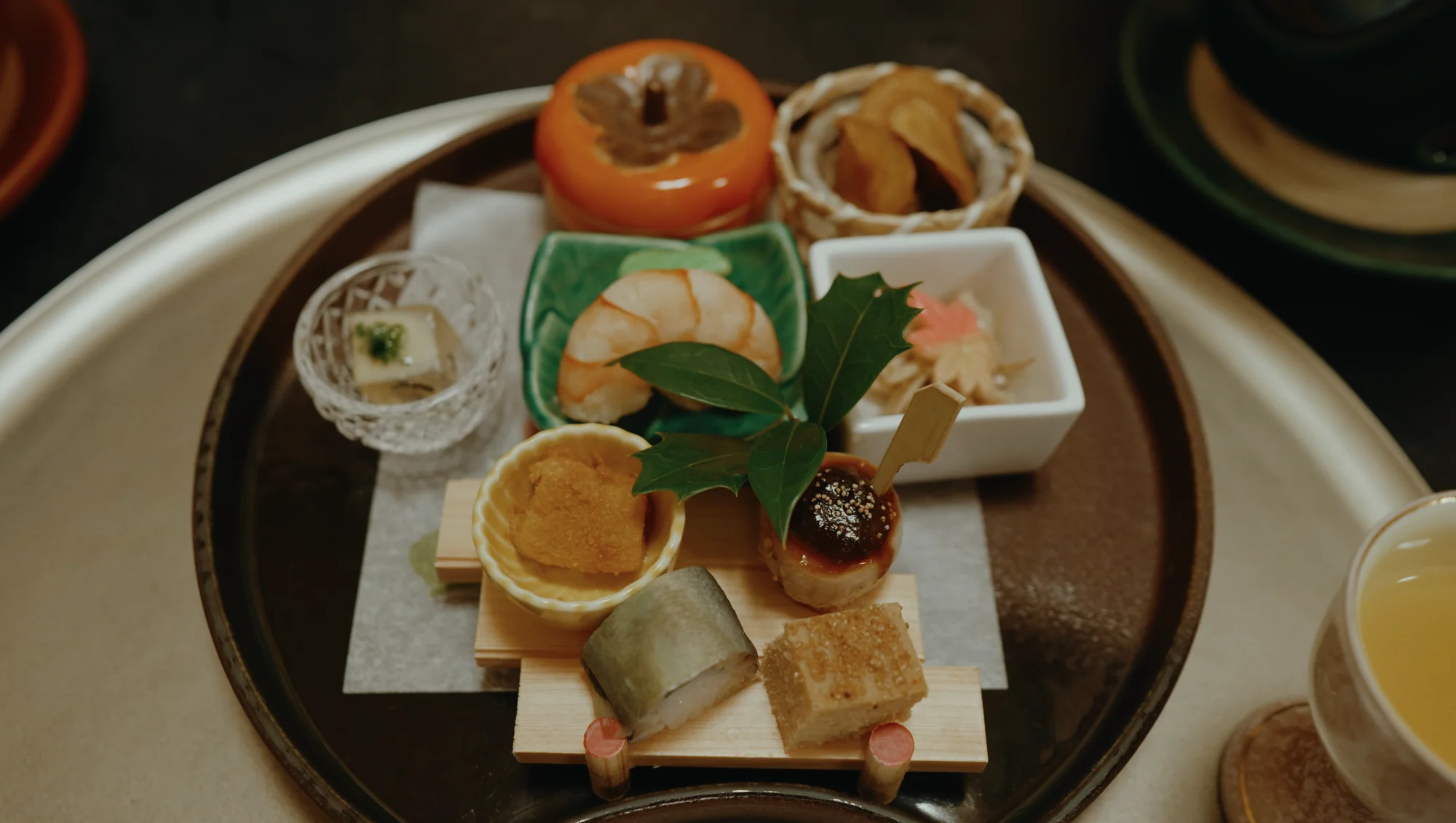
Kurokawa feeds you the way it bathes you: mostly at the inns, seasonally, and better than a village this size has any right to.
Culture & Food
Yukata
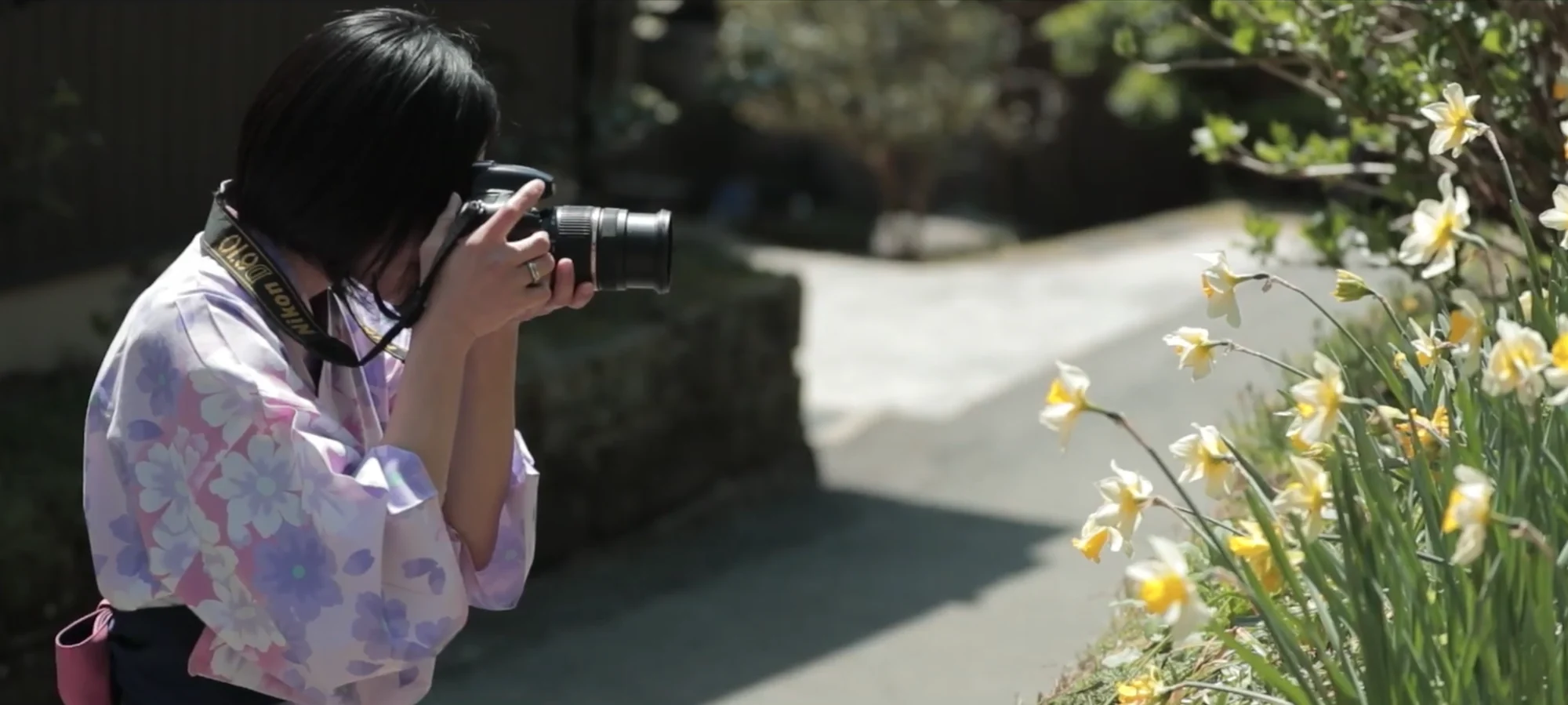
Some onsen towns tolerate yukata; Kurokawa was composed around it. This page adds the village's own rules; the hub has the generic how-to.

Culture & Food
Kurokawa Onsen: The Complete Guide
A wooden pass buys three baths from twenty-five. The innkeepers agreed, decades ago, to look like this.