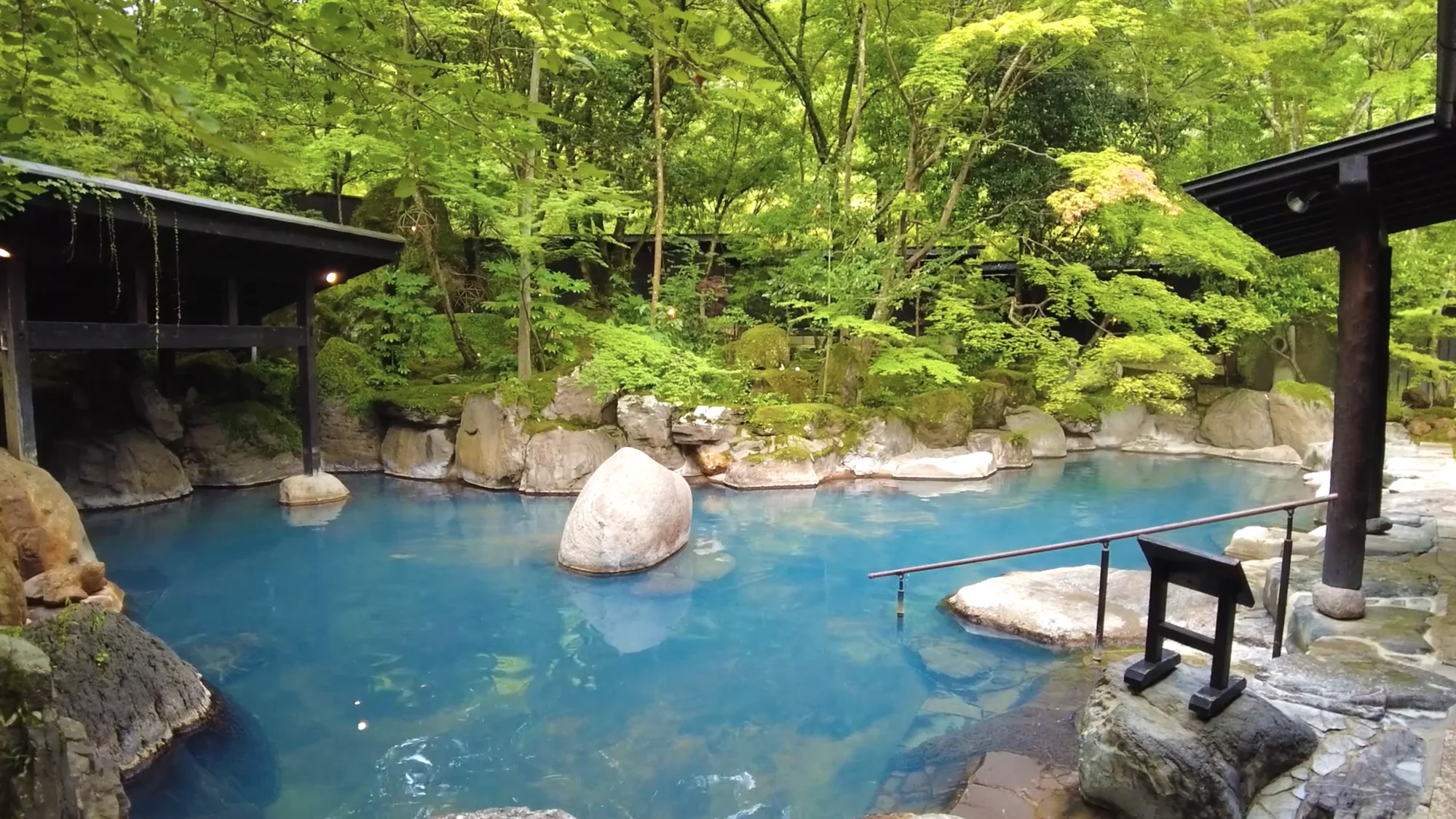
The universals, in one breath
Rinse and wash at the taps before entering; bathe nude, swimwear stays in the bag; the small towel goes on your head or the ledge, never in the water; tie up long hair; no photography past the changing-room door; hydrate between soaks. If any of that is new, read the hub's full etiquette guide before your first stamp — five minutes that make the rest instinctive. Everything below is what Kurokawa adds on top.
Why the rules are load-bearing in this particular village
Etiquette pages usually present the rules as courtesy; in Kurokawa they are structure, and understanding why makes them easy to keep. The village's entire model, thirty inns opening their best baths to each other's guests through a wooden pass, runs on trust that strangers will treat every bath as carefully as the host's own guests would.
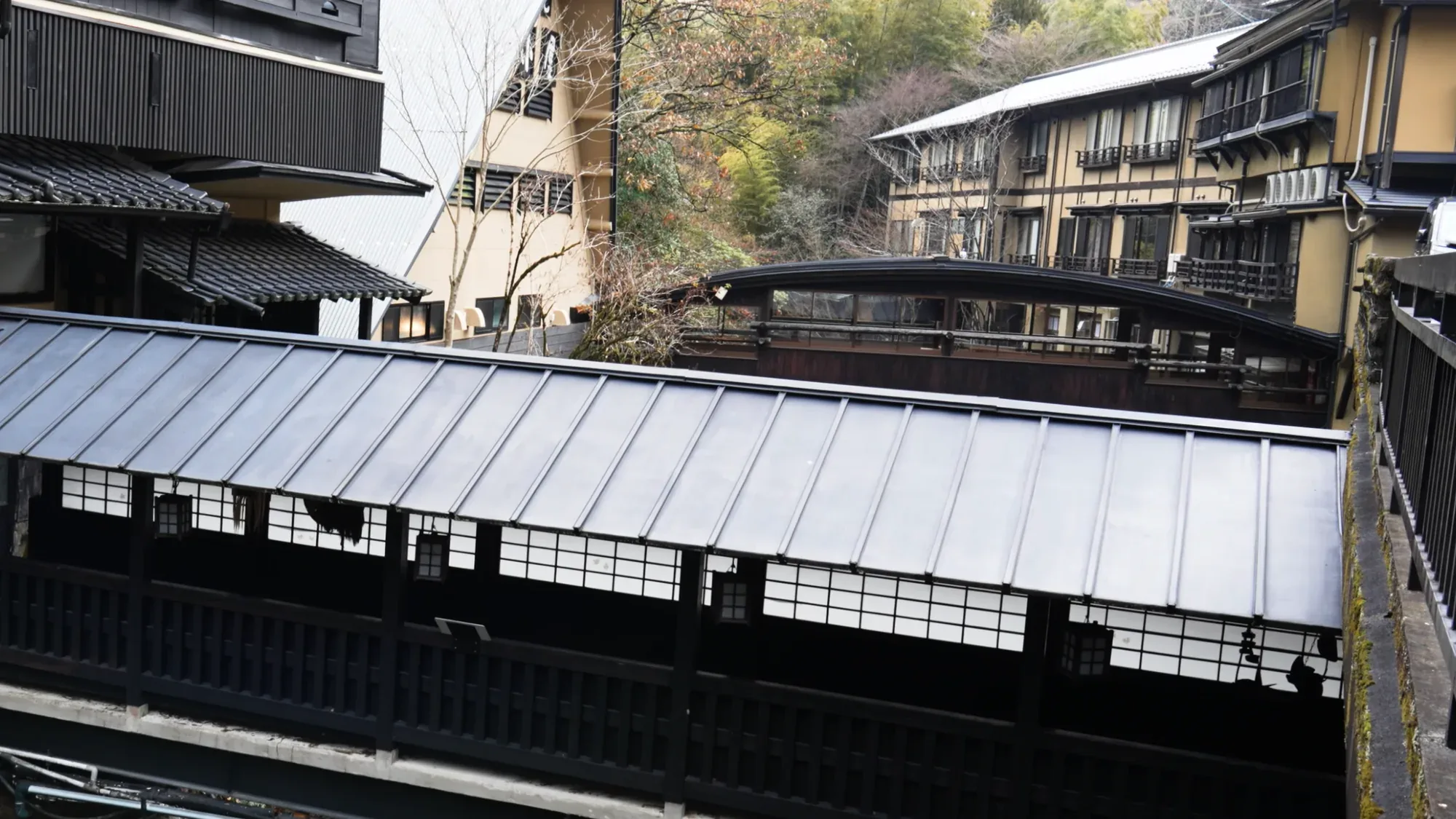
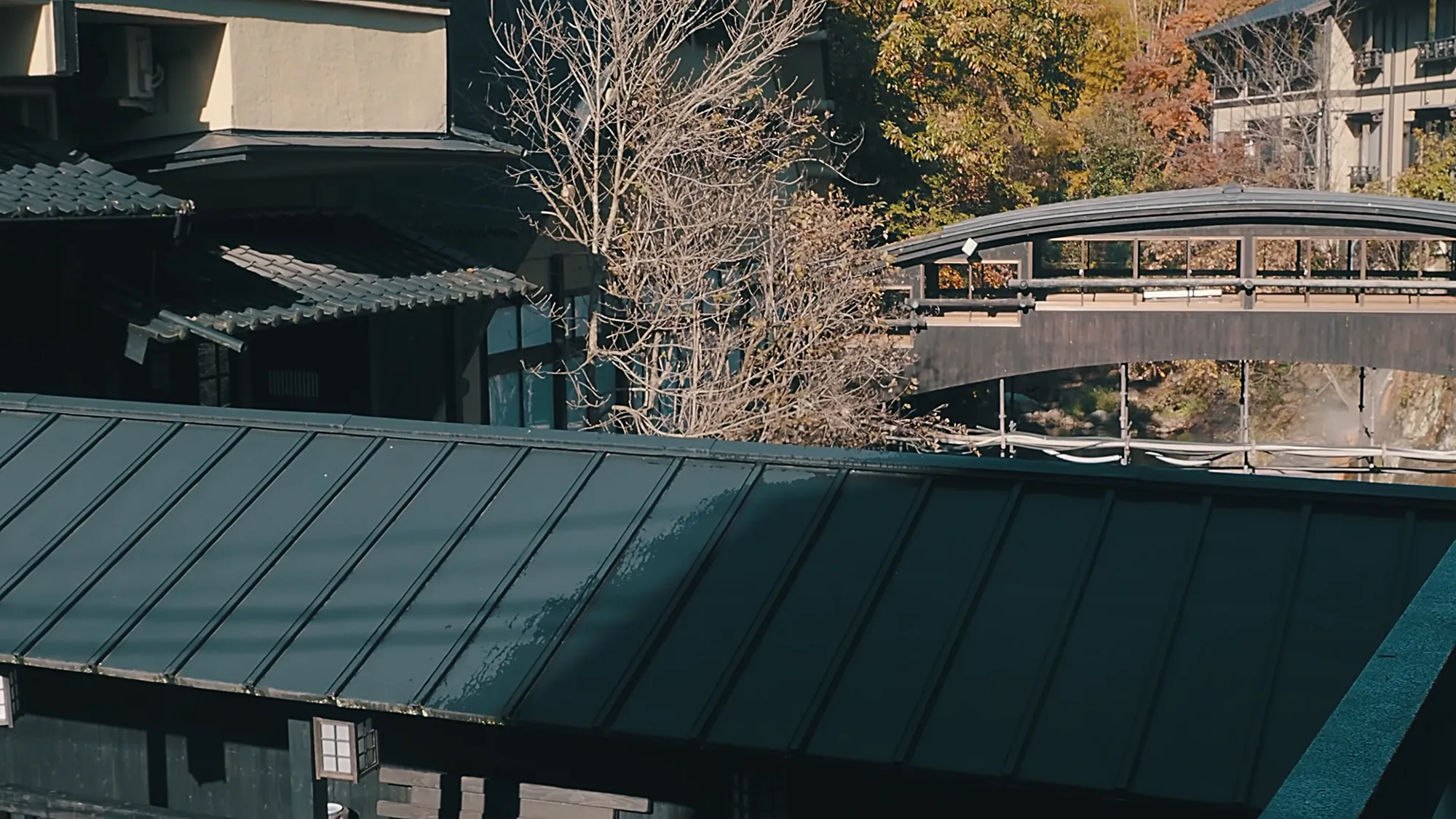
The rules hold here because the village is small enough for everyone to notice.
There is no attendant at most rotenburo, no turnstile, no surveillance the design code would ever permit; the tegata window works because the visitors it admits behave. The same is true one layer up. The lanes' beauty is a commons the inns maintain jointly, the photography ban protects bathers who cannot protect themselves once undressed, and the mixed and private bath systems survive precisely because their rules, wraps, sightlines, locked doors, are kept without enforcement.
This is why the association publishes a visitor code at all, and why its items read less like prohibitions than like maintenance instructions for the machine you came to enjoy: keep the lanes quiet, keep smoke off the street, keep drones grounded without permission, keep cars in the inn lots rather than on the roadsides, keep cameras out of the baths absolutely.
A visitor who follows them is not performing politeness for its own sake; they are doing their shift in the cooperative that makes the place worth visiting, exactly as every innkeeper does. Read the rest of this page in that spirit and the rules stop being a test to pass. They are the village, briefly, being run partly by you.
The bath-hopper's kit
Tegata bathing means visiting baths that provide nothing. Most day-use rotenburo offer no towel, soap, or shampoo, so the hopper's kit is a small towel, travel soap, a plastic bag for the damp between stops, and coin change — for the occasional locker and for single-bath fees, an approximate ¥500 to 800 (about US$3 to 5) , on any bath you take beyond your three stamps.
A small towel, a coin purse, and the pass. Nothing else travels well wet.
One thing to expect at the tap: because Kurokawa's source water runs hot, many inns add water to bring it to a bathable temperature, which the association says does not change its mineral content — so a bath that feels merely warm is still the real thing. Present the tegata at the front desk, take your stamp and directions, and follow the marked path to the bath.
The exchange at the desk, scripted
The tegata transaction has a small social shape, and knowing it makes every stamp smoother. Enter, meet the eyes of whoever is at the desk, and offer the disc with a short greeting: すみません、入湯手形でお願いします (sumimasen, nyūtō tegata de onegai shimasu), excuse me, with the bathing pass please. They take a sticker, often tell you where the bath is, and sometimes add the day's caveat, cleaning finished late, the rotenburo is hotter than usual, the women's side is busier.
Listen to that sentence; it is the most current bath information in the village. On leaving, a simple ありがとうございました as you pass the desk closes the loop. None of this requires Japanese beyond those two phrases, and gestures cover the rest.
The reason to bother is the frame the whole village runs on: you are not redeeming a ticket at a counter, you are being admitted to a working inn's bath as a guest of the village's shared system, and the innkeepers extend that admission hundreds of times a day. The two-phrase courtesy is the visitor's half of the arrangement, and it is noticed.
The vocabulary that does the work
A dozen words carry nearly all of the bath's spoken etiquette, and arriving with them turns every threshold encounter into a two-second exchange. Sumimasen, the all-purpose excuse-me and soft apology, opens questions and closes errors. Onegaishimasu, please, attaches to any request, and arigatō gozaimasu closes it.
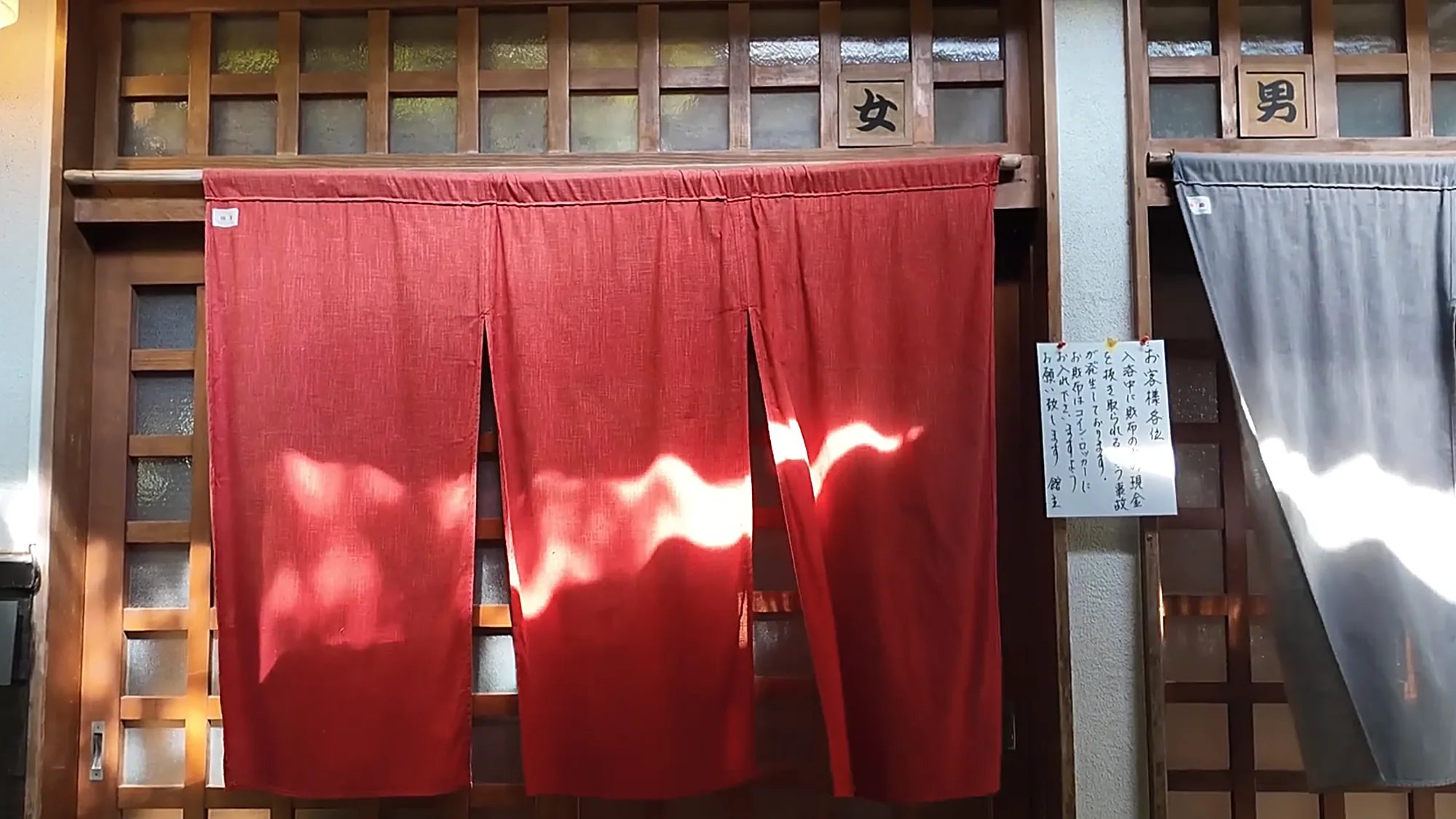
Two kanji do the most important work of your day. 女 is women, 男 is men.
At the desk, the operational nouns do the rest: tegata for the pass itself, kashikiri for the private bath, konyoku for the mixed one, rotenburo for the open-air pool, and kazoku-buro, the family bath, as the gentler synonym many inns use for their lockable rooms. Two questions cover most needs whole: haitte mo ii desu ka, may I enter, pointed at a door or a bath board, and nanji made desu ka, until what time, pointed at anything with hours.
In the water, the only speech etiquette is volume, but one custom deserves knowing: the small nod exchanged with bathers already in the pool as you enter, a wordless acknowledgment that costs nothing and marks you instantly as someone who understands the room. Numbers, times and prices all survive being written; the phone's note screen, used outside the changing-room threshold, is a legitimate etiquette tool, and every desk in the village is practised at reading it.
None of this requires studying Japanese. It requires perhaps ten minutes on the bus in, and it repays them at every door, because a visitor who asks in even broken Japanese has already said the most important thing: that they know the village runs on consideration, and that they intend to run on it too.
The village's own rules
Beyond the universal etiquette, Kurokawa publishes a short visitor code of its own, worth reading once because it belongs to a village that rebuilt itself around a shared look. The onsen town is non-smoking outside designated areas. Drones need prior permission. Do not pick plants or foliage, and do not enter private land. Parking is limited and roadside parking is not allowed. Do not put your towel in the water.
Entry to a bath may be refused when it is crowded. And photography in the open-air baths is prohibited in principle — an association rule for the whole village, not any single inn's. The village even asks that you use low-impact soap and shampoo, because it regulates what enters its onsen out of concern for the stream the baths sit above. None of it is heavy-handed; it is the housekeeping of a place where the scenery is authored and shared.
Etiquette above the waterline: the lanes, the lens and the car
The village's code follows you out of the water, and its street-level clauses are the ones day visitors most often miss. The lanes are non-smoking; the association says so plainly, and the design code's whole atmosphere depends on it. Drones stay grounded without permission, a rule that protects both the rooftop privacy of a bathing village and the quiet the illuminations trade on.
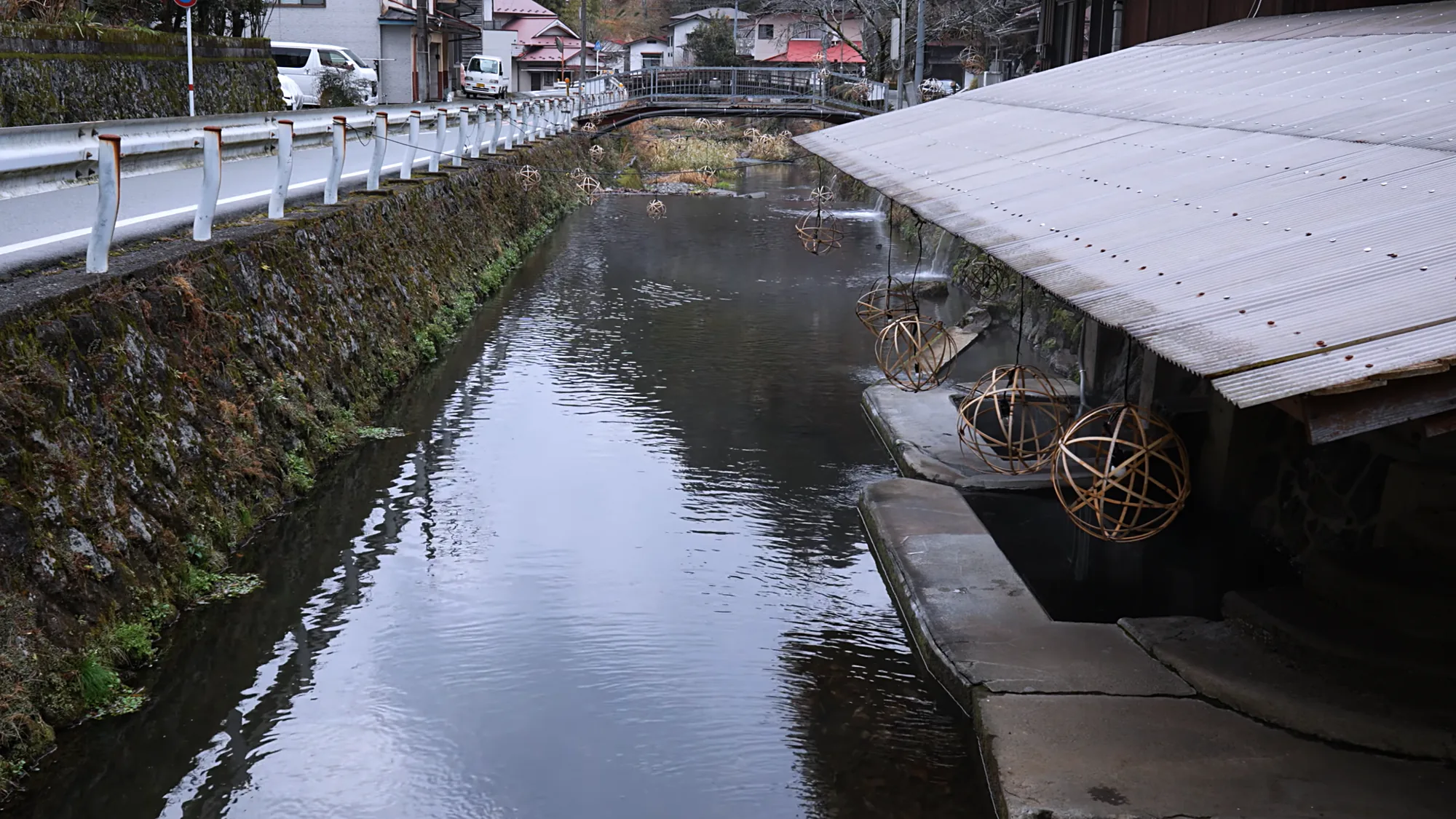
The lane is somebody's front garden. Drive it, and photograph it, accordingly.
Cars belong in inn and designated lots, never on the roadsides, where the narrow lanes have no slack to give. Litter goes home or into the shops that sold it; a village without visual noise has no army of bins, and the emptiness of its streets is maintenance, not accident.
Photography above the waterline is welcome and bounded by two courtesies: bathers and bath interiors are never subjects, even incidentally through an open gate, and identifiable strangers on the lanes deserve the same ask-first standard as anywhere civilised. The quieter clauses are volume and pace, keeping conversations at the scale of the street and stepping aside on the stairways, and one that is really a kindness to yourself: the shoe racks, thresholds and low doorways of old buildings reward attention, especially at night.
None of this is onerous, and all of it is reciprocal. The village that asks you to keep its lanes quiet is the same one lighting them for you at no charge, and the visitor code, kept, is what lets a working hamlet of a few hundred residents host its enormous fame without curdling.
You are inside someone's working inn
Every tegata bath sits within a working ryokan hosting its own overnight guests, and that is the courtesy that actually distinguishes Kurokawa. Stay on the marked route between entrance and bath rather than wandering corridors and gardens; keep your voice down near guest rooms; skip the lobby photography; and clear out of the changing room briskly when it is busy.
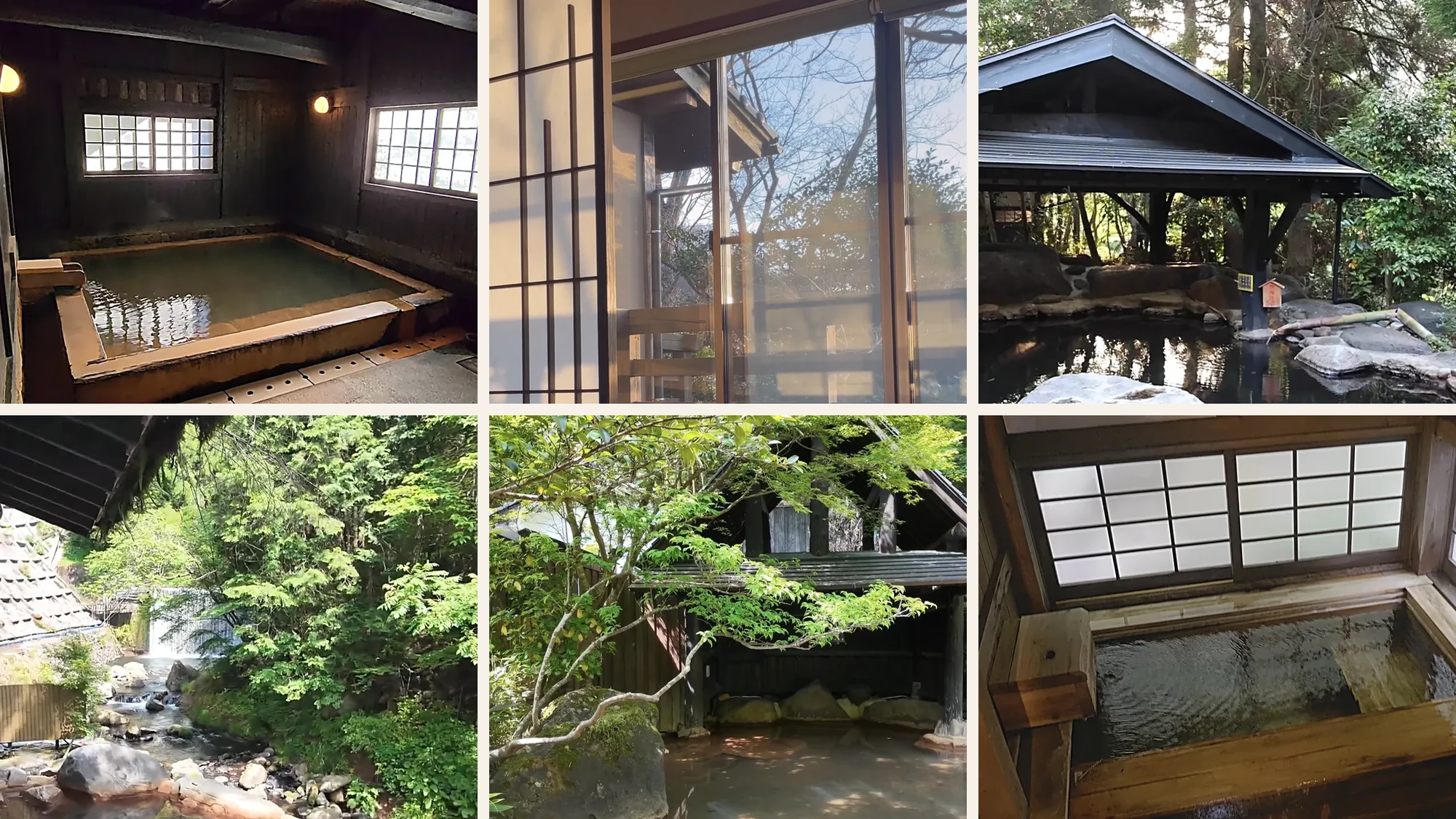
Six settings, one word. This is how much ground "onsen" covers in one valley.
Day-use windows run roughly 8:30 am to 9 pm and vary by inn, so a bath you plan to reach late in the day is worth confirming at the desk — closures before 21:00 are common, and the daily open-bath board at the Kaze-no-ya information centre lists what is open before you make the walk.
The changing room, step by step
Every bath visit begins in a small room that handles more etiquette than the water does, and a clean routine there settles the whole visit. Shoes come off at the threshold or the rack outside, the reliable first signal in all Japanese interiors. Inside, choose a basket or shelf space and make it your entire footprint: clothes folded in, towel on top, nothing spread onto neighbouring baskets.
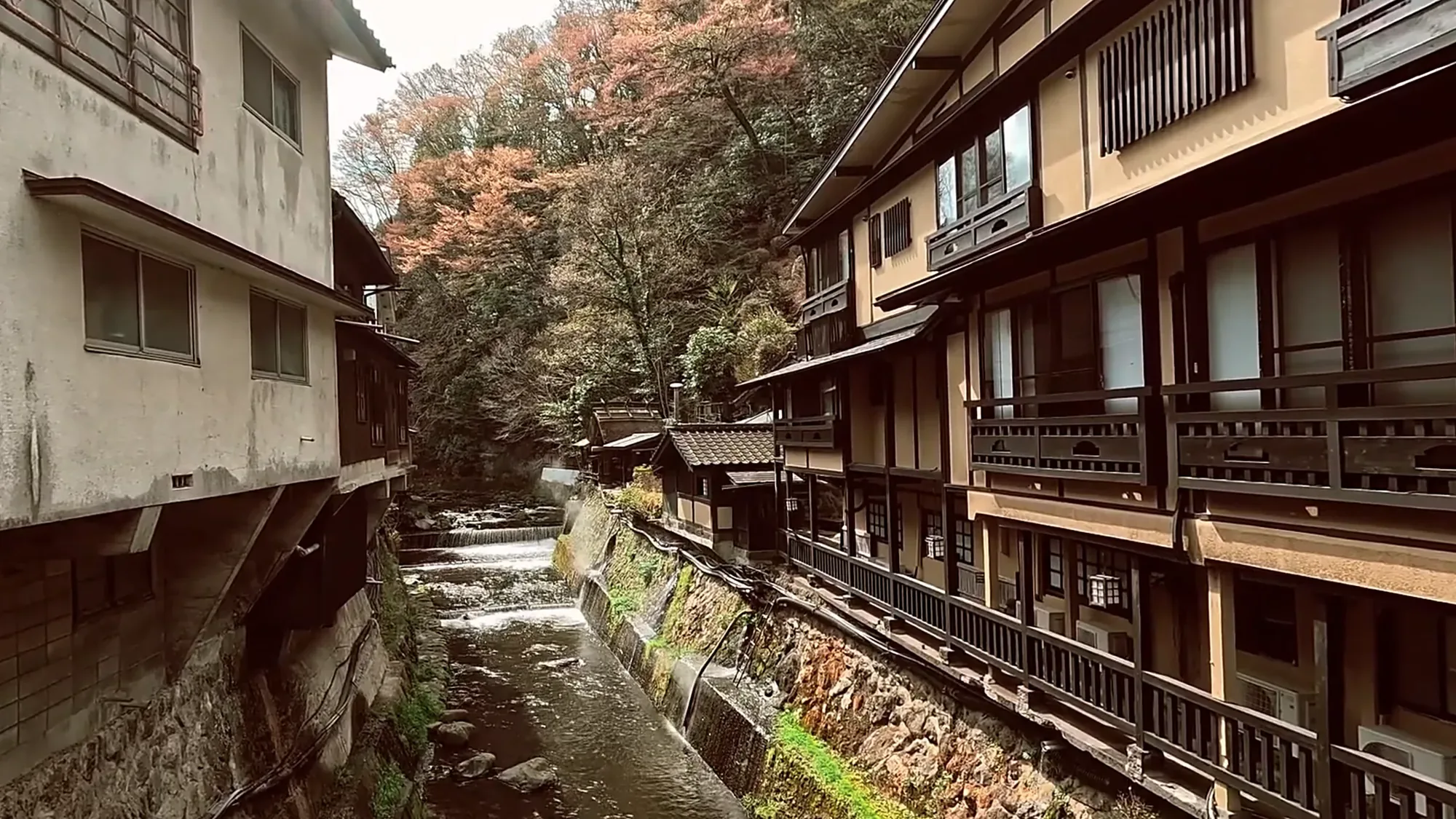
Everything that matters happens before you reach the water.
Valuables go into a locker where one exists and stay minimal where one does not, the village's small-bath rusticity being part of its character; the practical answer is to carry little, a few coins, the disc, the small towel, and leave the rest at your inn.
Phones and cameras end their journey here, in the basket, screens down, full stop; the prohibition covers the changing room's threshold onward, and handling a phone anywhere people undress is the single fastest way to alarm a room, whatever you were actually doing with it. Undress completely, without ceremony; hesitancy draws more attention than matter-of-factness, and nobody is looking anyway, which is itself a rule everyone silently keeps. Take only the small towel through the far door.
On return, the courtesies reverse with two additions: dry off roughly at the bath-room side so the changing floor stays walkable, and wring nothing over the baskets. Thirty seconds of orientation on entering, the same on leaving, and the room works exactly as generations of design intended, a decompression chamber between the dressed and undressed halves of the visit.
The washing station, done properly
The pre-bath wash is the etiquette's one non-negotiable act of labour, and doing it well is mostly a matter of geometry. Take a stool and basin at a free station, sit, and wash thoroughly, soap and rinse, before approaching the water; the tubs here run kakenagashi, continuously flowing and shared, and every bather's cleanliness is part of every other bather's bath.
Manage your splash radius: the handheld shower points down and inward, lather stays at your own station, and a glance at how the neighbouring stations angle themselves teaches the local norm faster than any guide. When you finish, rinse the stool and basin with a sluice of water and return them tidy, nozzle hung, the small reset that marks an experienced bather more clearly than anything done in the tub. Two Kurokawa-specific notes refine the standard.
First, some of the village's most rustic riverside baths keep washing facilities deliberately simple, in keeping with their setting; where a full station is absent, the resident custom is the kakeyu, several scoops of the bath's own water poured over the body at the edge before entering, which honours the principle with the means available.
Second, soap and shampoo, where provided, stay at the stations, never at the open-air tub's rim, and the wilder pools ask for no products at all beyond the rinse, since their overflow returns to a watershed the township actively protects. Wash as if the river downstream were watching. In this valley, in a documented sense, it is.
In the water: the six quiet disciplines
Once in, the etiquette compresses to six habits, each learnable in a sentence. The towel stays out of the water, folded on the head, set on a rock, or held clear, never submerged and never wrung into the tub. Hair, where long, goes up out of the waterline for the same reason. Entry is gradual and low: ease in from the edge rather than stepping down into the middle, both for courtesy and because source-hot water rewards respect.
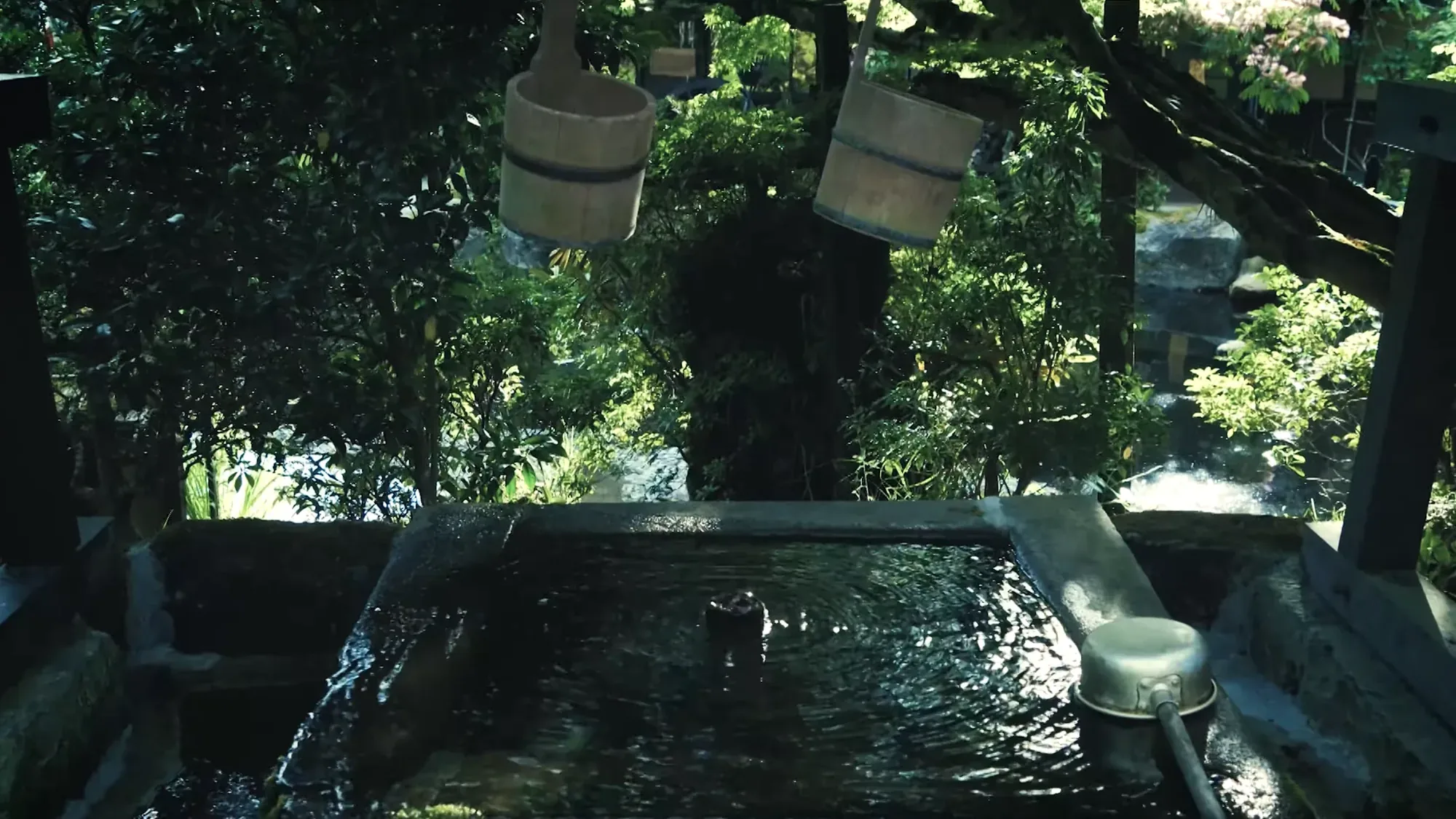
Quiet, still, and no phone. The disciplines are mostly about other people.
The volume is conversational at most; the open-air bath is treated as a place where quiet is part of what everyone came for, and the acoustics of rock and water carry more than people expect. The body stays settled, no swimming, no splashing, children included, which is the clause parents most need to brief in advance.
And the eyes practise the soft courtesy this site has described in the mixed-bath context, attention angled to the steam, the trees, the middle distance, a habit that makes every shared bath, mixed or separated, more comfortable for everyone in it. To these add the exit courtesy peculiar to bath-hopping villages: leave nothing behind, towel, hair tie, bottle, because the next tegata holder arrives in minutes and the unattended bath has no staff to sweep it.
None of the six requires cultural fluency, only calm. A bather who enters slowly, sits quietly and keeps the towel dry has, in the eyes of everyone present, done the entire thing correctly.
When the answer is no
The association's code states plainly that entry may be refused when a bath is crowded, and cleaning closures, private bookings and weather do the same work on other days. Take the refusal as operational, not personal: the system that lets thirty inns share their baths only works because each inn keeps the right to protect its own guests' experience, and the day board at Kaze-no-ya exists precisely so you can re-aim in one minute.
A nod, a thanks, and a walk to the next lane is the whole correct response, and your stamp is still yours, valid for six months, spendable at twenty-four other doors or on a soft-serve. The village's etiquette, at bottom, is this one habit: treating every door, open or closed, as belonging to someone who agreed to share it.
Mixed baths, footbaths, and the spent pass
Konyoku (mixed) baths follow their own posted arrangements — modesty wraps and women-only hours included — which our private and mixed baths guide covers in full; the short rule is to enter through the correct changing room and keep phones away entirely. The village's free footbaths need no ritual beyond drying your feet on the way out.
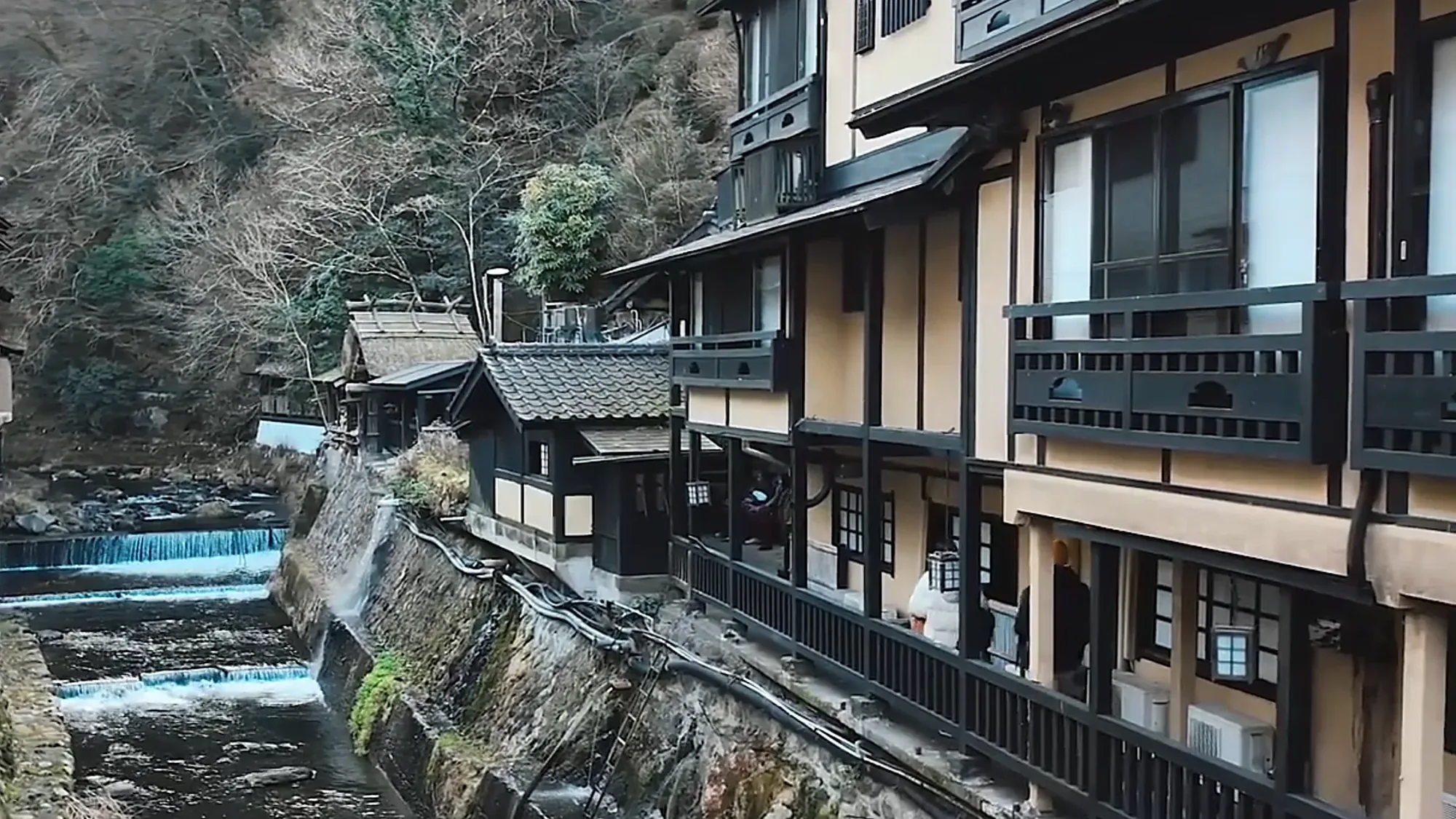
Three stamps, then the pass is a souvenir. The footbaths stay free.
And a spent tegata is yours to keep, a small cedar record of the three baths you chose; by a custom visitors describe — which we have not confirmed on the association's own pages — some leave it at the village's Jizō hall on the way out.
The edge cases, answered the village's way
Etiquette's hard questions cluster at the edges, and Kurokawa has built machinery for each. Tattoos: policy is genuinely per-inn here, the association keeps no blanket rule and publishes no list, so the path is its enquiry form or a direct question to the specific bath, with the kashikiri private hour standing as the officially suggested route that no policy can refuse; covering small ink is a courtesy some bathers choose, but the honest answer remains ask, or book the door that locks.
Children: welcome in principle throughout the bathing culture, washed and accompanied like anyone else, with the specific bath's desk owning the specific answer, and the private hour again absorbing every case where a shared pool fits badly. Menstruation: the considerate standard is to sit out the shared pools for the days themselves and let the in-room and kashikiri systems carry the trip, a switch inns accommodate without ceremony.
Alcohol: the kaiseki evening and the after-dinner soak both belong to the village's rhythm, but heat and drink multiply each other, so the practised order is bathe first, drink second, and never reverse it seriously. Mixed bathing: wraps where provided, women's hours where posted, and the sightline courtesy at full strength. Illness and open wounds: sit those days out entirely; the shared water asks it.
What unites the answers is the village's design: for every case where the standard bath fits badly, there is a posted arrangement, a desk to ask, or a private door, which means the correct move at every edge is never to improvise. It is to ask, and the asking is expected.
When you get it wrong, and the one-paragraph version
You will get something wrong, and the last etiquette lesson is what happens next: almost nothing. The Japanese bath forgives honest error gracefully; a towel that slips into the water is wrung out, a forgotten rinse is gestured toward kindly, a wrong basket is a smile and a swap, and the correct response to any correction is a small bow, a sumimasen, and the amended behaviour, after which the matter is closed completely.
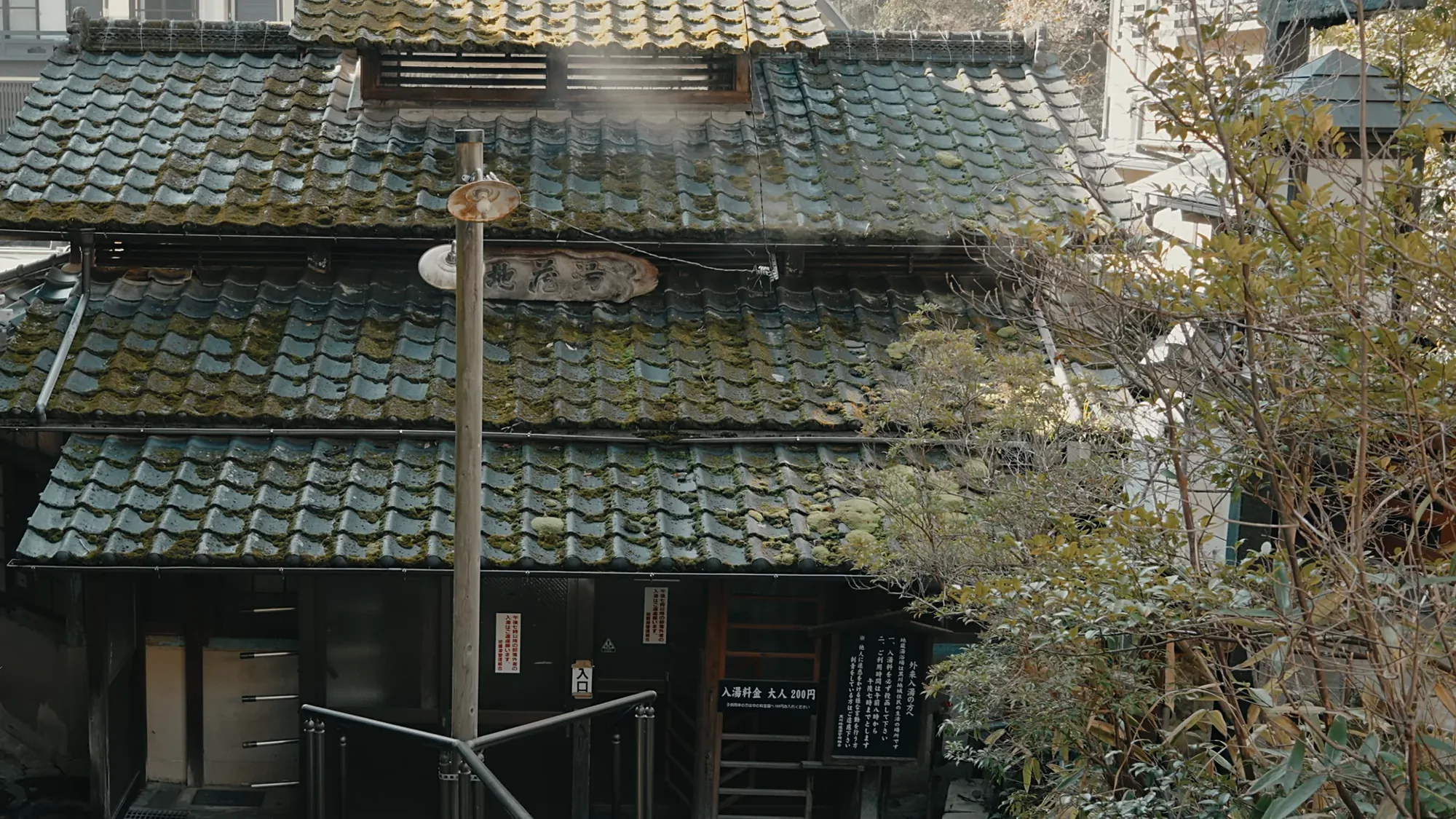
Wash first, no swimsuit, keep the small towel out of the water. That is the whole of it.
Anxiety about the rules keeps more travellers out of the water than the rules themselves ever would, and the anxiety mistargets: the etiquette's entire content is consideration made routine, and a visitor who is visibly trying is already keeping its spirit.
So, the one-paragraph version, for the reader who takes nothing else: wash before you bathe; keep the small towel out of the water; be quiet, slow and settled; keep phones and cameras from the changing room onward; follow the posted arrangement at every door, and ask the desk when unsure; use the private hour for every case that fits a shared pool badly; smoke nowhere on the lanes, fly nothing without permission, park only in lots; and treat every bath, lane and lantern as the shared property of a village that has trusted you with it, because that is precisely what it has done.
Bathers who hold that paragraph need no other. The rest of this page is only the same sentence, unpacked, with the village's own machinery attached.
Tips
Pack towel, soap, and coins before your first stamp; day-use baths supply nothing.
No photography in the baths — an association rule for the whole village, mixed baths above all.
Stay on the marked path inside inns; the bath is public, the ryokan is not.
Check each bath's day-use hours at the desk; closings before 21:00 are common.
Use low-impact soap; the village regulates what enters its onsen for the stream's sake.
New to onsen entirely? Read the JOS hub etiquette guide first, then hop freely.
Frequently asked questions
Do Kurokawa's day-use baths provide towels and soap?
What hours can you bath-hop in Kurokawa?
Can I look around the ryokan where I use a tegata bath?
Where does onsen etiquette differ in Kurokawa versus elsewhere?

Verified by The Japan Onsen Society
Show all sources
Verified July 7 to 16 and September 6, 2026 by The Japan Onsen Society. The single-bath fee band and the leave-your-tegata-at-the-Jizō custom are visitor-reported and marked ; the visitor code, the photography rule, the soap regulation and the 8:30–21:00 window rest on the ryokan association's own pages.
Visitor code (non-smoking, drones, no picking plants, no private land, limited parking, towel out of water, crowding refusals) · photography prohibited in the rotenburo in principle · soap/shampoo regulation · 8:30–21:00 bathing window · 源泉かけ流し + 加水 → 黒川温泉観光旅館協同組合 FAQ + tegata page kurokawaonsen.or.jp/faq/ → verified Sep 6, 2026
Universal onsen etiquette → the JOS onsen-etiquette hub
VERIFY:
Day-use window norm 8:30–21:00 (kurokawaonsen.or.jp bathing page) and variability wording
Towel/soap non-provision at day-use baths — confirm norm + any exceptions
Locker prevalence/coin needs at major baths
Single-bath fee range ¥500–800 consistency
Jizo-shrine tegata custom (same flag as siblings — one confirmation covers all)
USD conversions assume ~¥150/$1. Update ¥→USD at publish.
黒川温泉観光旅館協同組合 よくある質問 (Kurokawa Onsen Ryokan Co-operative Association, official FAQ) - the crowding-refusal clause and the visitor code the sections above apply, verified September 6, 2026
黒川温泉観光旅館協同組合 入湯手形 (tegata page) - the six-month validity and sticker mechanics behind the re-aim advice, verified September 6, 2026
黒川温泉観光旅館協同組合 黒川温泉について (association, about page) - the 黒川温泉一旅館 cooperative idea behind the rules-as-structure framing, verified September 6, 2026
日本温泉協会 国民保養温泉地 南小国温泉郷 (designation profile) - the きよらの郷 watershed protection behind the washing-station clause, verified September 6, 2026
Related guides
The Baths
The waters
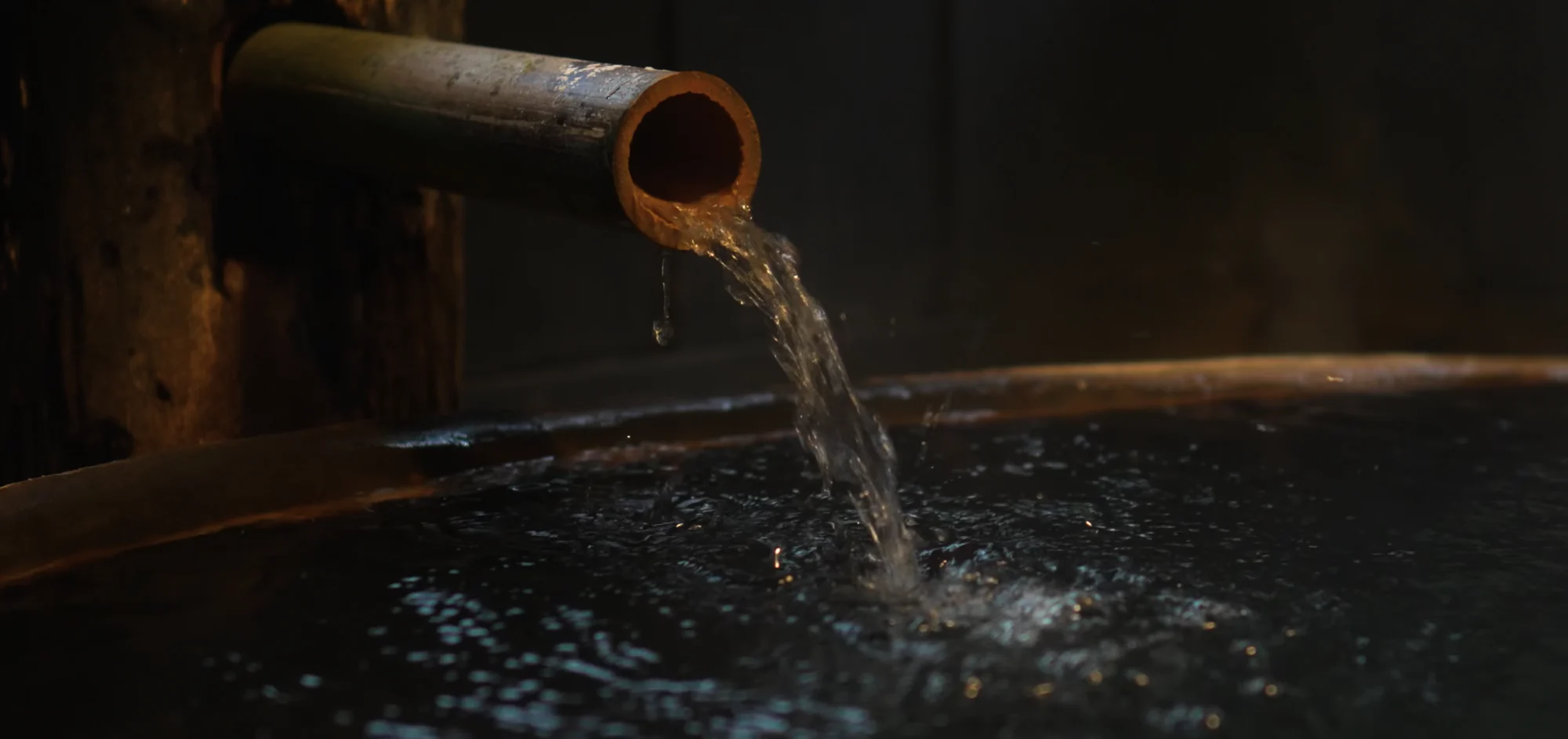
Kurokawa has no single water. Each inn owns its source, so bath-hopping is chemistry-hopping — sulphur, chloride and bicarbonate within one lane.
The Baths
The Best Open-Air Baths (Rotenburo)
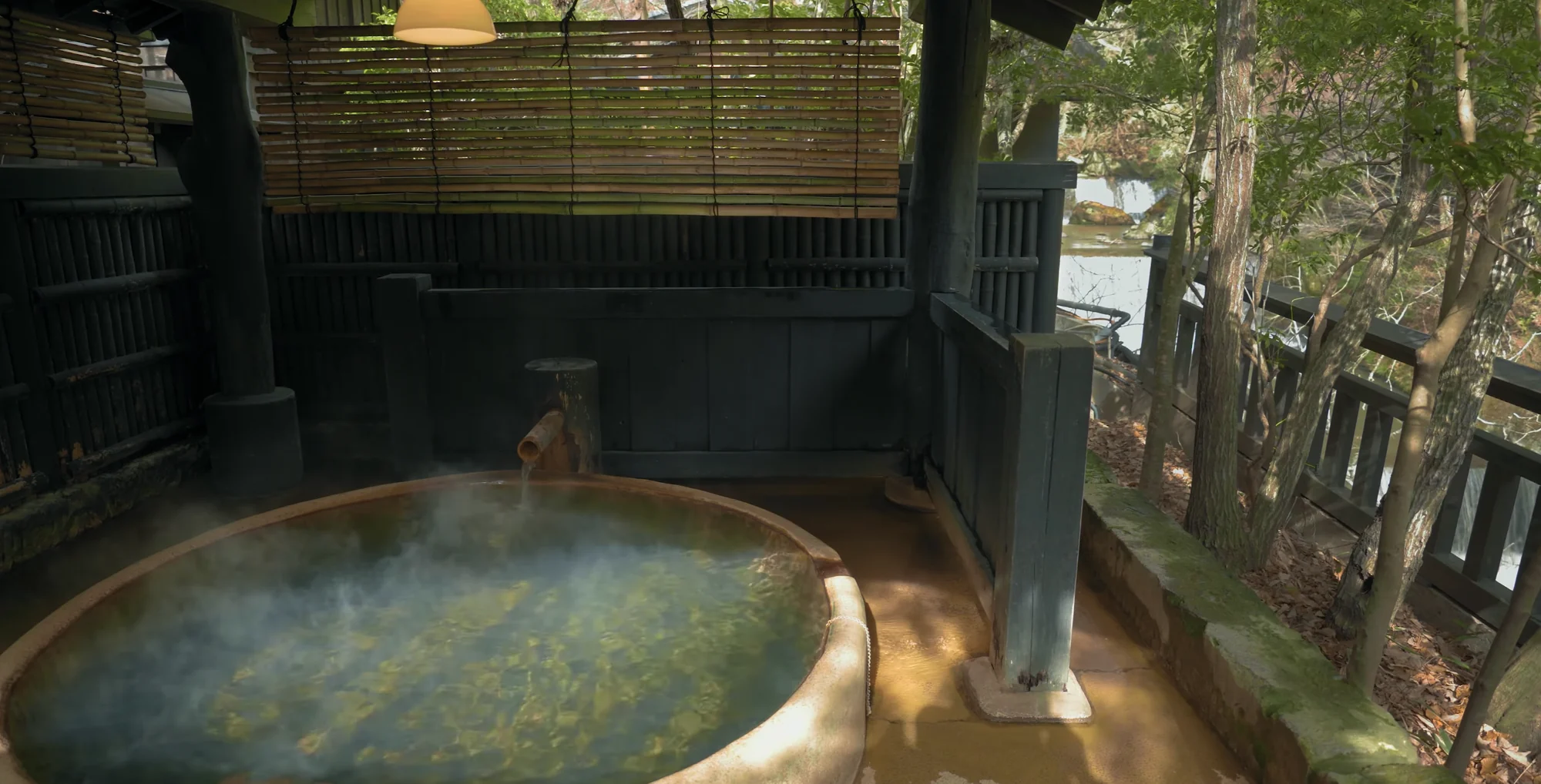
The tegata buys three of twenty-five open-air baths. Choose for contrast — a river, a cave, a pond — not three of the same.

The Baths
Kurokawa Onsen: The Complete Guide
A wooden pass buys three baths from twenty-five. The innkeepers agreed, decades ago, to look like this.