Building the excursion day
The standard car loop from Kurokawa: Nabegataki's morning slot, lunch in Ōguni or on the highland, Daikanbō and the Senomoto stretch mid-afternoon, back for the bath by five, exactly as the 2-day itinerary stages it. Car-free travellers have two honest options: split a taxi to Nabegataki as a group, or anchor on the Kyūshū Ōdan bus's scenic crossings and give the caldera a dedicated Aso-based day elsewhere in the trip, since Aso Station is the region's transit spine. Two cautions.
One of these is an hour away and one is most of a day. Decide which before you book the boat.
In winter, ice edits everything — Nabegataki's paths and the back roads demand care, and the Daikanbō rim wind is polar. And the 2026 Kumamoto earthquake has reduced some regional bus services, so a car-free excursion plan must be checked against the association's live traffic page before you rely on a specific run .
Timing discipline: how day trips fail, and how they don't
Every failed day trip from Kurokawa fails the same three ways, and each has a mechanical fix. The first failure is the unreserved return: the Odan's departures are few and bookable, peak seasons fill them, and the traveller who boards outbound without a return seat has volunteered for the day's most avoidable anxiety; the fix is booking both legs together, always.
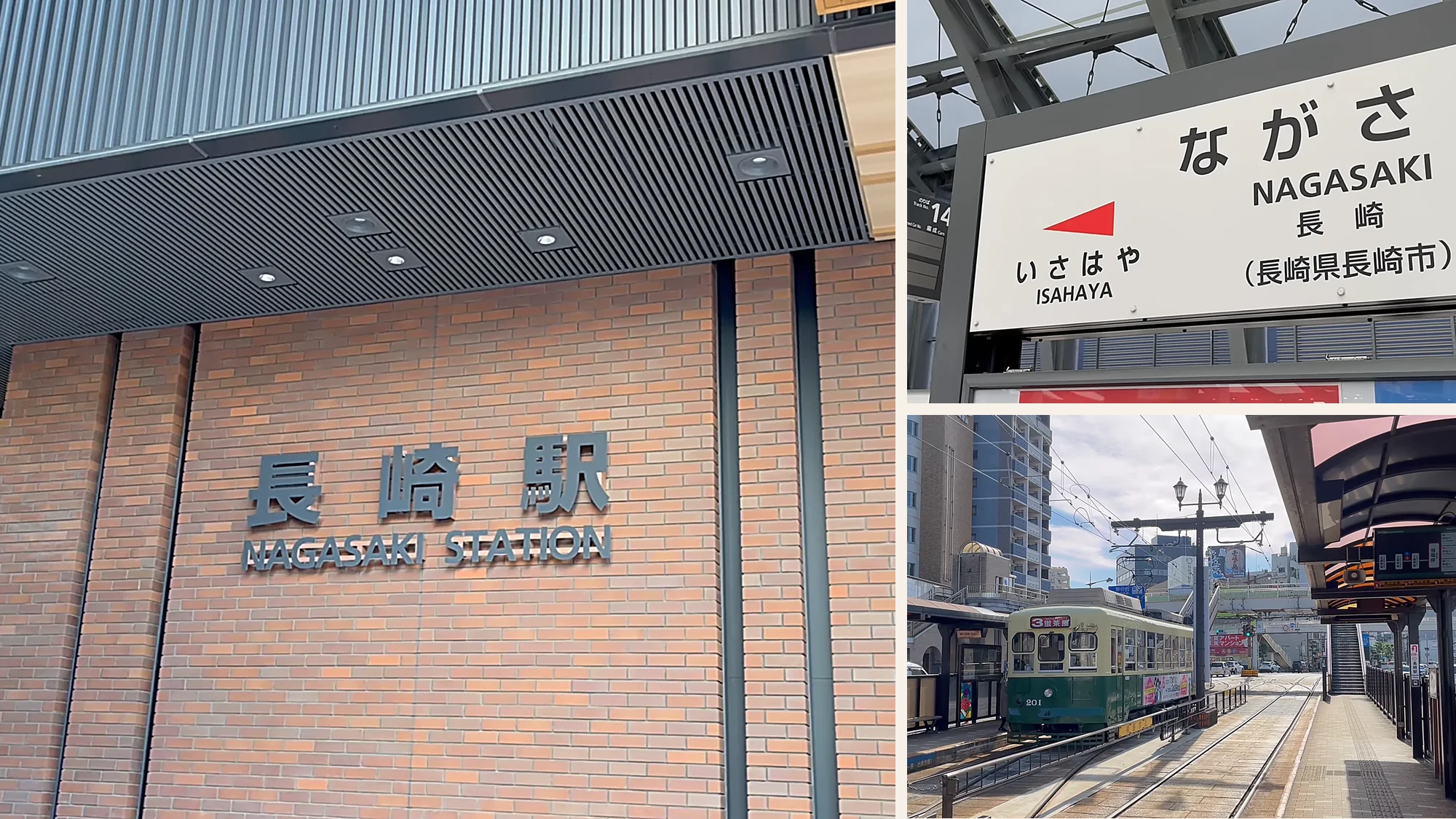
Nagasaki is four hours away. That is a separate trip, and pretending otherwise ruins both.
The second is the stale timetable: the 2026 earthquake's service reductions have been revised in stages, which means last year's plan, last month's blog and even last week's memory can all be wrong; the fix is the association's live weather-and-traffic page on the morning of travel, a two-minute ritual this site has repeated across a dozen pages because it genuinely is the answer.
The third is the compressed itinerary, two destinations forced into one day, which the bus frequencies quietly forbid; the fix is the one-excursion rule, one trip out, one unhurried return, the pre-dinner bath as the day's fixed point. To these add the winter clause, that early darkness moves every deadline forward an hour, and the weather clause, that the scenery days, Aso and Senomoto, should float to the clear day of the trip while the town days, Yufuin, tolerate cloud.
None of this is arduous. It is the same competence the village itself models: check the board, respect the clock, hold plans lightly. The reward is a region's worth of Kyushu threaded painlessly onto a village stay.
The day-trip network, priced to the yen
Kurokawa's excursion field runs on one bus line more than any other, the Kyushu Odan, and the operator's current fare table, revised August 1, 2026, prices the whole network exactly. The short hop is Aso: ¥1,600 (about US\$11) connects the village to Aso Station and the caldera country, the cheapest serious day trip on the board.
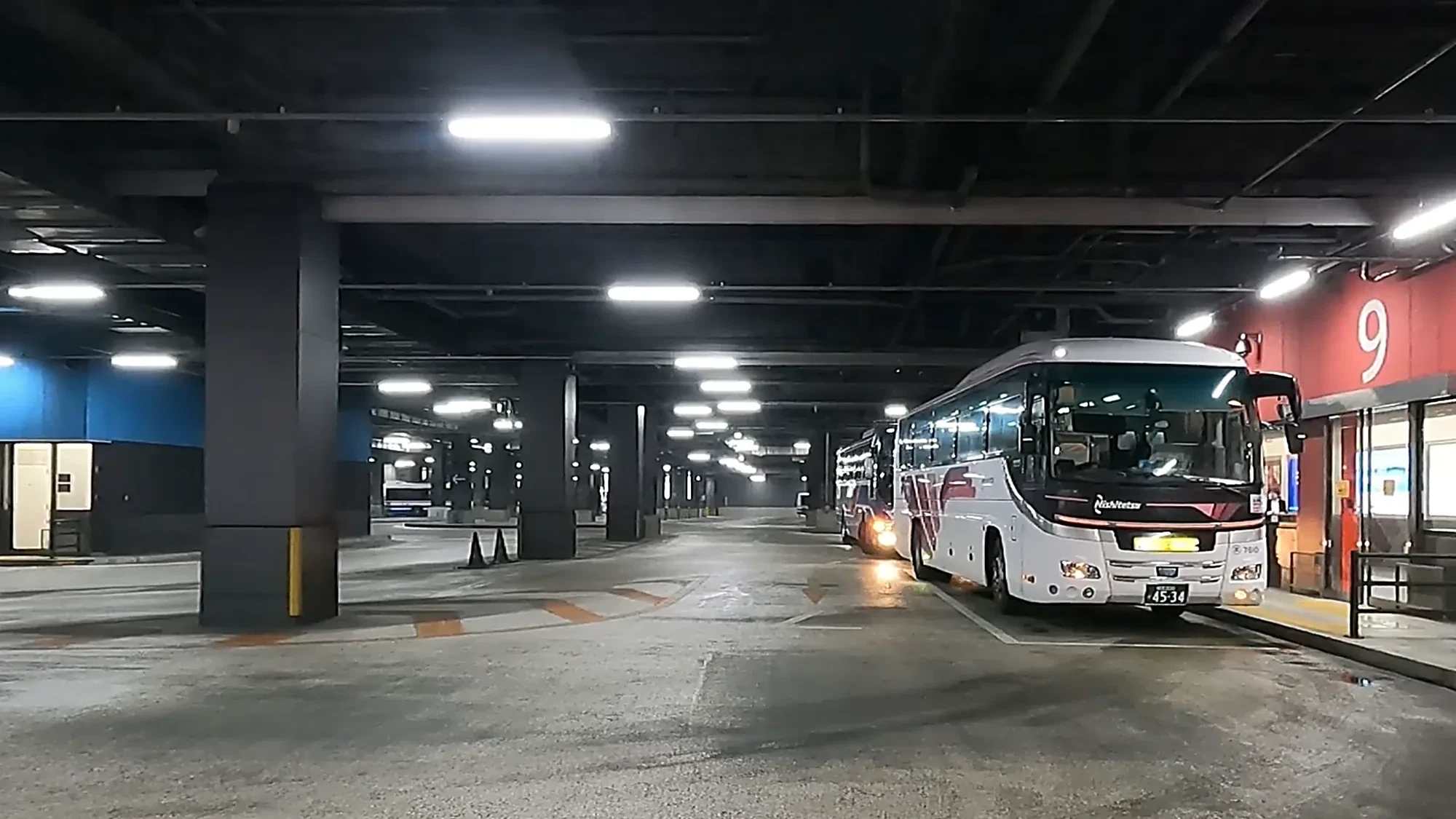
Every trip on this page is reachable without a car, at a published fare.
The onsen-to-onsen classic is Yufuin: ¥2,700 (about US\$18) and 1 hour 37 minutes by the association's timing puts you in Japan's most fashionable spa town before lunch. The full traverse is Beppu: ¥4,000 (about US\$27) rides the line to its far terminus, the most productive hot-spring city in the country. And the Kumamoto leg, ¥3,400 (about US\$23), makes the prefectural capital and its castle a possible, if long, out-and-back.
Read as a menu, the table sorts the trips by ambition: under ¥3,500 (US\$23) return buys the Aso day with money left for lunch, around ¥5,400 (US\$36) return buys the Yufuin comparison, and ¥8,000 (US\$53) return buys Beppu, at which point the arithmetic starts arguing for the overnight instead. Two disciplines keep the menu honest.
The Odan runs a handful of reserved departures a day, so the return seat is booked with the outbound, never assumed; and the 2026 earthquake's service revisions mean every plan on this page opens with the association's live traffic page on the morning itself. Priced, reserved and checked, the network turns a village stay into a regional base. Skipped, it leaves the village exactly as good as it was.
The honest verdict: when not to day-trip at all
This page ends against its own title, because the best day-trip advice for many Kurokawa visitors is abstention. The village's core experience, the three-bath rhythm, the lanes at graze pace, the evening under lanterns or parasols, consumes a day whole and rewards a second; a two-night stay spent entirely in the valley is not an unadventurous itinerary but a correctly sized one, and the traveller who buses to Yufuin on their only full day has traded the region's rarest atmosphere for its most reproducible.
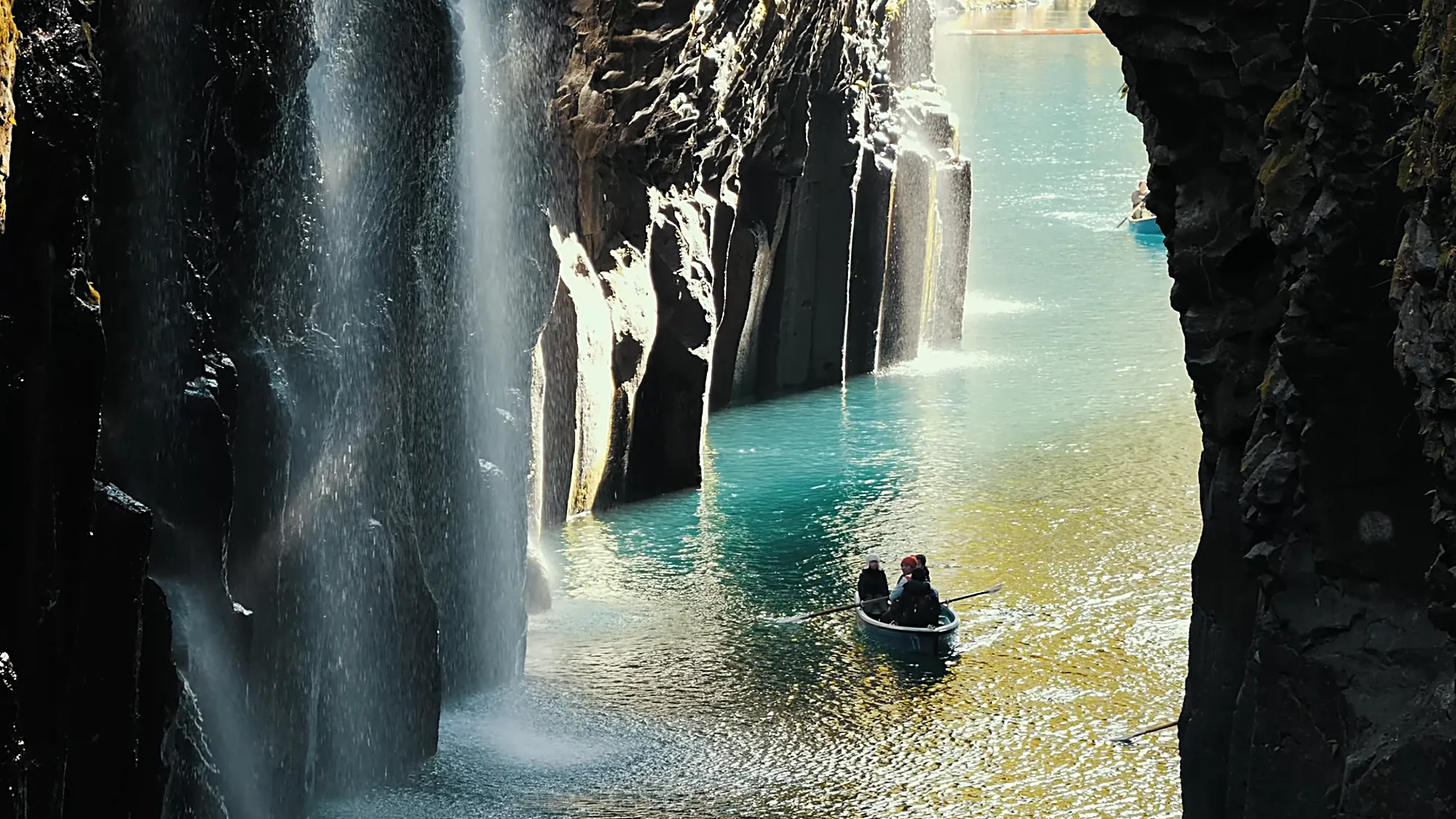
Beautiful, and too far. This is the trip people regret attempting in a day.
The day-trip network earns its place in three specific cases. The third night: from three nights up, a village this small genuinely benefits from one day of elsewhere, and the excursions above are ranked for exactly that slot. The through-traveller: anyone routing across Kyushu anyway should ride the triangle as an itinerary rather than radiating from one base.
And the second visit: returners who already own the village's rhythm can spend their days generously abroad, coming home each evening to the baths with the region in their legs. Outside those cases, the strongest play remains the micro tier, an hour at the river temple, a grassland detour, which adds the valley's context without spending its scarce commodity, unscheduled time. The bus fares will still be there next trip, revised and re-checkable.
The unhurried second day in the village is only there if you refuse to spend it elsewhere, and more travellers regret the excursion they took than the one they postponed.
Nabegataki Falls: behind the curtain
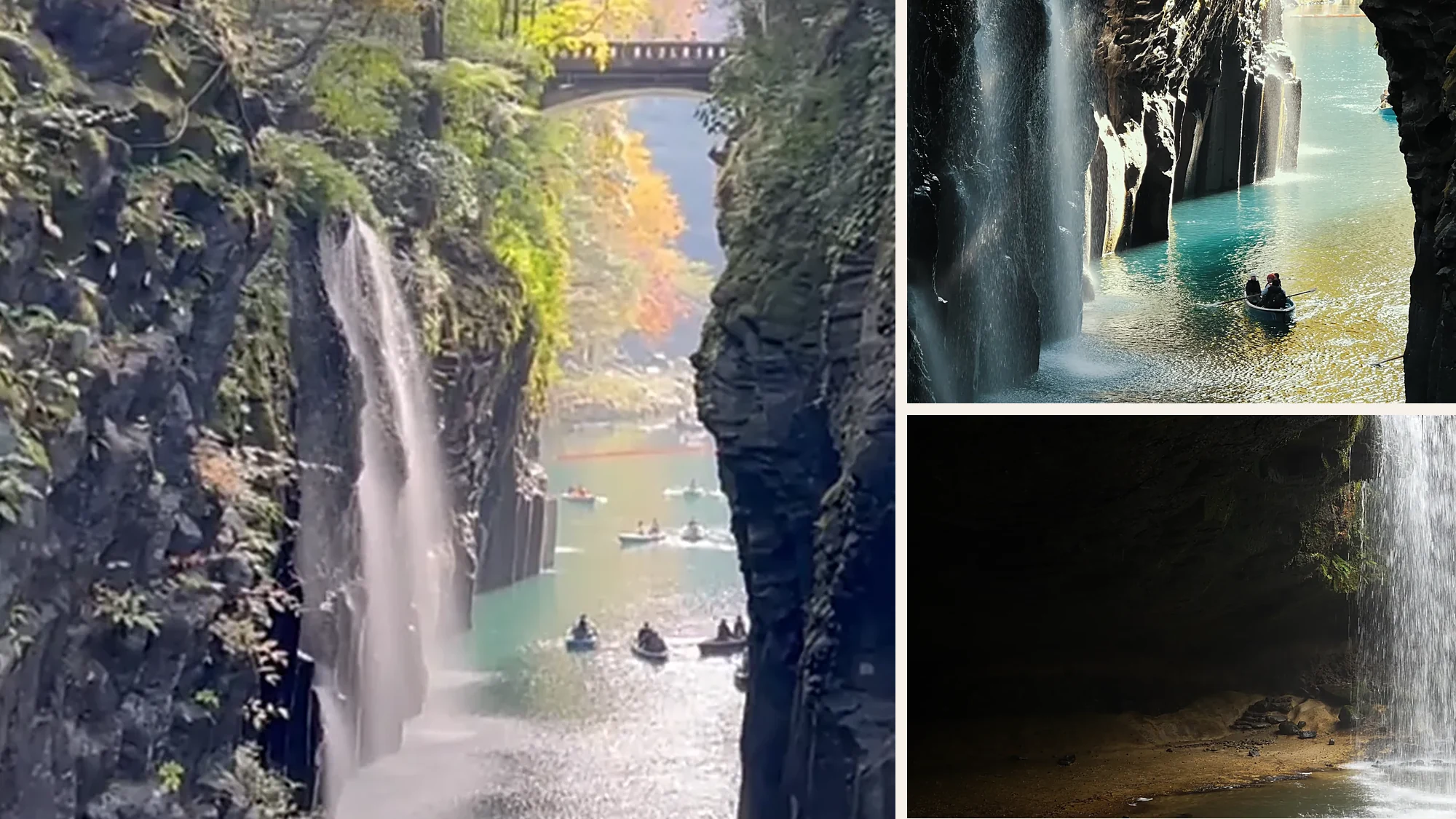
The area's marquee outing: a wide, low curtain of water, about 10 m (33 ft) high and 20 m (66 ft) across, pouring off a ledge with a walkable hollow behind it, so you stand in the recess and watch daylight through falling water. Green season frames it best, and a spring illumination and summer foliage are the photogenic peaks.
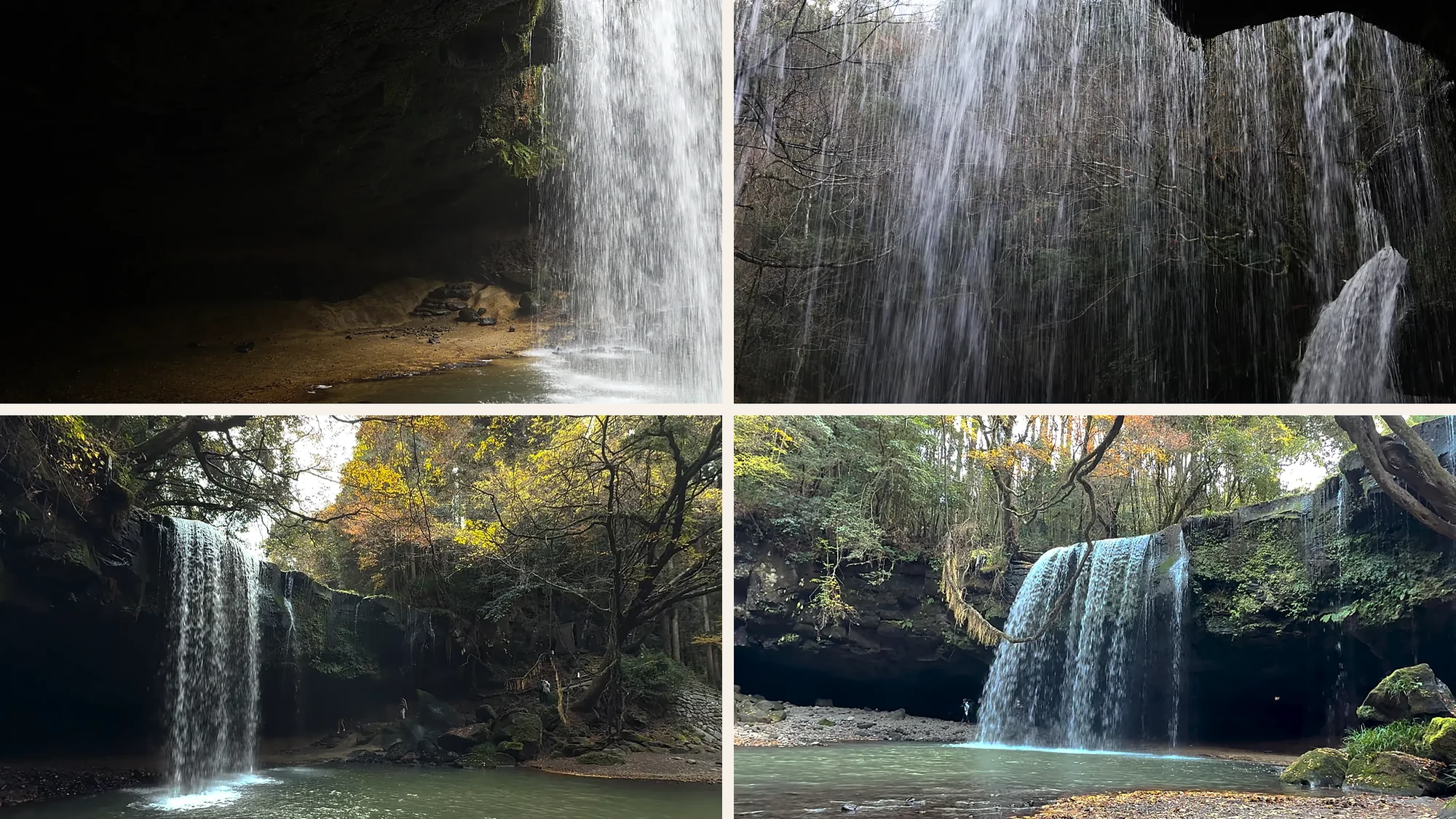
You can walk behind it. That is the whole reason this trip is worth the morning.
Practicalities changed with fame: entry now runs on timed online reservation (the Webket system), bookable ahead and same-day only if slots remain — a crowd-control response after the falls went viral. It sits about 25–30 minutes from Kurokawa by car or taxi in Ōguni town (a drive time we carry from listings, not a Japanese primary); the paths are stone and spray-slick, so bring grip, and allow 60–90 minutes on site.
Daikanbō: the caldera explained
The northern rim's great overlook, roughly 40 minutes from the village : the whole Aso caldera at your feet, its floor a grid of towns and fields, the central peaks arranged in the skyline locals read as a reclining figure. Go for clarity — morning air or late light — and simply look; the view does its own interpreting. It is free and always open, with a café and stalls at the car park, and it combines naturally with the Yamanami Highway's Senomoto stretch for a full highland day.
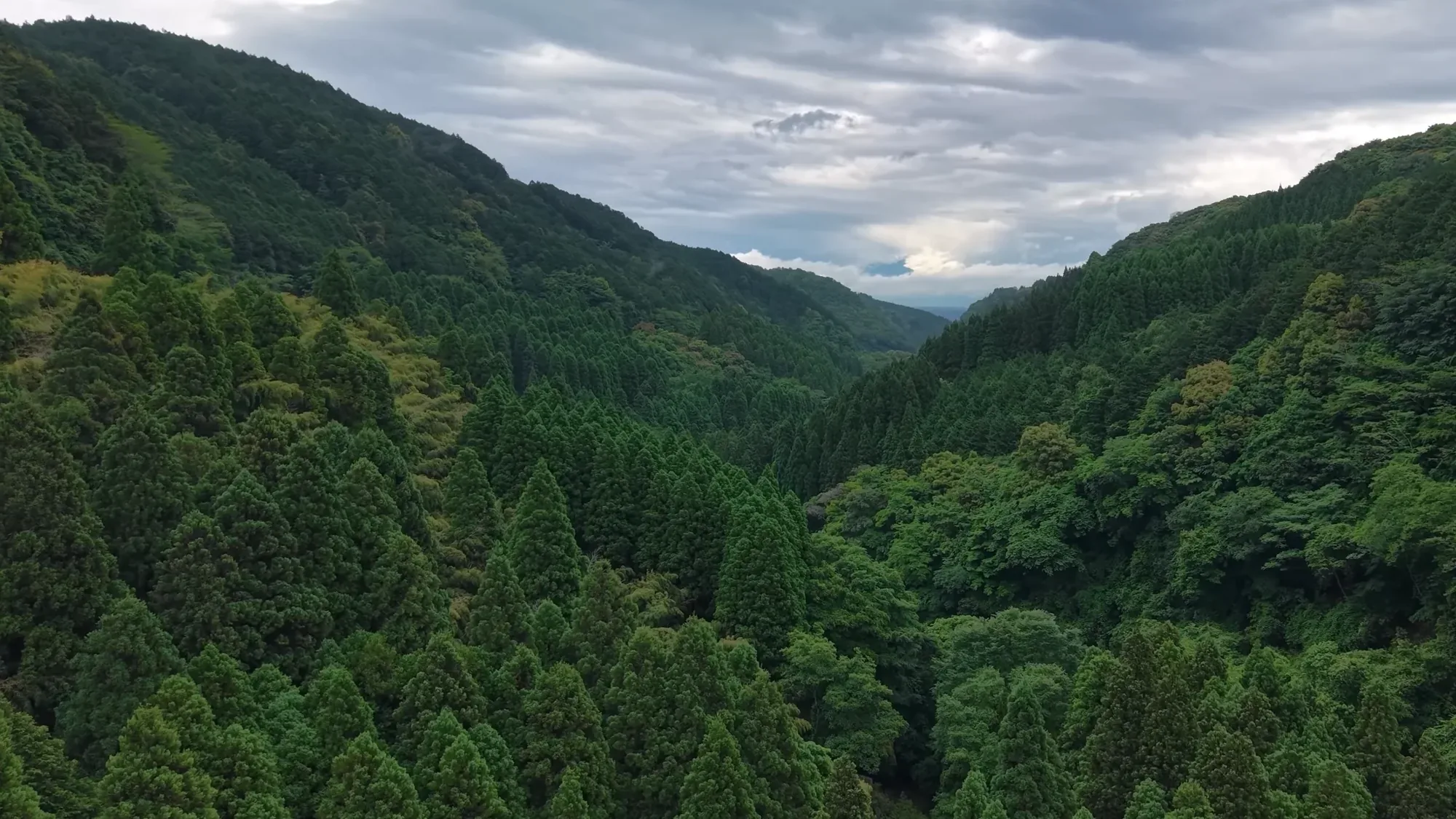
Daikanbo explains the caldera in one look, provided the cloud cooperates.
The Aso day: the caldera next door
Aso is the excursion the geography itself recommends: the village sits on the caldera's northern shoulder, the bus ride is 40 to 50 minutes on the Odan routing, with the local Sanko line offering an alternative of about 60 minutes toward Oguni plus a 30-minute connection, and the destination is one of the world's great volcanic landscapes, the five peaks standing in a caldera vast enough to hold towns, rail lines and pasture.
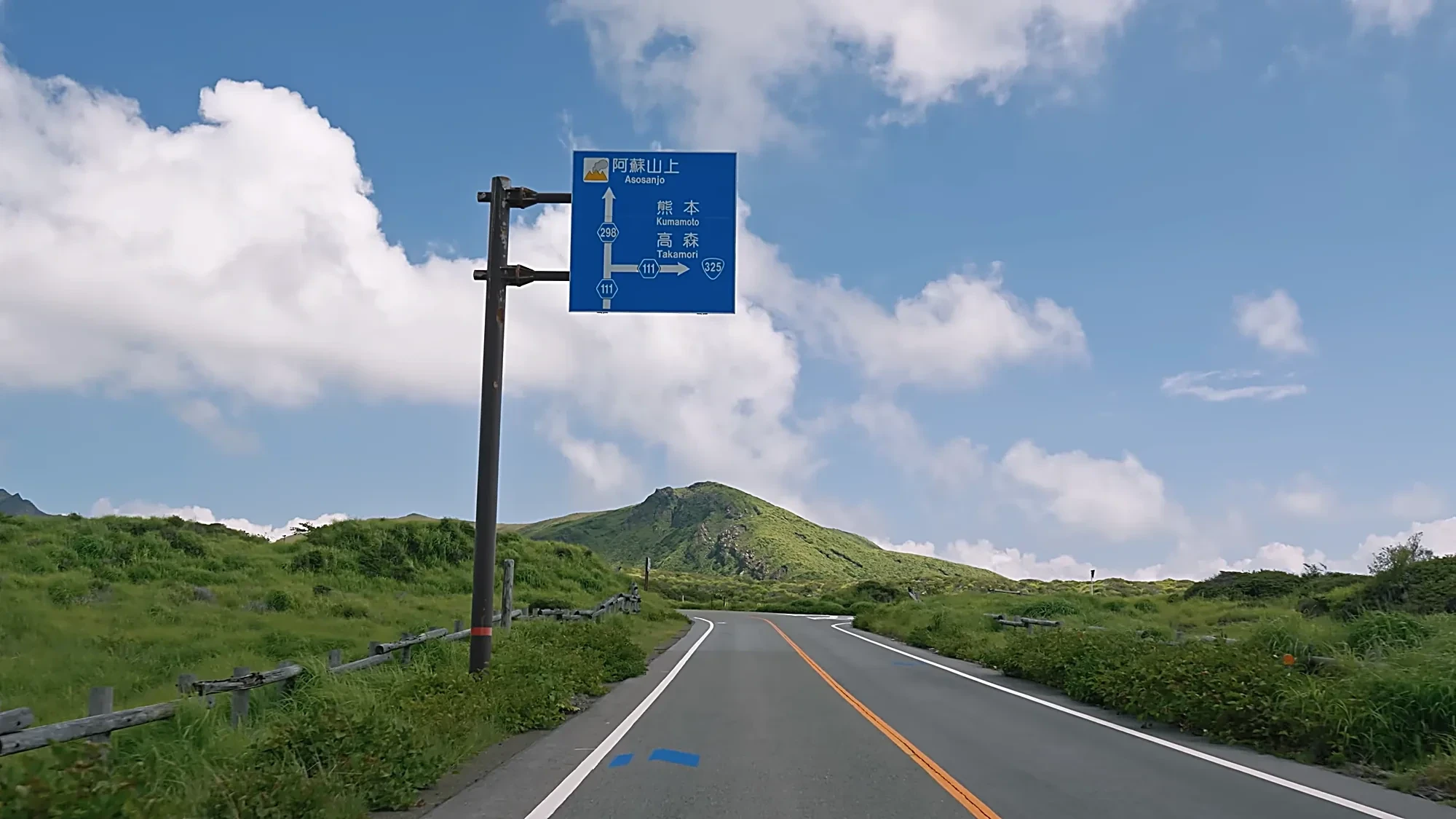
The closest big day out, and the one most worth the early start.
The day works in either of two shapes. The lighter shape never leaves the rim country: ride out, walk the grassland viewpoints, eat an akaushi beef lunch in the caldera's farm economy, ride back for the pre-dinner bath, a day of enormous views and minimal logistics.
The fuller shape descends to Aso Station and the crater-side country beyond, for which the station's visitor infrastructure handles the day's onward connections; crater access itself opens and closes with volcanic activity, so that leg is confirmed on the day, from official sources, never assumed from a guidebook. For drivers, the same excursion becomes the Yamanami Highway's southern run, the road doing the sightseeing continuously rather than at stops.
The honest advice on timing is seasonal: the caldera is at its green maximum in early autumn when the grasslands stand full height, theatrical under winter's first whitening, and clouded into invisibility on the wrong wet day, which is why the Aso trip should always be the clear-day card in a two-day hand, played when the sky commits. When it does, there is no better-value ¥3,200 (US\$21) of transport in Kyushu.
The Aso volcano zone: conditions apply
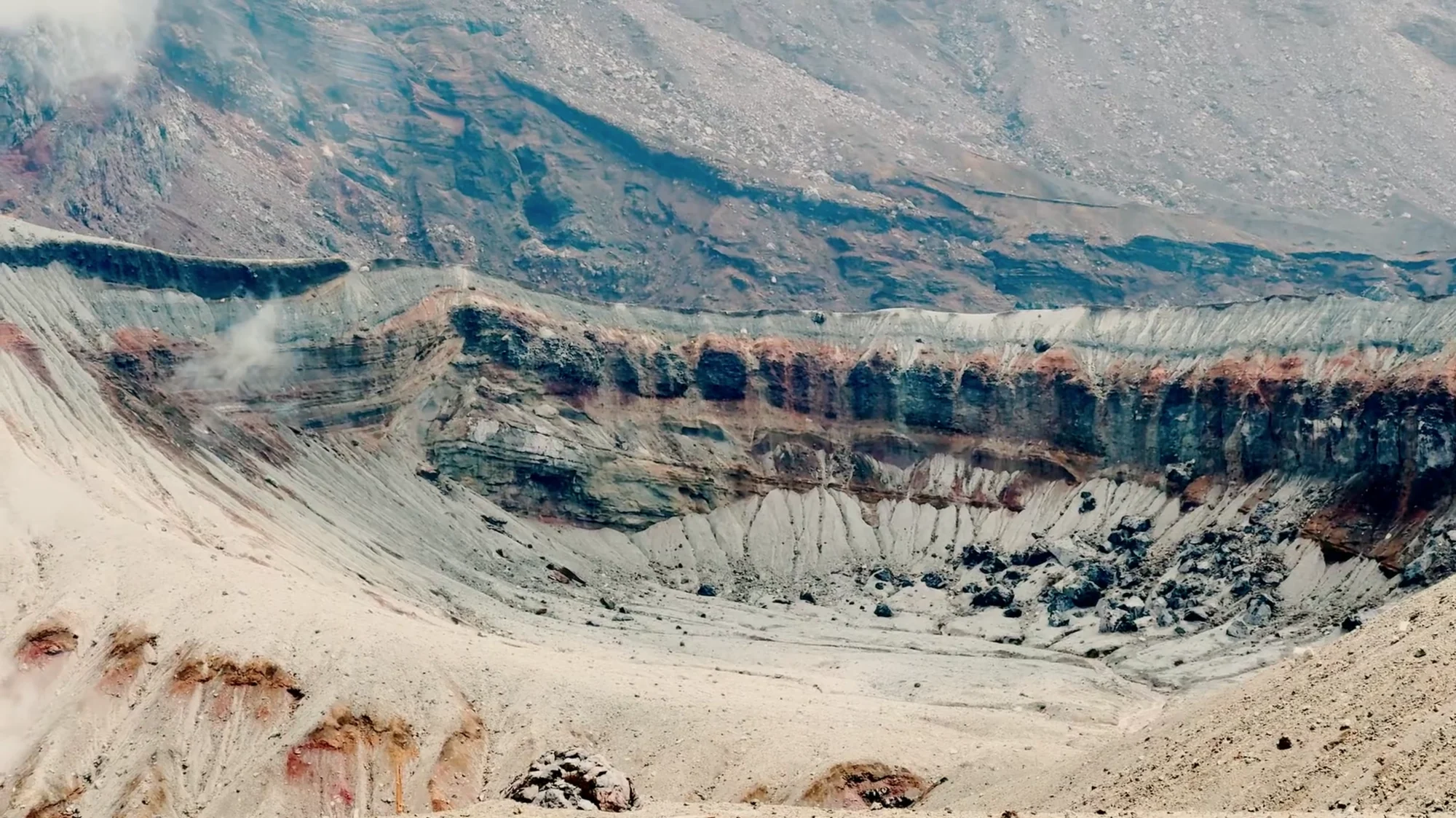
About an hour south lies the caldera's live heart: the Nakadake crater area, the Kusasenri grass plain, and the volcano museum. When alert levels permit, the crater's turquoise, steaming lake is Kyushu's most primal sight; when they do not, barriers close the summit zone with little notice. So check the official volcanic status the morning of any crater plan, and treat Kusasenri and the museum as the reliable floor of the day. Buses serve Aso's sights from Aso Station in season, but this is the excursion where a car earns its keep.
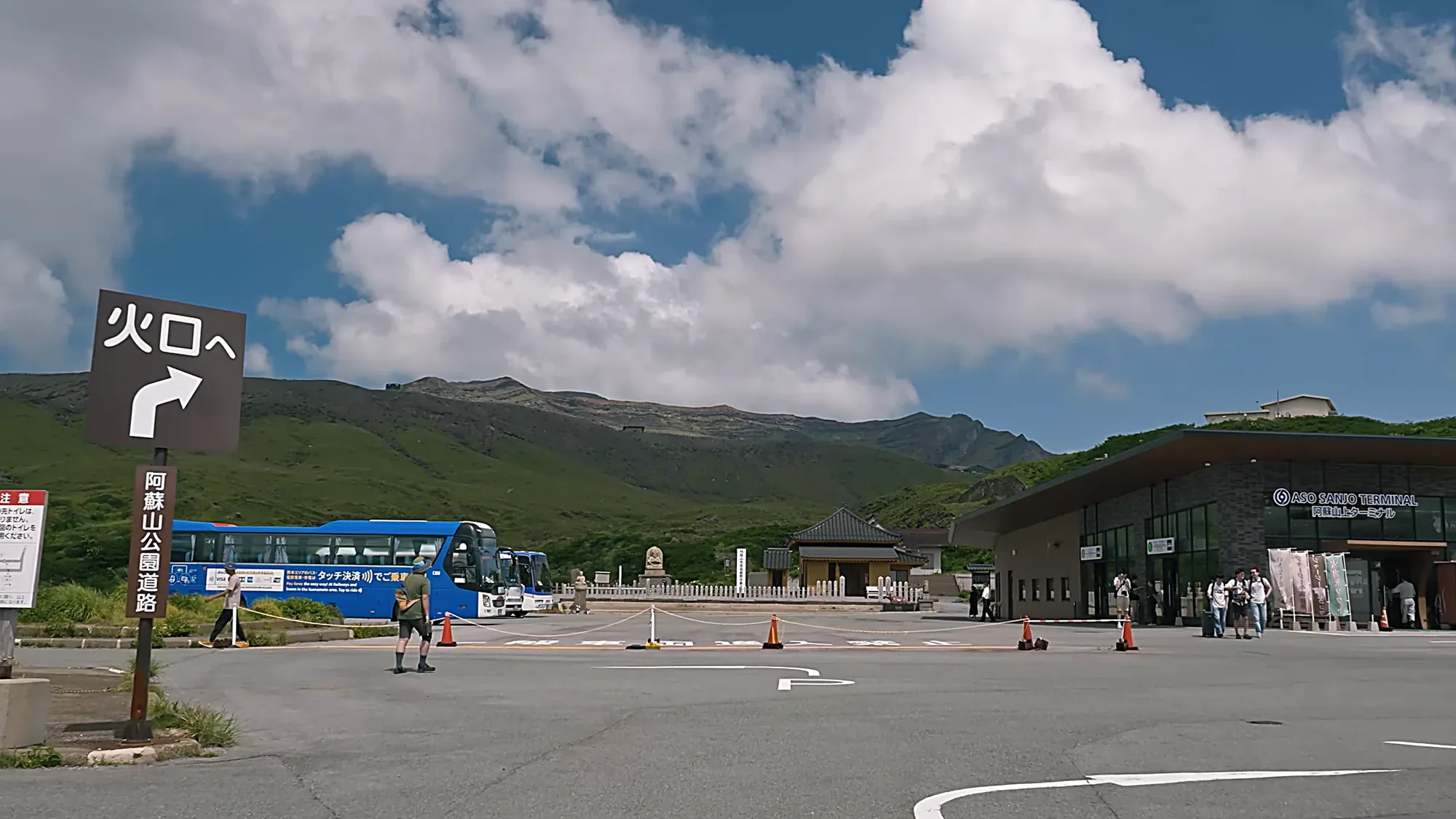
The crater closes on gas readings, without notice. Check the morning you go.
Senomoto highland and the Kūjū range
Two sourced sights extend the caldera day, both named in the government hot-spring-area profile. Senomoto highland (瀬の本高原), on the plateau between Kurokawa and the Aso rim, is ranked first among Kumamoto Prefecture's hundred green landscapes — open grassland and long views, the kind of place you stop the car for rather than tour.
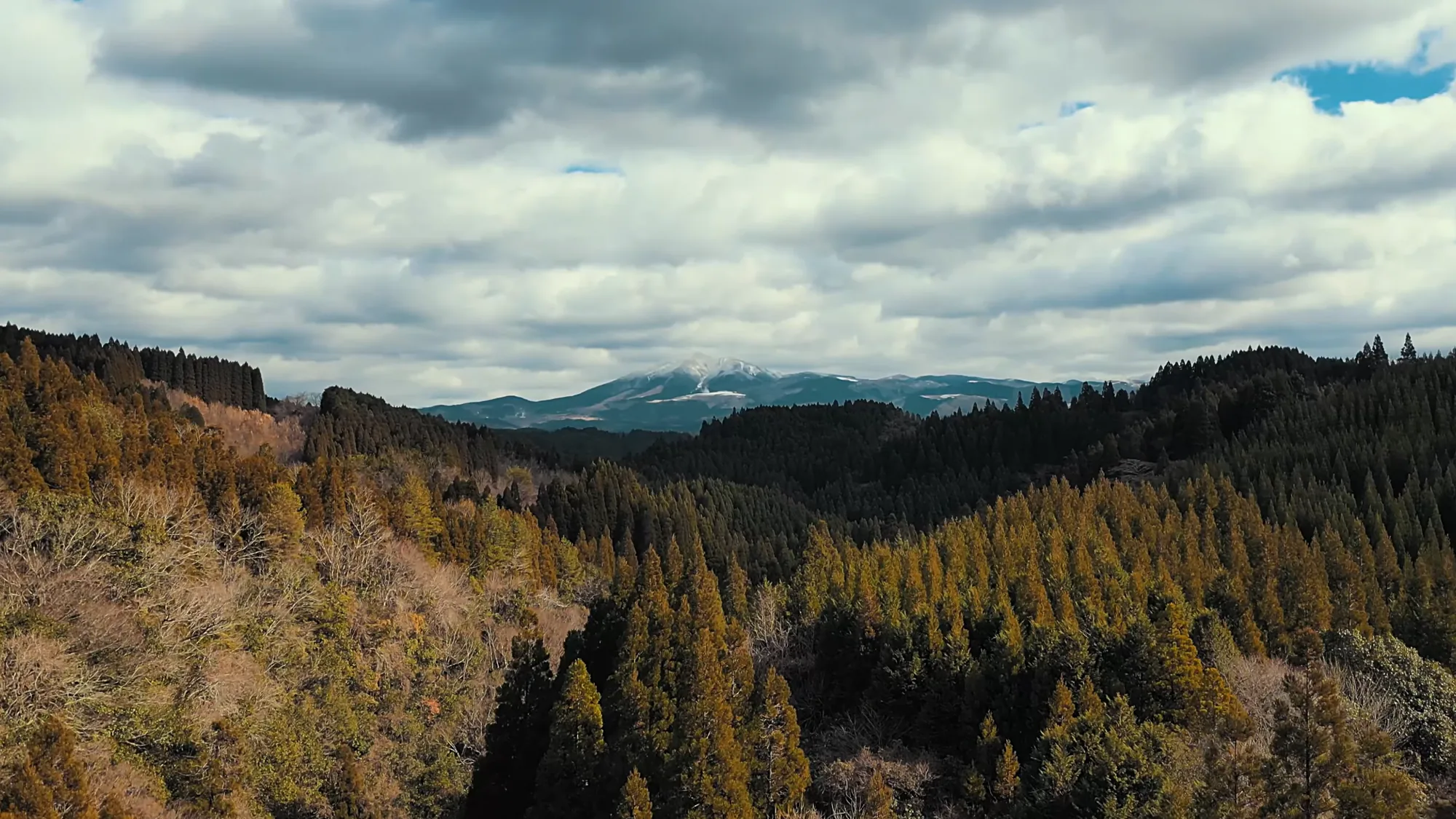
Senomoto sits on the saddle between the two. It is the drive, not the destination.
Across the valley rise the Kūjū mountains (九重連山), the volcanic range that walls Kurokawa's southern horizon and draws hikers in the warmer months; from the village they are the skyline, and from the Yamanami Highway they are the drive. Neither needs a ticket, and both turn a Nabegataki-and-Daikanbō run into a proper day out rather than two stops.
The five-springs day: touring Kurokawa's own designation
The most overlooked day trip from Kurokawa never leaves its own national designation. The village is one of five hamlets in the Minamioguni spa area, and stringing the other four into a loop makes a half-day with a theme no caldera drive can match: the same volcanic water, four different characters. Run it clockwise.
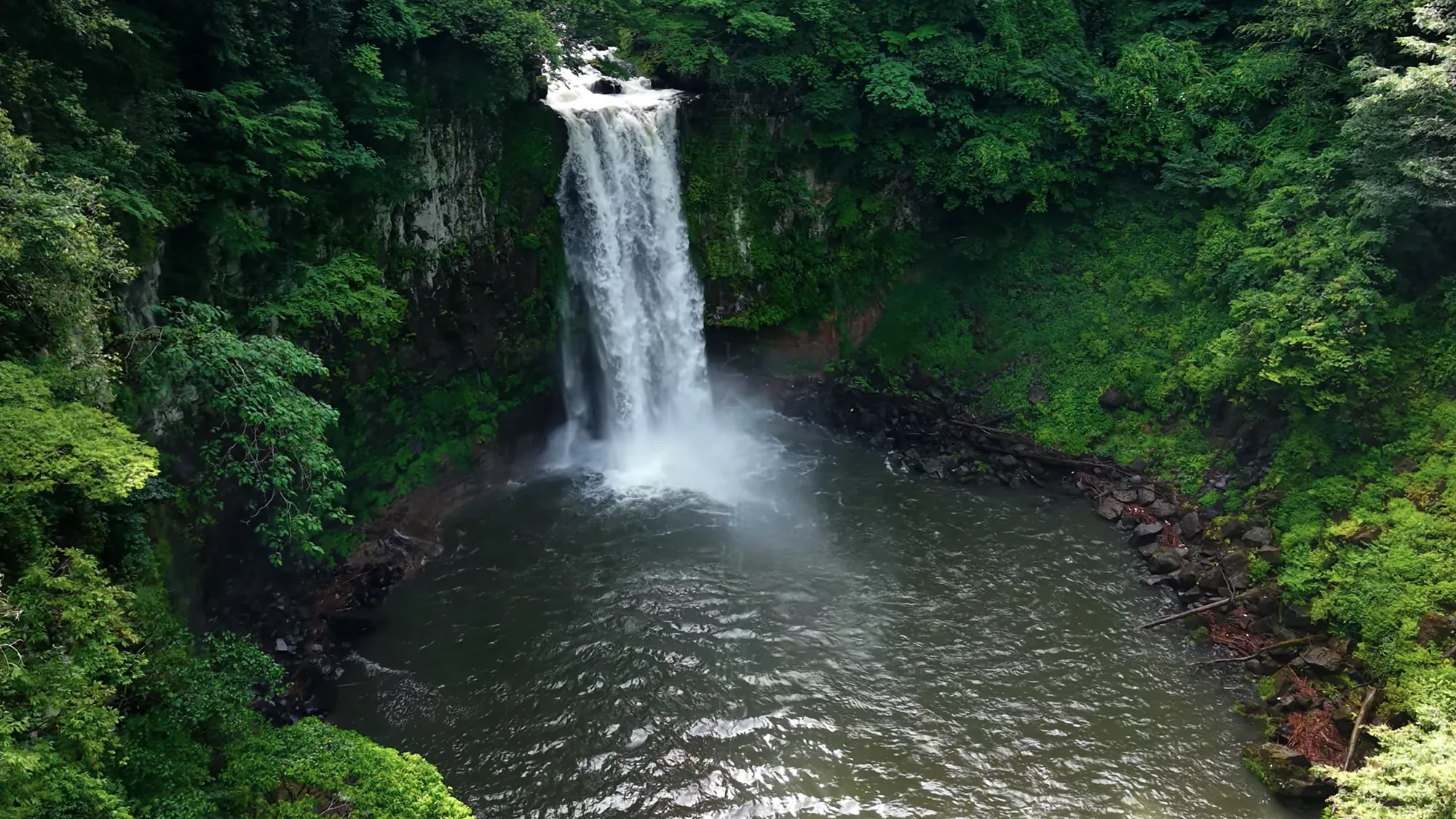
Four hamlets share the designation, and almost nobody visits the other four.
Tanohara, minutes up the valley, is the working elder, a cure-bathing ground of some three hundred years whose source emerges hot enough to need no reheating, with a modest footnote in film history as a Tora-san location. Manganji is the set piece: the stone-ringed bath on the bank of the Shizu River where bathers soak effectively in the stream, the protected okichi-mozuku alga in the current, and the thirteenth-century temple of Hojo Tokisada standing over it all.
Oda continues the bicarbonate belt in its quietest form. Shirakawa closes the loop as the area's sulphur pole. None of the four has Kurokawa's polish, which is the point; they are what the valley's bathing culture looks like without a design code, and together they earn the designation's full name, a National Recuperation Hot Spring Area, better than any single village could.
Practicalities are honest but unglamorous: this is a car-or-taxi circuit, the hamlets keep their own modest hours, and specific bath fees and opening times were not pinned in our sources, so ask at Kaze-no-ya before setting out and carry coins.
The micro day trips: excursions of an hour or two
Between staying put and boarding a bus sits the township's own excursion tier, half-days and spare hours inside the five-hamlet map, and for many visitors these are the trips that end up mattering. Manganji is the essential one: the thirteenth-century temple and, below it, the stone-ringed bath in the running river, the valley's bathing tradition in its original state, reachable in minutes by car and worth an unhurried hour of anyone's trip.
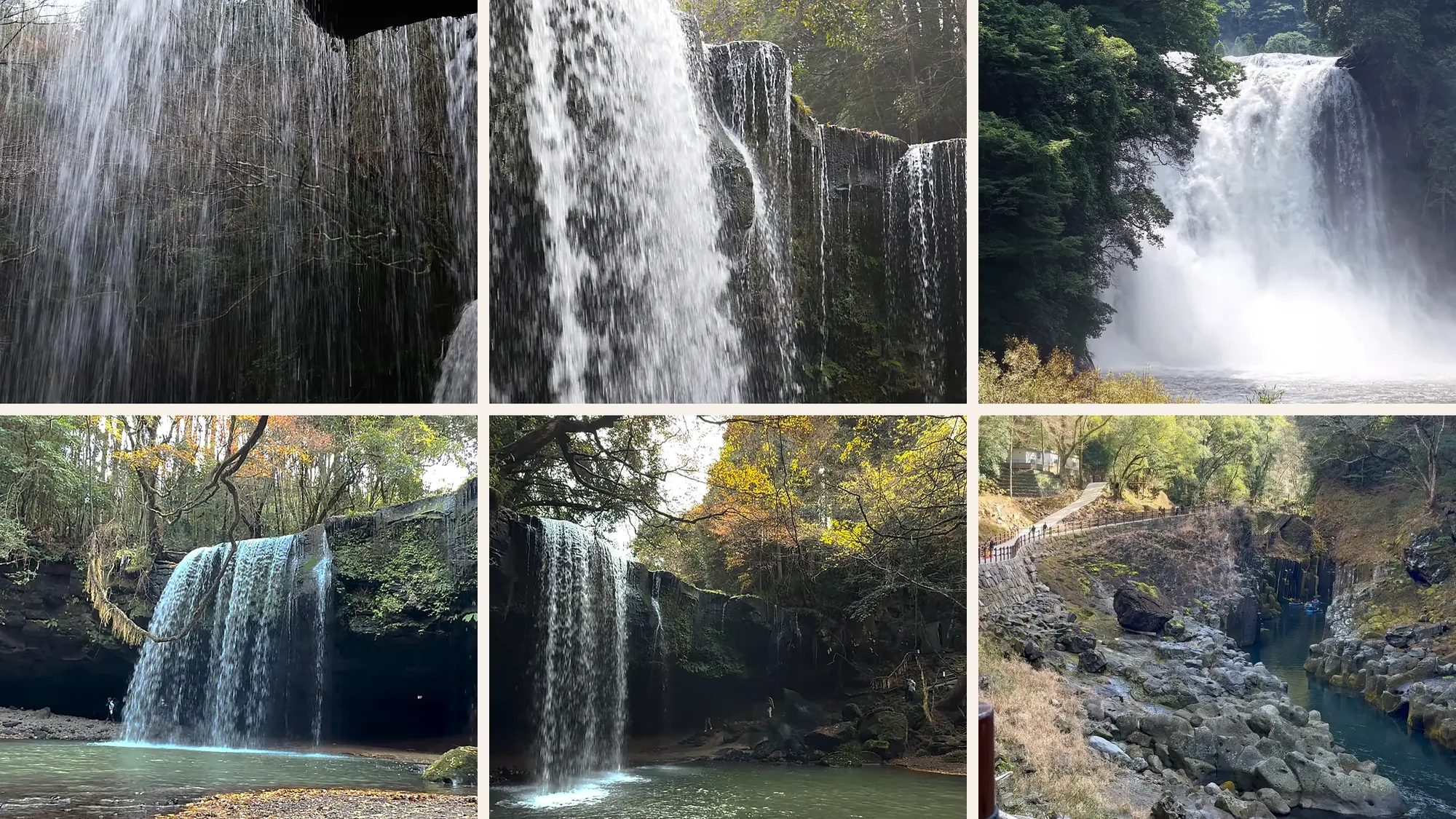
Half of these are twenty minutes away and take an hour of your day.
Tanohara pairs with it naturally, the neighbouring spring hamlet whose three-century therapeutic-stay lineage and unfamous lanes show the valley as it all once was; together they make a contemplative half-day that costs almost nothing and recalibrates how you see the main village's polish. Senomoto is the scenic counterweight, the grassland listed first among Kumamoto's hundred green landscapes, effectively the Aso day's opening view without the full commitment, and the natural leg-stretch for anyone driving the Yamanami.
The micro tier's virtues are the inverse of the bus network's: no reservations, no timetables, no weather bets longer than an hour, and a shape that fits the village's own rhythm, out after the morning bath, back before the afternoon one. Visitors without a car can reach some of this tier by the local services and their inn's advice, and should ask the front desk rather than force it; the bus network above is the carless traveller's stronger suit.
But drivers should treat the micro tier as mandatory. It is the difference between visiting a famous village and understanding the valley that produced it.
Yufuin as a day trip, by one bus
The other ready-made excursion runs east on a scheduled service. The Kyushu Odan bus reaches Yufuin Station from Kurokawa in 1 hour 37 minutes for ¥2,700 (about US\$18) on the operator's current fare table, which puts Japan's most fashionable onsen town inside day-trip range without a car.
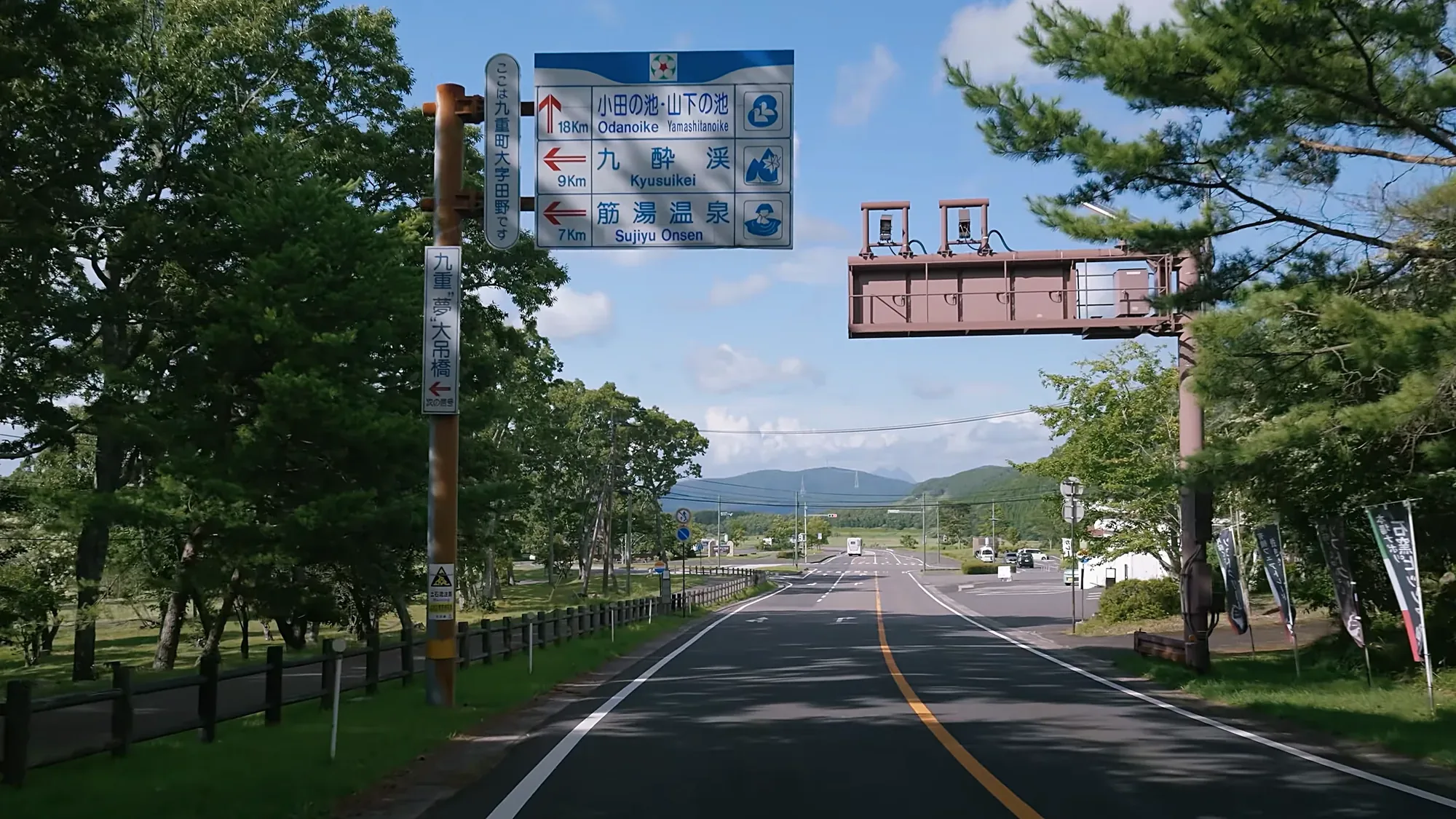
Yufuin is one bus and no changes, which is rarer here than it sounds.
The shape of the day writes itself: a morning departure, Yufuin's boutique main street and its mountain backdrop through midday, and an afternoon bus home in time for the evening bath, with the grassland crossing of the Senomoto highland thrown in twice as the scenery both ways. The honest caveats are two.
The Odan's schedule has run reduced since the 2026 Kumamoto earthquake, with revisions in stages, so this is a day trip to confirm against the operator's current timetable rather than plan from memory; and Yufuin at midday is everything Kurokawa is not, busy, browsable and bright, which is either the day's appeal or its warning depending on why you came to the mountains.
Done deliberately, the pairing flatters both towns: you spend the crowded hours in the town built for them, and the quiet ones in the village that owns quiet.
The Yufuin day: visiting the other idea of an onsen town
Yufuin, 1 hour 37 minutes up the line, is the day trip with a thesis: it is the other great answer to the question Kurokawa answered, what a small hot-spring town should become, and seeing both in one trip is a course in Japanese tourism design. Where Kurokawa is the refined arts-and-crafts village of bathing itself, lanes, discs, steam, subtraction, Yufuin under Mt.
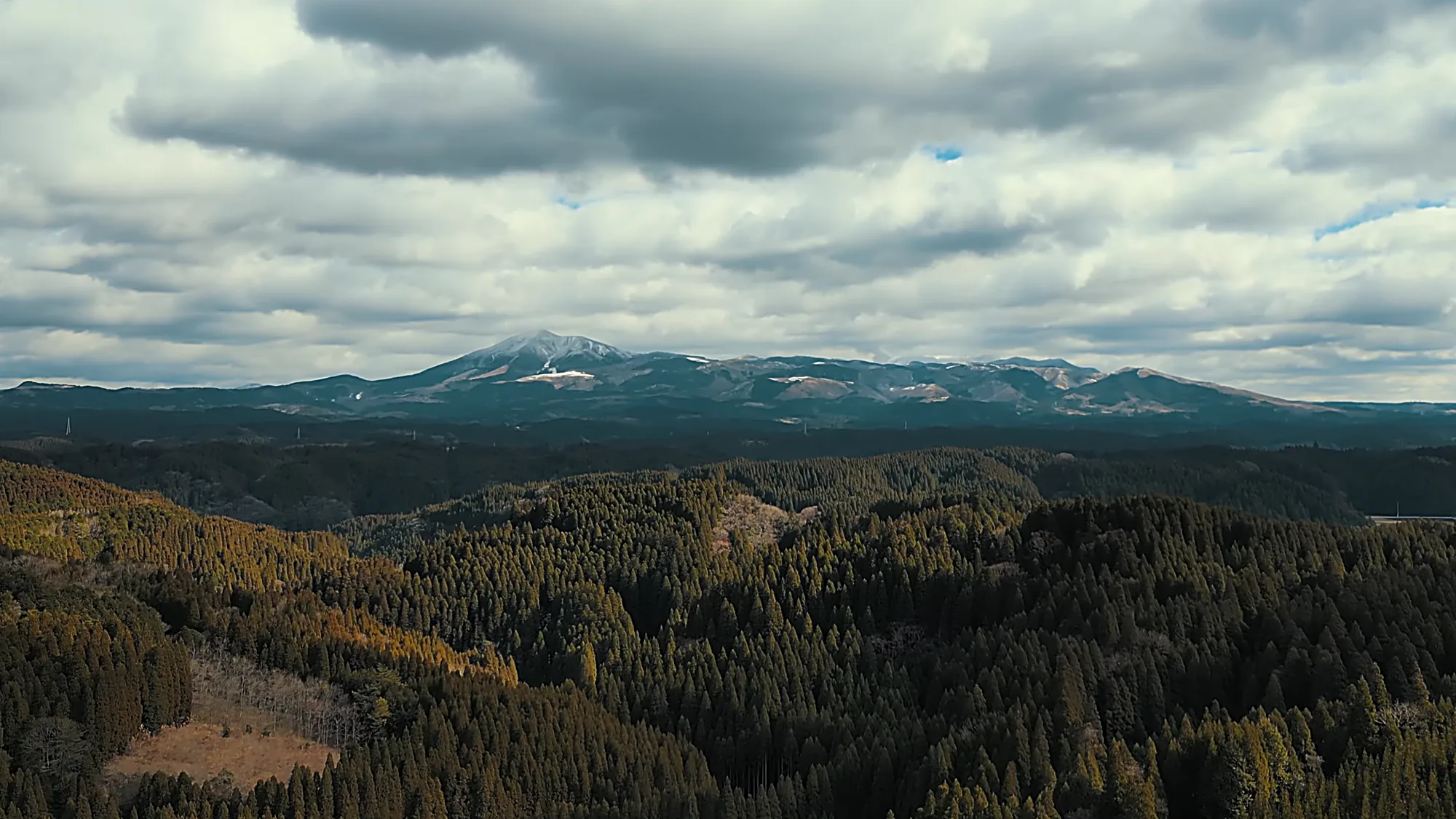
Yufuin solved the same problem the opposite way. Go once and you understand both.
Yufu is the refined arts-and-boutique village, a browsing town of galleries, cafés and shops strung between the station and the lake, with the mountain doing the scenery and the baths playing a supporting role. The day trip plays to that difference.
Go for the browsing, the museums and the patisserie culture; eat well at midday when the town is at full brightness; walk to the lake as the tour flow ebbs; and be back on the Odan in time for Kurokawa's dinner hour, having spent the day in a town built for daylight and returned to one built for evening. The comparison clarifies both places.
Yufuin's crowds are larger and younger, its economy runs on the stroll rather than the soak, and its pleasures need no changing room; travellers who find Kurokawa too quiet often love it, and travellers who love Kurokawa's hush usually return from Yufuin grateful for it. That gratitude is, frankly, half the excursion's value: no single day teaches what Kurokawa actually is faster than eight hours in its brilliant, busier sibling. Book the return seat before leaving; the evening buses carry everyone who had the same idea.
The long line: Beppu, and the onsen triangle problem
Beppu sits at the Odan's far end, ¥4,000 (about US\$27) and the better part of a morning away, and the honest question is not whether it is worth seeing, it is, but whether it is worth seeing as a day trip. Japan's most productive hot-spring city is an urban, steaming, gloriously ungoverned counterpoint to Kurokawa's curation, hell-ponds and public baths and vapour rising from street grates, and it rewards time in exactly the way a long out-and-back denies.
Do the arithmetic before booking: two bus legs totalling several hours, a city that spreads across neighbourhoods rather than lanes, and a last reserved departure that sets a hard afternoon deadline. The day-trip version is achievable and always slightly breathless.
The better structure, for travellers with the nights to spend, is the one the bus line itself draws on the map: the onsen triangle as an itinerary, not an excursion, Kurokawa's two quiet nights, Yufuin's browsing day and night, Beppu's urban steam at the end or beginning, one line, three opposed philosophies of hot water, no backtracking. That routing also solves the airport question, since the association's own access chain connects Beppu and Yufuin onward to Oita's flights.
The rule this page keeps arriving at applies here at full strength: match the destination's format to the time given it. Aso fits a day, Yufuin fills one exactly, and Beppu wants a bed. Trips that respect those shapes come home satisfied; trips that compress the triangle into day-returns come home mostly with bus memories.
The Kumamoto question, answered by the clock
Kumamoto city sits on the fare table at ¥3,400 (about US\$23), and travellers regularly ask whether the prefectural capital, with its castle and its food, works as a day trip from the village. The clock answers more firmly than the map: the association times the Kumamoto connection at around three hours each way, which makes the out-and-back six hours of bus wrapped around perhaps four useful city hours, a ratio no castle survives.
The correct use of the Kumamoto leg is directional. Travellers arriving through Kumamoto's airport or Shinkansen station should spend their city hours on the way in or the way out, castle in the morning, village bus in the afternoon, which buys the same sights for half the transit and no repeated ground.
The same directional logic upgrades the whole day-trip menu when a trip is one-way across Kyushu: Aso works as a stop on the southern approach, Yufuin and Beppu as the exit line east, and each excursion this page prices as a return becomes cheaper and calmer as a through-journey.
The general rule is worth stating because it transfers to every base in Japan: a destination three hours away is not a day trip, it is a routing decision, and the fare table's most expensive rows are usually the itinerary's way of suggesting you re-order the trip rather than ride the bus twice. Kurokawa's geography rewards travellers who let it be the middle of a line instead of the centre of a wheel.
Tips
Reserve Nabegataki online days ahead; same-day slots are a gamble in season.
Wear grippy shoes at the falls; the behind-the-curtain path is wet stone.
Hit Daikanbō in morning or late light; midday haze flattens the caldera.
Add the Senomoto highland on the Yamanami Highway; it is a stop, not a detour.
Check Aso's volcanic alert level the morning of any crater plan, and hold Kusasenri as the fallback.
Frequently asked questions
Do you need a reservation for Nabegataki Falls?
How far is Nabegataki Falls from Kurokawa Onsen?
What is Daikanbō?
Can you visit the Aso crater from Kurokawa?

Verified by The Japan Onsen Society
Show all sources
Verified July 7 to 16 and September 6, 2026 by The Japan Onsen Society. Senomoto's first-place ranking and the Kūjū range are the government hot-spring-area profile's own; the Nabegataki and Daikanbō drive times come from listings, not a Japanese primary, and are marked , as are current bus services under the 2026 earthquake reductions.
Senomoto highland ranked first among Kumamoto's hundred green landscapes · Kūjū range · Nabegataki, Daikanbō and Aso as area sights → 南小国温泉郷 (国民保養温泉地) profile spa.or.jp/kokumin/1131/ → verified Jul 7 & Sep 6, 2026
Live traffic + 2026 earthquake service reductions → 組合 kurokawaonsen.or.jp/weather_traffic/ → perishable, re-check
VERIFY:
Nabegataki reservation details (Webket, cancellation window), current fee, dimensions, spring illumination status
Drive times (Nabegataki 25–30 min, Daikanbō ~40 min, Nakadake ~1 hr) — listings-sourced estimates
Aso volcanic-alert checking source to link at publish; seasonal bus services under earthquake reductions
USD conversions n/a
(Honest length note: the sourced excursion set is finite — taken to its ceiling; the marquee falls/rim logistics remain listings-sourced under pending a Japanese-primary pin.)
日本温泉協会 国民保養温泉地 南小国温泉郷 (Japan Spa Association, designation profile) - the five-hamlet structure and every Tanohara, Manganji, Oda and Shirakawa fact in the loop above, verified September 6, 2026
九州産交バス 九州横断バス運賃表 (Kyushu Sanko Bus, Odan fare table, revised August 1, 2026) - the Kurokawa–Yufuin ¥2,700 fare, verified August 18, 2026
黒川温泉観光旅館協同組合 アクセス (association access matrix) - the 1 hour 37 minute Yufuin journey time, verified September 6, 2026
黒川温泉観光旅館協同組合 天気・交通情報 (live weather and traffic page) - earthquake-era Odan service status; perishable, re-check before travel
日本温泉協会 温泉地詳細[黒川] (Japan Spa Association, spring-area record) - the two Aso routings, Odan 40–50 minutes and the Sanko line via Oguni, verified July 7 and September 6, 2026
Related guides

Trip Planning
Kurokawa Onsen: The Complete Guide
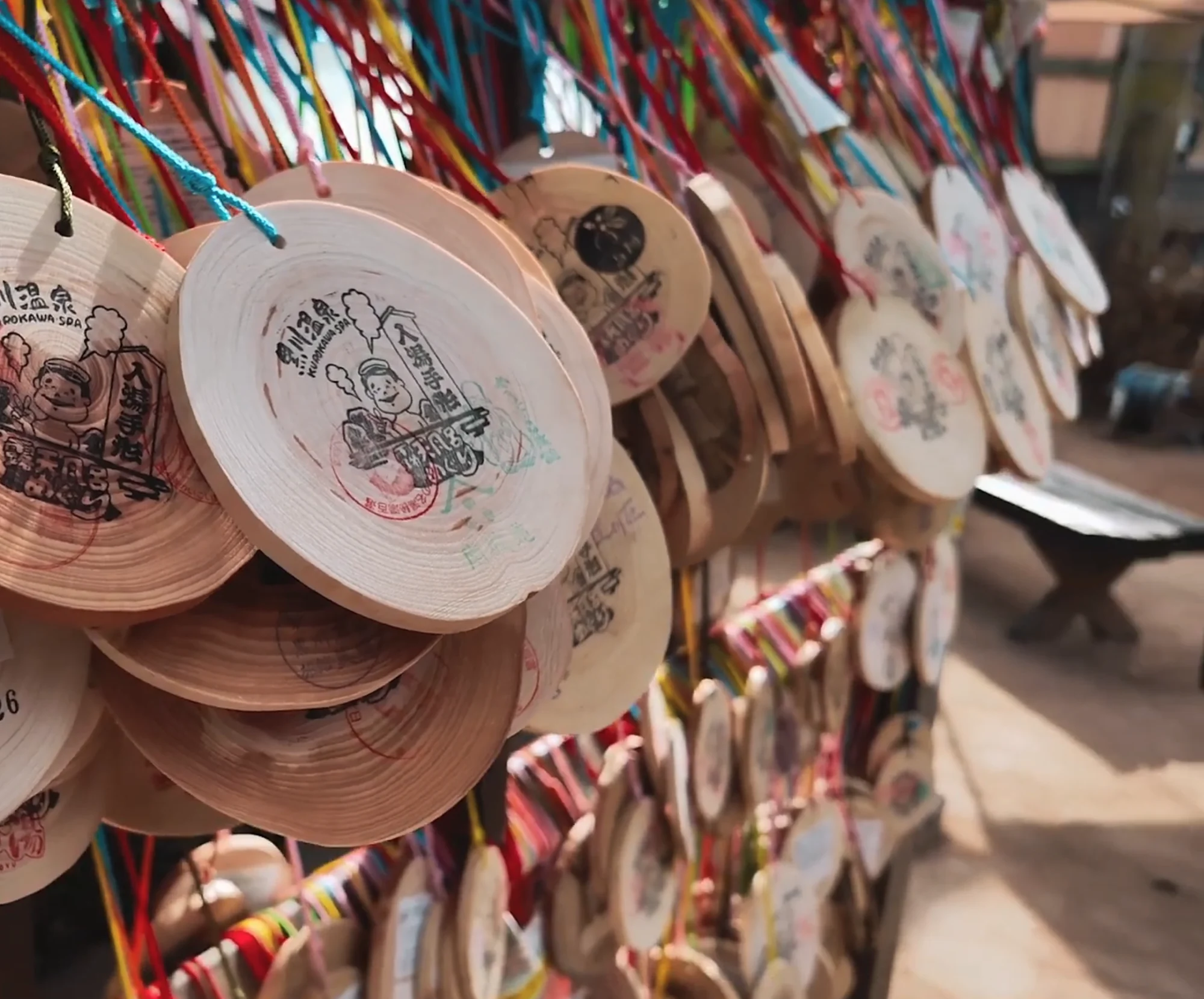
A wooden pass buys three baths from twenty-five. The innkeepers agreed, decades ago, to look like this.

Trip Planning
Worth it?
Kurokawa is not on the way to anywhere. Reaching it takes a bus into the caldera, and it repays the effort only slowly.
Trip Planning
The Nyūtō Tegata Explained
A wooden disc buys any three of twenty-five baths, valid six months. Two stickers can go to baths and the third to lunch.