Why winter is the village's season
A rotenburo is an argument that only cold air can finish, and winter is when Kurokawa's baths finally get it. The village sits at about 700 m (2,300 ft) and, per the ryokan association, runs three to five degrees Celsius (five to nine degrees Fahrenheit) cooler than the Kumamoto lowlands, so the winters here genuinely bite while the plains merely chill.
Drop a 40°C+ (104°F+) open-air soak into near-freezing mountain air and the contrast is the whole experience: the shock at the shoulders, the steam standing off the water, the heat that stays in you on the walk back. Add the nightly lanterns and the thinned daytime crowds and the case makes itself. This is the season the village was, quite literally, rebuilt to sell.
Why the cold is the point, not the price
First-time winter visitors often frame the season as a trade, beauty bought with discomfort, and the frame is wrong; the cold is the active ingredient. An open-air bath is an instrument that plays the difference between water and air, and at 700 m (2,300 ft), with the highland air running 3 to 5°C (5 to 9°F) below the lowlands, January hands that instrument its largest interval: near-freezing air on the face, source-hot water at the shoulders, and between them the steam that turns every bath into weather.
This is also the season to bathe by chemistry. The chloride family among the valley's waters is winter's own: it holds heat against the skin long after towelling off, so a chloride soak taken before the lantern walk sends you into the cold carrying warmth the way a stone carries the day's sun. The bicarbonate and simple families keep their gentleness for the day's first and third soaks, and the sulphur side saves its theatre for a finale.
Even the walking between baths, the part summer visitors call the connective tissue, changes function in winter: the cold resets the body between soaks, which is why the tegata's walk-soak-walk rhythm feels designed for this season above all. It was; the pass was minted by people who bathed here in January. Dress for the lanes, undress for the water, and let the interval between them do what it has done in this valley for centuries.
What winter changes
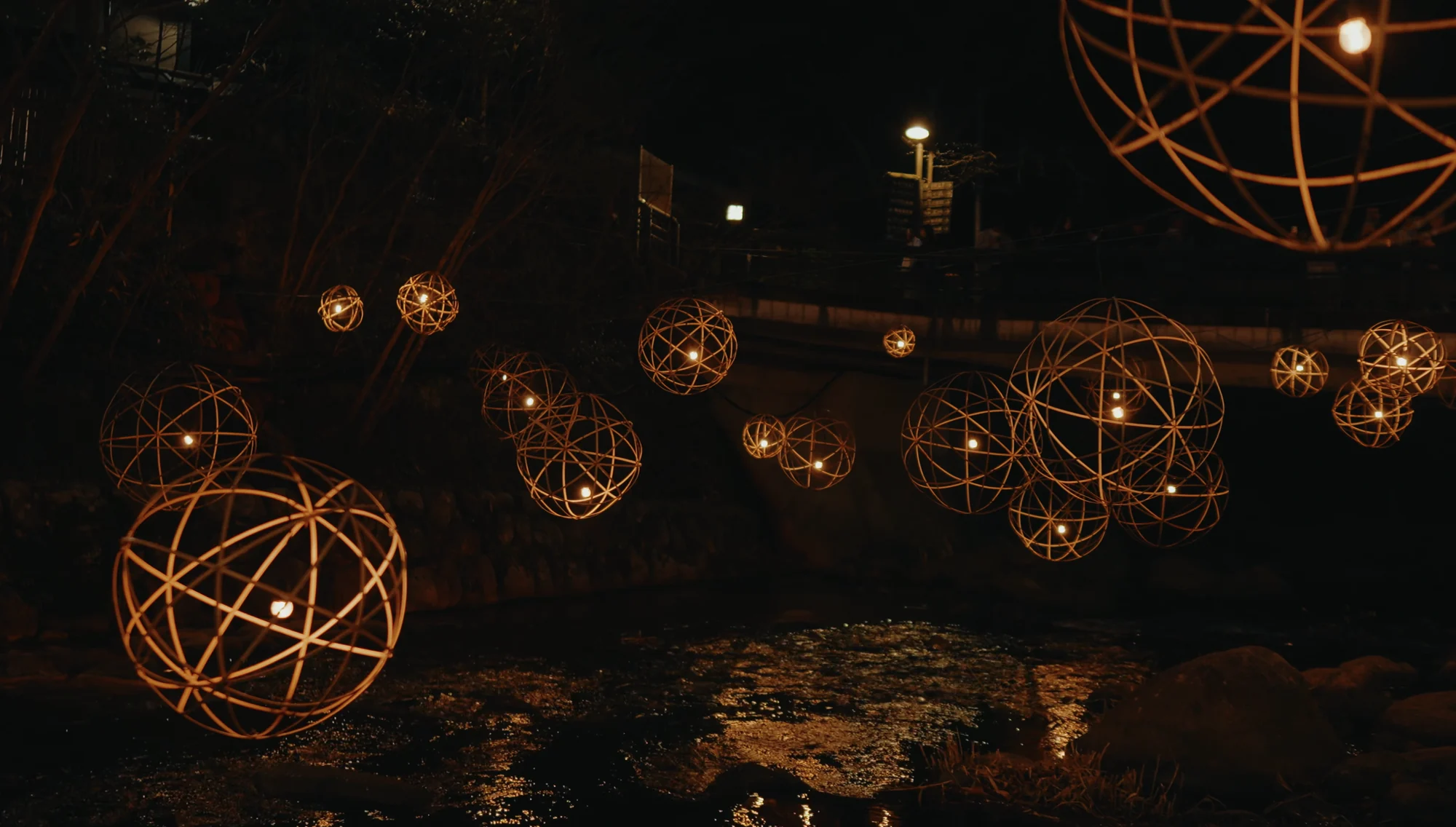
Three things improve and two get harder. Improved: the bathing, as baths built for contrast come into their own and the steam turns every pool photogenic; the evenings, with Yuakari's bamboo lanterns lighting the river from dusk to 10 pm through the season; and the pace, as the day-trip flow shrinks and a midweek village feels half-private.
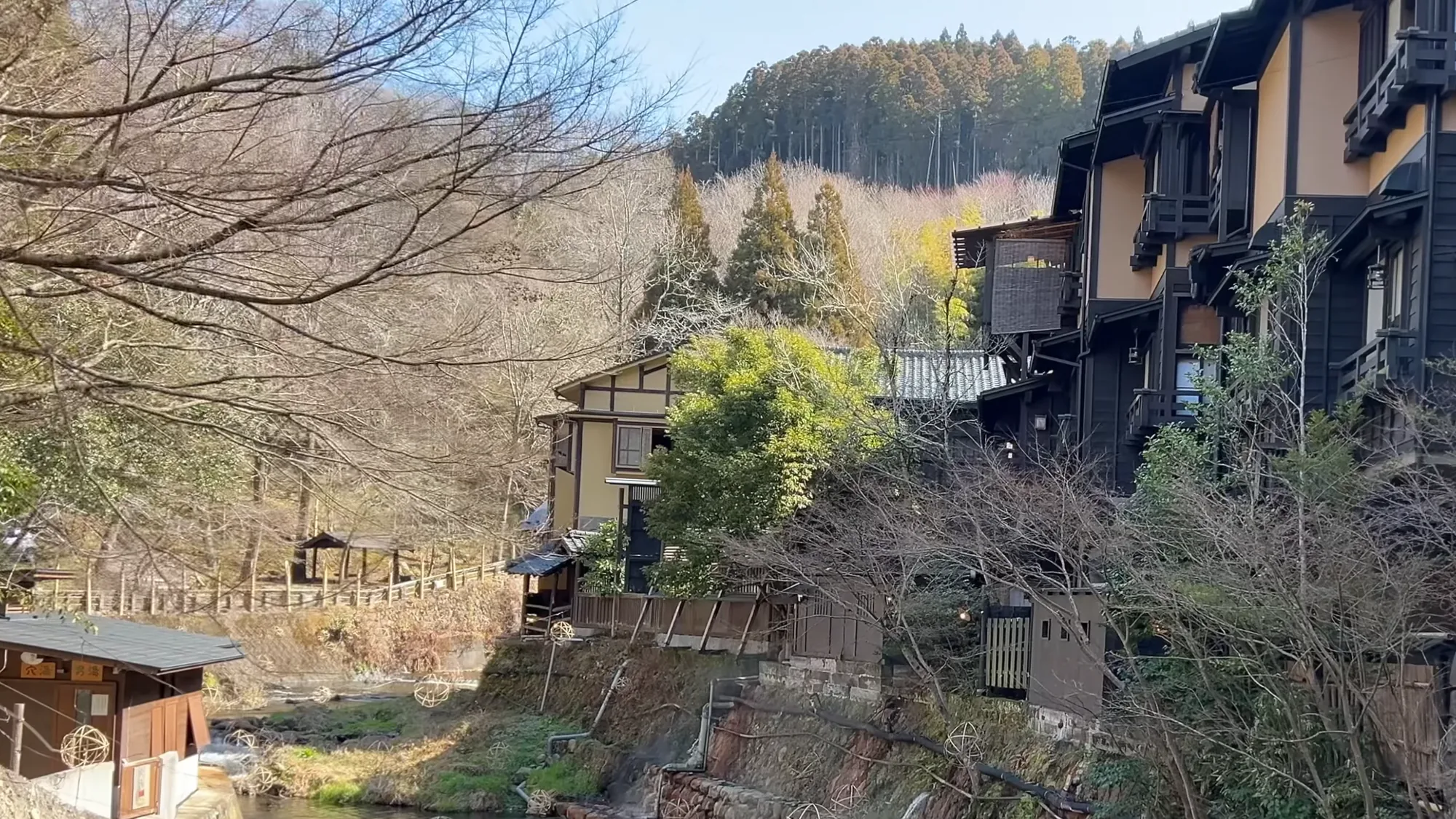
Less colour, more steam, and the water finally doing what it is for.
Harder: rooms, because Yuakari-season Saturdays and New Year compress the village's already scarce beds; and driving, because the Aso caldera approach roads ice and demand winter tyres or chains. Snow itself is a gift rather than a guarantee at this altitude — expect several proper falls a season, with cold clear nights between them, and treat snow on the lanterns as a bonus to hope for, not a promise.
The honest winter cautions
Winter's ledger has a debit column, and listing it plainly is cheaper than discovering it. Daylight is short, so the stamp circuit wants a morning start; the same three baths that fill a leisurely summer day can feel rushed against a 5 pm dusk.
Doors close more often: weather, maintenance and private bookings pull individual baths off the board in every season, but winter adds its own reasons, so the daily bathing page is a morning ritual, not a formality, and a plan that needs one specific bath on one specific day is a plan asking for trouble; hold the favourite lightly and let the board pick the alternates.
Transport is the season's real risk concentration: the earthquake-era service reductions are still being revised, mountain weather can slow or stop buses on the worst days, and the last connections of the day leave no slack, all of which the live traffic page exists to answer. Book the peak honestly, because the Christmas-to-January 3 week and the February holiday weekends price and fill like the events they are.
And respect the season's physical terms: lanes can be icy, the standing bath and stone steps ask for unhurried feet, and the classic winter error, one bath too many chased too quickly on a cold day, is solved by the pacing the village already teaches, rest, water, and the six-month validity that makes an unused stamp a return ticket rather than a loss. None of these debits outweighs the season.
They are the terms of admission to the valley's best weeks, and every one of them yields to ten minutes of checking and a soft plan.
Winter, measured against the other seasons
Put winter beside its rivals and the comparison clarifies what each traveller should actually book. Against November, the great daylight season, winter loses the foliage photograph and wins nearly everything else: fourteen weeks of nightly lanterns against roughly two contested weeks of peak colour, easier midweek bookings, and the bathing itself at full strength rather than as an accessory to leaf-viewing.
Against the green months of May, June and September, winter costs more planning, colder travel and shorter days, and pays in intensity; the green season is the value play and the gentle first visit, winter is the version the village would choose for itself.
Against summer, the contest is really between two illuminations, Kasa Andon's parasols in the warm evenings and Yuakari's lanterns in the cold ones, and the tiebreaker is honest self-knowledge: travellers who wilt in heat should note that August is the one season with a genuine crowd peak and that the baths, held at source temperature year-round by the association's own disclosure, ask more of a bather when the air refuses to cool.
The composite answer this site keeps arriving at: a first trip with open dates goes to a January or February midweek, a photography trip goes to early November and books months out, a budget trip goes green-season midweek, and the perfect two-trip pattern is winter first, for the village at its most essential, then November, for the same lanes wearing their other masterpiece. Winter is not the easiest season here. It is the one the others are measured against.
The winter bathing method
Cold changes bath strategy. The walks between tegata baths become part of the experience, so dress for them: a coat over the yukata or ordinary warm clothes, a hat, and gloves for the lantern-lit transfers. Favour baths with hot pools and short exposed approaches on the coldest nights, and save the most open riverside rotenburo — Yamamizuki's register — for daylight or a gentle evening.
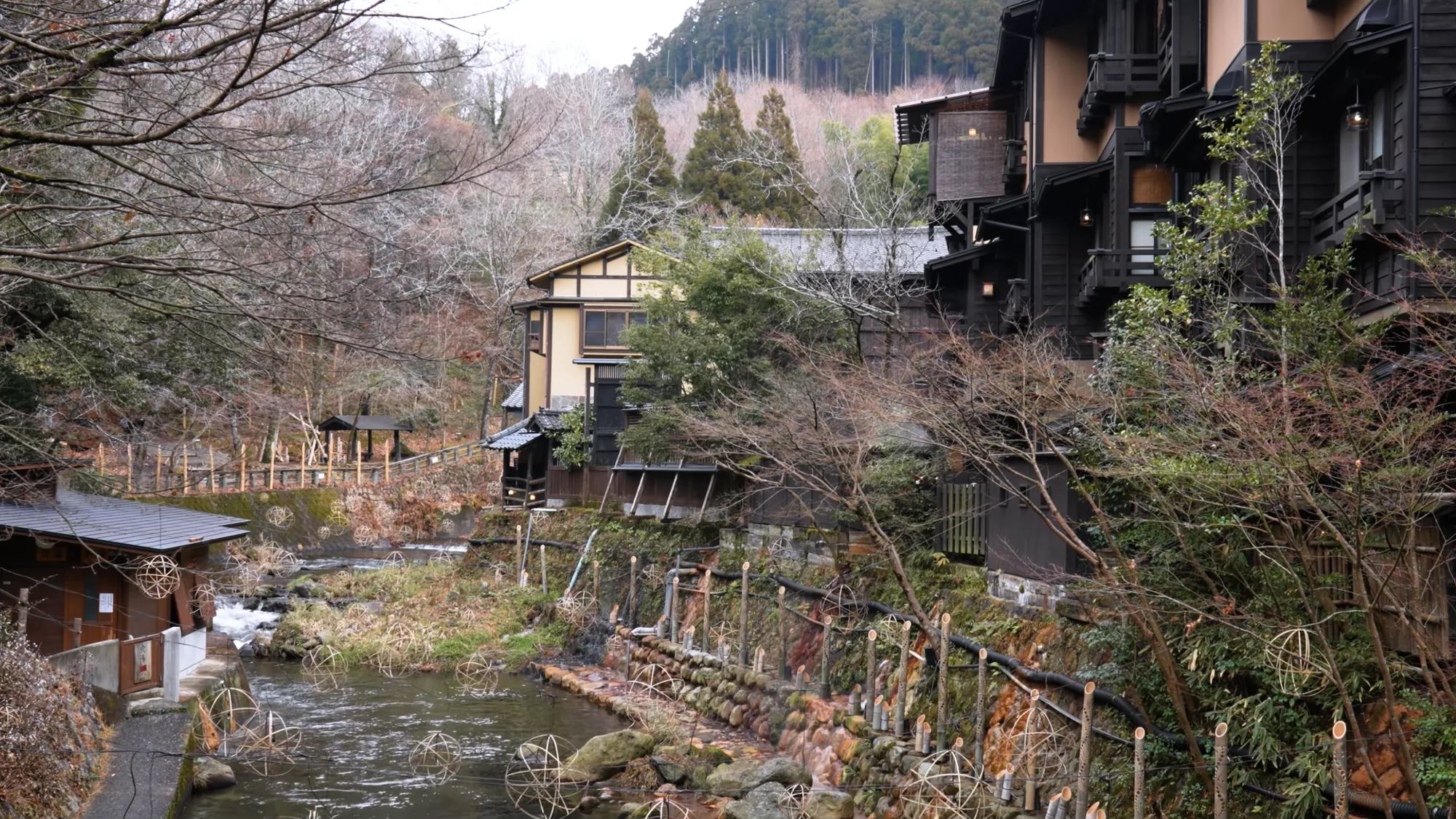
Go in hot, get out before you think you should, repeat. That is the method.
The rhythm that works: one bath at late-afternoon check-in, dinner, the Yuakari walk, then the night's second bath after 9 pm when the lanes empty. Morning brings the season's real secret, steam pouring off the river at first light with nobody on the bridges. Remember that photography is prohibited in the baths themselves; the camera is for the lanterns and the steam over the water, not the pools.
The cold-weather circuit: which baths winter favours
Winter re-ranks the village's baths, and the sourced facts sketch the cold-weather shortlist. The smartest winter door in Kurokawa may be Yamamizuki's, for a reason its own spa page documents: the men's indoor bath, Masurao, connects directly to the riverside Yukoku-no-yu rotenburo, so you undress, warm through indoors, and enter the outdoor water without a frozen walk between, which on a January morning is the difference between ritual and endurance.
Shinmeikan's cave bath is the village's natural storm shelter, hot water inside rock while sleet does what it likes outside. Fumoto's 1.5 m (4.9 ft) standing bath earns its winter place through depth: chin-deep immersion holds warmth in wind that skims a shallow pool. And Yamabiko's broad Senninburo becomes winter's theatre piece, the village's largest water surface producing its largest steam.
The general principle for your three stamps: in winter, favour depth, shelter and short approaches, and spend the most exposed riverside settings on the milder midday hours. The reward for choosing well is the season's particular luxury, a bath that keeps you warm for the whole lantern walk home.
The cold-air method
A few habits make the winter bath better and safer, and they are the old habits, not new rules. Enter gradually: the whole point of winter bathing is the contrast between air and water, and the body enjoys that contrast most when you rinse with warm water first and settle into the pool by stages rather than plunging.
Keep the head cold and the body hot, the classic rotenburo economy, a snow-cooled towel folded on the crown while the shoulders steep. Shorten the soaks and raise their number; three ten-minute baths warm deeper than one half-hour parboil, and the walks between them are where winter pays you. Drink water, in the changing room or from the inn's kettle, because hot springs dehydrate as pleasantly as any sauna.
And give the evening its buffer: a last bath finishing well before bed, a warm room, and the particular sleep that follows a day of hot water and cold air, which regular winter bathers will tell you is half of what they came for. None of this is medical guidance, and bathers with heart or circulatory conditions should read the official contraindications on our waters page and talk to their doctor before winter bathing anywhere. It is simply how the people who built villages like this one have always used them in the cold.
A winter day in the village, hour by hour
Winter compresses Kurokawa's daylight and sharpens everything in it, so the day rewards composing. Begin before breakfast, in your own inn's rotenburo, when the air is at its coldest and the water's steam stands thickest; this is the soak the season exists for, and it costs nothing but waking early.
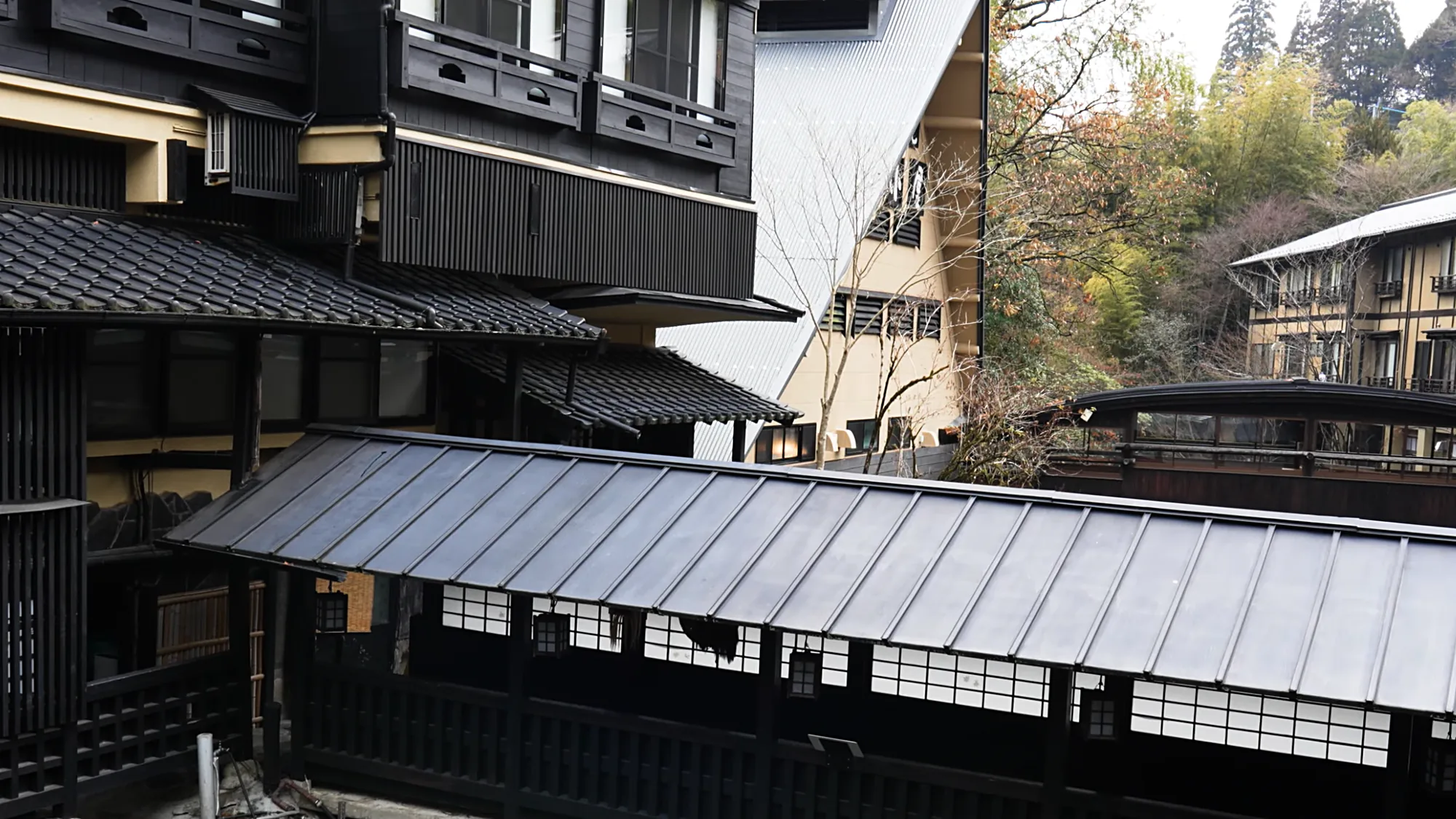
Short daylight, long evenings. The day is shaped by when the light goes.
After breakfast, walk the lanes while the light is still low and slanting, and start the tegata circuit in the 8:30 window, taking the day's most anticipated bath first, while your energy and the bath board's options are both at their fullest. Lunch falls naturally in the lanes' daytime economy, and the early afternoon belongs either to a second stamp or to a reserved kashikiri hour, taken warm while the light lasts.
By four the dusk is already assembling, and this is the moment to be done with travelling between doors: day visitors drain away, the inns turn toward dinner, and the village exhales. Dinner at your inn is the evening's main event, as it is in every season, but winter adds the second act no other season has: from December 20 the Yuakari lanterns burn along the river and lanes, and the after-dinner walk through them, warm from the meal and the bath, is the single finest half hour the village offers all year.
End, if you like, in the small evening tier the sticker system keeps open, a highball at Irori-ya, which serves from 18:00 on the slope, and then the short cold walk home, which is not a chore in this village. It is the dessert.
Yuakari, briefly
The lantern season runs from about December 20 to March 31, nightly from dusk (around 5:30 pm) to 10 pm, free and handmade, and it has its own page. Winter planning collapses into a single rule because of it: stay overnight, because the lights outlast the last bus down the mountain, and the emptiest, best hour on the bridges is close to the 10 pm finish.
The lantern season, held against the calendar
Yuakari is winter's signature and its dates deserve exactness: the current season runs December 20, 2025 to March 31, 2026, nightly through the deepest cold, which means the illumination is not a festival weekend but a standing condition of the winter village, there on a random Tuesday in February exactly as on New Year's Eve. That standing quality is the planning gift.
A trip aimed anywhere inside the fourteen-week window collects the lanterns without competing for a date, and the season's crowd structure follows from it: the week between Christmas and January 3 books like the festival it effectively is, November-style pressure returns on February weekends around the holiday calendar, and the long midweeks in between are the connoisseur's slot, lanterns burning, baths quiet, inns easy.
Hold the etiquette beside the beauty: the walk is through a living village's lanes, so the posted courtesies apply, no drones without permission, no smoking along the route, and the bath-photography prohibition as absolute after dark as at noon. One practical pairing completes the season's use: the lanterns reward the after-dinner hour, when the day visitors are gone and the lanes belong to staying guests, which is one more argument, the strongest of the year, for sleeping in the village rather than day-tripping it.
A February midweek overnight, one chloride soak before the walk, the lanterns by the river, and the highball room open till 22:30 on the slope: that is the village's winter argument in a single evening, and it is not seriously contested.
The winter evening economy, small and exact
Winter nights in Kurokawa are not empty, they are precise, and knowing the small evening tier turns the after-dinner hours from a corridor back to your room into a modest itinerary. The sticker half of the tegata keeps two doors open into the evening: Irori-ya, the hearth-side izakaya on the Igozaka slope, serves from 18:00 to 22:30 and honours the sticker for a highball, and Okyakuya pours beer or coffee against a sticker until 20:00, which makes the wooden disc one of the few bathing passes anywhere with a nightlife clause.
Around those fixed points, the evening's other institutions are the lanterns themselves, the bath your inn keeps open for its own guests after the tegata window closes at 21:00, and the ancient entertainment of the bath-warmed walk. Manage expectations honestly: this is not a town of bars, and the lanes by 21:30 are quiet enough to hear the river working. That quiet is the product.
The village's whole winter proposition is the alternation of heat and cold, light and dark, company at dinner and solitude on the walk, and an evening spent chasing more stimulation than the valley offers will end disappointed for reasons that have nothing to do with the valley. Book the second night.
The first winter evening teaches the rhythm; the second one, with the lesson learned and no bags to unpack, is routinely the best few hours of the trip, and it costs only the midweek rate and the willingness to walk out into the cold once more.
Getting here in winter
The Fukuoka highway bus and the Kyūshū Ōdan route run through winter, and the access pages carry the steps. Two winter cautions matter. Drivers should treat the final caldera approach with respect — winter tyres at minimum, chains carried in a cold snap, daylight arrivals preferred.
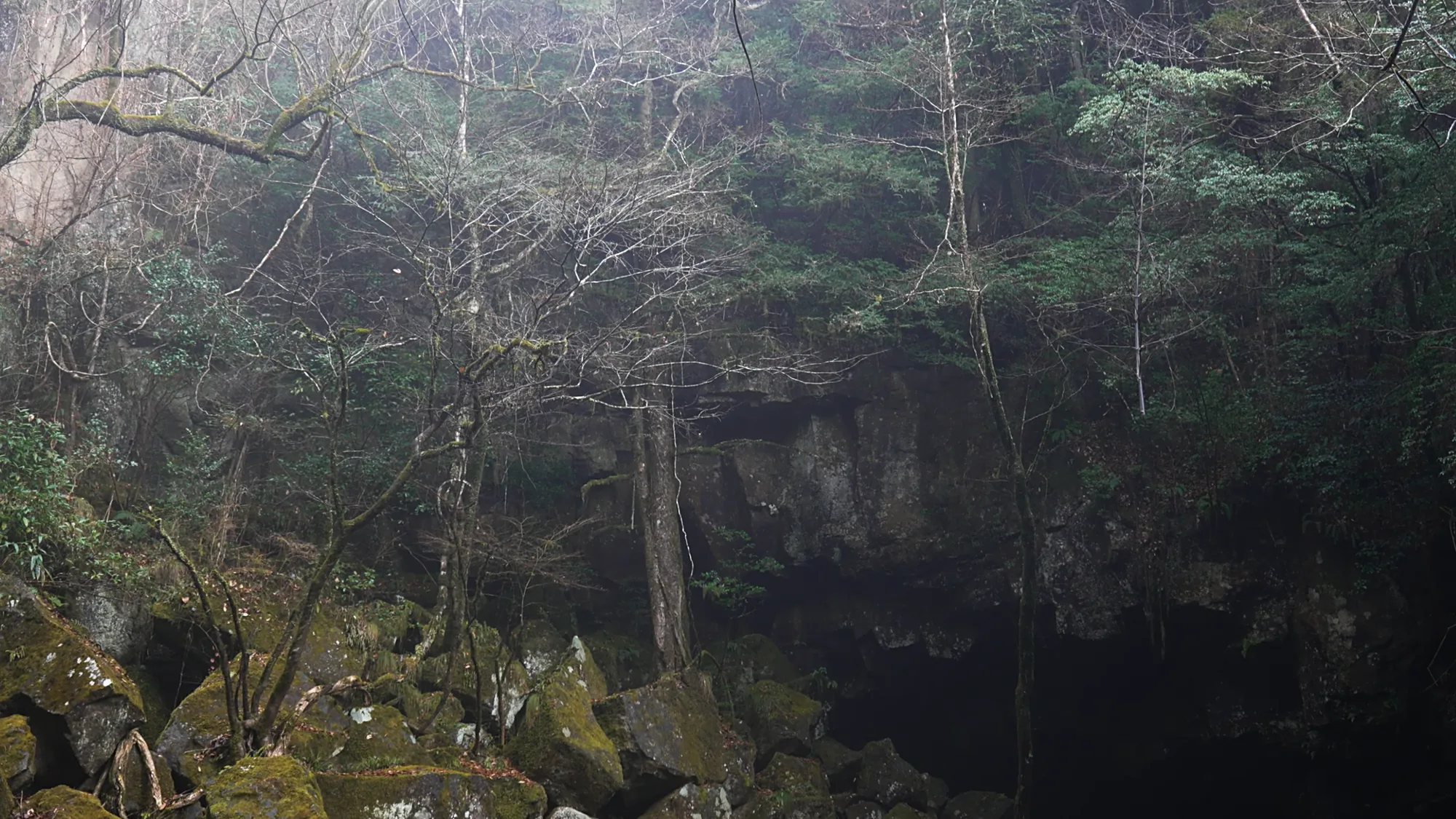
The buses run. The rental car is the part that needs thinking about.
And services are currently thinner than usual: the 2026 Kumamoto earthquake has reduced some regional bus schedules, so the association's live weather-and-traffic page is the thing to check before you fix a winter arrival, every time . Once you are in the village nothing needs wheels; pack boots with tread for the stone lanes and let the inn's entrance heaters do the rest.
Snow days, buses and the honest winter plan
Winter logistics here reduce to one decision made honestly: bus or car. The buses are the default answer and run through the season; they put the driving on professionals who know the caldera roads, and they deliver you to a village that needs no vehicle once you arrive.
The car buys freedom for the wider highlands at the cost of responsibility for them: winter tyres as the baseline, chains carried when a cold snap is forecast, daylight arrivals as policy, and the humility to change plans when the mountains say so. Two checks anchor either version.
The association's live weather-and-traffic page is the village's own bulletin for road and service conditions, and in this particular era it matters doubly, because the 2026 Kumamoto earthquake has left regional bus schedules thinner than normal and revised in stages. And your inn is the second bulletin: tell it your arrival plan and it will tell you, with complete candour, whether the plan survives the forecast, meet the bus stop shuttle included.
The one winter mistake with no remedy is the late arrival that meets a closed mountain road in the dark; every other version of a Kurokawa snow day, including the one where you simply stay an extra night because the buses paused, ranks among the better travel problems a person can have.
Arriving in winter without drama
Winter tightens the margin for error on the approach, so borrow the village's own systems. The direct Fukuoka bus, timed by the association at 2 hours 45 minutes, remains the cleanest arrival in any weather, and a morning departure lands you with daylight to spare; late buses are legal but joyless, because the association's access matrix carries a warning that matters twice as much after dark, that some local routings terminate at the Minamioguni town hall, ten minutes by car short of the lanes, which is a shrug at 3 pm and a genuine problem at 7 pm in January.
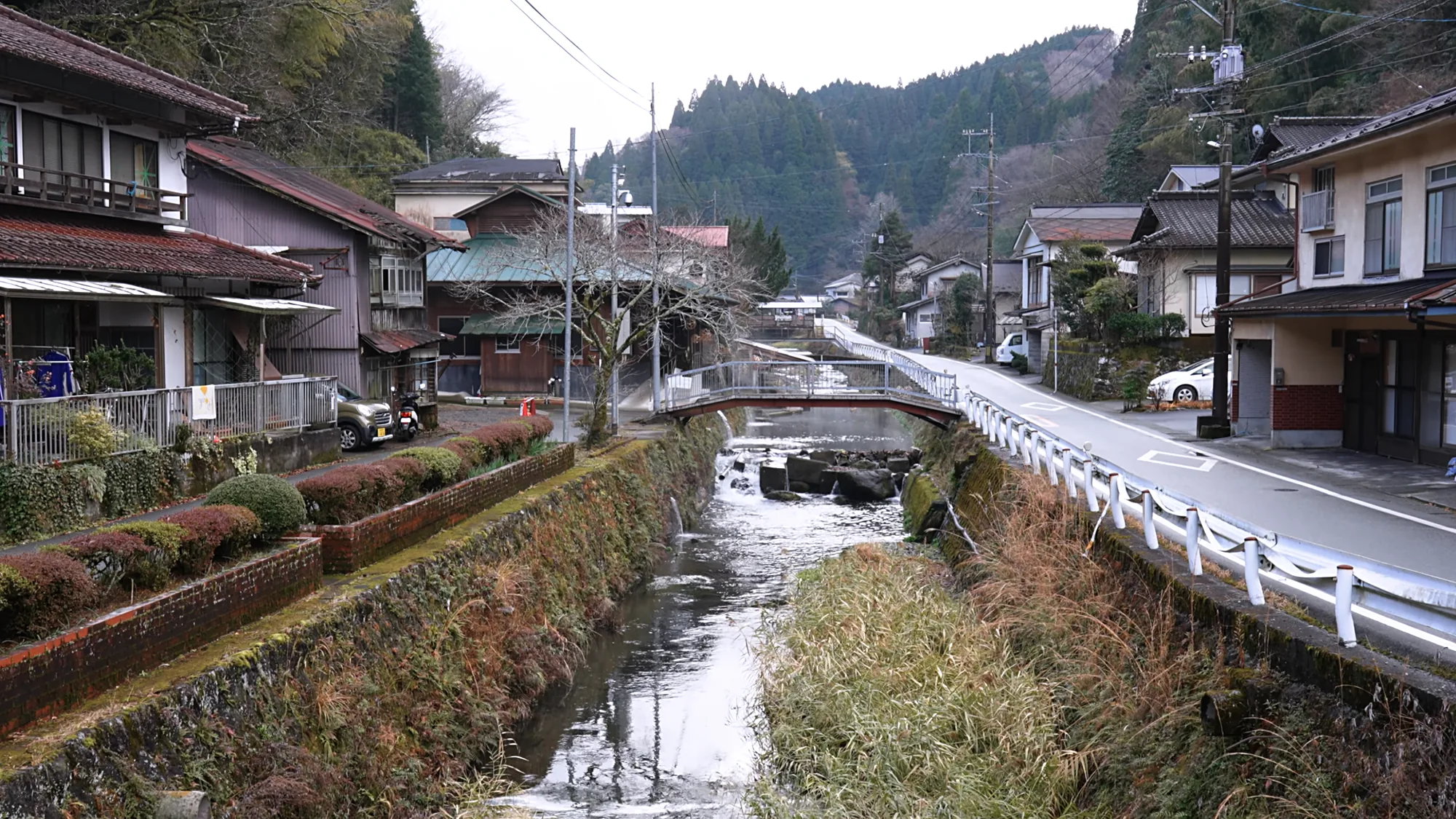
Arrive before dark. The last stretch is narrow and it is not lit.
The answer is arrangement, not luck: tell your inn which bus you are on, because inns meet the village stop by arrangement, and in winter that shuttle is the difference between a five-minute ride and an icy uphill walk with luggage. Drivers should respect the altitude.
The Hita interchange route's last hour crosses highland country that behaves like mountains, not like the lowland cities it left, and a winter driver's plan includes the possibility of snow chains and the certainty of early darkness; parking remains inn lots only.
Above all, use the two pages the association maintains for exactly this season: the live weather-and-traffic page for the day's road and bus truth, doubly important while the 2026 earthquake's service reductions are still being revised, and the daily bathing board for which doors are open before you commit boots to a hill. Winter here punishes improvisation gently and rewards a ten-minute check completely.
What to wear, and what to leave in the room
The village's winter dress code is written by its rhythm: you will be repeatedly warm, cold, wet and dressed again, so pack for cycling between states rather than for any one of them. Layers beat bulk, because changing rooms are intimate and a bulky coat spends the bath stuffed in a basket; a warm hat and gloves earn their space on the lantern walk; and footwear should slip on and off without a struggle, since every bath, and many shops, begin at a shoe rack.
Keep the day kit thin: the tegata disc, the small towel, coins, and little else, with the big camera making the trip only for the golden hour and the lanterns. Two room-side notes complete the kit. Silver jewellery stays in the room safe on any day that includes the sulphur-side baths, tarnish being the one souvenir nobody wants, and the phone, whose battery sulks in cold air, appreciates an inside pocket between photographs.
As for the question every first-timer asks, what one wears between inn and bath in January: ask your own inn, whose answer comes with whatever the house lends or suggests, and note that the full yukata-in-the-snow postcard is a choice, not a requirement; most winter bath-hoppers simply wear their coats over ordinary clothes and change at each bath, which the changing rooms are built for. The village has been dressing January bathers for generations. Arrive with layers and let the systems do the rest.
Booking the season, and eating it
Demand tiers cleanly: New Year and Yuakari-season Saturdays first, February weekends next, midweek almost civilised. Book two to four months out for weekends, further for the famous houses, and treat January or February midweek as the smart slot — full winter, full lights, the gentlest competition.
Rates run at or above the autumn peak at the top inns and barely move at the modest tier, which is exactly why the budget strategy works best in winter: the same ¥1,500 (about US$10) tegata and the same free lanterns belong to the six-mat room as much as the villa.
At the table, winter is hotpot season — the local Aso akaushi beef arrives in simmering nabe as the nights cool — another reason the two-meal booking, always the default here, earns its place.
This winter, specifically: the fortieth
One dated fact makes the coming cold season different from the last decade of them: the tegata's fortieth-anniversary programme runs from July 1, 2026 to March 31, 2027, which means the 2026 to 2027 Yuakari season falls entirely inside the anniversary window.
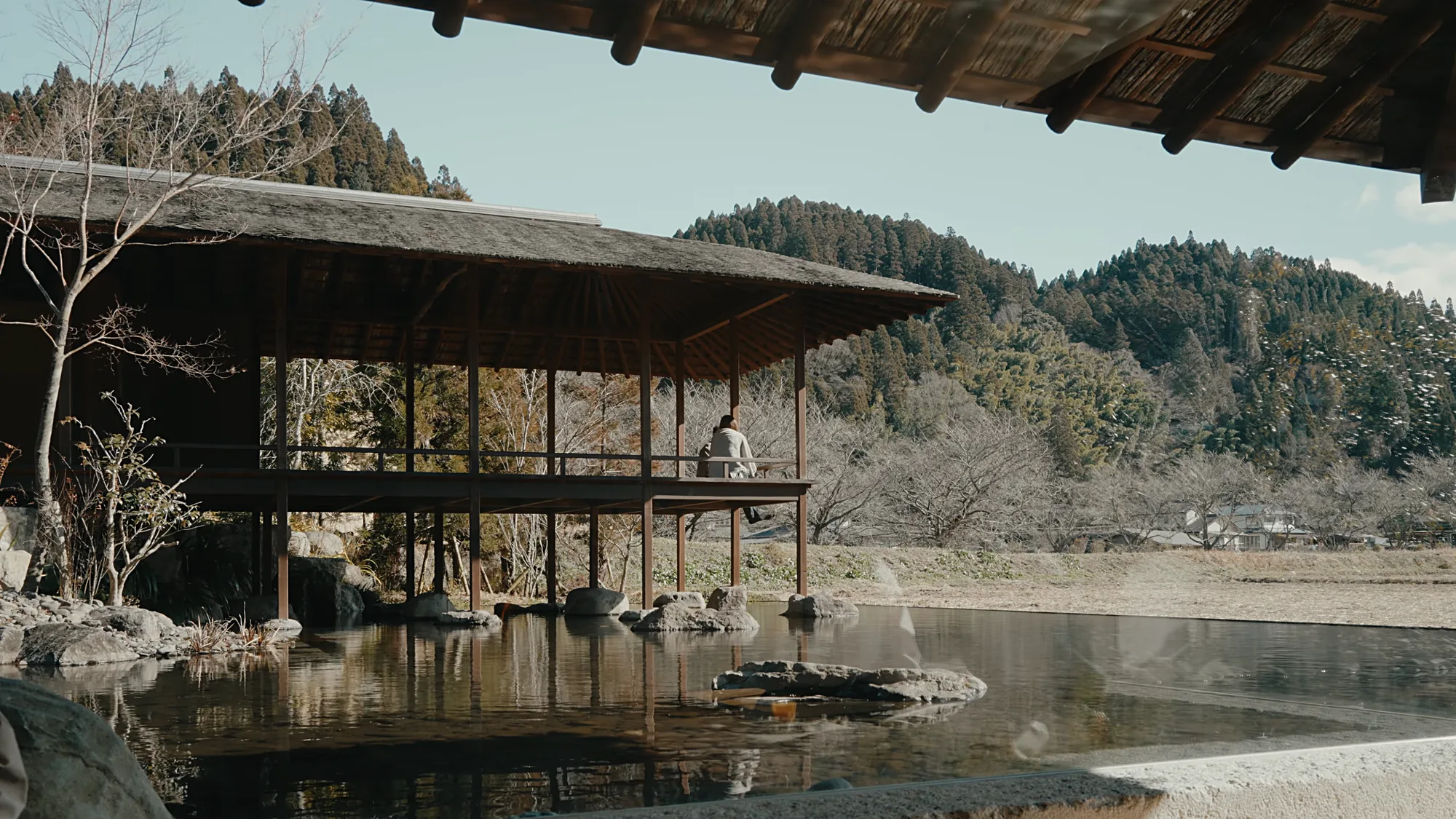
Forty winters of the shared-water system, and the fortieth is this one.
The association has not published, in the material we have read, exactly what the winter instalment of the programme holds, and we will not guess; what is sourced is the window itself and the association's habit of marking its institutions carefully.
For planners the practical consequence is mild but real: an already peak season with a milestone attached argues for booking the Yuakari weekends even earlier than the usual two-to-four-month lead, and for midweek travellers it adds a small piece of luck, a chance of anniversary touches on an ordinary quiet Tuesday. Whatever the programme turns out to be, there is something fitting about the timing.
The pass was born in 1986 to carry a struggling village through winter after winter; its fortieth birthday falls in the season it was always best at.
Tips
Book Yuakari-season weekends two to four months ahead; midweek January is the value slot.
Pack real winter shoes; the lanes are stone, steep in places, and occasionally iced.
Bathe late evening and early morning; winter gives both hours to overnight guests alone.
Drivers: winter tyres non-negotiable, chains in the boot, arrive in daylight, check live status first.
Build the night around the 10 pm lantern close: bath, dinner, walk, second bath.
Frequently asked questions
Is Kurokawa Onsen good in winter?
Does it snow in Kurokawa Onsen?
Can you get to Kurokawa in winter without a car?
What should I pack for winter in Kurokawa?

Verified by The Japan Onsen Society
Show all sources
Verified July 7 to 16 and September 6, 2026 by The Japan Onsen Society. Altitude, the temperature differential and the Yuakari run are the association's own; snowfall frequency is a general characterisation, and current winter bus schedules are perishable under the 2026 earthquake reductions and must be re-checked .
About 700 m · 3–5 °C cooler than the lowlands · Yuakari roughly Dec 20 – Mar 31 · photography prohibited in the baths → 黒川温泉観光旅館協同組合 FAQ kurokawaonsen.or.jp/faq/ → verified Sep 6, 2026
Live weather / traffic + 2026 Kumamoto earthquake service reductions → 組合 kurokawaonsen.or.jp/weather_traffic/ → re-check every publish → perishable
VERIFY:
Snowfall characterisation (several falls a season) against climate normals for Minamioguni
Yuakari dates/hours per current season
Winter bus reliability under the earthquake reductions; winter-tyre wording per road authority
Akaushi-hotpot winter menu phrasing — general, soften if needed
USD conversions: ¥1,500 tegata ≈ US$10 at ¥150/dollar
山みず木 温泉 (Yamamizuki, spa page) - the Masurao indoor bath connecting directly to the Yukoku-no-yu rotenburo, the winter-circuit fact above, verified August 18, 2026
日本温泉協会 温泉地詳細[黒川] (Japan Spa Association, spring-area record) - Fumoto's 1.5 m standing bath, Yamabiko's largest rotenburo, Shinmeikan's cave, verified July 7 and September 6, 2026
黒川温泉観光旅館協同組合 入湯手形 (tegata page) - the fortieth-anniversary programme window, July 1, 2026 to March 31, 2027, verified September 6, 2026
黒川温泉観光旅館協同組合 天気・交通情報 (live weather and traffic page) - the winter road and service bulletin; perishable, re-check before travel
黒川温泉観光旅館協同組合 公式サイト (association home) - the Yuakari window December 20, 2025 to March 31, 2026 held against the calendar, verified September 6, 2026
黒川温泉観光旅館協同組合 よくある質問 (official FAQ) - the 700 m altitude with its 3–5°C differential, the visitor courtesies behind the lantern-walk etiquette, and the illumination framing, verified September 6, 2026
黒川温泉観光旅館協同組合 アクセス (access matrix) - the 2 hour 45 minute Fukuoka timing, the Minamioguni town-hall routing warning, and the Hita interchange drive, verified September 6, 2026
Related guides
When to Visit
Best time to visit
Kurokawa has no bad season; what changes is contrast, colour, and competition for beds in a village of thirty small inns.
When to Visit
Spring
Kurokawa off-duty: the baths still hot, the lanes empty on a Saturday, and rooms bookable in weeks rather than months.

When to Visit
Kurokawa Onsen: The Complete Guide
A wooden pass buys three baths from twenty-five. The innkeepers agreed, decades ago, to look like this.