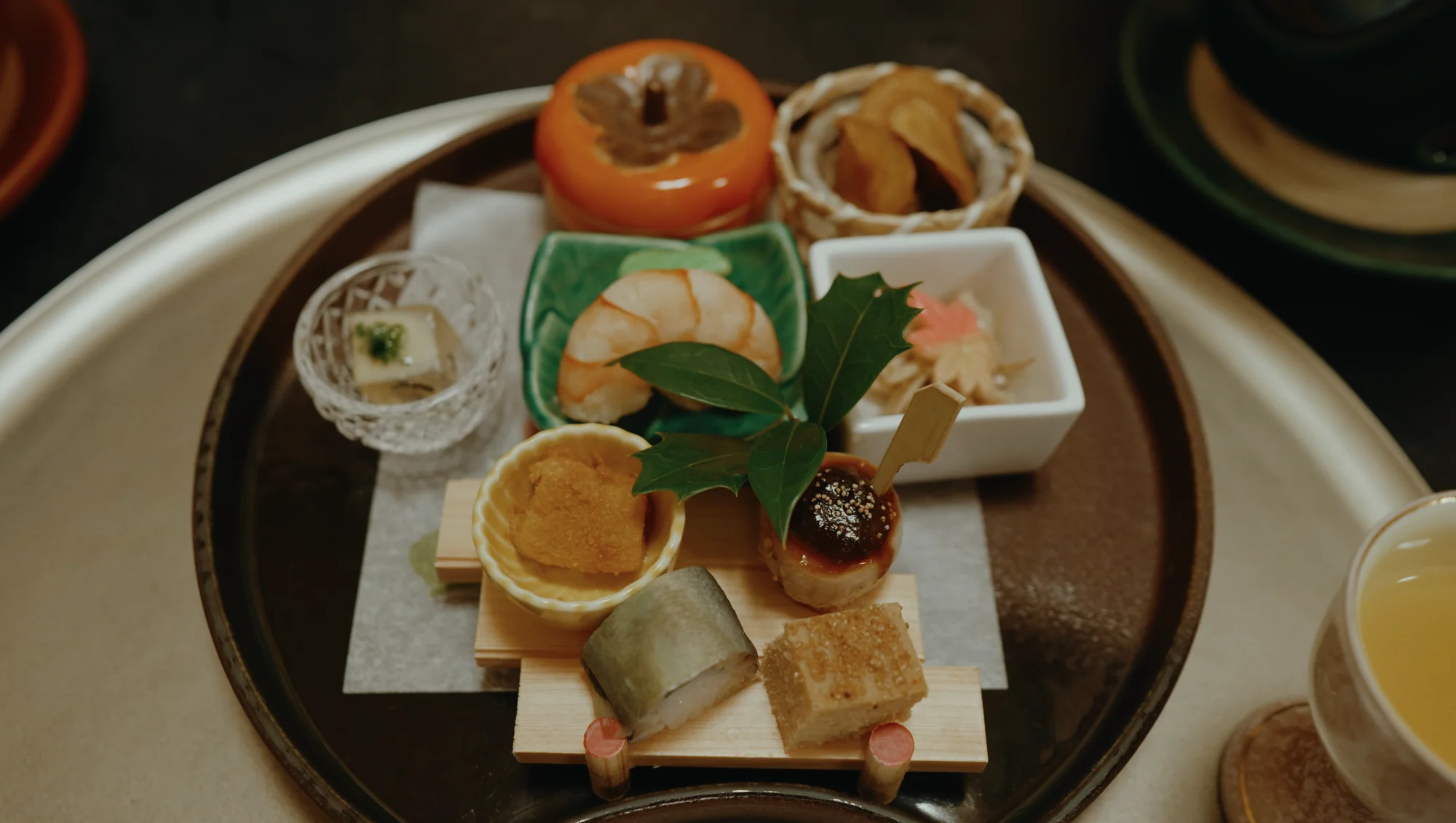
Kaiseki, the Aso way
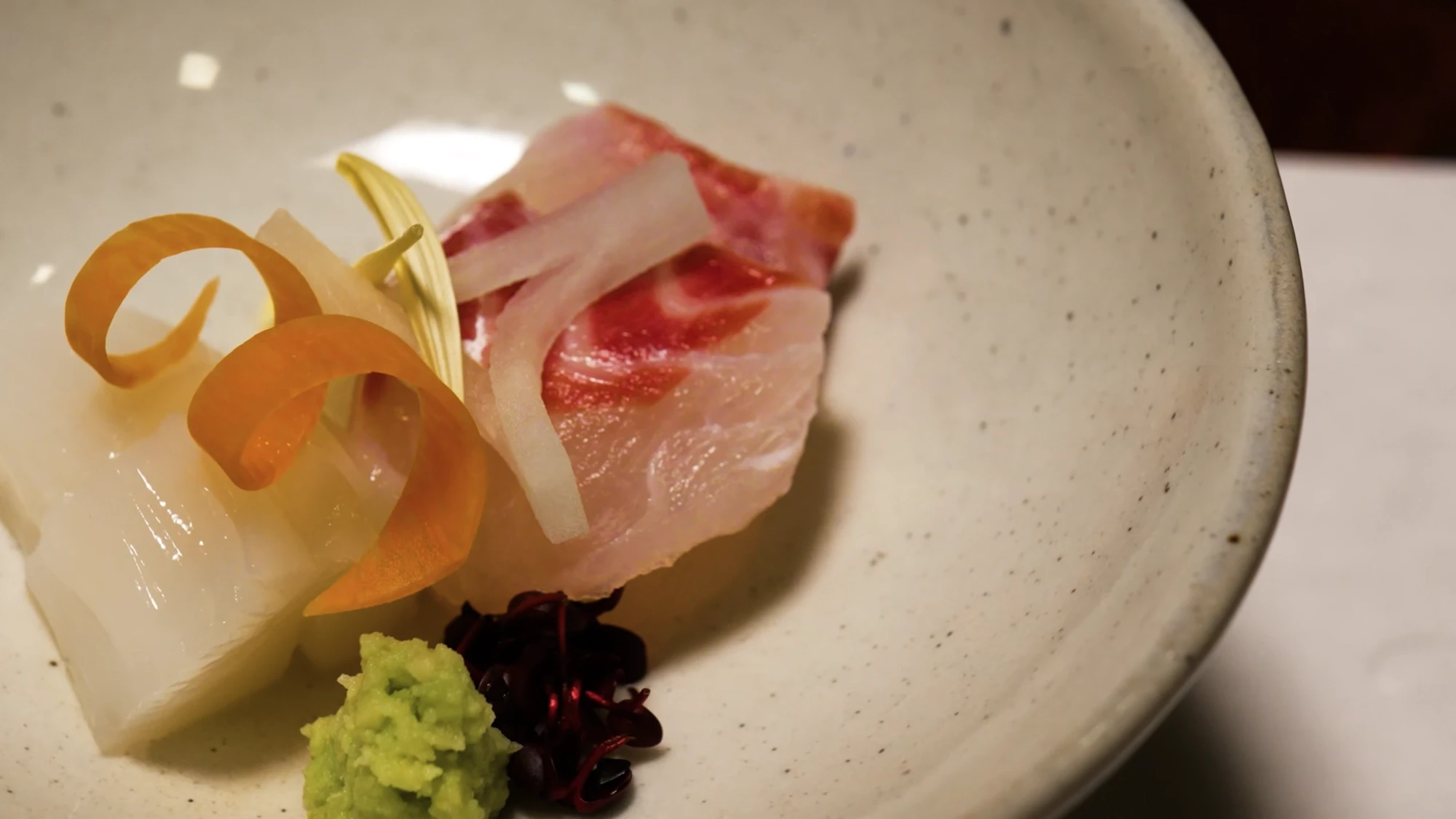
The inn dinner is where Kurokawa's setting becomes flavour. Expect the mountain register rather than coastal refinement: akaushi, the lean, sweet red-haired Aso cattle, as grilled or shabu courses; yamame, the landlocked trout of the local streams, salted and charcoal-grilled whole; dango-jiru, the region's hearty flat-dumpling soup; sansai mountain vegetables, bamboo shoots and highland rice; and horse sashimi, Kumamoto's famous basashi, on many menus for the willing.
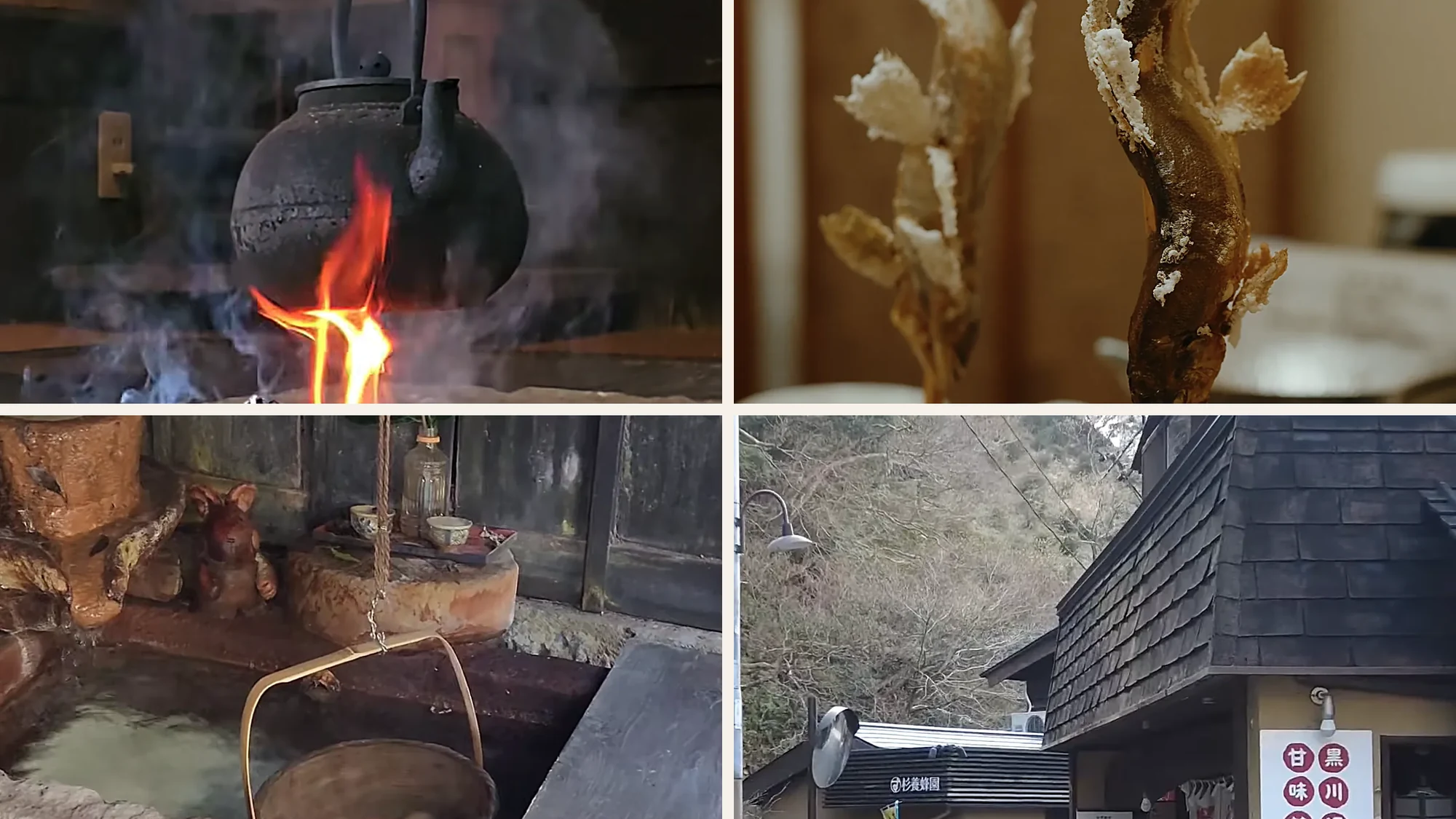
Live fire, spring water and whatever grew on the caldera that month. The method is older than the menu.
Autumn brings mushrooms and river fish at their fattest; winter brings the akaushi hotpots forward. Even the modest houses cook seriously here; this is a village that competes on the whole evening, not a single dish.
The kaiseki evening, decoded for first-timers
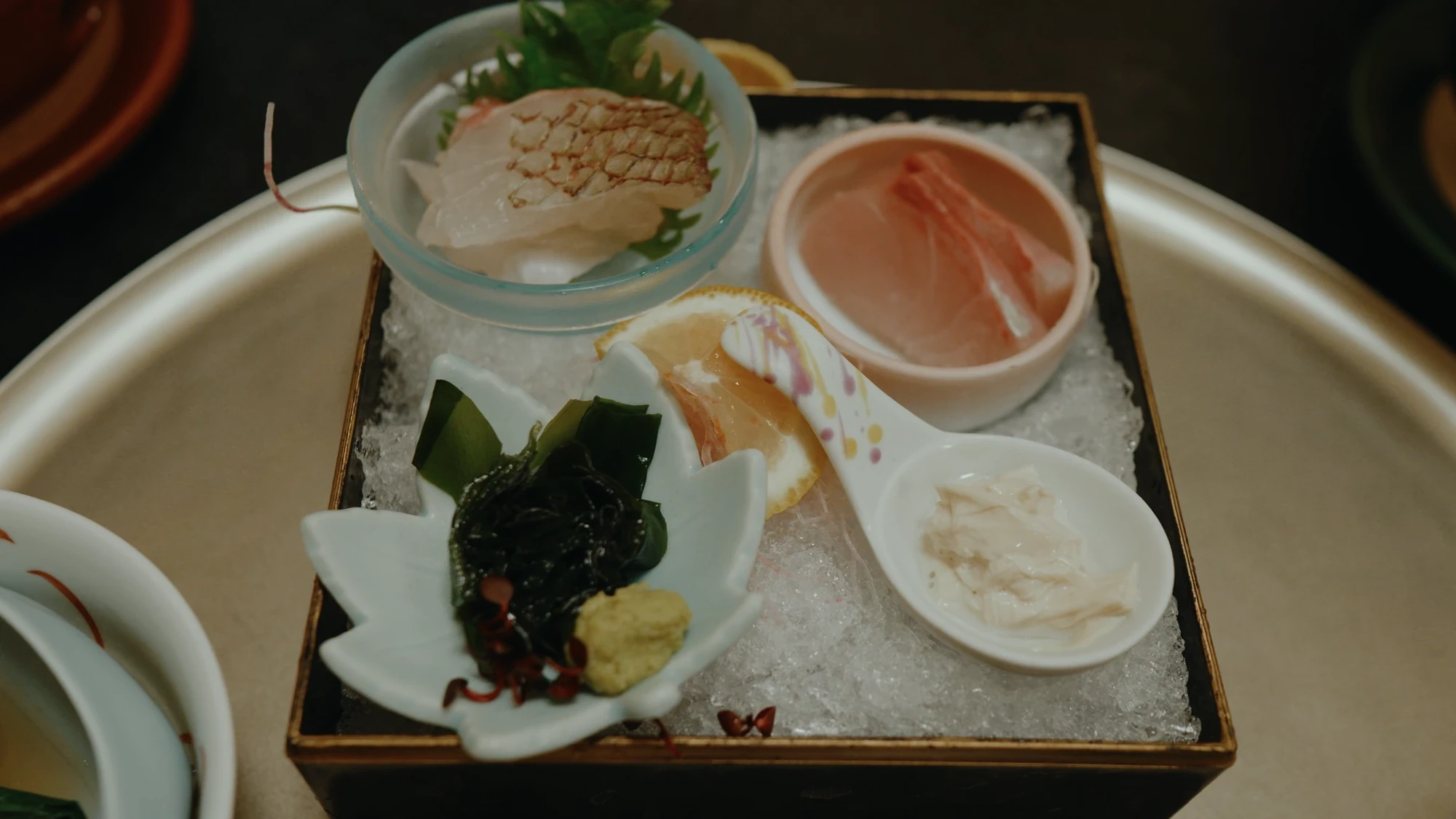
The multi-course dinner included in a ryokan stay follows a grammar worth knowing in advance, because knowing it converts a parade of small mysteries into a legible meal. Expect a procession rather than a plate: an opening set of small seasonal things, a clear soup, sashimi from the region's rivers and coasts, a simmered course, something grilled, often a hotpot or steamed course in the cool months, rice and pickles to signal the closing, and a modest dessert.
The portions are individually small and cumulatively serious; arrive hungry and pace yourself early. Three practicalities govern the evening. First, the seating is early and semi-fixed, typically negotiated at check-in, and the kitchen cooks to it, so lateness genuinely costs the food; plan the pre-dinner bath backward from the hour.
Second, dietary limits are handled at booking, not at the table: these are small kitchens cooking a set menu for the whole house, and an allergy or a no-pork or no-alcohol constraint communicated in the reservation message is met with grace, while the same request sprung at 18:30 may simply be impossible.
Third, the meal is the evening's entertainment, not its obstacle; the courses are timed to be lingered over, and the correct pairing is the village's own rhythm, a bath before to earn it and the lantern walk after to settle it. Guests who treat kaiseki as a long, quiet performance of the region's seasons, rather than dinner delaying their evening, have understood the form, and the form is most of why one sleeps in this village at all.
The highland larder: what this valley actually tastes like
Read the shop directory's own self-descriptions and a coherent regional larder assembles itself, worth seeking deliberately. Beef leads it: this is akaushi country, the Aso region's red cattle, and the village now has a dedicated specialist in Aka, the akaushi restaurant opened in November 2025. Dairy runs a close second, Jersey-milk soft-serve at Yama no Ibuki in milk and black-tea variations, the kind of single-farm richness that makes a ninety-second cone a legitimate destination.
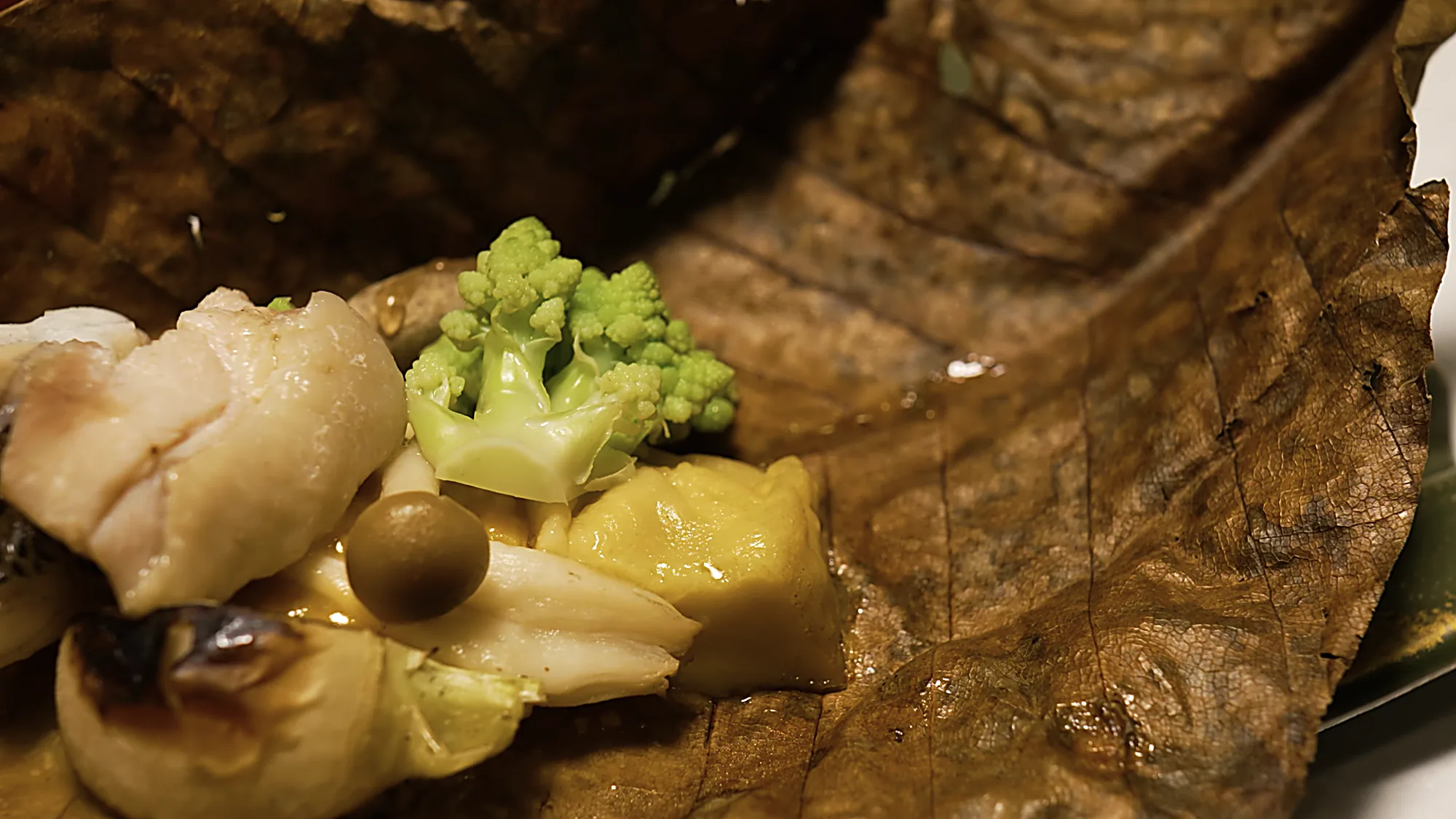
Highland vegetables, river fish, and beef from the grassland an hour away.
The starches are local and specific: shiratama dumplings worked from stone-milled Aso mochi rice, eaten beside the stream that powers the village. Tofu comes hearth-side, cooked around an irori with headwater from the upper Chikugo, the same water this site spends a whole page on, here in edible form.
The sweeteners are a beekeeper's, Sugi Yohoen's honey poured over soft-serve from 9:15 each morning, and the village's fruit arrives as house-made syrups, Sanga's seasonal squash honouring a sticker deep into the evening. Even the preserves are a genre: eleven varieties of tsukudani at the pickle-maker, and grilled-leek or charbroiled-garlic miso sold by the hundred grams (3.5 oz).
None of this is haute cuisine and all of it is the point: the lanes sell the valley's own produce at walking pace, and a day spent grazing them is a geography lesson conducted by mouth. The kaiseki table that evening will serve the same larder with its dress on. Taste it in the street first and the dinner reads twice as well.
Eating with the valley's seasons
The kaiseki form is a seasonal instrument, and at 700 m (2,300 ft) the seasons it plays are the highland's, a beat behind and a note cooler than the lowland cities'. Winter is the table's grandest hour: the cool-month courses lean into hotpots, simmered dishes and the year's richest preparations, and the walk in from the lantern-lit lanes to a heated dining room is itself a course.
Spring arrives late here and tastes of it, the mountain's first green things reaching the menu in the weeks the village's scattered cherries open. Summer cooks lighter and cooler, the season when the Jersey soft-serve and the takeaway beer earn their keep at midday and dinner works in the evening's highland coolness that the lowlands never get.
And autumn is the larder's harvest draft, the season of the caldera's produce arriving at its most confident, timed to the weeks the gorge turns. The planning consequence is pleasant: the same inn booked in two different seasons serves what amounts to two different kitchens, which makes dinner a genuine reason for the repeat visit, not merely a repeated amenity. One booking note completes the calendar.
The peak eating seasons track the peak visiting ones, so the November and deep-winter weeks that contest the rooms contest the new specialist kitchens' tables too, and the reservation burst that secures the bed should secure the beef the same evening. In the green months, everything relaxes: the tables, the prices and the pace, with the kitchen's repertoire undiminished. Value eaters, as ever in this village, travel midweek and in May, June or September.
The village's eating places, from the association's own directory
A note on method: we have eaten in none of these, so what follows is the ryokan association's own directory — its descriptions, in its words, with its phone numbers — and not our reviews. It is the sourced spine no English guide reproduces. Places to eat (thirteen listed):
褐 -aka- — akaushi specialist, reservation-only (opened Nov 2025). 0967-44-1139
いろり家 Irori-ya — izakaya-style cooking midway up Igo-zaka; one of the few places open late; accepts the tegata green sticker. 0967-44-0890
うな北 — eel restaurant on Kawabata-dōri; takeaway available. 0967-44-1010
白玉っ子 Shiratamakko — sweet shop by the stream; shiratama from 100% Aso mochi rice, stone-milled; seasonal menus. 0967-48-8228
すみよし食堂 — small counter-and-one-table diner under a red lantern; country cooking from local rice and vegetables. 0967-44-0657
とうふ吉祥 Kissho — tofu cuisine around an irori hearth, made with headwater from the Chikugo and Kumamoto soybeans; dango and its own soy-milk soft-serve; accepts the tegata sticker. 0967-44-0659
豚皇 TONKOU — reservation-only pork restaurant (opened Oct 2025); katsu set lunches, and an evening course for Kurokawa overnight guests only. 070-5277-1782
湯音 Yune — Jersey-milk and local-produce specialist; producers' photographs on the wall, a bench outside for anyone to rest. 0967-44-0777
予祝 Yoshuku — named for an Aso rite of celebrating a harvest in advance; built around rice and the food, crafts and people of Kurokawa, Aso and Minamioguni. 0967-44-0454
わろく屋 Waroku-ya — café-restaurant in a relocated Meiji-era farmhouse at the foot of Marusuzu bridge; Kumamoto akaushi and own-farm vegetables; counter seats for solo diners; accepts the tegata sticker.
パティスリー麓 Patisserie Fumoto — old-house-style patisserie on Kawabata-dōri using seasonal Kumamoto and Aso ingredients. 0967-48-8101
翔隆 Shōryū and やまたけ Yamatake are listed without a description; Yamatake 0967-44-0930.
Two of these are worth planning around, because no English guide flags them: 褐 -aka- and TONKOU are reservation-only, and TONKOU's dinner is restricted to Kurokawa overnight guests — a real constraint that quietly reinforces staying the night.
The new kitchens, and what reservation-only means here
Two openings mark the current chapter of the village's food story, and their shared policy tells you how Kurokawa thinks. Aka, the akaushi beef specialist, opened in November 2025; TONKOU, a pork specialist, in October 2025; both run reservation-only, and TONKOU's evening course is restricted to guests staying overnight in the village. To a visitor from the city, reservation-only in a hamlet this size can read as pretension.
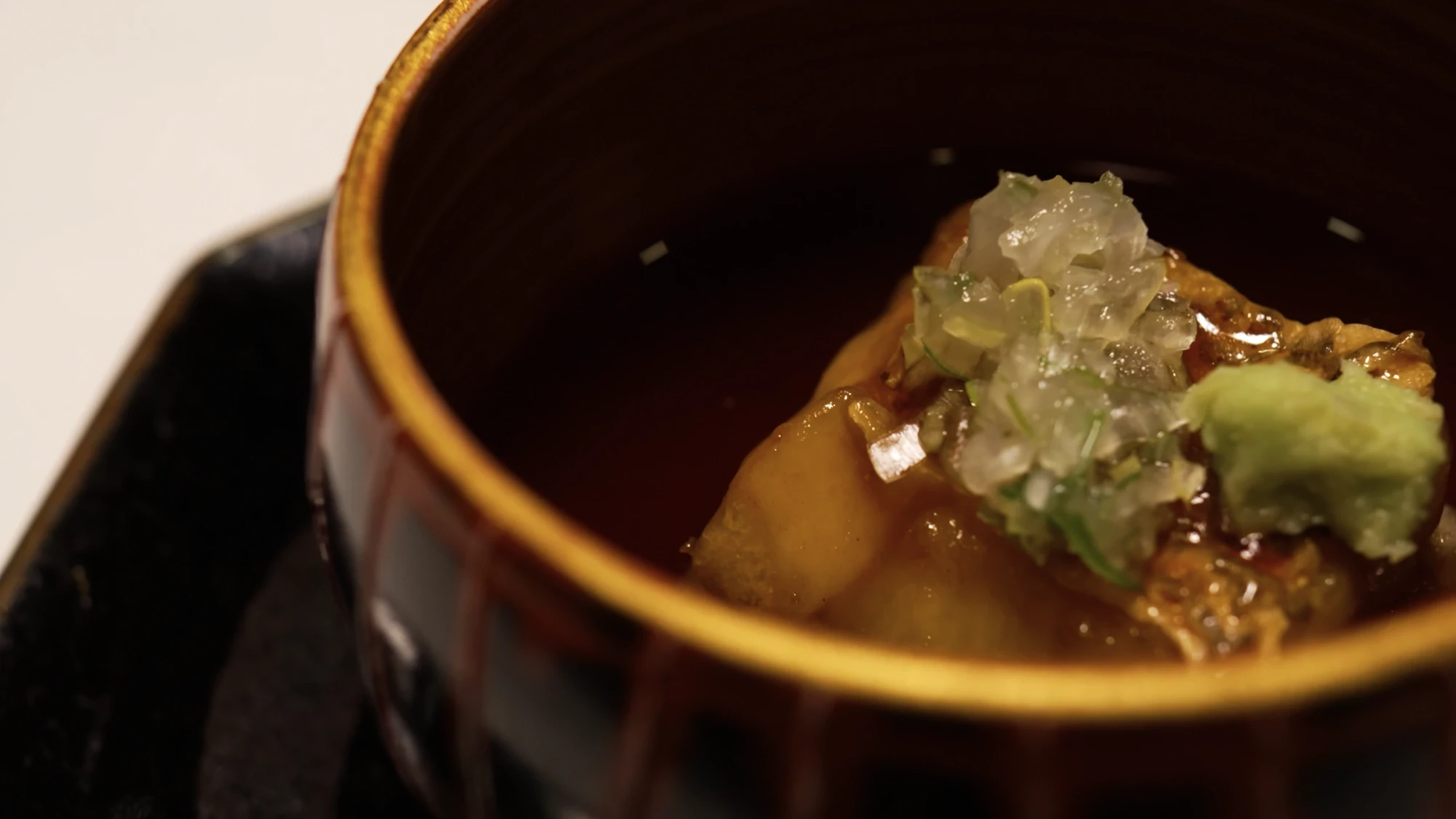
Reservation-only means a week ahead, not an hour. Plan it before you arrive.
It is the opposite: these are kitchens sized to the village's actual evening population, cooking set preparations that begin before the guest arrives, and the reservation is simply the kitchen and the guest agreeing to take each other seriously. The overnight-guests-only clause on TONKOU's dinner is the village's whole argument compressed into a booking rule, the best of the place reserved, literally, for the people who sleep here, exactly as the after-hours baths and the lantern-lit lanes are.
The practical consequences are plain. Book these tables when you book the room, in the same burst of messages, because a two-kitchen town has no walk-in slack; state dietary limits then; and if the trip is a day trip, accept that the new kitchens' evening work is structurally out of reach, one more line in the long ledger of reasons the overnight wins.
There is also a quieter signal here worth naming: a village confident enough to open specialist kitchens in 2025 is investing in its food story, and the eating in Kurokawa is, on the current evidence, still improving.
The village's eating clock, hour by hour
Kurokawa feeds its visitors on a schedule as fixed as its bathing hours, and eating well here means eating on the village's clock rather than your own. The day opens gently: the bakery-café corner of the lanes starts at 9:00, where Au Pan's donuts and drip coffee meet the first walkers, and the morning is the sweet spot for anything that must be bought before it sells out.
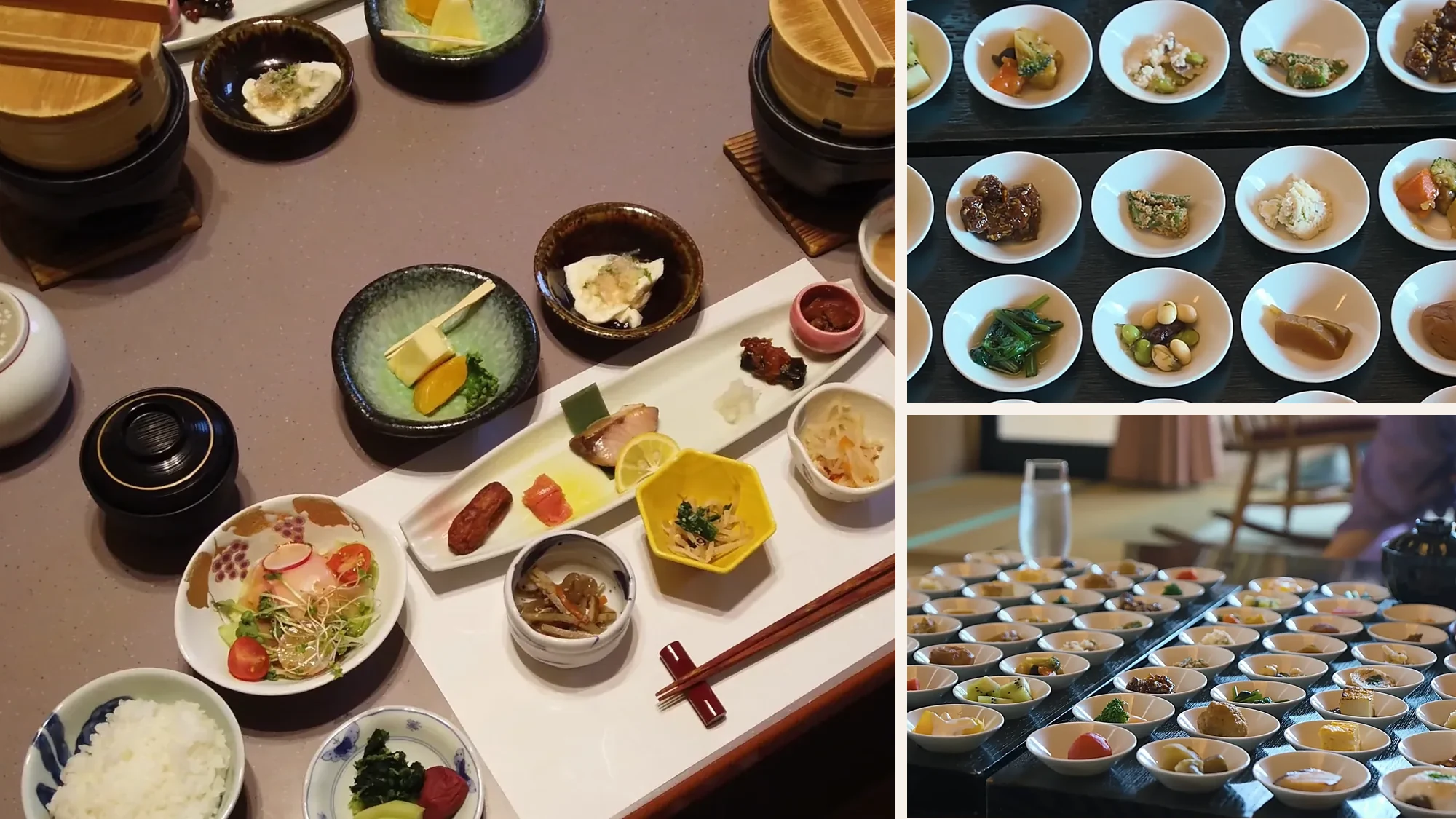
Breakfast is at eight and it is not small. Plan the morning bath before it.
Midday belongs to the grazers and the sit-down lunches alike, the thirteen listed eating houses running their kitchens through the early afternoon, and the classic pattern is a real lunch bracketed by small indulgences, a shiratama dumpling by the stream before, a soft-serve after. By 16:00 the daytime economy is folding its aprons, and the wise visitor has already eaten, because the gap between the lanes' closing and dinner's first course is real and unbridgeable by anything except a bath.
Dinner is the inn's hour, seated early, unhurried and central, the meal the room rate was always mostly about. And after it, the village offers a deliberately small last chapter: Irori-ya serving at its hearth from 18:00 to 22:30 on the Igozaka slope, one of the very few doors open late, where a highball against a tegata sticker closes the day.
The trap to avoid is the city habit of deferring meals: there is no 21:00 ramen here and no convenience-store safety net worth the name. Eat when the village eats, and it feeds you superbly; freelance against its clock, and the lanes will teach you the schedule the hungry way.
How mealtimes actually run
Kurokawa keeps agricultural hours, and eating well here means eating on its clock. Morning belongs to the inns' breakfasts. The lanes' kitchens open mid-morning, 9:00 to 11:00 for most of the directory, and lunch is the village's social meal, the one sitting where day visitors and overnight guests share the counters.
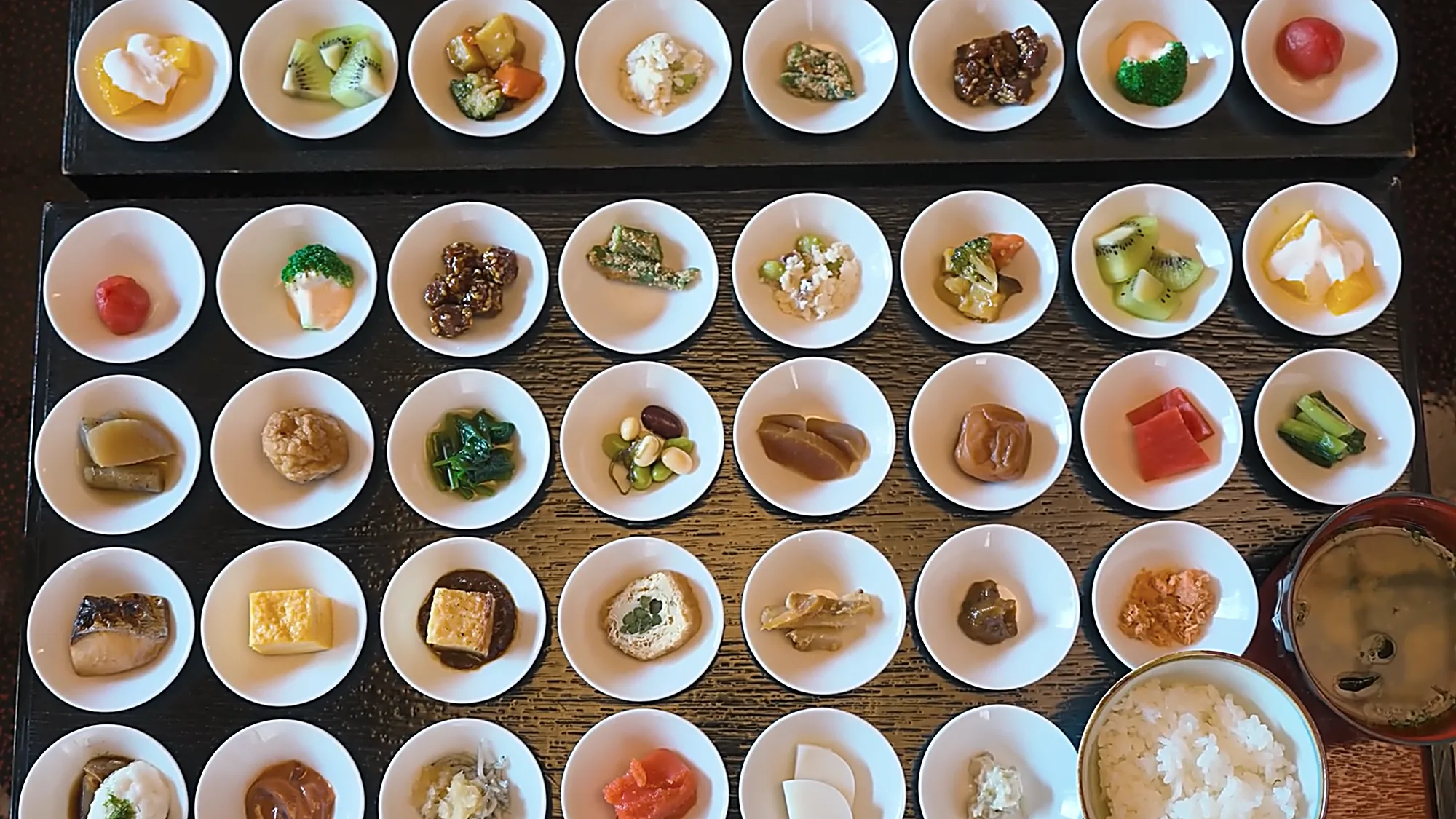
Dinner at six, breakfast at eight, and the village asleep in between.
By 16:00 or 17:00 the daytime places begin closing, and by early evening the street has gone quiet, because the village's diners are seated in their inns before their kaiseki. After dark the sourced options narrow to a handful: Irori-ya serves its izakaya cooking from 18:00 to 22:30 midway up the Igozaka slope, the historic Okyakuya pours beer and coffee until 20:00, and TONKOU seats its reservation-only dinner for overnight guests.
The practical translations: eat your independent meal at lunch, not dinner; do your food shopping before your second bath, not after; and if a nightcap beyond your inn's lounge matters to you, know that Irori-ya is, by the directory's own account, one of the few late doors in the village. None of this is a defect.
A town whose evening entertainment is lantern light and hot water was never going to run a midnight kitchen, and the short evening is part of why the mornings here feel so good.
The snack circuit
Between tegata stamps the lanes feed the wanderer, and the directory names the makers. The dorayaki specialist どらどら on Igo-zaka hand-grills daily; 白玉っ子 pounds its Aso-rice shiratama by the stream; とうふ吉祥 churns soy-milk soft-serve from Chikugo headwater; 湯音 pours Jersey milk. Onsen tamago appear wherever steam does, and the river cafés pour coffee over the gorge. None of it is haute; all of it is correct at 3 pm in a yukata.
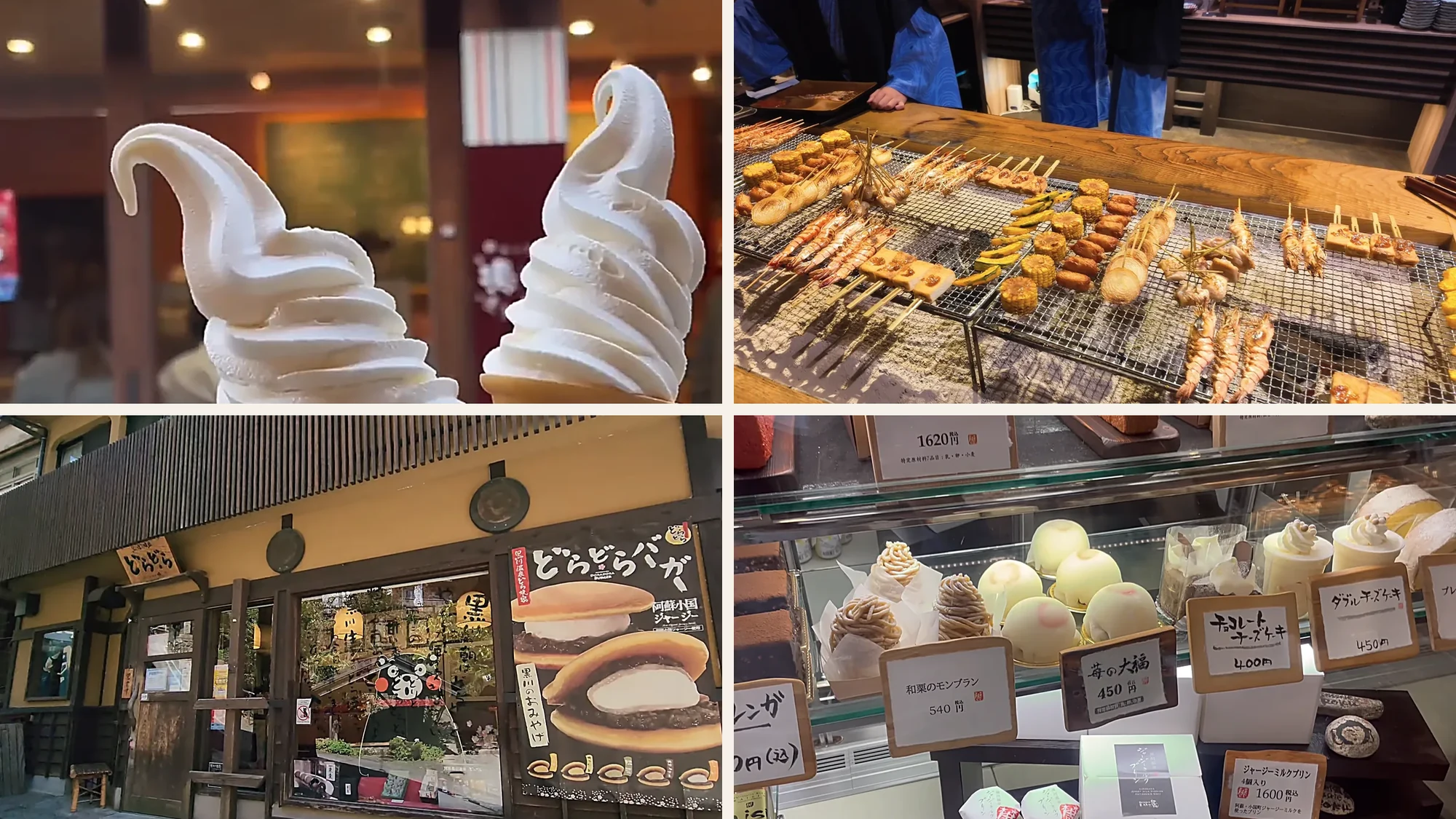
None of this needs a reservation, and the green sticker covers some of it.
Sweet Kurokawa: the dessert circuit
The village's confectionery bench is deep enough to plan a walk around, and every stop below is from the association's own directory. On the Igozaka slope, どらどら hand-grills its dorayaki daily and builds the doradora burger, a cream-daifuku dorayaki sandwich, in five flavours. By the stream on Kawabata-dori, Shiratamakko works shiratama dumplings from 100 percent Aso mochi rice, stone-milled, with menus that change by season.
Tofu Kissho churns soft-serve from its own soy milk when it is not serving dango with tea. Jersey milk gets two temples: Yune, the renovated specialist with its producers' photographs on the wall, and Yama no Ibuki, whose 100 percent Jersey soft-serve comes plain or blended with Japanese black tea. Sugi Yohoen, the outlet of a Kumamoto beekeeper seventy years in operation, does the honey soft-serve that anchors the tegata's sticker list.
And Patisserie Fumoto brings the French register to an old-house shopfront, built on seasonal Kumamoto and Aso ingredients. A visitor with a tegata sticker, a few hundred-yen coins and two hours between baths can eat across that whole list without repeating a texture, which for a village of thirty inns is a quietly remarkable bench.
Eating on the pass: the green sticker
The Nyūtō Tegata is not only a bathing pass. Its third sticker — the green one — buys a food or souvenir item instead of a bath at participating businesses, so the pass and the shopping street are one system. Among the shops and stalls that take it: 杉養蜂園 (honey soft-serve), とうふ吉祥 (dango), 山のいぶき (Jersey soft-serve), いろり家 (a highball), and 新明館 (a branded towel), alongside craft and sake shops along Igo-zaka.
It is a genuinely local mechanic that no English page explains; if you are not going to spend all three stickers on baths, this is where the other one goes.
Lunch and the dinner problem
Lunch works independently: tofu and akaushi houses, teishoku sets, and the snack circuit reward a plan. Dinner is another matter, and the advice repeats across our stay pages because the geography forces it: the village's free-standing dinner seats are few, the inns cook for their own guests at a single seating, and a room-only booking creates a seven-o'clock problem that money solves poorly. Book two meals with the room. The exceptions are the reservation-only rooms above — and TONKOU, whose evening table is open only to those already sleeping in the village.
Drinking, briefly
Inn dinners pour local sake and shochu, Kumamoto being rice-shochu country and northern Kyushu strong in sake; a few small bars and the inns' lounges cover the nightcap hour. The village's evening is short by design; the last drink is usually taken in a bath's afterglow rather than a bar.
Drinking the valley: sake, cider, beer and the hearth
The village drinks the way it eats, modestly and locally, and the drinking map is short enough to memorise. Its anchor is Gotō Saketen at the top of the Igozaka slope, a sake shop more than ninety years old with a konbini corner grafted on, which makes it simultaneously the village's cellar, its pantry of last resort and its longest-serving social institution; residents and visitors have always crossed paths at its till.
The local cider is better than the local beer. Both are better by the hearth.
The soft end of the list is local cider, Hotarumaru and Kumamon bottles at Sake no Yado, and Ikoi's version of hospitality, a cider paired with an onsen egg against a tegata sticker. Beer arrives by the smallest possible glass: Waroku-ya pours a small draft to take away, which in a village built for strolling is exactly the right format.
And the evening's licensed premises is Irori-ya, the hearth-side izakaya, where the highball is the sticker's after-dark redemption and the fire does half the entertaining. What the list lacks is as characteristic as what it holds: no bar street, no late licences, no volume. Drinking here is an accompaniment to walking, bathing and dinner, not an activity with its own arc, and the sensible indulgence is a different local bottle each evening rather than any quantity of one.
Buy the sake you liked at dinner from the ninety-year shop the next morning; it packs well, and it is the rare souvenir that reproduces the evening it came from.
Provisions: the edible souvenirs
The souvenir half of the directory leans edible, and the best of it makes the suitcase argument. Goto Saketen, at the top of Igozaka and more than ninety years old, sells local sake and beer brewed with spring water alongside its convenience-store corner, and the directory describes it as a shop where residents and visitors meet, which is the correct register for buying a bottle.
Sake no Yado, under low eaves with an old earth-floored interior, carries own-brand and limited-distribution sake and takes the tegata sticker; its Hotarumaru and Kumamon ciders, brewed from Aso spring water, are the children's version of the same souvenir. Hirano Shoten, the pickle house a minute from the Sakura-dori plaza, runs from light pickles to long-cured tsukudani, offers tastings, and takes the sticker. Machiya on Kawabata-dori covers the confectionery-and-Kumamon-goods register.
And the misos of Miyagedokoro Machiya, grilled leek and charbroiled garlic in 100 g (3.5 oz) tubs, travel better than almost anything else in the village and improve rice on the far side of an ocean. The pattern worth noticing: nearly every edible souvenir here is either made with the local water or made by a house older than the village's fame, which is what shopping means in a town that regulates its own shampoo.
The edible souvenir shelf, chosen with a curator's eye
The take-home half of the directory, fourteen souvenir listings deep, rewards the same selectivity as the eating half. The department store of the genre is Kurokawa-dō, reopened in December 2022 with some three hundred items, the place to solve gift obligations in one pass and to find the yu-mikuji, the fortune slip that reveals its text in bath water, still the most Kurokawa object a few hundred yen can buy.
Buy the things that travel. Most of the best of it does not.
The connoisseur's purchases sit in the specialist shops: the eleven tsukudani varieties at the pickle-maker, the grilled-leek and garlic misos sold by weight, mountain honey from the beekeeper, and the sake shop's regional bottles. The non-edible entry that belongs on this page anyway is Tōan on the slope, stocking the work of some seventy kilns, because the correct container for the food memories of this trip is a piece of Kyushu pottery, and a teacup used daily at home extends a three-day trip by years.
Two practical notes govern the shelf. Hours are daytime and Wednesdays are the village's habitual closing day for several houses, so souvenir shopping is a before-16:00 discipline, best folded into the between-baths hours rather than deferred to departure morning. And weight is the enemy of glass and liquid: buy pottery and bottles early only if the inn will hold them, or late and close to the bus. The best single strategy remains the tegata's: let the sticker choose one shop's item for you, and let taste, not packaging, choose the rest.
Honest answers to the questions eaters actually ask
Can vegetarians and vegans eat well here? With preparation, adequately; without it, poorly. The kaiseki kitchens can adapt, but dashi and small fish preparations run through the form's foundations, so the honest sequence is to state the constraint precisely at booking, ask directly whether the kitchen can cook to it, and choose the inn partly on the answer; the lanes' daytime tofu, dumplings, soft-serve and produce carry the daylight hours easily. Is breakfast included, and what is it?
At nearly every inn, yes, and it is a Japanese morning set, rice, soup, fish, pickles, vegetables, served early; guests who need coffee beyond it will find the bakery corner from 9:00. Can the trip be done cheaply? Yes, and this page has effectively written the method: breakfast and dinner ride the room rate, so the only meal money buys is lunch, and a sticker redemption plus one modest lane lunch feeds the day for well under ¥2,000 (US\$13).
What about the famous closing day? Wednesday recurs across the directory, with Thursdays joining at some houses, so a Tuesday-to-Thursday trip should map its must-eats against the listed hours rather than assume. Are the eating houses child-friendly? The daytime lanes, thoroughly, soft-serve being the village's unofficial childcare; the kaiseki evening, variably, and the same at-booking conversation that handles allergies handles children's meals.
And the summary question, is Kurokawa a food destination: it is a bathing destination that feeds you far better than it needs to, which, given what the bathing is, may be the highest compliment the kitchen category allows.
Tips
Book dinner with the room, always; the village cannot absorb walk-in diners.
Tell the inn about dietary limits at booking, not check-in; kaiseki menus are set days ahead.
Hit the dorayaki shop before mid-afternoon; sellouts are routine.
Try basashi at dinner if you are ever going to; Kumamoto is its home ground.
Save room at lunch: the snack circuit between baths is half the village's charm.
Frequently asked questions
What food is Kurokawa Onsen known for?
Can you eat dinner in Kurokawa without a ryokan meal plan?
What is akaushi?
Is Kurokawa vegetarian-friendly?

Verified by The Japan Onsen Society
Show all sources
Verified July 7 to 16 and September 6, 2026 by The Japan Onsen Society. The restaurant and shop directory — descriptions, phone numbers, the reservation-only and overnight-guest-only facts, and the green-sticker redemptions — are the ryokan association's own listings; we have eaten in none of the businesses and make no quality judgements. Akaushi, yamame, dango-jiru and basashi are regional-cuisine characterisations.
13 places to eat + 14 shops with self-descriptions and phones · reservation-only 褐 / TONKOU · TONKOU dinner for overnight guests only · green-sticker redemptions → 黒川温泉観光旅館協同組合 shop directory kurokawaonsen.or.jp/omise/ + tegata page → verified Sep 6, 2026
VERIFY:
Igozaka dorayaki shop (dora-dora burger, 5 flavors, sellouts) current operation
Tofu restaurant details (source-water/soybean claims per search; likely Tofu Kissho — confirm name before naming)
Reservation-only akaushi restaurant name/status (byFood/trip sources — identify before naming)
Dango-jiru as local staple (Oita/Kumamoto regional dish — fine, confirm framing)
Yamame characterization (landlocked salmon/trout wording)
Basashi prevalence on Kurokawa inn menus
Bars/nightlife scarcity current
USD conversions n/a; update any at publish.
黒川温泉観光旅館協同組合 お店一覧 (Kurokawa Onsen Ryokan Co-operative Association, shop and restaurant directory) - every business, self-description, hour and phone number in the sections above: the mealtime pattern, the dessert circuit, and the provisions list, verified September 6, 2026
黒川温泉観光旅館協同組合 入湯手形 (tegata page) - the sticker-accepting subset and the per-item redemptions cited above, verified August 18 and September 6, 2026
黒川温泉観光旅館協同組合 お宿一覧 (member inn directory) - the two-meals-included rate structure behind the budget arithmetic, re-verified September 7, 2026
Related guides
Culture & Food
History & revival
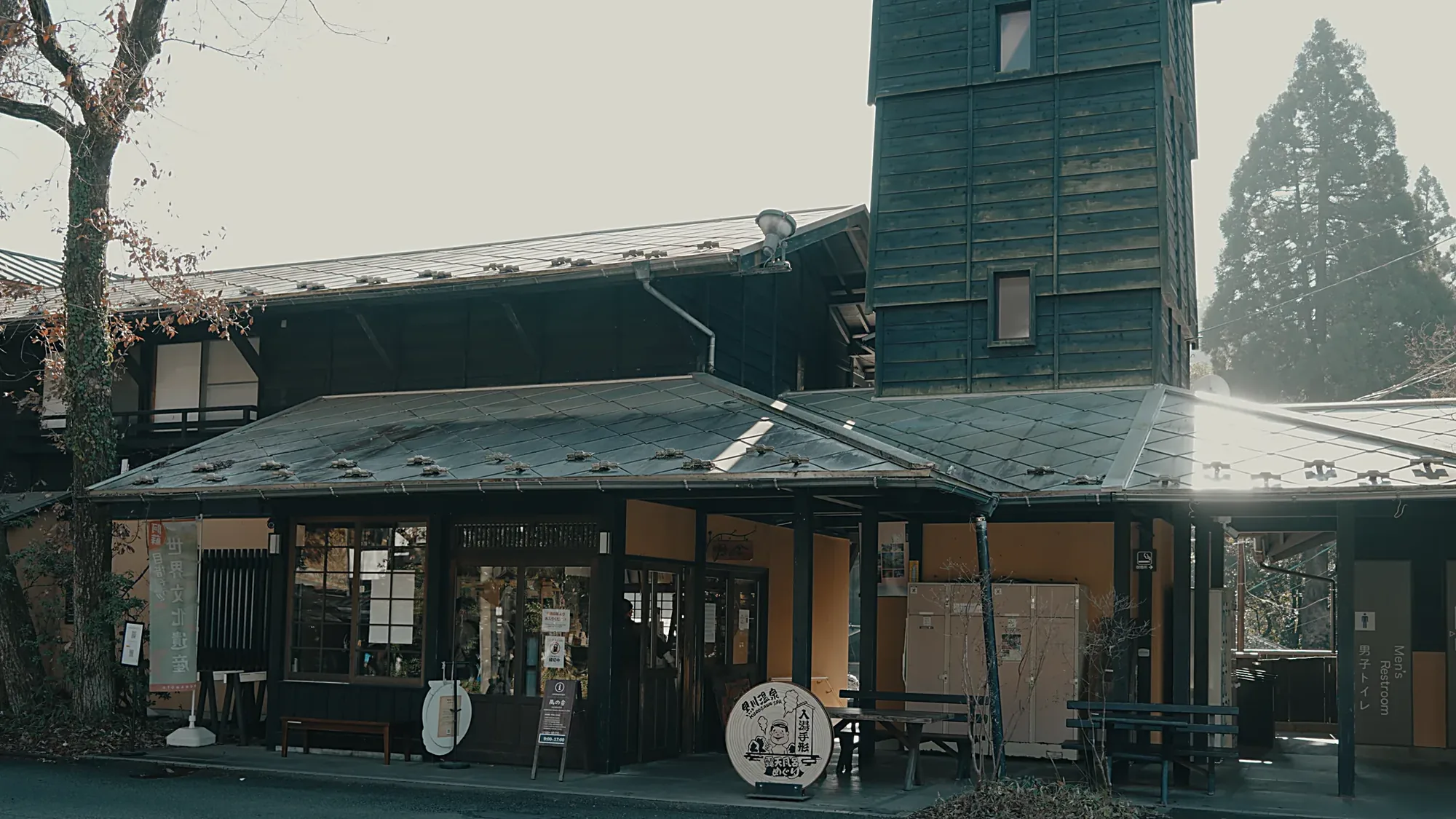
Every beautiful village has a story; Kurokawa's is a strategy — three decades of innkeepers making a dying town beautiful on purpose.
Culture & Food
Yukata
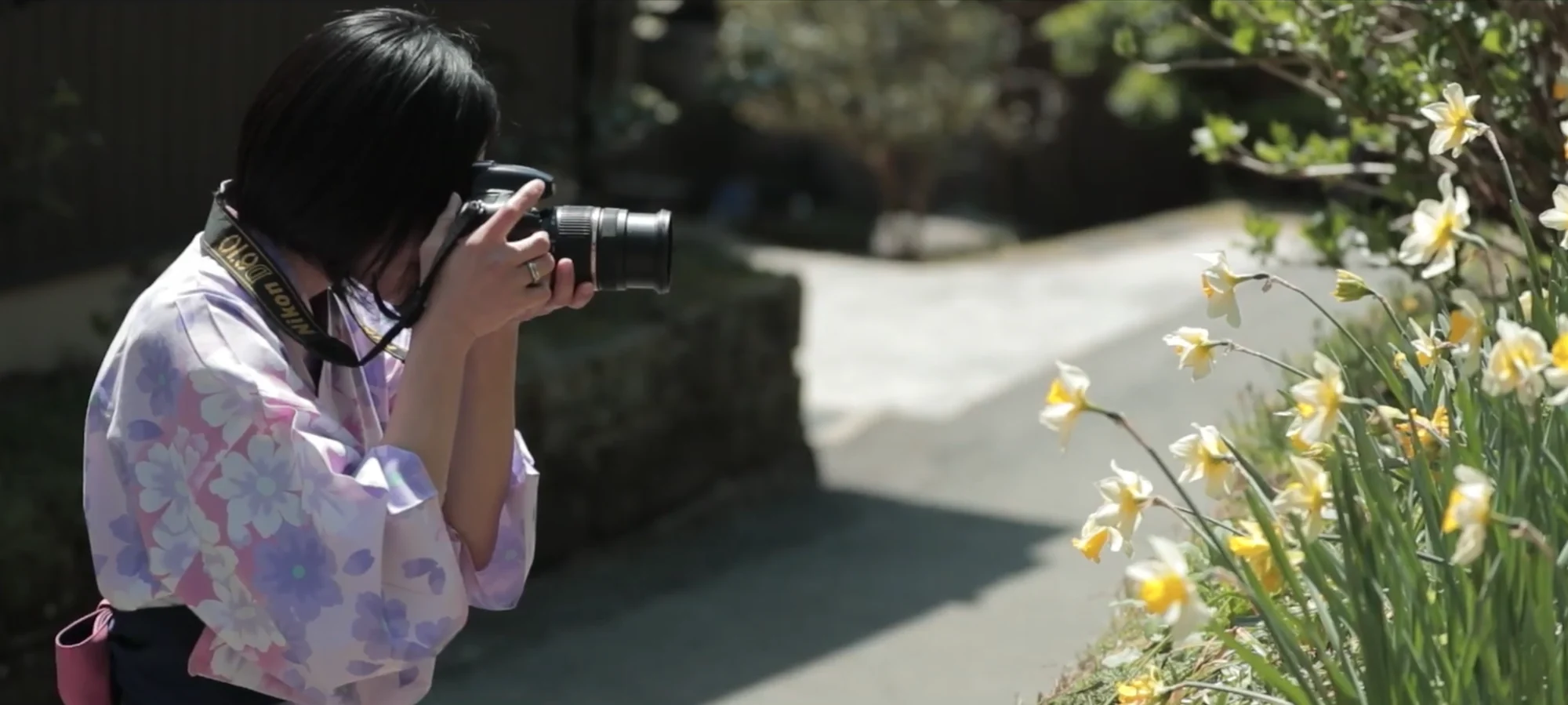
Some onsen towns tolerate yukata; Kurokawa was composed around it. This page adds the village's own rules; the hub has the generic how-to.

Culture & Food
Kurokawa Onsen: The Complete Guide
A wooden pass buys three baths from twenty-five. The innkeepers agreed, decades ago, to look like this.