Is there a tattoo ban in Kurokawa Onsen?
No. There is no town-wide tattoo ban in Kurokawa, and that is the first thing to understand. The ryokan association's stated position is that tattoo policy is set by each inn, not by the village, and that a guest with a tattoo should ask the inn directly; the association routes tattoo questions to the individual inns rather than answering for them.
In practice that means a patchwork rather than a wall: some inns admit covered tattoos, some admit tattoos outright in certain baths, some would rather you use a private bath, and the only way to know for a given inn on a given day is to ask it. What it is not is a closed door.
The association's answer, word for word
Because so much English-language writing about tattoos in Japan runs on rumour, it is worth printing exactly what Kurokawa's ryokan association says, in its own FAQ, in its own words:
「タトゥーに関する対応は旅館により異なり、個別にご案内しております。大変お手数ですが、お問い合わせフォームにタトゥーの有無をご記載の上、ご連絡ください。また、貸切風呂をご利用いただく方法もございます。」
In translation: "The handling of tattoos differs by inn, and we provide guidance individually. We apologise for the trouble, but please note whether you have a tattoo on the enquiry form and contact us. There is also the option of using a private (kashikiri) bath."
Three things live in that short paragraph, and each one matters. First, there is no ban to cite, because there is no policy above the inn level; the association describes a patchwork, not a wall. Second, the association itself offers to broker the question: the enquiry form is not a brush-off but the actual mechanism, an intermediary that asks the inn so you do not have to manage the exchange in Japanese at the front desk.
Third, the private bath is not a workaround visitors invented; it is the association's own suggested route, offered in the same breath. A village that wanted tattooed visitors gone would not end its tattoo answer with a booking suggestion.
What the official words mean in practice
Read as travel advice, the association's answer converts into a simple order of operations. If your ink is small and coverable, plan normally, carry waterproof cover patches from home, and ask at each front desk before entering a shared bath; a covered tattoo and a polite question is the everyday case these inns handle.
The posted wording and the answer at the desk are not always the same thing.
If your ink is large, visible or simply not something you want to negotiate about in a foreign language, decide before you travel that your bathing will be private, and build the booking around that: an inn with reservable kashikiri baths, or a room with its own rotenburo.
And if you want certainty about one specific famous bath, use the machinery the village built for exactly this: write to the association's enquiry form, state that you have a tattoo, name the inn, and let them answer for it. The one strategy that fails in Kurokawa is the one that fails everywhere in Japan, arriving unannounced and hoping nobody minds. Everything else works.
The wider context: Kurokawa against the national picture
Travellers arrive at this page carrying scar tissue from the national conversation, so it is worth stating where this village actually sits in it. Japanese bathing's tattoo hesitancy is historical and real, and the JOS hub's national guide carries that story; what matters here is the local variance, and Kurokawa's variance is institutional.
Where most onsen towns leave the question to signage and luck, this one routes it through a published FAQ answer, a brokered enquiry form, and a village-wide private-bath culture dense enough that the association can offer kashikiri as the standing alternative in its own words. Where some famous bathing towns publish outright bans, this one publishes a process.
And where the national conversation fixates on exclusion, this village's paperwork, read closely, is about matching: the right bath, the right hour, the right door, for a guest the system fully intends to bathe. None of that makes Kurokawa a tattoo paradise, a phrase no honest page should type; shared-bath refusals happen here, policies are house law, and the visitor who wants guarantees should buy them in the form of a lock on a door.
But ranked against the alternatives a tattooed onsen-lover actually faces in Japan, a village with an official answer, an official broker and twenty-five doors' worth of odds is close to the best-case scenario the country currently offers, and it earned that position the same way it earned everything else, by organising.
Why we don't publish a list of tattoo-friendly inns
Plenty of English blogs and tattoo directories name specific Kurokawa inns as tattoo-friendly. We do not reproduce those lists, for one reason: no Japanese primary source, and no list from the ryokan association itself, confirms them. The association publishes no roster of which inns accept ink; policies change without notice; and a name that was accurate for one traveller in one bath last year is not a promise for you this year.
Publishing an unverifiable list would be exactly the kind of confident, sourceless claim this guide exists not to make. So in place of a list you cannot rely on, here is a method that always works.
Why this page will never print the list
One structural promise, restated as policy because readers keep asking for the opposite. This page will not publish a roster of tattoo-friendly Kurokawa inns, this year or any year, and the refusal is load-bearing. The association publishes no such list; policies are house law, revisable without notice; and a printed list ages into a trap, sending next year's traveller to a door whose answer changed after our read.
Every roster you will find elsewhere online was assembled from anecdotes, and anecdotes about other people's skin, other seasons and other front-desk staff are not a basis on which to promise a stranger admission. What we print instead is the process that cannot rot: the official FAQ position, the enquiry form that brokers current answers, the facets that locate private water, the priced examples, and the etiquette that keeps the answers generous.
If the association ever publishes a per-inn policy list, this page will carry it within the week, sourced and dated. Until then, the honest sentence remains the one the village itself wrote: handling differs by inn, guidance is individual, and the private bath is always there. A page that respects its readers gives them machinery that works over lists that flatter, and this is that page.
The reliable route: book a private bath
The single answer that removes the tattoo question entirely is the private bath. Most of Kurokawa's inns keep at least one kashikiri (private-use) bath you can reserve by the hour, commonly for around ¥1,000 to 2,500 (about US$7 to 17) per visitor reports, and behind a locked door the public-bath policy simply does not apply — the bath is your party's alone.
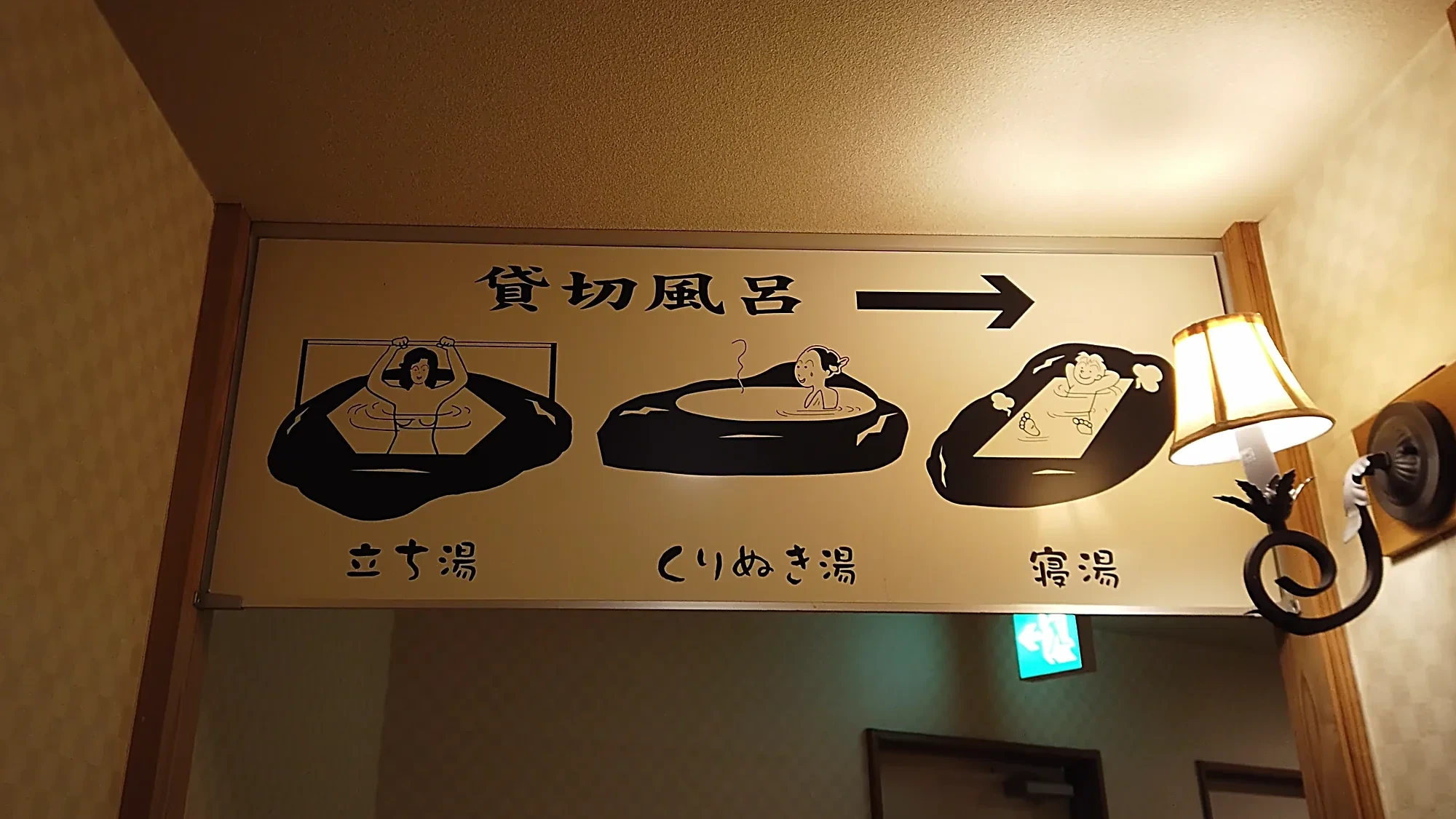
A booked bath removes the question entirely, and it is the answer we recommend.
A step further is a guest room with its own open-air bath: Kōnoyu, for example, keeps nine rooms with a private valley-view rotenburo, which makes the whole stay policy-proof. Our private and mixed baths guide covers how kashikiri works, and the private-bath ryokan guide covers where; for a tattooed traveller either one turns Kurokawa from a question into a booking.
The zero-friction bookings
For travellers who would rather never raise the subject at all, the association's own directory quietly contains the answer, through two of its facets and two of its listings. The directory filters inns by private bath and by private open-air bath, which for a tattooed guest are the only two filters that matter. Among the listings, two stand out.
Kurokawa-so offers three private baths free to staying guests, by reservation, which makes it arguably the single most tattoo-practical address in the village: an evening of private bathing with no hourly meter and no policy conversation, at a listed ¥26,273 (about US\$175) per person with two meals. And Konoyu keeps nine guest rooms with their own valley-view open-air baths, banded ¥24,000 to ¥35,000 (about US\$160 to \$233), where the bathing question never leaves your room.
For day visitors, the one kashikiri price we can source is Yamamizuki's: ¥2,000 (about US\$13) for fifty minutes, bookable on the day through its Inoya cafe reception. Those three data points, one free-with-reservation, one in-room, one metered, bracket the real cost of bathing tattooed in Kurokawa: somewhere between nothing and the price of a nice lunch.
How to ask, and what to expect
When you do want a shared or public bath, ask before you undress — at the front desk, or in advance through the inn's own enquiry form, which is how the association says tattoo questions are handled. A small tattoo that a waterproof cover patch can hide is widely workable; a larger or uncoverable piece is exactly what the private bath is for.
Bring your own cover patches from home rather than counting on finding them locally: it is sometimes reported that the village information centre can help with cover options, but we have not been able to confirm that on an official source , so do not build a plan around it.
The currency that keeps a tolerant town tolerant is discretion — cover when asked, keep the ink the least interesting thing about you, and a quiet yes is the usual answer.
A model enquiry, ready to send
The enquiry form is the official route, so here is a message that does the job, in Japanese with a plain English mirror. Adapt the bracketed parts.
Ask before you travel, in writing, and keep the reply.
「はじめまして。[月/日]に黒川温泉への宿泊を検討している外国人旅行者です。タトゥーがあります([大きさ・場所、例:腕に10cm程度])。[旅館名]の大浴場・露天風呂の利用は可能でしょうか。難しい場合は、貸切風呂の予約を希望します。どうぞよろしくお願いいたします。」
In English: "Hello. I am a foreign traveller considering an overnight stay in Kurokawa Onsen on [date]. I have a tattoo ([size and place, for example: about 10 cm on my arm]). Would use of [inn name]'s shared baths and rotenburo be possible? If it is difficult, I would like to reserve a private kashikiri bath instead. Thank you very much."
The structure is the point more than the phrasing: say when, say what the tattoo is, name the inn, and offer the private-bath fallback yourself. That last line does real work, because it tells the inn you understand the system and gives them an easy yes to offer instead of an awkward no. Answers typically settle the matter before you ever board the bus, which is precisely what the machinery is for.
The vocabulary of the question
Ten words carry the whole subject in Japanese, and knowing them turns signage and conversation from anxiety into information. タトゥー (tatū) is the loanword for tattoo, the term the association's own FAQ uses, neutral and modern; 刺青 (irezumi) is the older word, heavier with history, more likely on formal signage. お断り (okotowari) on a sign means refused; 入浴 (nyūyoku) is bathing, so a notice pairing the two is answering your question before you ask it.
ワンポイント (wan-pointo), one point, is the common Japanese term for a small single tattoo, and hearing it in an answer usually signals a size-based policy, small ink yes, large ink no. カバー (kabā) or シール (shīru) in an answer points to the cover-patch route.
貸切風呂 (kashikiri-buro) you know by now, the private bath; 大浴場 (daiyokujō) is the shared great bath the policy actually governs; and 個別に (kobetsu ni), individually, is the word doing the work in the association's own answer, the promise that your case will be heard as a case.
Armed with that list, the enquiry form's reply, a door's sign and a front desk's answer all become readable, and the traveller who can read the answer stops fearing the question, which is most of what this page exists to accomplish.
If a bath says no
It will happen occasionally, and how it goes depends mostly on you. A refusal at a Kurokawa front desk is quiet, apologetic and impersonal: the clerk is applying a house rule that predates your arrival, not judging your forearm. Accept it the same way, thank them, and re-aim, because one no costs you one option among twenty-five baths and the day keeps its shape.
What protects the next tattooed traveller is the manner of this one; the village's tolerance is a stock that polite visitors add to and entitled ones spend down. If the refusal stings, remember that you hold the better hand anyway: the enquiry form for certainty, the kashikiri culture for privacy, and a pass that converts any disappointment into dessert.
Bath-hopping with a tattoo
The tegata covers any three of about twenty-five open-air baths, which is the other reason a tattoo need not derail a visit: if one inn's public bath says no, that is one option out of twenty-five, not the end of the day. A workable plan is to confirm acceptance at one or two public baths for the famous settings, spend one stamp — or one booking — on a private bath, and let the rest of the village be the lantern-lit walk between. You lose nothing by re-aiming.
Bath-hopping tattooed: the sticker pivot
The tegata gives a tattooed bath-hopper one piece of insurance nobody mentions: the food-and-souvenir sticker. The pass's three stamps do not all have to become baths, and one may be spent at any of nineteen participating shops and inns instead. That changes the arithmetic of a refusal entirely.
On a normal bath-hopping day you confirm acceptance at your first two baths by asking at the desk, and if a third inn's shared bath turns out to be the wrong fit, the last stamp converts to a honey soft-serve, a ceramic cup or a highball without losing a yen of the pass's value. No other bathing town builds a graceful exit directly into its ticket.
The village's two public bathhouses, Jizo-yu and Ana-yu, sit outside the tegata scheme and outside the association's inn policies alike, and we have found no published tattoo policy for either, so we do not guess at one; treat them as ask-first doors like everywhere else.
What the ink actually changes, bath by bath format
Run the format taxonomy through the tattoo lens and the circuit sorts into three clean tiers. Fully policy-free: the kashikiri category in all its forms, the hourly block, the free reserved baths, the in-room rotenburo, plus every non-bath redemption of the pass, the sticker counters, the footbaths where posted practice admits clothed feet, and the lanes themselves; a tattooed visitor can construct a complete and excellent Kurokawa day inside this tier alone.
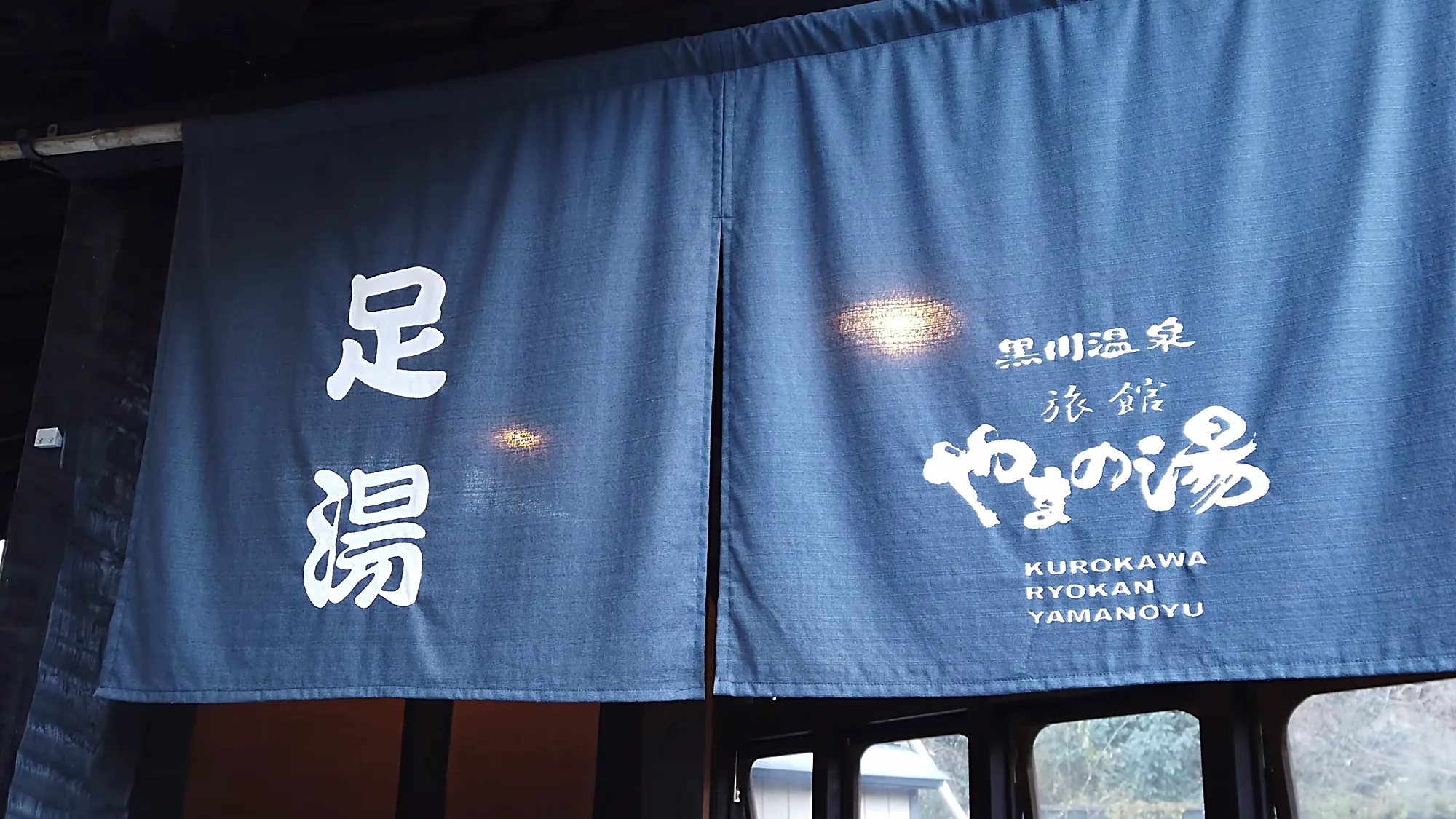
A footbath asks nothing of you. Most of the rest depends on the format.
Ask-first: every shared bath in the scheme, the cave, the Senninburo, the riverside pools, where the answer is each house's own and the asking is the etiquette; small covered ink widens the yes considerably, and the refusal, where it comes, costs one door among twenty-five.
Unknown and stated as such: the two public bathhouses, Jizo-yu and Ana-yu, whose policies our sources simply do not carry, and any inn's current stance, which time can change in either direction, which is why this page teaches the process rather than printing a list that would rot. The tier map's practical yield: build the day's spine from tier one, decorate it from tier two, and treat tier three as the village treats you, case by case, with courtesy.
That is not a workaround. It is the same system every guest uses, with one extra question attached, and the question has an official mailbox.
Covering ink: the practical craft
Where the ink is small enough to cover, the cover itself is a small craft, and doing it competently widens the ask-first tier considerably. The tools are waterproof cover patches, flesh-toned adhesive sheets sold for exactly this purpose in Japan and abroad; bring them from home, as this page has always advised, because we cannot confirm local availability, and bring more than the trip needs, since each bath means a fresh application. The technique matters more than the brand.
Apply to clean, dry, unlotioned skin well before the bath, not in the changing room; press the edges until they feather flat, because hot water finds lifted corners; and size up generously, a patch that overlaps the ink by a wide margin survives immersion far better than an exact fit.
Large pieces can take multiple overlapping sheets, though there is an honest limit where coverage becomes costume, and a back piece under a patchwork is neither hidden nor comfortable; that is the territory the private tier exists for. After the bath, peel gently in the changing room rather than leaving the evidence in the water, and re-dress the skin, which adhesive and hot water will both have opinions about. Two etiquette notes complete the craft.
A covered tattoo asked-about is still an asked-about tattoo, so the front-desk question stays polite practice even when the patch is invisible. And a patch that fails mid-bath is not a crisis; a quiet exit and a rebooked kashikiri hour is the graceful recovery, and the village has seen it before.
The tattooed day, hour by hour
Rules are abstract until they meet a schedule, so here is a full tattooed visitor's day, built entirely from the documented machinery. Three weeks out: the enquiry form carries your question, tattoo size and placement stated, target inn named, private-bath fallback offered, and the answer arrives before you have packed.
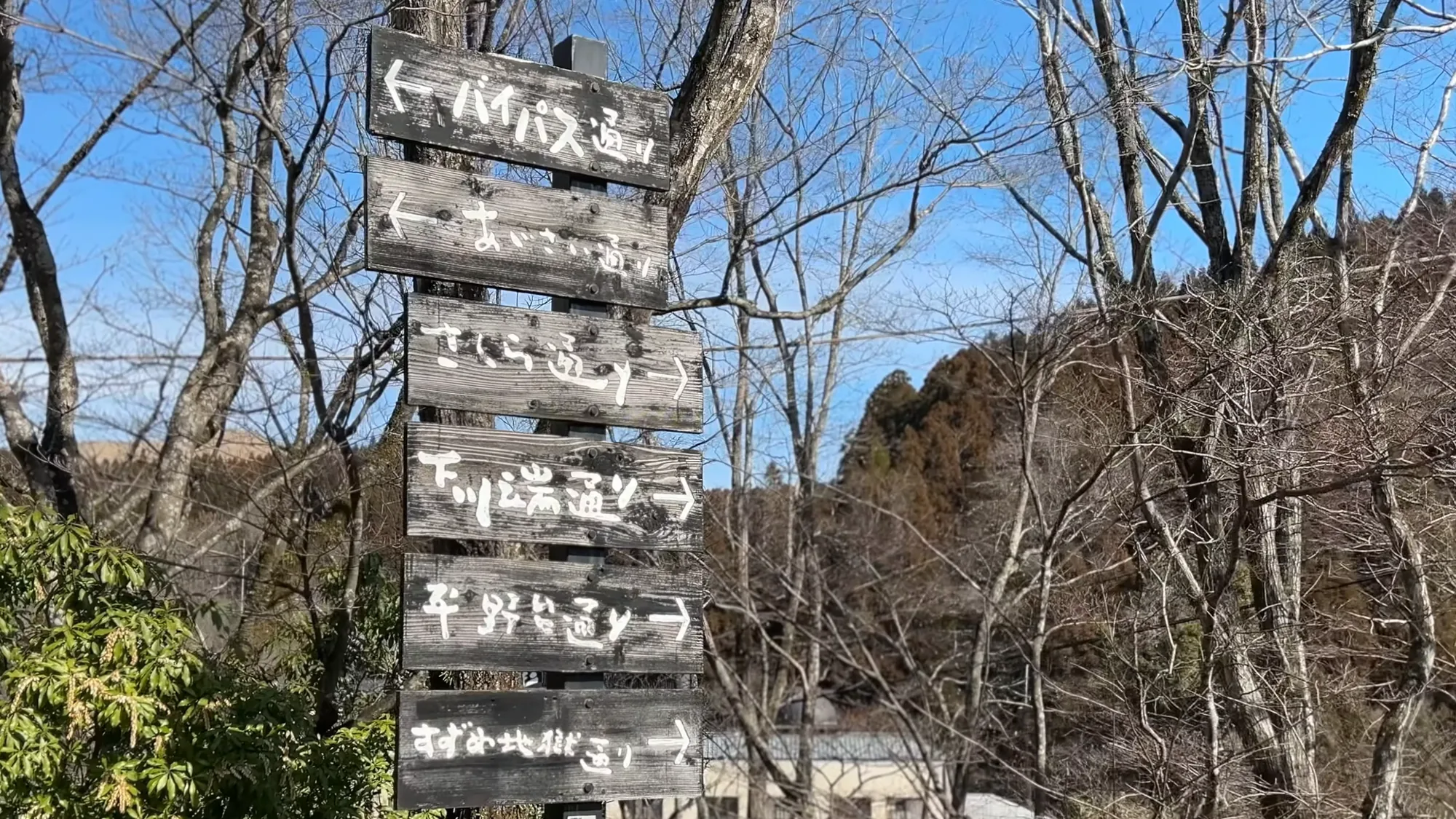
Plan the route around the baths that already said yes.
Booking day: the room is chosen through the two facets that matter, private bath or private open-air bath, or at one of the two zero-friction addresses, Kurokawa-so with its three free reservable baths at ¥26,273 (US\$175) or Konoyu's nine in-room rotenburo rooms at ¥24,000 to ¥35,000 (US\$160 to \$233); the kashikiri reservation is made in the same message as the room.
Arrival afternoon: the tegata is bought like anyone's, because the pass itself carries no policy, only the doors do; the first stamp goes to a bath cleared in advance or, where the ink is small and covered, to a front desk asked politely on the spot. The heat of the afternoon: the sticker converts at a soft-serve counter, no policy conversation required at any shop in the village, since the nineteen sticker doors sell food and objects, not immersion.
Early evening: the reserved private hour, the day's centrepiece, fifty minutes at the documented ¥2,000 (US\$13) rate or free at the free-bath inn, booked before dinner while day visitors still hold the shared pools. Night: your own inn's bath under its house rules, which you settled at booking, or the in-room rotenburo that made the question disappear entirely.
Nothing in that day is improvised, nothing is negotiated in a towel, and nothing is missed: three stamps' worth of value, the private soak, the kaiseki, the lanterns. The village's machinery, used in the order it was built for, delivers the complete Kurokawa to a tattooed guest with less friction than most unmarked visitors generate by winging it.
The split party: inked and unmarked, together
Most tattooed travellers do not travel in tattooed parties, and the mixed group's choreography deserves its own plan, because the failure mode, the unmarked half waiting awkwardly outside a refused door, is entirely avoidable. The documented system offers three clean patterns.
Parallel bathing: the party takes the same inn at the same hour, the unmarked members in the shared bath, the inked member in the kashikiri booked for the same window, reconvening at the same front door; nobody waits, nobody is excluded, and the fifty-minute block matches a shared soak's honest length.
Alternated stamps: on the tegata circuit, the party asks together at each desk, bathes together where the answer is yes, and at any refused door the inked member takes the sticker counter across the lane while the others bathe, the pass's own architecture absorbing the split without waste.
And the full private route: the free reserved baths at the value address, or an in-room rotenburo, where the whole party bathes together by default and the question never surfaces at all, the honeymoon-and-family pattern that quietly suits mixed-ink couples best. The one pattern to avoid is the martyrdom loop, the inked member waving the party into bath after bath while collecting none, which no one enjoys and the sticker economy makes unnecessary.
A mixed party that plans one private hour and spends its stamps flexibly will find, at the day's end, that everyone bathed as much as they wished, which is the only statistic that matters.
New to onsen and tattoos in Japan?
The national picture — why tattoos carry the association they do in Japanese bathing culture, and how that is slowly changing — lives on the Japan Onsen Society hub's tattoo guide, worth five minutes before your first bath so the local patchwork makes sense. The in-bath rules are the same for everyone: rinse and wash thoroughly before entering, keep towel and hair out of the water, and no photography past the changing-room door, a rule the association applies to all of Kurokawa's open-air baths.
The rule is not about you. It is about a history the village is slowly leaving behind.
Ink and the one-ryokan idea
There is a reason the village's tattoo answer is a patchwork, and it is the same reason the village works at all. Kurokawa's organising idea, stated by the association itself, is one ryokan: each inn a detached room, the lanes the corridors between them. The corollary is that each detached room keeps its own house rules, the way rooms in a home do, and the association's role is to connect them, not to overrule them.
That is exactly the shape of the tattoo policy: no village law, thirty house decisions, and a shared front desk, the enquiry form, that speaks for all of them. Understanding this spares you the frustration of hunting for the official list, because the structure of the village guarantees no such list can exist.
What exists instead is a broker that answers questions honestly, a private-bath culture thick enough that every inn has a door you can lock, and a design philosophy that has spent forty years choosing the guest experience over the easy rule. For a tattooed traveller, that is a better deal than a printed policy, because it means the answer is always a conversation, and conversations in Kurokawa tend to end in hot water.
Answers to the follow-up questions the mailbox gets
Three recurring follow-ups deserve their place on the page. Does the tegata refund a refused stamp? The pass has no refund mechanism in its published terms, and it does not need one: an unspent sticker keeps for six months and converts at nineteen counters, so a refusal costs re-aiming, never money, which is a better consumer protection than most refund policies manage. Will the enquiry form answer in English?
The form is the association's official channel and our model message above is bilingual for exactly this reason; write in simple English with the Japanese template attached, state dates plainly, and expect the substance of an answer even where the prose is machine-translated, because the system is built to broker outcomes, not to grade grammar. And should you disclose ink the inn cannot see?
For the shared baths, yes, once, at the desk, in the spirit the association's individually-handled policy implies; the disclosure is what converts you from a rule-taker into a case, and cases, in this village, get answered generously. For the private tier, disclosure is moot by design, which is the tier's entire point.
The pattern across all three answers is the page's closing argument in miniature: every tattoo problem in Kurokawa is either solved by the sticker, solved by the form, or solved by a lock, and the visitor who knows which solver fits which problem has no problems left.
Tips
The private bath solves everything: no policy conversation, ink or no ink.
Ask at the desk or via the inn's enquiry form before undressing; never test a room's tolerance.
Bring waterproof cover patches from home; don't rely on buying them locally .
One refusal costs one option among about twenty-five baths, not your trip; re-aim.
No official list of tattoo-OK inns exists; treat any roster you find online as unconfirmed.
Frequently asked questions
Are tattoos allowed in Kurokawa Onsen?
Which Kurokawa ryokan accept tattoos?
What if my tattoo is too large to cover?
Where do I buy tattoo cover stickers in Kurokawa?

Verified by The Japan Onsen Society
Show all sources
Verified July 7 to 16 and September 6, 2026 by The Japan Onsen Society. What we could not confirm, and therefore do not assert: any per-inn tattoo acceptance, and the sale of cover stickers at the information centre — both marked . The kashikiri price band is visitor-reported.
Tattoo policy set inn by inn, handled through each inn's own enquiry, no published per-inn list; kashikiri offered · photography prohibited in the rotenburo in principle → 黒川温泉観光旅館協同組合 FAQ kurokawaonsen.or.jp/faq/ → verified Sep 6, 2026
Kōnoyu: 9 guest rooms with private valley-view open-air baths → kashikiri-onsen.com
Kashikiri hourly private baths around ¥1,000 to 2,500 → visitor-reported band → no primary
National tattoo-and-onsen context → the JOS hub tattoo guide
VERIFY:
Whether the information centre sells or provides tattoo cover stickers (no primary found; stated as unconfirmed)
The ryokan association's exact tattoo-guidance wording on its FAQ
Kashikiri price band ¥1,000–2,500 consistency with sibling pages
USD conversions assume ¥150 to the dollar
黒川温泉観光旅館協同組合 よくある質問 (Kurokawa Onsen Ryokan Co-operative Association, official FAQ) - the verbatim tattoo answer quoted and translated above: policy varies by inn, individual guidance via the enquiry form, kashikiri offered as the route, verified August 18 and September 6, 2026
黒川温泉観光旅館協同組合 お宿一覧 (member inn directory) - the private-bath and private-open-air-bath facets, Kurokawa-so's three free reservable private baths and price, Konoyu's band, re-verified September 7, 2026
山みず木 温泉 (Yamamizuki, spa page) - the sourced kashikiri rate of ¥2,000 for 50 minutes with day-use reception at the Inoya cafe, verified August 18, 2026
黒川温泉観光旅館協同組合 について (about page) - the 黒川温泉一旅館 idea and the detached-rooms metaphor behind the per-inn policy structure, verified September 6, 2026
黒川温泉観光旅館協同組合 入湯手形 (tegata page) - the pass's policy-neutral terms, the six-month validity in the refund answer, and the nineteen sticker doors in the tier map, verified September 6, 2026
Related guides
The Baths
The waters
Kurokawa has no single water. Each inn owns its source, so bath-hopping is chemistry-hopping — sulphur, chloride and bicarbonate within one lane.
The Baths
The Best Open-Air Baths (Rotenburo)
The tegata buys three of twenty-five open-air baths. Choose for contrast — a river, a cave, a pond — not three of the same.

The Baths
Kurokawa Onsen: The Complete Guide
A wooden pass buys three baths from twenty-five. The innkeepers agreed, decades ago, to look like this.