Day 1: arrive and go village-deep
Run the one-night playbook at full length: arrive by 2–3 pm, tegata in hand by 3:30, the first stamp at a riverside bath in daylight, Yamamizuki's woods or Sanga's gorge. Room, tea, yukata; the one-seating kaiseki at 6 or 6:30; then the night village, a kashikiri hour or the second stamp, and the lanes after 9 pm, Yuakari-lit in winter. The only change two nights permit: linger everywhere. Nothing must be finished today.
Getting there, and the last-leg trap that strands two-day trippers
A two-day trip starts with the journey in and ends with the journey out, and both are worth planning because Kurokawa has no train station. The ryokan association publishes a full origin matrix with its own journey times. From Fukuoka / Hakata a direct highway bus runs 2 hours 45 minutes — not the "about three hours" often quoted.
From Kumamoto the 九州横断バス (Kyushu Crossing Bus) runs direct in about 3 hours, with a rail-and-bus alternative via JR 豊肥本線 to Higo-Ōzu, the やまびこ号 to Aso, and the 産交バス杖立線 onward. From Beppu or Yufuin the once-daily Crossing Bus is the through route, roughly 1 hour 37 minutes from Yufuin.
The nearest railheads are JR Aso Station on the Kumamoto side and JR Hita Station on the Fukuoka side, each about an hour out by car — Hita is the closer option for many Fukuoka-side arrivals and goes almost unmentioned in English.
The trap to plan around: on the Kumamoto side, the last local-bus leg ends at 南小国町役場前 (Minamioguni town hall), a further ten minutes by car from Kurokawa itself, not in the village. Arrange your inn's pickup or a taxi for that final stretch, especially arriving after dark on Day 1. And because the 2026 Kumamoto earthquake has reduced some regional services, check the association's live weather-and-traffic status page before fixing any specific departure — fares are not printed on the access page, which links out to each operator, so confirm the fare at the operator when you book.
Day 2 morning: the dawn and the departure-that-isn't
Dawn bath at the inn, 6:30–7:30, then breakfast, and here the itinerary forks from every checkout in the village: you stay. Watch the one-nighters stream toward the midday buses, then take the third tegata stamp in the emptied late morning, the cave register at Shinmeikan or Fumoto's deep standing bath, when the famous rooms run quietest.
Day 2 afternoon: the caldera
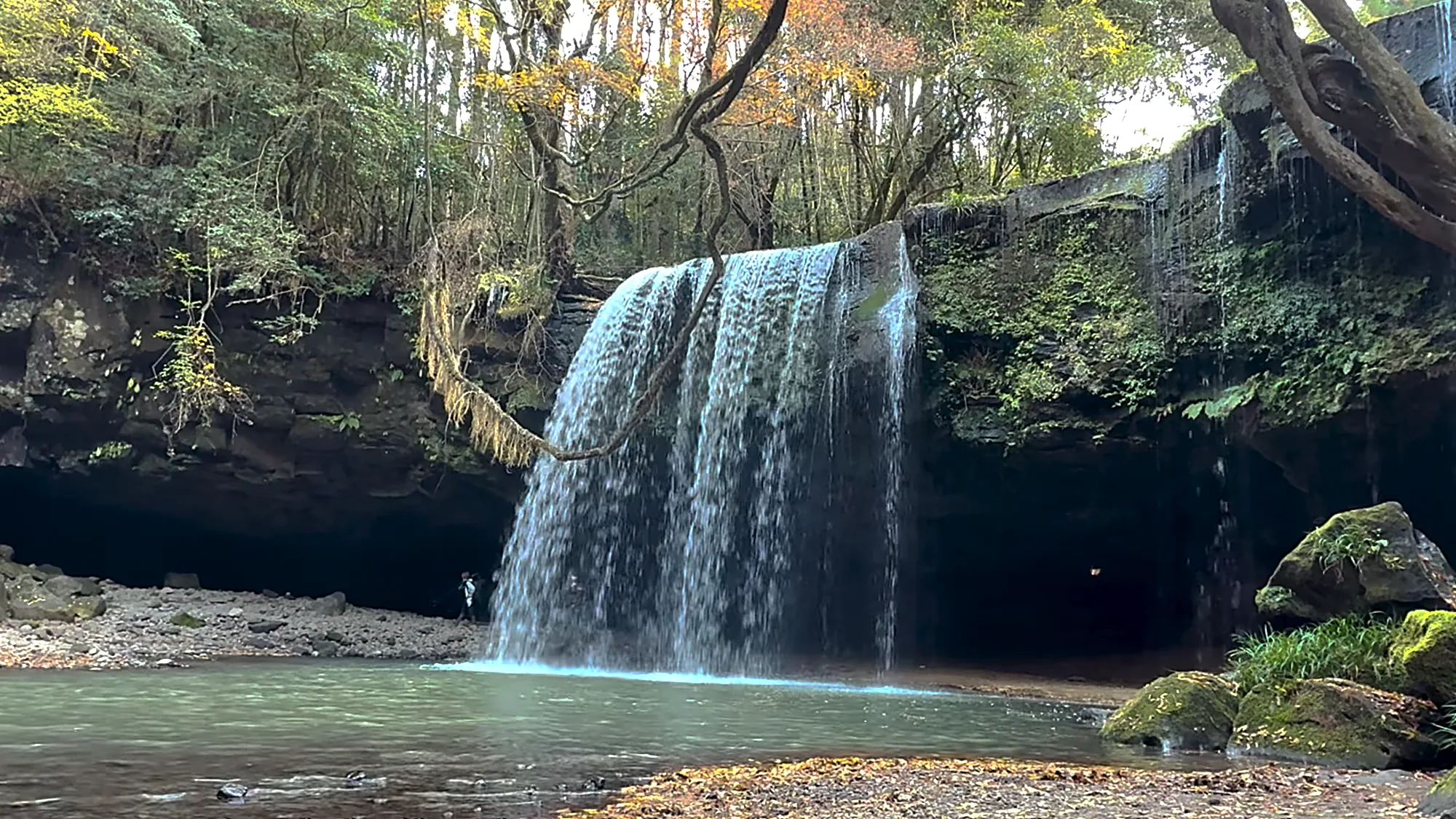
With a car: the classic loop. Nabegataki Falls first (25–30 minutes; timed-entry reservation booked days ahead), walking behind the water curtain; lunch in Oguni or back toward the highlands; then Daikanbō's caldera-rim panorama, the sleeping-Buddha skyline of Aso's peaks across the vast green floor, roughly 40 minutes from the village. Home by late afternoon with an hour to spare before dinner. Conditions permitting, ambitious drivers swap Daikanbō for the Nakadake crater zone, checking volcanic-alert status first, per the day-trips page.
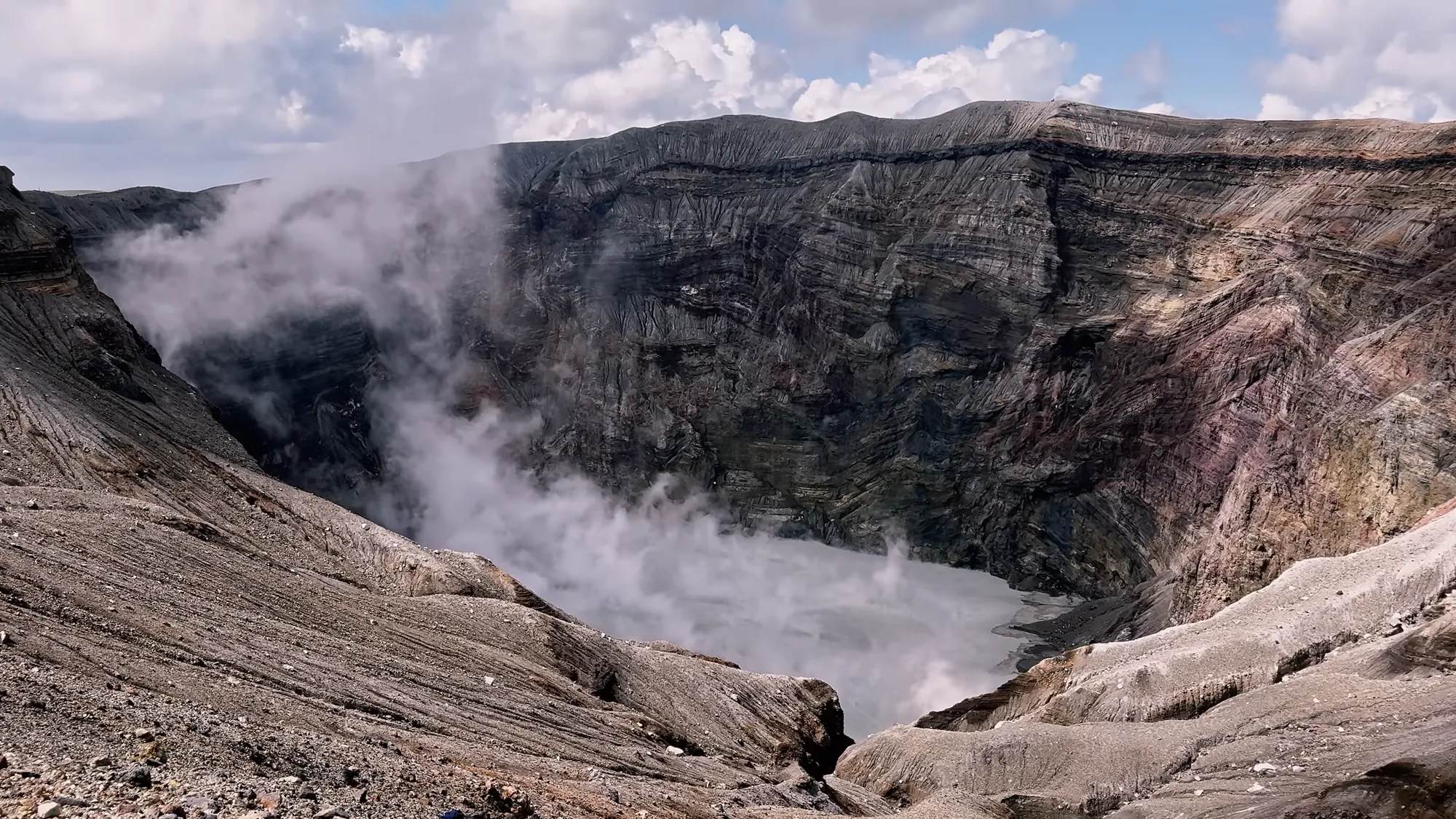
An hour away, and the reason the water in your bath is hot.
Without a car: gentler and still good. A taxi round-trip to Nabegataki (split among a group it is reasonable) or a village-arranged tour where available; otherwise, declare Day 2 the deep-village day: the footbaths, the Jizo shrine, the craft lanes, a café hour above the river, and a repeat soak at your Day 1 favorite, the tegata's quiet privilege of a second visit at day-use rates.
The caldera, and the valley beyond Nabegataki
Day 2's excursion is only the headline of a much larger landscape, and the Japan Spa Association's designation profile names sights the village tends to hide. Kurokawa sits on the highland skirt between the outer rim of the Aso caldera and the 九重連山 (Kujū range), on the uppermost reaches of the 筑後川 (Chikugo River).
Beyond the walk-behind curtain of Nabegataki and the caldera-rim panorama at Daikanbō, the profile lists 七滝 (Nanataki) and 夫婦滝 (Meotodaki) falls, the 清流の森 forest with its 雀の地獄 rock formations, and 瀬ノ本高原 (Senomoto highland), ranked first among Kumamoto's hundred green landscapes. Further out are the ペトログラフ押戸石 (the Oshitoishi petroglyph stones), 金比羅杉, and the 竹の熊大けやき (the great zelkova of Takenokuma). Two neighbouring hamlets of the wider 郷 make quieter detours than the famous falls: 田の原温泉 has been a 湯治場 (cure resort) for some three hundred years, its source hot enough to need no reheating; and at 満願寺温泉 you bathe in the river itself, in a stone-enclosed open-air bath on the bank of the 志津川, a stream that holds オキチモズク, a protected natural monument, beside the thirteenth-century temple 満願寺.
A car opens all of this; without one, a taxi to Nabegataki split among a group is reasonable, and the deep-village day loses nothing by staying put.
The wider district, if two days stretch to three
Kurokawa is the best-known name in a five-hamlet district, and a two-day stay that threatens to become three has somewhere to go. The 南小国温泉郷 (Minamioguni hot-spring district) counts fifty-three lodgings and roughly 2,300 beds across all five hamlets — a figure often misquoted as Kurokawa's own, when Kurokawa's association has thirty inns and the tegata scheme twenty-five baths. Two neighbouring hamlets reward the extra day.
田の原温泉 (Tanoharu) has been a 湯治場 — a cure resort — for some three hundred years, its bicarbonate source erupting hot enough to need no reheating. And 満願寺温泉 (Manganji) offers a river bath in the truest sense: an open-air bath enclosed by stones on the bank of the 志津川, where you bathe in the stream itself, beside the thirteenth-century temple 満願寺; the stream holds オキチモズク, a protected natural monument.
Neither is on the tegata, and both are the kind of place a third day is for — the district beyond the postcard, still sourced, still quiet.
Day 2 evening: the second night
The second kaiseki (inns rotate menus for two-night guests; confirm when booking), then the night's final baths with nothing left to check off, which is when Kurokawa is best. The last morning asks only the dawn bath, breakfast, and the midday bus, with the finished tegata going home as the trip's cedar souvenir.
The tegata, and how two days spend it
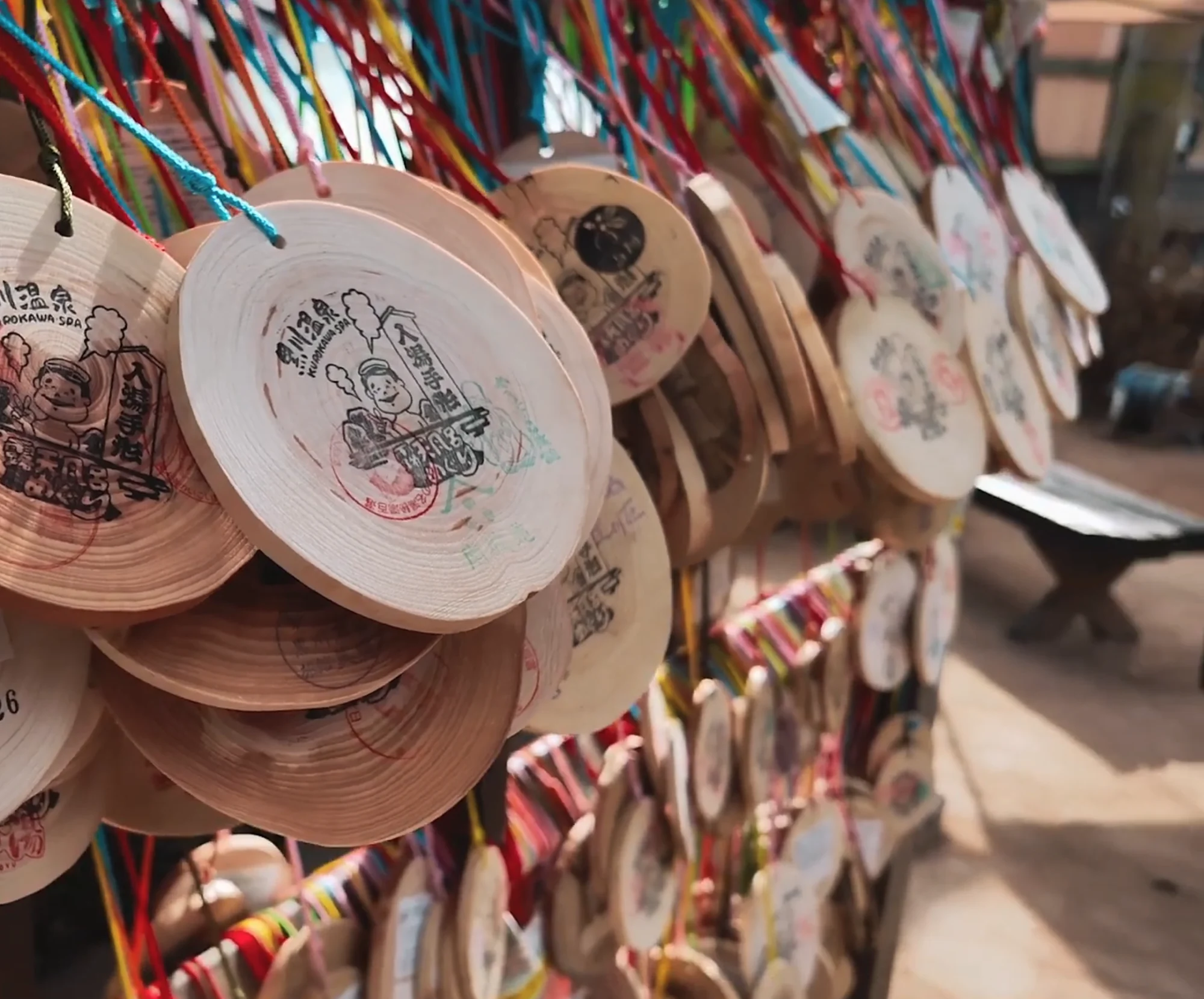
The 入湯手形 (nyūtō tegata) is what makes two days pay. It costs ¥1,500 for an adult and ¥700 for a child (about US$10 / US$4.70), prices confirmed on the association's own page, and it carries three stickers good for any three of the twenty-five scheme baths between 8:30 and 21:00.
Crucially for a two-night stay, it is valid six months from purchase, and the association explicitly says an unfinished pass may be used on a return visit — so the "must do all three in a day" worry simply does not apply. Spend all three stickers on baths, or spend two on baths and one — the green sticker — on food or a souvenir at a participating shop; both uses are valid.
It is one pass per person and cannot be shared. Two facts reward the slower traveller who has time to notice them: one percent of all tegata sales funds landscape and conservation work in the village, and each inn carries its own stamp design, so a fully stamped disc is a personalised cedar souvenir. Buy it at any member inn or the association's 風の舎 (Kaze-no-ya) house. Photography in the open-air baths is prohibited in principle across the village, so treat the baths as something to carry out in memory.
Which baths to choose, inn by inn
Two nights mean five or six soaks, which is enough to choose for contrast rather than convenience. The association's own descriptions point the way. 山みず木 (Yamamizuki) is a single quiet inn built along the mountain stream — the finest riverside setting for a daylight Day 1 stamp. 新明館 (Shinmeikan) holds Kurokawa's hand-dug cave bath, a low tunnel of hot water reaching into the hillside.
Two days is six stamps if you buy a second pass. Most people do.
ふもと旅館 (Fumoto) keeps a 1.5 m standing bath (立湯) among its eight baths, the bath house renovated in August 2024. やまびこ旅館 (Yamabiko) has the village's largest open-air bath, the pond-like Senninburo, for space. いこい旅館 (Ikoi) is the only Kurokawa inn on the 日本の名湯秘湯百選 list, with thirteen baths. 和風旅館美里 (Misato) is the only inn in the village whose sulphur water changes colour.
旅館奥の湯 (Okunoyu) sits in roughly 2,000 tsubo of grounds and reserves certain of its mixed baths for women from about 8 to 10 pm. And for a private soak without a villa's price, 黒川荘 (Kurokawa-sō) gives guests three private baths free with a reservation.
Day-use baths supply almost nothing, so carry a small towel, your own soap, and coins for the entry boxes; the daily availability of each bath is posted, and inns close baths for cleaning, so check before you walk the loop.
The water you're soaking in, honestly
Two days of bath-hopping is really chemistry-hopping, because Kurokawa has no single spring type — each ryokan owns its own source. The wider 南小国温泉郷 is five hamlets and, per the Japan Spa Association's designation profile, they do not share a water: Kurokawa proper is 単純温泉 (simple) and 塩化物泉 (chloride); Tanoharu, Manganji and Oda are 炭酸水素塩泉 (bicarbonate); Shirakawa is 硫黄泉 (sulphur). At the spring-area level the same body lists four families in all — sulphur, bicarbonate, chloride and sulphate.
So the reason a Day 1 bath can feel different from a Day 2 bath is real and sourced, not imagined. One inn is singular: 和風旅館美里 (Misato) is the only inn in Kurokawa whose sulphur water changes colour, by the association's own description.
A piece of honesty the association volunteers in its own FAQ, and almost no English guide carries: nearly every Kurokawa inn is genuinely free-flowing from its own source (源泉かけ流し), but because the source runs hot, many inns add water (加水) to reach bathing temperature — which, the association says, does not change the mineral content or the designated effects.
On what the water is traditionally held to do, the Spa Association publishes official 適応症 (indications) and 禁忌症 (contraindications) by spring type: for sulphur, conditions such as atopic dermatitis, psoriasis and chronic eczema; for chloride, cuts, poor circulation, sensitivity to cold and dry skin; for simple springs, autonomic instability and insomnia. The official contraindications include acute illness with fever, active tuberculosis, advanced malignancy, and serious heart, lung or kidney disease.
These are the official Japanese designations for the spring type, attributed to 日本温泉協会 — not medical advice and not a treatment claim; anyone with a health condition should consult a physician.
Spending the green sticker
The tegata's third — green — sticker is redeemable for food or a souvenir at roughly nineteen named businesses, and a two-day stay is long enough to use it deliberately rather than burn all three stamps on water. In practice that means a honey soft-serve at 杉養蜂園 (Sugi Yōhōen), dango and soy-milk soft-serve at とうふ吉祥 (Tōfu Kissho), a Jersey-milk soft-serve at 湯音 (Yune), a highball at the late-opening いろり家 (Irori-ya), or a branded towel at 新明館 (Shinmeikan) — with ceramics at いご坂陶庵, pickles at 平野商店, sake at 酒の宿 and bathing goods at 黒川堂 also on the list.
The sticker is the part of the pass most visitors never spend.
Opening hours are thin in the shop directory; the tegata page carries hours for the sticker-accepting businesses, so cross-reference the two. It is a small thing that makes the pass feel less like a ticket and more like the village's own currency, and it is the kind of detail no English page explains.
Eating across two days
With two dinners at the inn (the default here, and the sensible one — the village has few free-standing dinner seats and inns cook for their own guests at a single seating), the lunches and snacks are where the village's own directory earns its place. The association lists thirteen places to eat.
Akaushi, Aso's red beef, is the local specialty: 褐 (-aka-) is a reservation-only akaushi house, and わろく屋 (Waroku-ya) is an akaushi specialist in a relocated Meiji-era farmhouse with counter seats for solo diners. とうふ吉祥 (Tōfu Kissho) builds tofu cuisine around an irori hearth using headwater from the Chikugo, with its own soy-milk soft-serve. うな北 is an eel restaurant on Kawabata-dōri with takeaway.
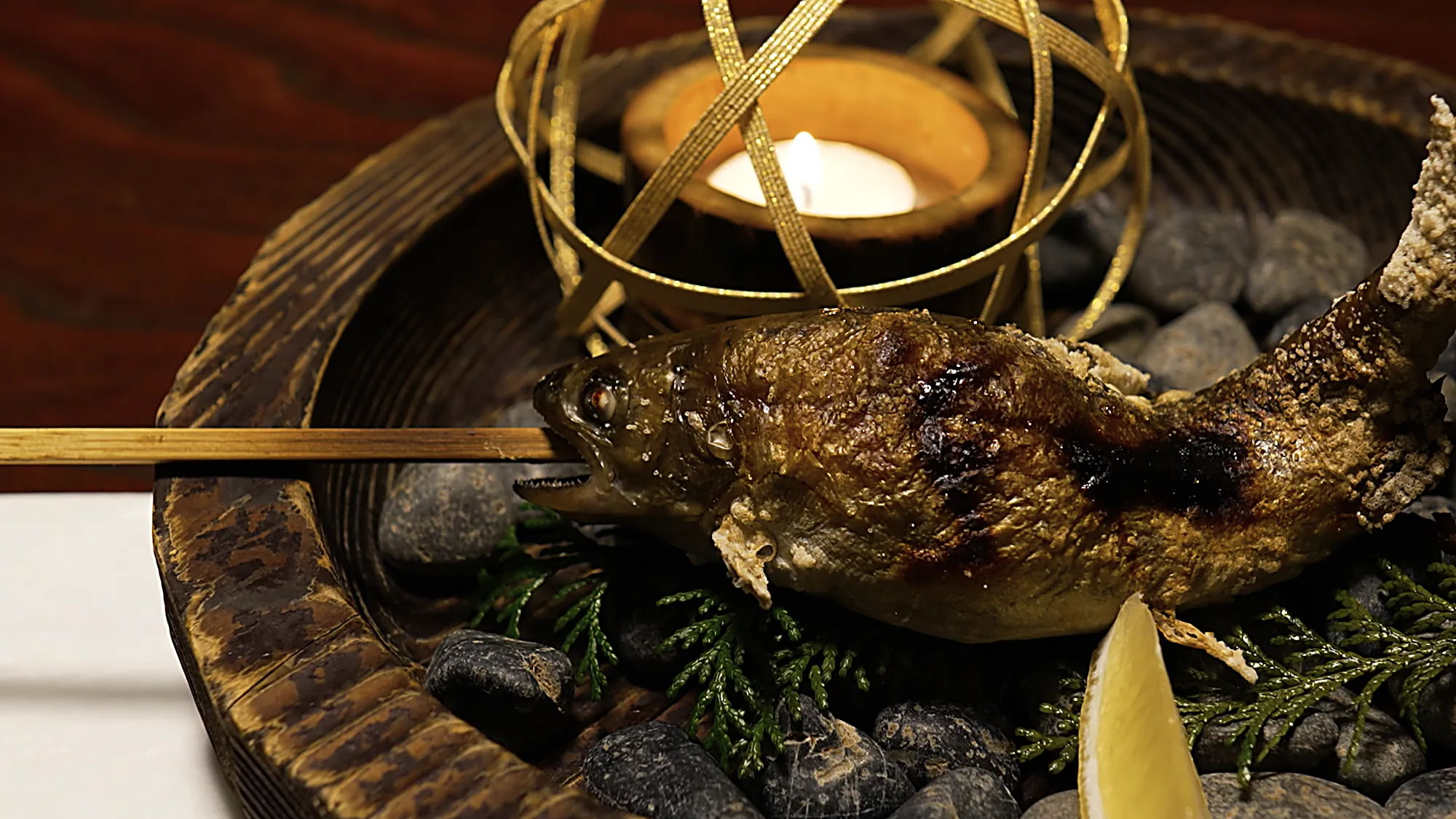
豚皇 (TONKOU) is reservation-only, and its evening course is for Kurokawa overnight guests only — a two-night stay is exactly who it is for. For the between-baths snack circuit: どらどら hand-grills dorayaki daily, 白玉っ子 (Shiratamakko) makes shiratama from stone-milled Aso mochi rice, and すみよし食堂 is a red-lantern counter diner of local rice and vegetables. The village closes early; いろり家 (Irori-ya), izakaya-style up Igo-zaka, is one of the few places open late, and it takes the tegata green sticker. On the menus generally: grilled 山女 (yamame) river fish, 団子汁 (dango-jiru) dumpling soup, mountain vegetables, and Kumamoto's 馬刺し (basashi).
Where to stay for two nights
Two nights can be one inn or two, and the association's own price list — per person, one night with two meals, tax excluded — shows how wide the choice is: from ¥12,727 at the four-room お宿玄河 (Genka), the smallest and cheapest, to ¥122,700 at 月洸樹 (Gekkoju), the most expensive, nearly ten times the floor inside one village of thirty inns. The middle sits around ¥18,000–27,000, where 山みず木, 新明館, ふもと, 美里 and いこい fall.
Splitting two nights between a riverside inn and a village-centre classic is a legitimate way to see more of the village, though a single inn spares you the mid-trip move; either way, book two to four months ahead for winter and the November foliage weekends, when the village's scarce beds compress hardest.
There are no hostels in the association's roster — the design code and inn economics never made room for a backpacker tier — so "budget" here means the humble ryokan floor, and the ¥1,500 tegata gives the ¥12,727 room the same famous baths as the ¥122,700 suite.
The price ladder, named
Because a two-night stay is the village's biggest single cost, it helps to see the association's own price ladder in full — per person, one night with two meals, tax excluded, and stated as indicative. The floor is お宿玄河 (Genka) at ¥12,727–14,545, the smallest inn at only four rooms, dead centre.
Just above sit 優彩別館 (¥13,000–20,000) and, around ¥16,000, 樹やしき (Kiyashiki) on high ground, the contemporary やまの湯 (Yamanoyu), and the 瀬の本高原ホテル (Senomoto Kōgen Hotel) looking across the five peaks of Aso. The village-centre band runs ¥17,000–27,000: やまびこ (Yamabiko) ¥17,000–50,000 with the great Senninburo, 山みず木 (Yamamizuki) ¥18,000–45,000 along its stream, 壱の井 (Ichinoi) ¥18,700–24,200 with yunohana floating in its sulphur water, 奥の湯 (Okunoyu) ¥19,000–40,000, 新明館 (Shinmeikan) ¥19,800–25,300 with the cave bath, ふもと (Fumoto) ¥20,000–26,000, 美里 (Misato) ¥20,000–27,000, and いこい (Ikoi) ¥21,500–23,500.
Higher again: こうの湯 (Kōnoyu) ¥24,000–35,000, 帆山亭 (Hozantei) ¥24,000–46,000 at the headwater, 黒川荘 (Kurokawa-sō) ¥26,273 with three free private baths, and 深山山荘 (Miyama Sansō) ¥30,250–35,750. The ceiling is 月洸樹 (Gekkoju) at ¥69,900–122,700. Choosing where in that ladder to spend two nights is the real planning decision; the baths, thanks to the tegata, are shared equally across all of it.
Two days across the seasons
What two days looks like shifts with the calendar, and the altitude moves that calendar later than the lowlands. The village sits at about 700 m (2,300 ft) and runs three to five degrees Celsius (about five to nine Fahrenheit) cooler than the Kumamoto lowlands, per the association. Cherry blossom comes in early April; autumn colour runs late October to mid-November, peaking in the gorge above the baths.
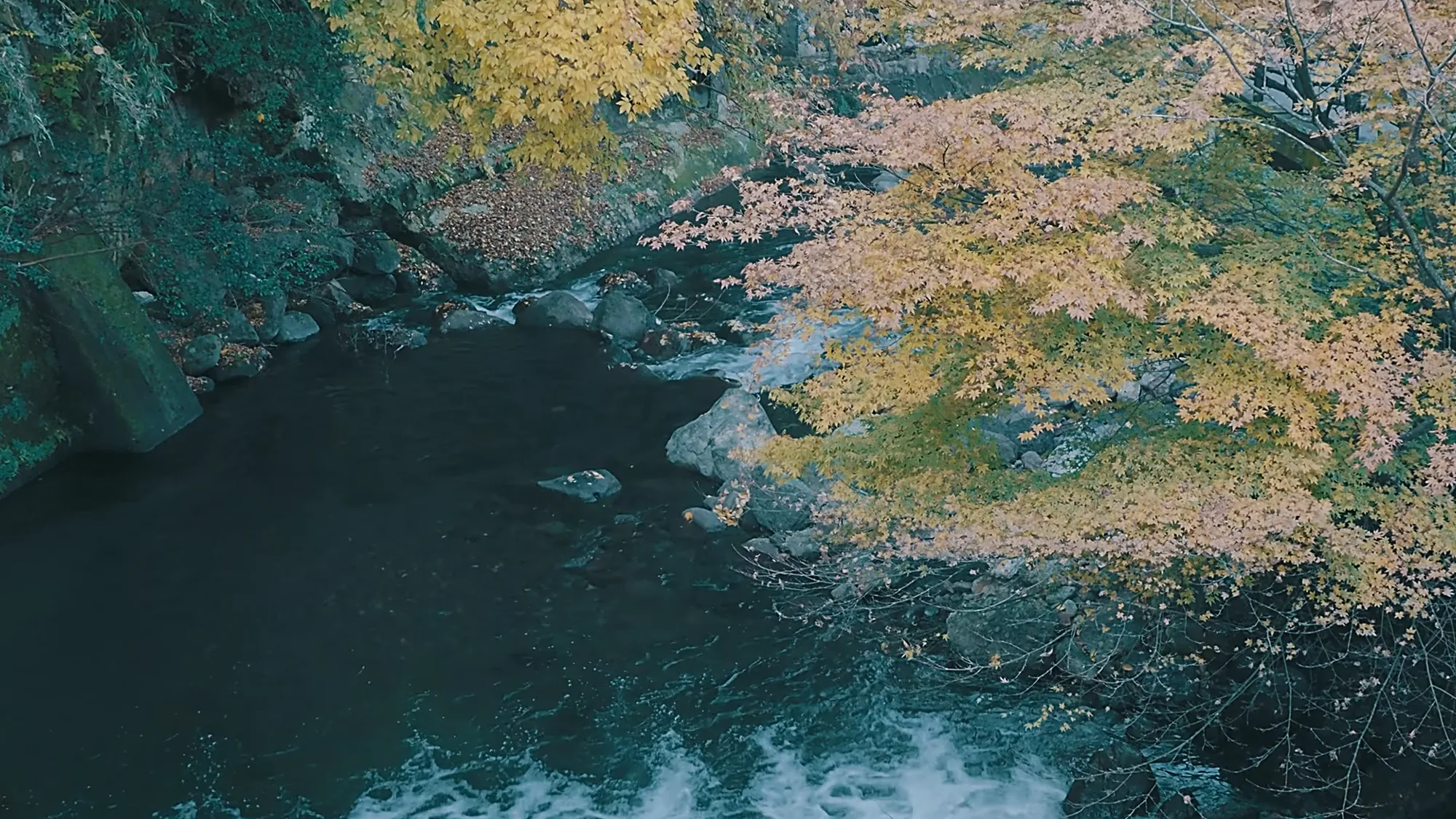
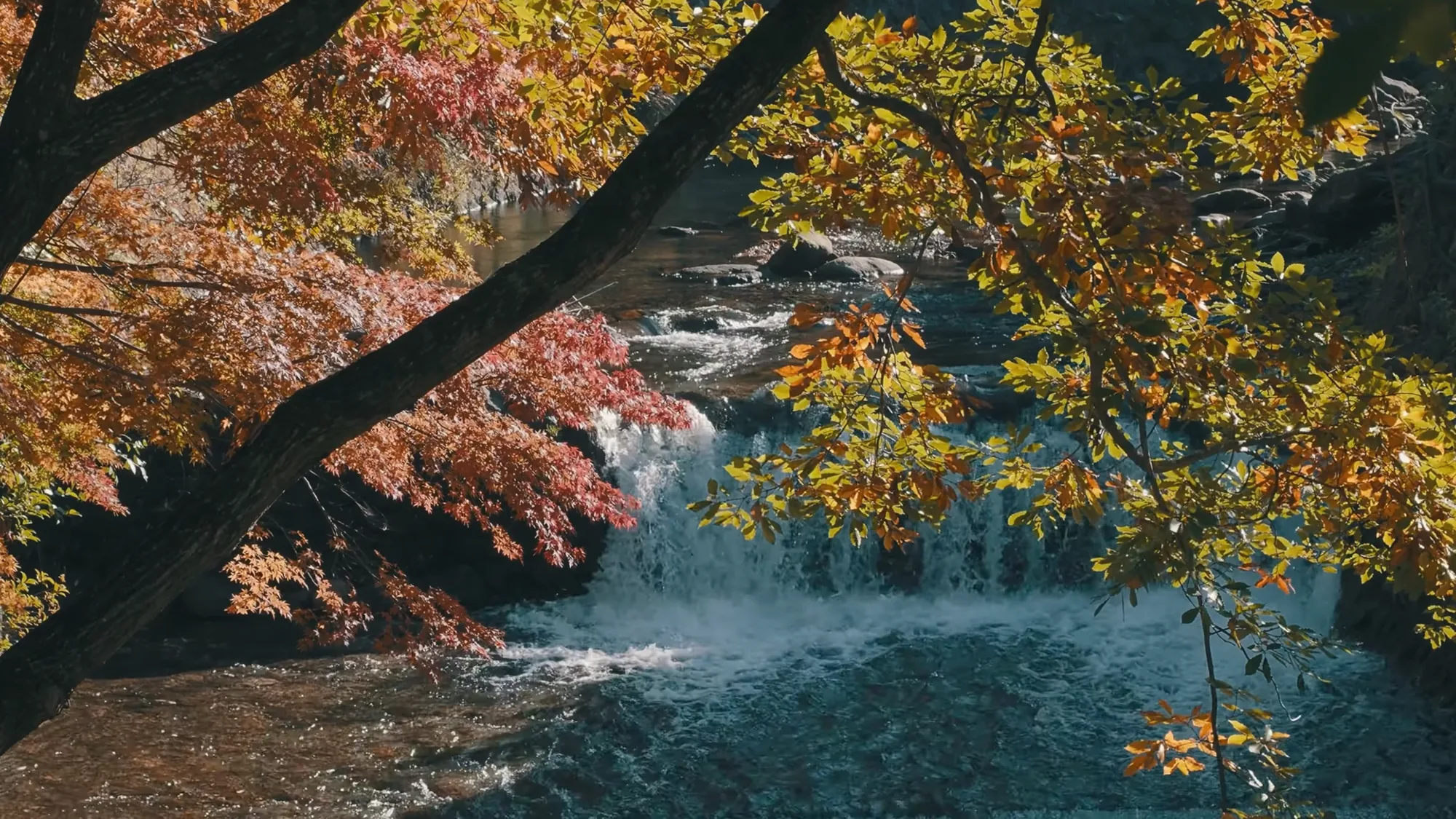
The second day is where the season really shows itself.
Winter is the headline season: open-air baths against near-freezing air and Yuakari (湯あかり), the bamboo-lantern illumination that runs roughly December 20 to March 31, the lanes and the Tanoharu River lit by handmade bamboo-ball lanterns and roughly two-metre pillars from dusk to about 10 pm, free to view, with exact dates announced each season — which turns Day 1's evening lanes into the trip's centrepiece.
Less known is the summer counterpart, 傘あんどん (Kasa Andon), June 1 to September 30, pairing travel parasols with ball lanterns. Both obey the village's design code: bamboo and lamplight, never floodlight.
The village you're walking through
A two-day pace leaves time to notice that Kurokawa's beauty is authored, not inherited, and the association tells the story plainly. Its founding legend is the 首なし身代わり地蔵 (the headless substitute Jizō) — a poor salt-seller, a bedridden father who craved a melon, a theft, a landowner's blade, and a Jizō whose head falls in the boy's place; carried later toward Higo by an ascetic, the statue is said to have spoken at Kurokawa and asked to be enshrined, a hall was built, hot water began to flow, and that is the founding of the village.
The statue still stands at its centre — and retiring a spent tegata there is the customary close to the bath-hop. The modern revival began from failure: the 1964 Yamanami Highway brought a brief boom that faded and left the village stranded, and until the year 2000 Kurokawa's name did not appear on the local newspaper's map of Kumamoto Prefecture at all. In the lean years the third-generation owner of 新明館 dug the cave bath by hand, aged twenty-four, with a chisel, over about three and a half years — the inn's own history records the feat without naming him, and neither do we until a Japanese primary carries the name.
His design idea was 「あるがままの自然」 — "nature as it is." From the 1980s the innkeepers took roughly two hundred signs down off the lanes together, enforced natural materials, and replanted the valley; the slogan became 黒川温泉一旅館 — "the whole village, one inn," each inn a detached room (離れ部屋) and the lanes the corridors (渡り廊下). Two days is enough to feel that the postcard is a made thing, maintained by committee, and better for knowing it.
The visitor code, and the bath-hopper's kit
Two days inside a village that rebuilt itself around a shared look is easier when you know its rules, and the association publishes them. From its own pages: the onsen town is non-smoking outside designated areas; sort and carry out your waste; no drones without prior permission; do not pick plants or foliage; do not enter private land; parking is limited and there is no roadside parking; keep your towel out of the bath water; and entry may be refused when a bath is crowded. To that add the practical kit, because day-use baths supply almost nothing: carry a small towel, your own soap, and coins for the single-entry boxes. The custom at the end of the circuit is to retire the spent tegata at the village's Jizō hall rather than pocket it — a quiet close to two days of bathing, and the reason the finished disc, with each inn's own stamp, comes home as the trip's cedar souvenir.
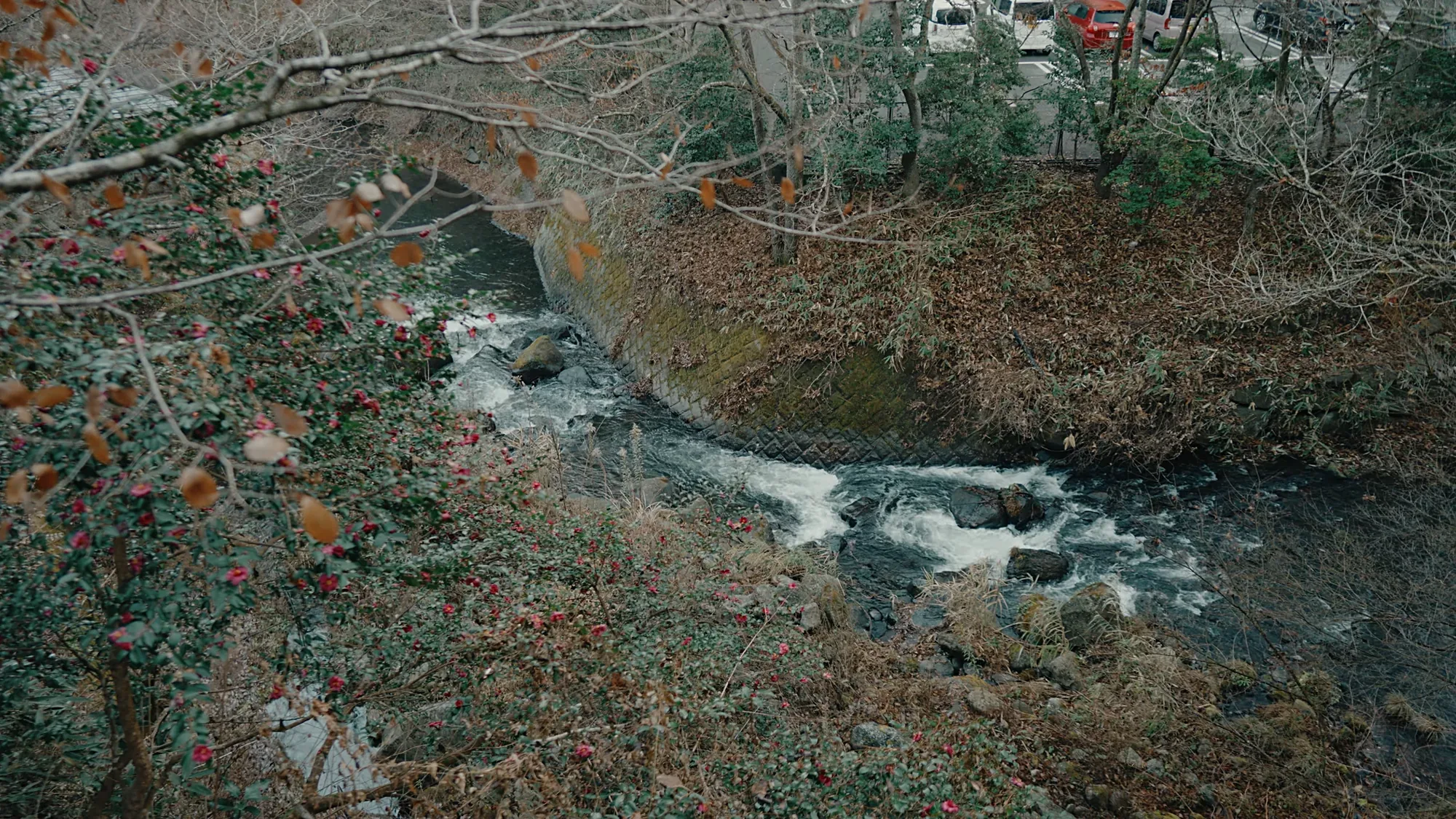
Two days of bath-hopping needs less kit than one day of packing suggests.
Doing the two days without a car
The itinerary above assumes a car for Day 2, but a car-free two days works and is arguably calmer. The village itself needs no wheels — you cross it on foot in fifteen minutes — so the only question is the caldera excursion.
A taxi round-trip to Nabegataki, split among a group, is reasonable; otherwise, declare Day 2 the deep-village day and lose nothing that matters: the footbaths, the Jizō hall, the craft-and-confectionery lanes, a café hour above the river, and a repeat soak at your Day 1 favourite, which the tegata's six-month validity and day-use rates make cheap.
Arriving and leaving without a car leans on the highway bus, and here the last-leg trap matters most: on the Kumamoto side the final local-bus stop is 南小国町役場前 (Minamioguni town hall), ten minutes short of the village by car, so arrange the inn's pickup for both the arrival and the departure. With the 2026 earthquake having thinned some regional services, the association's live traffic page is the thing to check before fixing either bus.
Tips
Reserve Nabegataki's timed entry when you book the room, not the night before.
Tell the inn you are staying two nights and confirm the rotated dinner menu.
Repeat your favorite bath on Day 2; second visits at empty hours beat new stamps.
No car: budget the Nabegataki taxi for a group, or embrace the deep-village day.
Check volcanic-alert status before substituting the Aso crater for Daikanbō.
Frequently asked questions
Is two days enough for Kurokawa Onsen?
What should I do on the second day in Kurokawa?
Do ryokan change the dinner menu for two-night stays?
Can I keep using the tegata on the second day?

Verified by The Japan Onsen Society
Show all sources
Verified July 7 to 16 and September 6, 2026 by The Japan Onsen Society. The tegata validity, the Senomoto ranking and the caldera sights are the association's and the government profile's own; the single-bath fee is visitor-reported and menu-rotation is a general characterisation, both marked ; bus services are perishable under the 2026 earthquake reductions.
Tegata 3 stamps / 6-month validity · 25 baths → 黒川温泉観光旅館協同組合 kurokawaonsen.or.jp/tegata/ → verified Sep 6, 2026
Senomoto (first of Kumamoto's hundred green landscapes) · Nabegataki · Daikanbō → 南小国温泉郷 profile spa.or.jp/kokumin/1131/ → verified Jul 7 & Sep 6, 2026
VERIFY:
Nabegataki reservation system (Webket, timed entry, book-ahead norms, cancellation window) current
Daikanbō drive time from village (~40 min estimate)
Menu rotation for two-night stays — common practice; confirm phrasing
Taxi availability/cost order for Nabegataki round trip
Local tour products existence for car-free Day 2
Day-use bath fee range consistency (¥500–800)
USD conversions assume ~¥150/$1. Update ¥→USD at publish.
Access matrix and journey times (Fukuoka 2h45, Kumamoto 3h, Yufuin/Beppu Crossing Bus), nearest stations Aso and Hita, the Minamioguni town-hall last-leg gap, altitude ~700 m and the 3–5°C differential, seasonal dates, source-water disclosure → アクセス・よくある質問 (黒川温泉観光旅館協同組合, official) — https://www.kurokawaonsen.or.jp/access/ + https://www.kurokawaonsen.or.jp/faq/ — verified Sep 6, 2026
Live service status under the 2026 Kumamoto earthquake reductions → 天気・交通情報 (組合, official) — https://www.kurokawaonsen.or.jp/weather_traffic/ — check every publish
Tegata mechanics (¥1,500/¥700, three stickers, six-month validity, 8:30–21:00, 25 baths, one per person, green sticker, 1% conservation levy, per-inn stamps) → 入湯手形 (組合, official) — https://www.kurokawaonsen.or.jp/tegata/ — verified Sep 6, 2026
Per-inn descriptions (Yamamizuki, Shinmeikan cave, Fumoto standing bath + 8 baths, Yamabiko Senninburo, Ikoi 名湯秘湯百選 + 13 baths, Misato colour-changing, Okunoyu ~2,000 tsubo, Kurokawa-sō three free private baths) and the full price band (¥12,727–¥122,700) → 宿泊 (組合 oyado list, official) — https://www.kurokawaonsen.or.jp/oyado/ — re-verified Sep 7, 2026
Restaurant directory (13 places to eat; reservation-only 褐 and TONKOU; TONKOU dinner for overnight guests; いろり家 open late; green-sticker shops) → お店 (組合 omise directory, official) — https://www.kurokawaonsen.or.jp/omise/ — verified Sep 6, 2026
The caldera-and-valley sights (Senomoto ranked first of Kumamoto's hundred green landscapes, 七滝, 夫婦滝, 清流の森/雀の地獄, ペトログラフ押戸石, 金比羅杉, 竹の熊大けやき), the Kujū range and Chikugo headwaters, 田の原温泉 as a 300-year 湯治場, 満願寺温泉's river bath → 南小国温泉郷 国民保養温泉地 profile (日本温泉協会) — https://www.spa.or.jp/kokumin/1131/ — verified Sep 6, 2026
Konyoku (mixed) baths with women-only hours (about 8–10 pm) → 奥の湯 (Okunoyu, the inn's own site) — https://www.okunoyu.com/ — verified Sep 6, 2026
The 1964 Yamanami Highway boom that faded, the hand-dug cave bath, ~200 signs removed, the 黒川温泉一旅館 slogan, obscurity until 2000, the headless-Jizō founding legend, the design philosophy 「あるがままの自然」 → 新明館の歴史 (Shinmeikan) + 黒川温泉について (組合) — https://shinmeikan.jp/history/ + https://www.kurokawaonsen.or.jp/about/ — verified Sep 6, 2026
Per-hamlet spring map (黒川 simple+chloride · 田の原/満願寺/小田 bicarbonate · 白川 sulphur), the four area spring families, the official 適応症/禁忌症 by spring type, 53 lodgings / 2,300 capacity district figure, and the neighbouring hamlets 田の原温泉 (300-year 湯治場) and 満願寺温泉 (river bath, オキチモズク) → 温泉地詳細 record + 南小国温泉郷 国民保養温泉地 profile (日本温泉協会) — https://www.spa.or.jp/search_p/detail_p/?F_ID=430260 + https://www.spa.or.jp/kokumin/1131/ — verified Sep 6, 2026
The 源泉かけ流し / 加水 source-water disclosure and the official visitor code (non-smoking, no drones, no roadside parking, towel out of the bath, entry refused when crowded) → よくある質問 (黒川温泉観光旅館協同組合, official) — https://www.kurokawaonsen.or.jp/faq/ — verified Sep 6, 2026
Related guides

Trip Planning
Kurokawa Onsen: The Complete Guide
A wooden pass buys three baths from twenty-five. The innkeepers agreed, decades ago, to look like this.

Trip Planning
Worth it?
Kurokawa is not on the way to anywhere. Reaching it takes a bus into the caldera, and it repays the effort only slowly.
Trip Planning
The Nyūtō Tegata Explained
A wooden disc buys any three of twenty-five baths, valid six months. Two stickers can go to baths and the third to lunch.