Bathe. Walk. Repeat.
Environment Ministry
Designated
area
Open-air baths
25
one pass
A village that agreed to look like one place
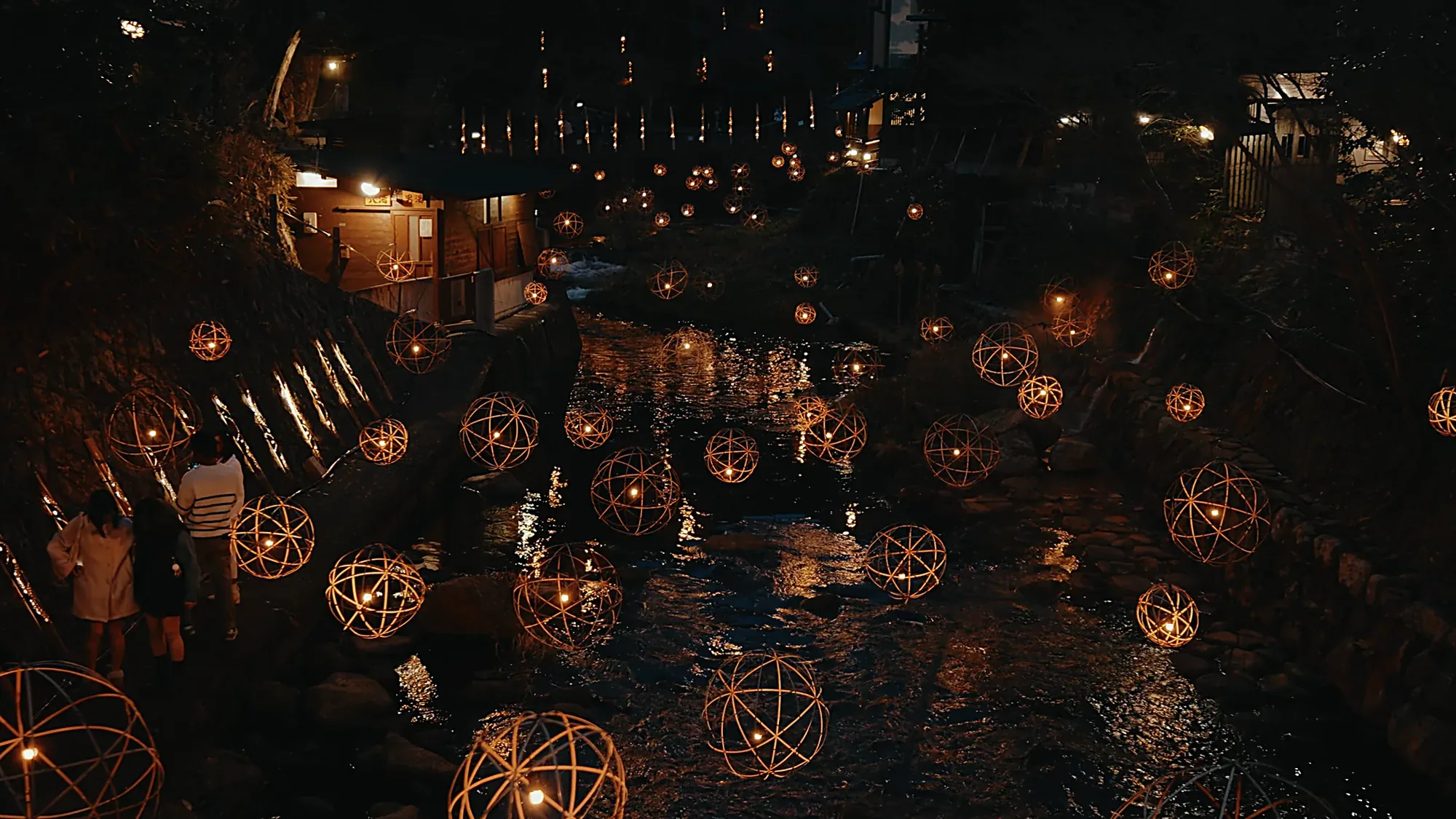
Wood smoke and sulphur on the evening air, and a lane lit by lanterns rather than signage. Thirty inns share one gorge and not one of them shouts. By dusk it belongs to people in cotton robes, walking slowly between baths.
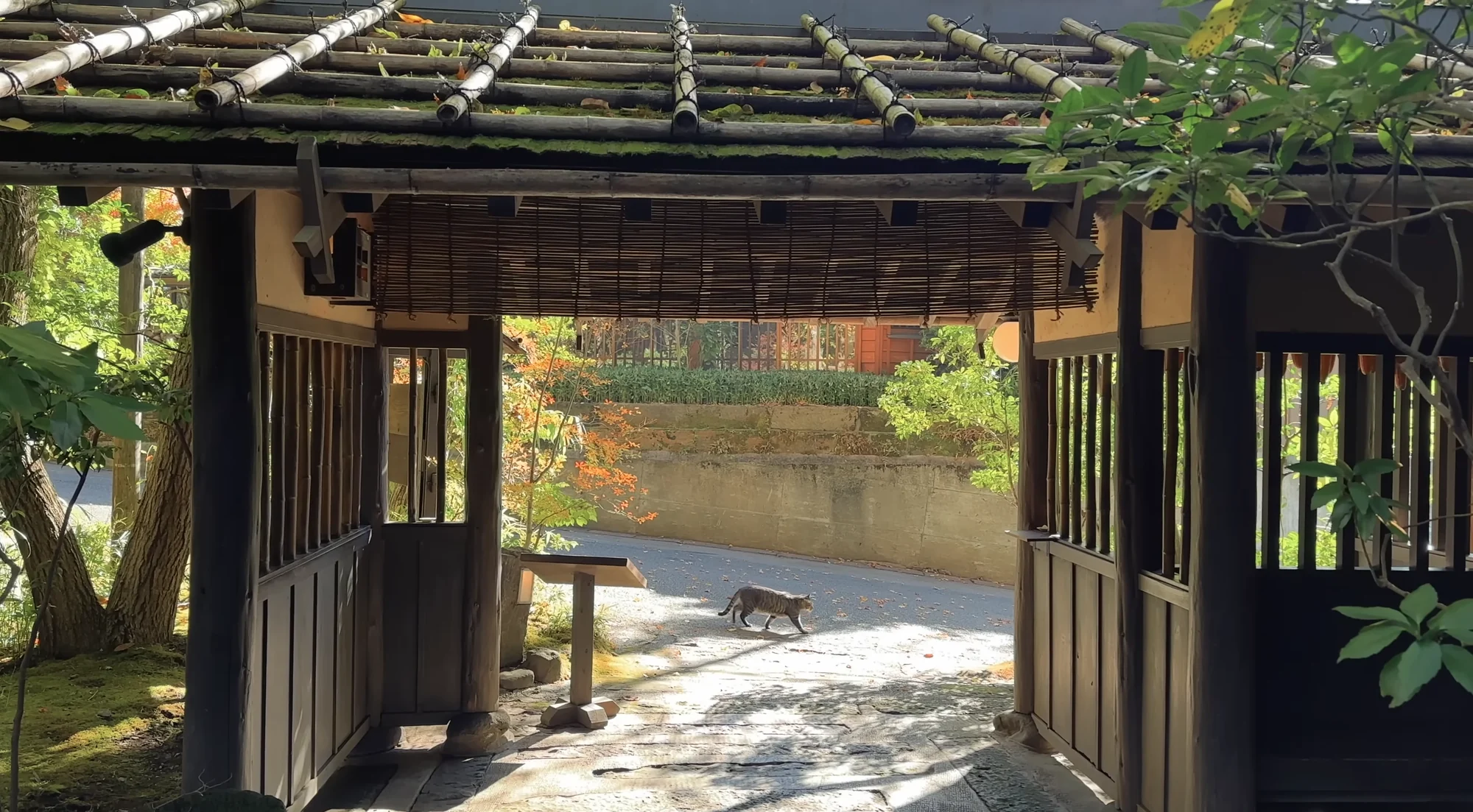
No train reaches it. No neon, no convenience store sign. Two dozen inns in dark timber, sharing their baths with each other’s guests by agreement since the 1980s.
From late December, hundreds of bamboo lanterns float light over the river each evening until ten.
Three baths, one wooden pass
A cedar disc on a cord, worn at the wrist like a key. It opens three open-air baths out of twenty-five, and choosing which three is half the pleasure. Good for six months.