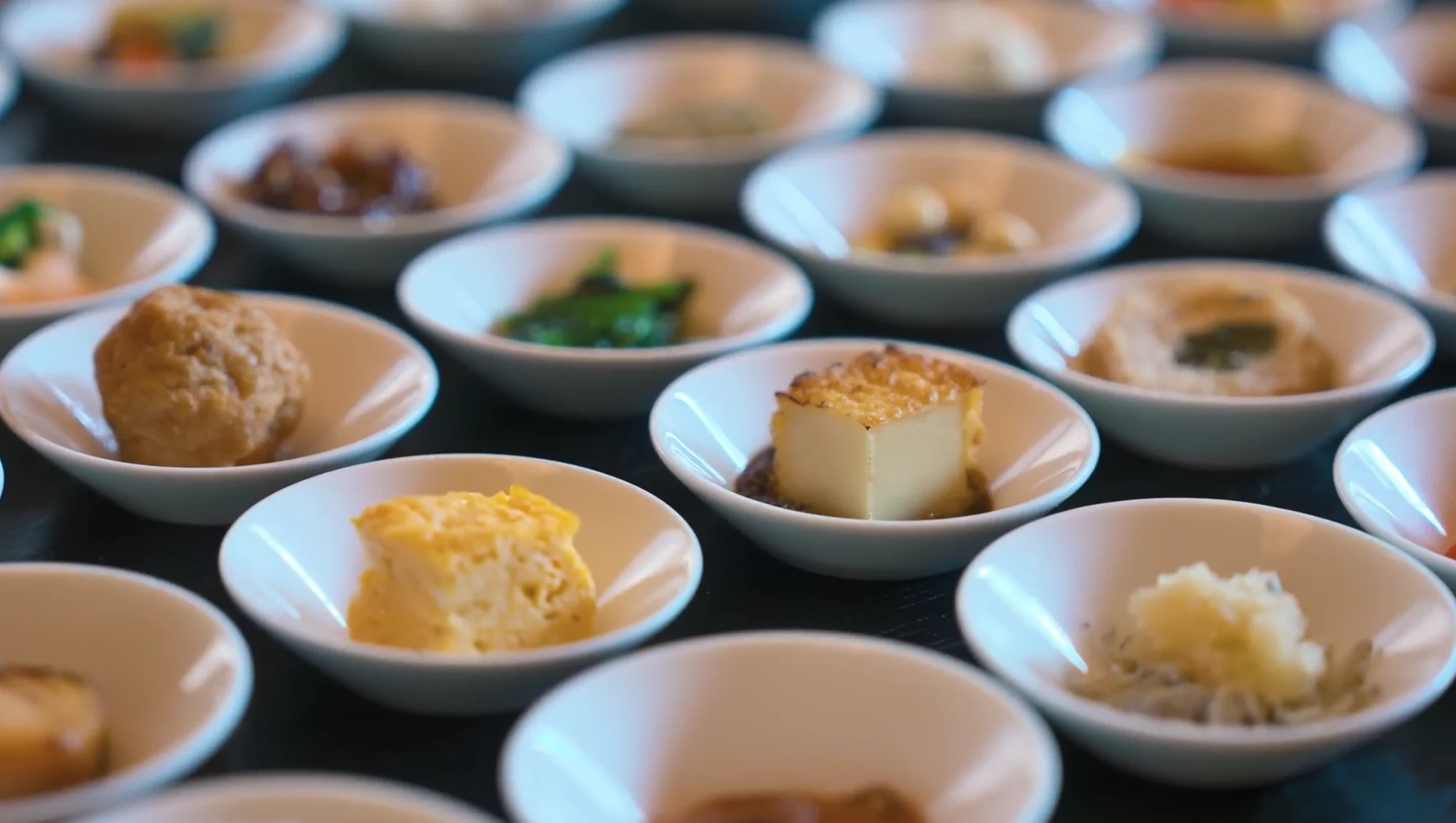
How to choose here, specifically
Two Kurokawa facts change the calculus. First, the Nyūtō Tegata means you are never locked into your own inn's baths — a modest inn plus three famous rotenburo beats an expensive inn used timidly — so the booking question is really about room, dinner and setting, not bath access.
Second, the association publishes its member list with an eleven-facet filter, and learning the filters is how you turn "which inn is best" into "which inn fits": barrier-free access, detached rooms (離れ), solo travellers accepted, pets, groups, in-room dining, private bath (貸切), rooms with a bath, open-air bath, private open-air bath, and cards.
Decide centre versus seclusion, set a price band, pick the two or three facets you cannot do without, and filter to a shortlist of three names — with rooms this scarce, one is not enough. (Which inns carry which facet sits behind the association's filter; we do not assign facets to named inns here — use the filter itself.)
The best ryokan, in one passage
The best ryokan in Kurokawa Onsen depends on what the night is for, but the shortlist is stable. For the village experience itself, book Shinmeikan, the centre-of-the-lanes inn whose hand-dug cave bath began the whole revival, at ¥19,800 to ¥25,300 (about US\$132 to \$169) per person with two meals. For the finest bath attached to any bed, book Yamamizuki on its mountain stream, ¥18,000 to ¥45,000 (US\$120 to \$300).
For private bathing without a luxury bill, book Kurokawa-so, where three private baths come free with a reservation at ¥26,273 (US\$175). For a milestone, Gekkoju is the ceiling at ¥69,900 to ¥122,700 (US\$466 to \$818). All prices are the association's own indicative per-person bands, and every inn shares the same lanes, the same tegata and the same valley.
How we compare inns we have not all slept in
A word on method, because ranking pages usually hide theirs. We do not publish invented star ratings or paraphrase anonymous reviews; this project removed fabricated ratings from its own pages once and does not intend to need to again. What this comparison stands on is the record: the ryokan association's member directory, which prices every inn and lets each describe itself in one line, and the Japan Spa Association's area record, which documents specific baths, grounds and honours inn by inn.
Those two sources disagree with marketing in useful ways, and where a famous claim has no primary behind it, we say so rather than repeat it. The consequence is a comparison built from what the village says about itself, weighed with our own judgement about which facts matter for which traveller. When we write that Yamabiko suits families, that is our reading of a sourced fact, the village's largest rotenburo, not a survey result.
Treat every verdict here accordingly: the facts are the association's, the weighing is ours, and your own temperament is the tiebreaker no guide can supply.
Reading between the descriptors
The association lets every inn describe itself in a single line, and those lines repay a suspicious reading, because each one quietly tells you a practical fact. "Away from the bustle" and "surrounded by woodland" mean distance: ask about the evening shuttle before you book, not after dinner. "Only four rooms" means scarcity: a house that small vanishes from calendars months before a foliage weekend, and also means the quietest stay on the page.
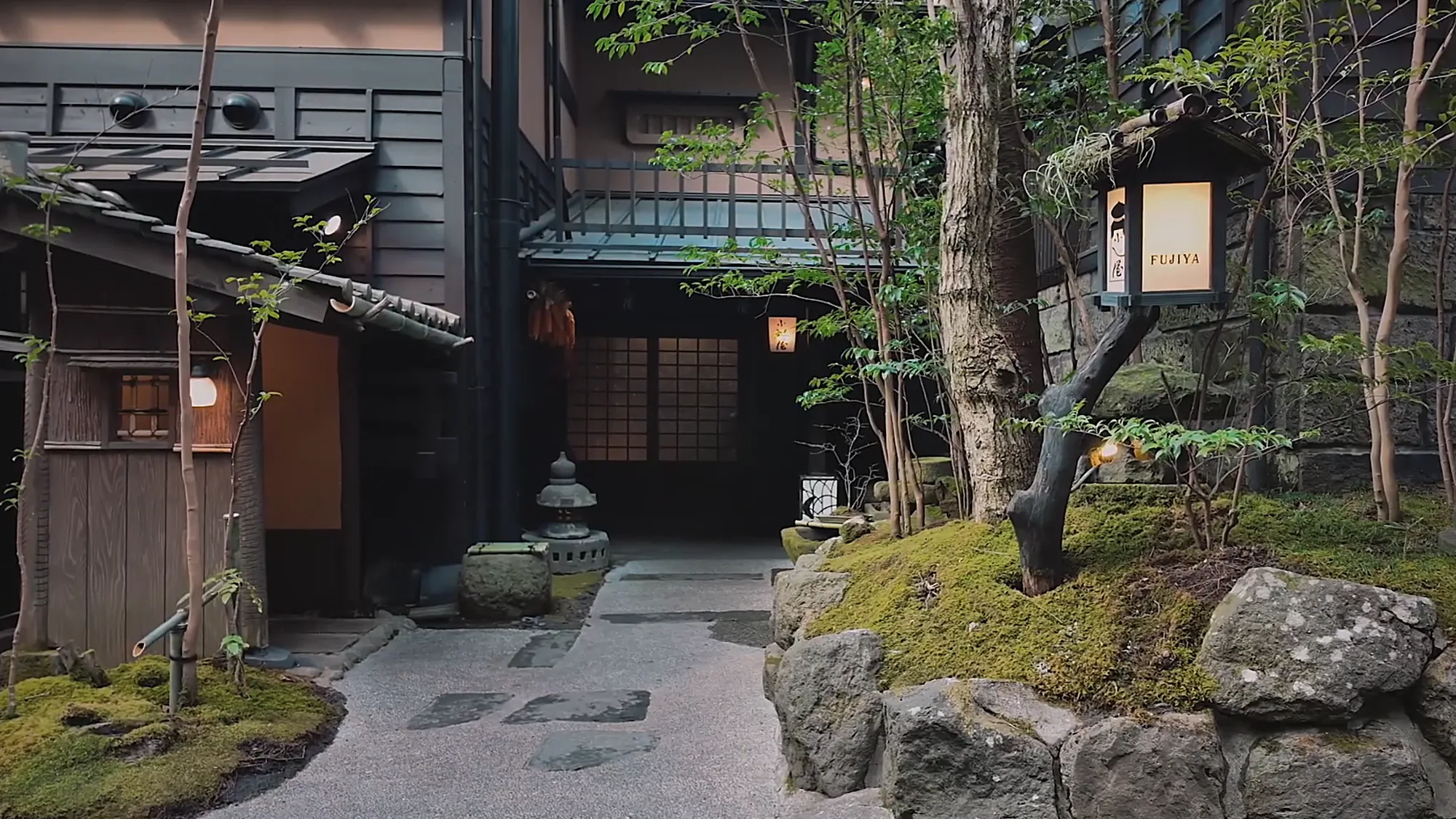
Every inn calls itself quiet. Read what they chose to photograph instead.
"Renovated August 2024" means the photographs are true, which in ryokan marketing is information. "High ground with a view" means stairs and slopes, worth knowing for older knees before it is charming. A named bath in the description, the Senninburo, the cave, the colour-changing water, means the inn considers that bath its identity, so day-trippers will visit it and staying guests should use it early and late, when the door closes to outsiders.
And the absence of any bath from a description is a hint to check the facet filter rather than assume. None of this is cynicism. A village that chose its own look this carefully writes its one-liners carefully too, and taking the inns at their word, precisely, is the most reliable reviewing method Kurokawa offers.
The question under every ranking
One meta-verdict closes the page, because it governs all the others. Readers ask which inn is best as if the stakes were binary, a right answer hiding among twenty-nine wrong ones, and the record simply does not support that anxiety.
The documented field runs from a four-room family house at ¥12,727 (US\$85) to a forest retreat at ¥122,700 (US\$818), and across that entire span the constants outnumber the variables: every member inn serves the two-meal ryokan evening, every one sits inside the same fifteen-minute valley, every one's guests hold the same tegata rights to the same twenty-five baths, and every one operates under the association code that keeps the lanes themselves the shared masterpiece.
The variables, cave against pond, stream against sky, kitchen against silence, are real, and this page has spent thousands of words adjudicating them, but they are variations on excellence, not gradations from success to failure. The honest closing advice is therefore anti-climactic by design: shortlist three houses from the verdicts above, book whichever answers first, and spend the anxiety you have saved on the decisions that actually move the trip, the season, the nights, the stamps.
In Kurokawa the worst-case outcome of the ryokan lottery is a lovely small inn in a beautiful village with dinner included, and travellers who internalise that sentence book faster, pay less and arrive happier than the ones still ranking at midnight.
The price map, floor to ceiling
The single most useful frame is the spread. The association's own per-person, two-meal listings run from ¥12,727 (about US$85) at the smallest inn — the four-room お宿玄河 (Genka), dead centre of the village — to ¥122,700 (about US$818) at the most expensive, 月洸樹 (Gekkoju). That is nearly a tenfold spread inside one small village, and it means "a Kurokawa ryokan" describes both a plain family room and a forest suite.
The floor and the smallest inn being the same place is the budget argument in a single fact; the ceiling is the luxury page's subject. Most travellers land in the broad ¥18,000–35,000 middle, where the real choice is setting and character rather than money.
What the numbers alone would rank
Strip the descriptors and rank the directory purely on its arithmetic, and three quiet signals emerge that no prose ranking catches. Band width first: Ikoi's two-thousand-yen spread is the tightest in the village and reads as consistency, every room the same promise, while Yamabiko's thirty-three-thousand-yen spread is the widest and reads as range, a house containing several houses; neither is better, but they are different purchases, the flat band buying predictability and the wide one buying choice.
Floor position second: five celebrated names, Yamabiko, Yamamizuki, Okunoyu, Sanga, Ichinoi, open under ¥19,000 (US\$127), which the budget page exploits and this ranking should acknowledge as the field's best structural bargain, fame at modest entry. Ceiling position third: the standard field tops at ¥50,000 with a documented gap to Gekkoju's ¥69,900 floor, and that empty band between is informative, the village having collectively declined to price anything in it; a ranking that respects revealed preferences reads the gap as the field's own definition of where ordinary excellence ends and the villa product begins.
The numbers also rank scarcity: four rooms at Genka, nine bath-equipped rooms at Yamamizuki, single-digit in-room-bath inventories generally, so the arithmetic ranking's final column is availability, and its winner on any given night is, unsentimentally, whichever excellent house still has the room.
If you can only choose a tier, not an inn
Availability often decides the inn for you, so the last useful ranking is of tiers, for the traveller booking late who can choose a category and must take what it holds. Ranked for a first one-night visit: the centre-classic tier first, any of its houses delivering the lanes, the dusk turn and the morning circuit, the experience least dependent on which door you drew; the stream tier second, where even the unranked draw sits on the water; the high-ground tier third, view guaranteed, lane immediacy traded; the annexe-and-quiet tier fourth for first-timers precisely because its virtue, removal, is the advanced course; and the highland tier last for the carless, first for drivers pairing the caldera.
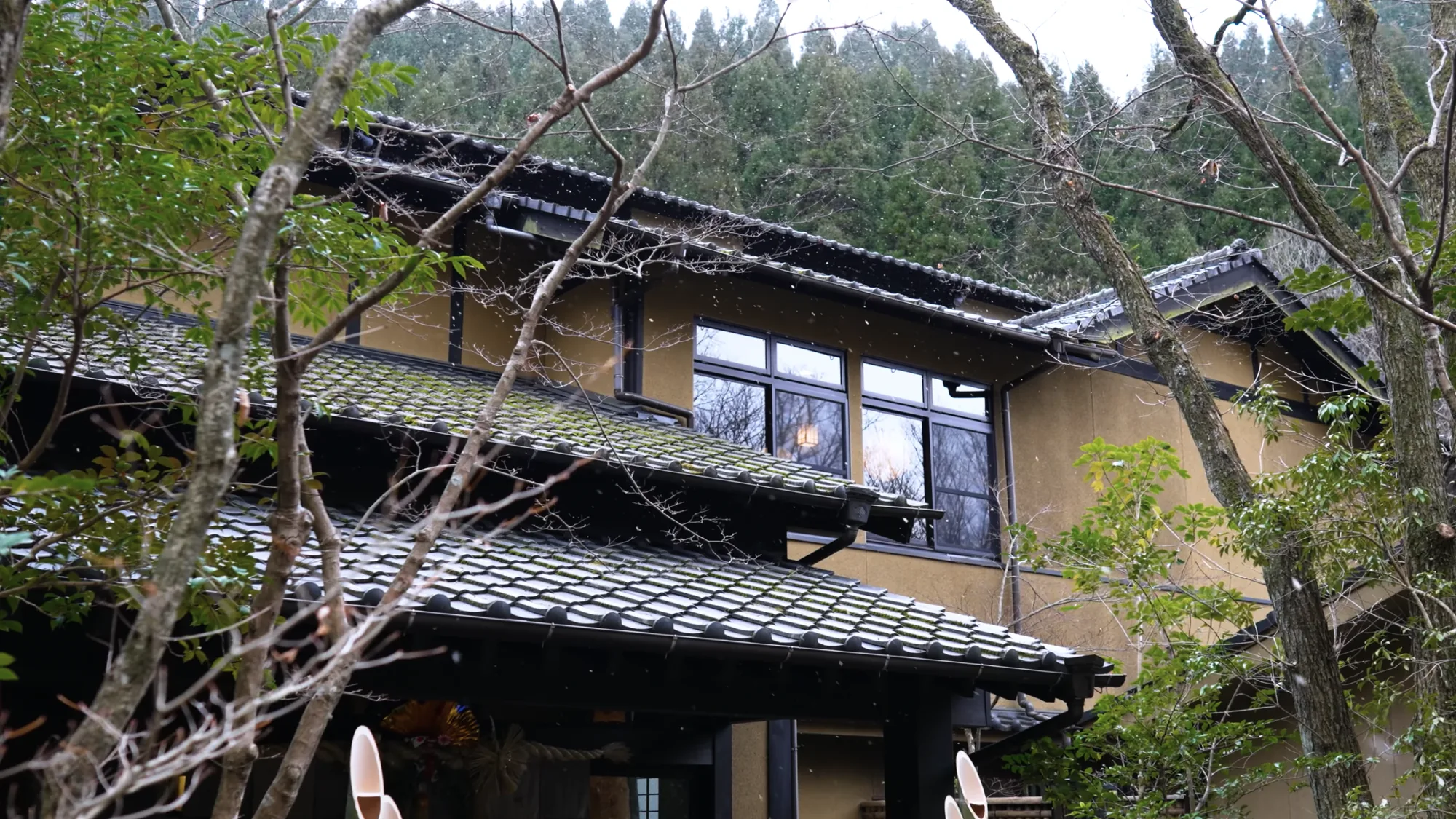
Pick the tier first. Within a tier here, the gap between inns is small.
Ranked for a second visit, the order nearly inverts: quiet and highland rise, the centre falls to third, because the lanes, once learned, travel well in memory while the silence must be re-bought in person. The tier ranking's comfort is its floor: the record shows no tier in this village that fails, only tiers that fit differently, and a traveller who books the right tier blind will land within one lane, one shuttle or one stamp of the trip they wanted.
In a field of thirty small houses that is a remarkable guarantee, and it is the village's design, not this page's generosity, that underwrites it.
The riverside and stream inns
If bathing and quiet are the point, the inns set apart on the water are the answer, and a shuttle or short walk into the village each evening is a feature rather than a cost. Yamamizuki (山みず木, ¥18,000–45,000) is the reference — the association calls it "a single quiet inn built along the mountain stream," and its riverside rotenburo is the one we rank first in the village.
Sanga (旅館山河, ¥19,000–40,000) works the same register in "silence, surrounded by mixed woodland." Hozantei (源流の宿 帆山亭, ¥24,000–46,000) is "the inn at the headwater." Book these earliest; they are the names the tegata crowd photographs.
The village-centre classics
Step from the door straight into the lanes. Shinmeikan (新明館, ¥19,800–25,300) is "the small inn with Kurokawa's cave bath," the revival's origin point. Fumoto + Rokuan (ふもと旅館&別館「麓庵」, ¥20,000–26,000) sits at the centre with the village's deep standing bath, and its bath house and annexe were renovated in August 2024 — worth noting when every other description reads as timeless. Ikoi (いこい旅館, ¥21,500–23,500) is the only Kurokawa inn on the 名湯秘湯百選 list, with thirteen baths.
Ichinoi (壱の井, ¥18,700–24,200) pours sulphur water "with yunohana floating in it," and Fujiya (ふじ屋, ¥22,000–27,500) is known for creative seasonal cooking. This is the tier for a first, one-night visit.
The inns known for a particular bath
Some inns are a bath first and a room second. Yamabiko (やまびこ旅館, ¥17,000–50,000) holds the great open-air Senninburo, the village's largest rotenburo. Misato (旅館美里, ¥20,000–27,000) is, in the association's own words, the only inn in Kurokawa whose sulphur water changes colour — a sharper fact than the "milky-white" line that circulates. Okunoyu (旅館奥の湯, ¥19,000–40,000) sits in "stillness among the hills" on roughly 2,000 tsubo of riverside grounds. And Kurokawa-sō (黒川荘, ¥26,273) offers private dining rooms and three private baths free with a reservation — the strongest single reason on this list for anyone who wants privacy without the villa price.
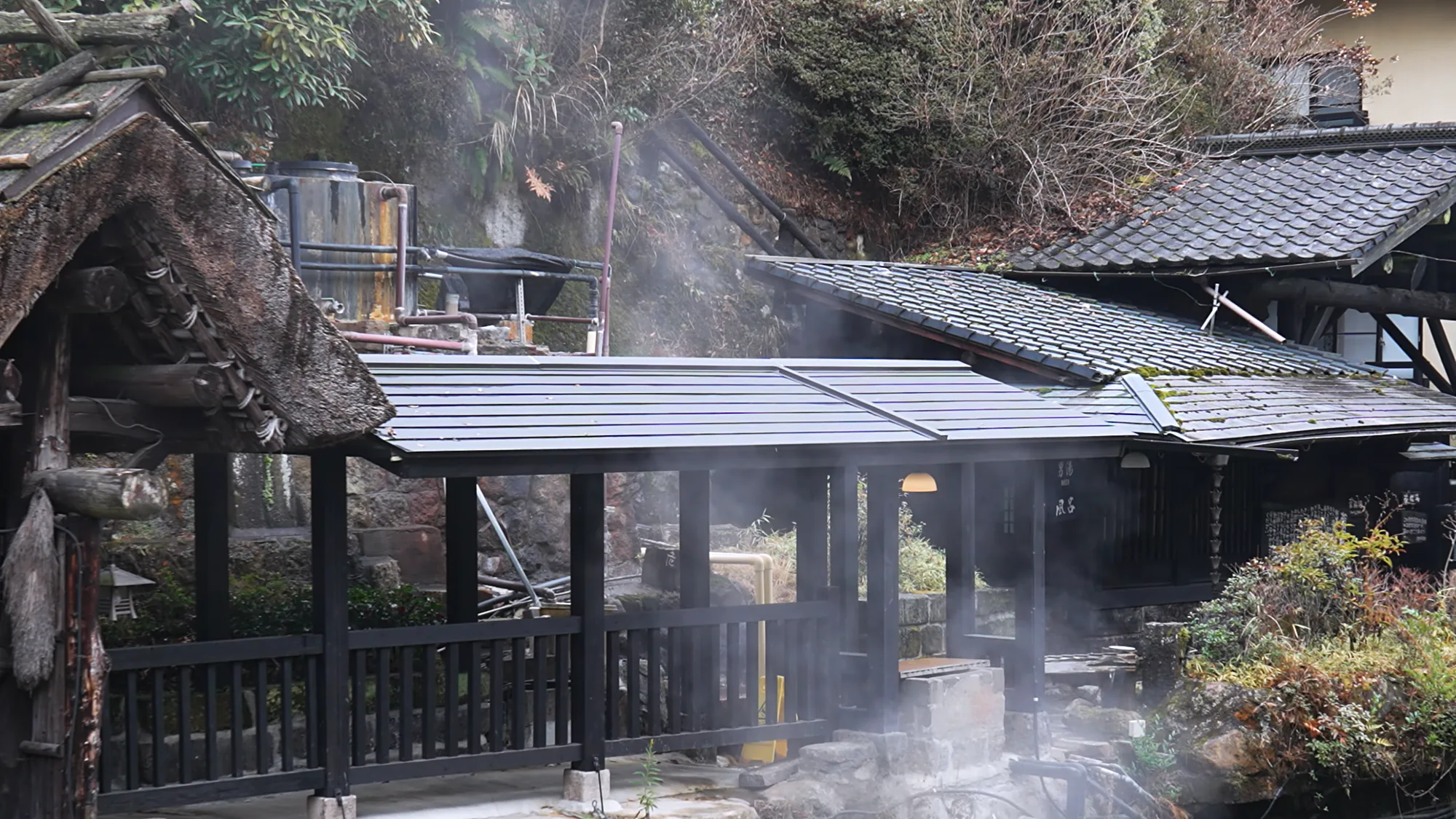
A few inns are chosen entirely for one pool. That is a legitimate way to book.
The hillside and quiet houses
A few minutes up or out, trading lane-immediacy for space, view and silence. Kōnoyu (こうの湯, ¥24,000–35,000) stands on high ground over the satoyama and keeps nine rooms with their own valley-view open-air bath. Noshiyu (お宿のし湯, ¥24,000–32,000) is "old-farmhouse style, wrapped in green." Nonohana (お宿野の花, ¥26,000–35,000) is the one where "the only sound guests hear is the one nature makes." Kiyashiki (樹やしき, ¥16,000–32,000) and Senomoto Kōgen Hotel (瀬の本高原ホテル, ¥16,000–40,000, "looking across the five peaks of Aso") sit higher still, and Miyama Sansō (深山山荘, ¥30,250–35,750) offers "birdsong, rice fields, a natural planetarium at night."
The luxury tier
At the top, Gekkoju (月洸樹, ¥69,900–122,700) — "held by the forest, held by the moon" — is the ceiling of the association's list and the subject of the luxury page. It sits apart from the village and builds a complete world of its own; the choice at this end is the town or the cocoon.
The honest matches
First visit, one night: a village-centre classic (Shinmeikan, Fumoto, Ikoi). A bath pilgrimage: the riverside inns (Yamamizuki, Sanga). Privacy without the villa price: Kurokawa-sō's three free private baths, or a private-open-air-bath room found through the association's filter. A milestone with the room as the destination: the luxury tier. Budget-led: the four-room お宿玄河 and the family-inn floor, where the tegata makes a modest inn a strategy rather than a compromise. Every tier books out for November foliage and Yuakari-season weekends two to four months ahead.
The head-to-heads
Yamamizuki or Sanga. The two stream inns, and the closest call on the page. Yamamizuki's listing is the purist's: one quiet inn on the mountain stream, and the rotenburo we rank first in the village. Sanga answers with woodland silence and, at similar money, a reputation for bath variety within its own walls. The tiebreak: if the single best bath is the trip, Yamamizuki; if you want the quiet without leaving your own inn's water, Sanga. Book whichever answers first; both go early.
Shinmeikan or Fumoto. Neighbours at the centre, both mid-band. Shinmeikan holds the cave and the founding story, and no other booking in the village puts you inside its history the same way. Fumoto counters with the practical case: eight baths including the deep standing tachiyu, and a bath house renovated in August 2024, the newest hot-water infrastructure on the lane. History or hardware; a first-timer with one night should take the history and use the tegata for everything else.
Yamabiko or Okunoyu. The space contest. Yamabiko's Senninburo is the village's largest open-air bath, and its wide band, ¥17,000 to ¥50,000 (US\$113 to \$333), means it can be booked modestly or grandly. Okunoyu spreads roughly 2,000 tsubo (about 6,600 m² / 1.6 acres) of hillside stillness at ¥19,000 to ¥40,000 (US\$127 to \$267). Bath scale versus grounds scale: families lean Yamabiko, couples lean Okunoyu.
Konoyu or Miyama Sanso. The hillside pair for people who want the room to be the destination. Konoyu's high ground over the satoyama comes with the village's best-known set of rooms with private open-air baths. Miyama Sanso, the Yamamizuki family's annexe at ¥30,250 to ¥35,750 (US\$202 to \$238), sells the night sky itself, birdsong, rice fields, a natural planetarium. In-room water or highland dark; there is no wrong answer, only a forecast.
Five more head-to-heads, called
The first four duels settled the famous names; five more decide the field's quieter corners. Genka or Yusai Bekkan, the floor duel: the four-room centre house against the away-from-the-bustle annexe, ¥12,727 versus ¥13,000 (US\$85 versus \$87) at their floors, and the call is location against quiet at near-identical money; first-timers should take Genka's centre, light sleepers the annexe, and both should book early, since the cheapest doors clear first.
Ikoi or Fujiya, the mid-band duel: thirteen baths and a national listing against a kitchen-led house, ¥21,500 to ¥23,500 against ¥22,000 to ¥27,500, and the call runs on appetite, the bather takes Ikoi, the eater Fujiya, with the tegata letting each borrow the other's strength by day. Noshiyu or Nonohana, the atmosphere duel: farmhouse texture against engineered silence, overlapping bands in the mid-twenties, and the call is sensory, wood-smoke-and-beams against nothing-at-all; couples celebrating take Nonohana, culture-hunters Noshiyu.
Kiyashiki or Senomoto, the high-ground duel: over-the-village vantage against over-the-caldera horizon, and the call is scale, the village's own rooftops or the five peaks of Aso, with drivers leaning Senomoto and walkers Kiyashiki, whose height still connects to the lanes.
And Nanjoen against the whole field, the value duel: the one listing that tells you outright to book direct for its best price, which makes it the field's honesty benchmark; when two mid-band inns tie on your shortlist, the one that teaches you how to pay less is expressing a philosophy, and philosophies run whole houses.
Best for, in one line each
Best first night: Shinmeikan, because the village's story should be your address once. Best bath attached to a bed: Yamamizuki. Best privacy per yen: Kurokawa-so, whose three private baths come free with a reservation. Best for families: Yamabiko, where the largest rotenburo absorbs children's energy and other bathers' patience alike. Best table, on the association's own description: Fujiya, the creative seasonal kitchen.
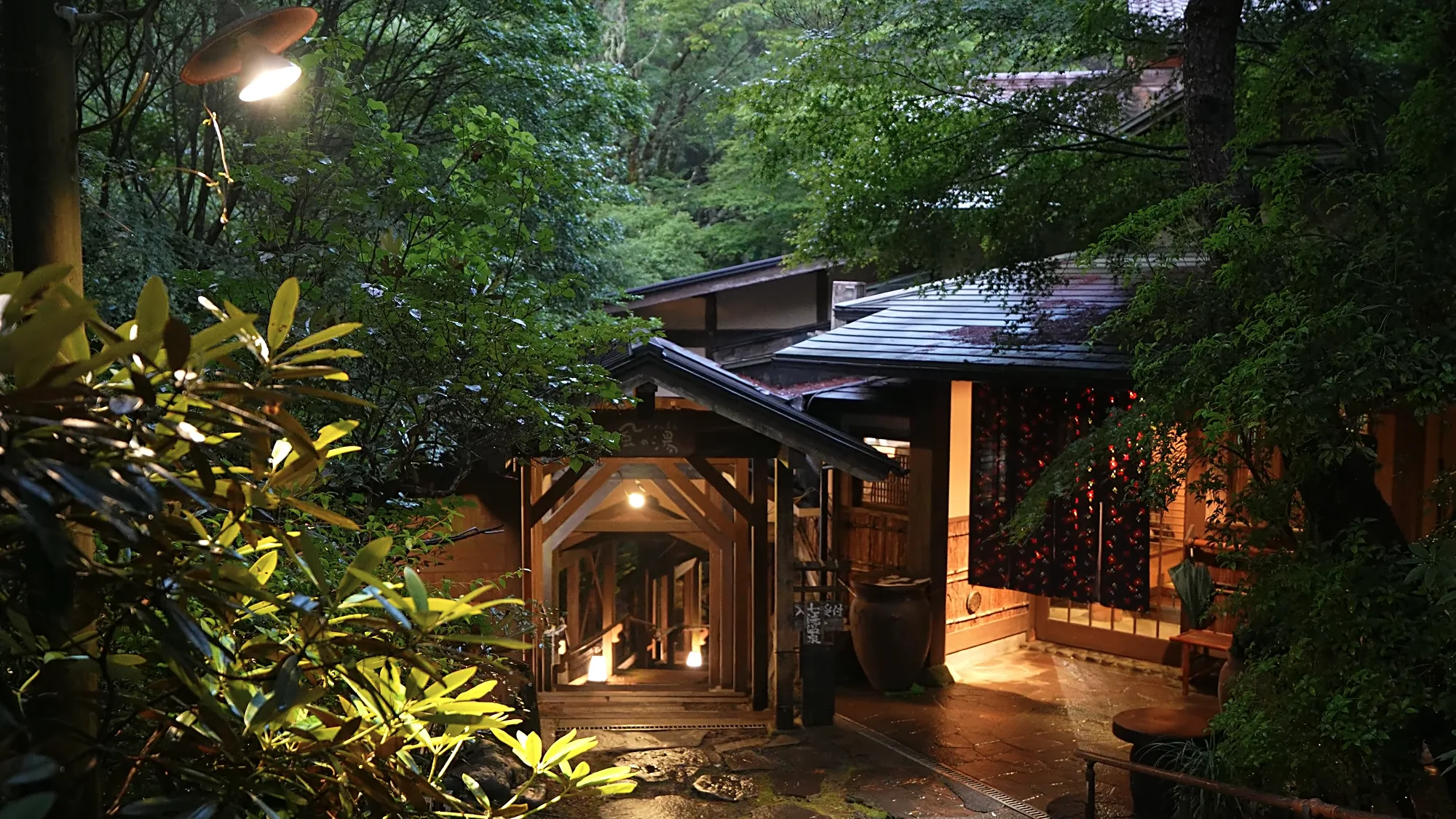
Not a ranking. A set of answers to different questions.
Best view outward: Senomoto Kogen Hotel, with the five peaks of Aso across the grassland. Best silence: Nonohana, which promises nature's sound and nothing else. Best cheap bed in the best location: Genka, four rooms at the village's dead centre from ¥12,727 (US\$85). Best splurge that is still the village: Hozantei at the headwater. Best splurge that leaves the village behind: Gekkoju, from ¥69,900 (US\$466).
Ten answers, one honest caveat: these are readings of the association's own record, not scores, and the record is the thing to check the year you book.
Best by party size
Two, four and eight are different trips, and the field ranks differently for each. For two, the whole directory is open and the verdicts above apply unedited; couples add one filter, the kashikiri calendar or an in-room bath, and the quiet tier's small houses, Nonohana's silence, Miyama's sky, reward the party size that fits their scale.
For four, a family or two couples, the ranking tilts practical: Yamabiko's space absorbs the party's spread, the two-room booking at a mid-band house beats one large room at a famous one, and the free-bath clause at Kurokawa-so quietly becomes the field's best four-person amenity, one reservation covering everyone's private hour.
For eight, the field narrows honestly: the groups facet exists because small houses cannot seat eight at one sitting, the four-room Genka class is arithmetically out, and the workable set is the larger houses, Yamabiko's scale again, the highland hotel's capacity, plus the split-across-two-inns structure the stay page describes, which turns a crowd into two civilised parties who meet for the lantern walk.
The cross-size constant is the booking sentence: say the party size first, because in a village of small houses it is the single fact that eliminates the most doors, and the doors it leaves open will be genuinely glad to see all of you.
The best ryokan, month by month
Season re-weights the axes, so the top verdict itself rotates through the year, and calling that rotation is more useful than pretending one house wins twelve months. In deep winter the crown tilts to Shinmeikan, whose cave is the village's one weatherproof theatre and whose centre position shortens the frozen walks; the dissent goes to Yamamizuki for the connected indoor-to-outdoor passage that beats the cold by architecture.
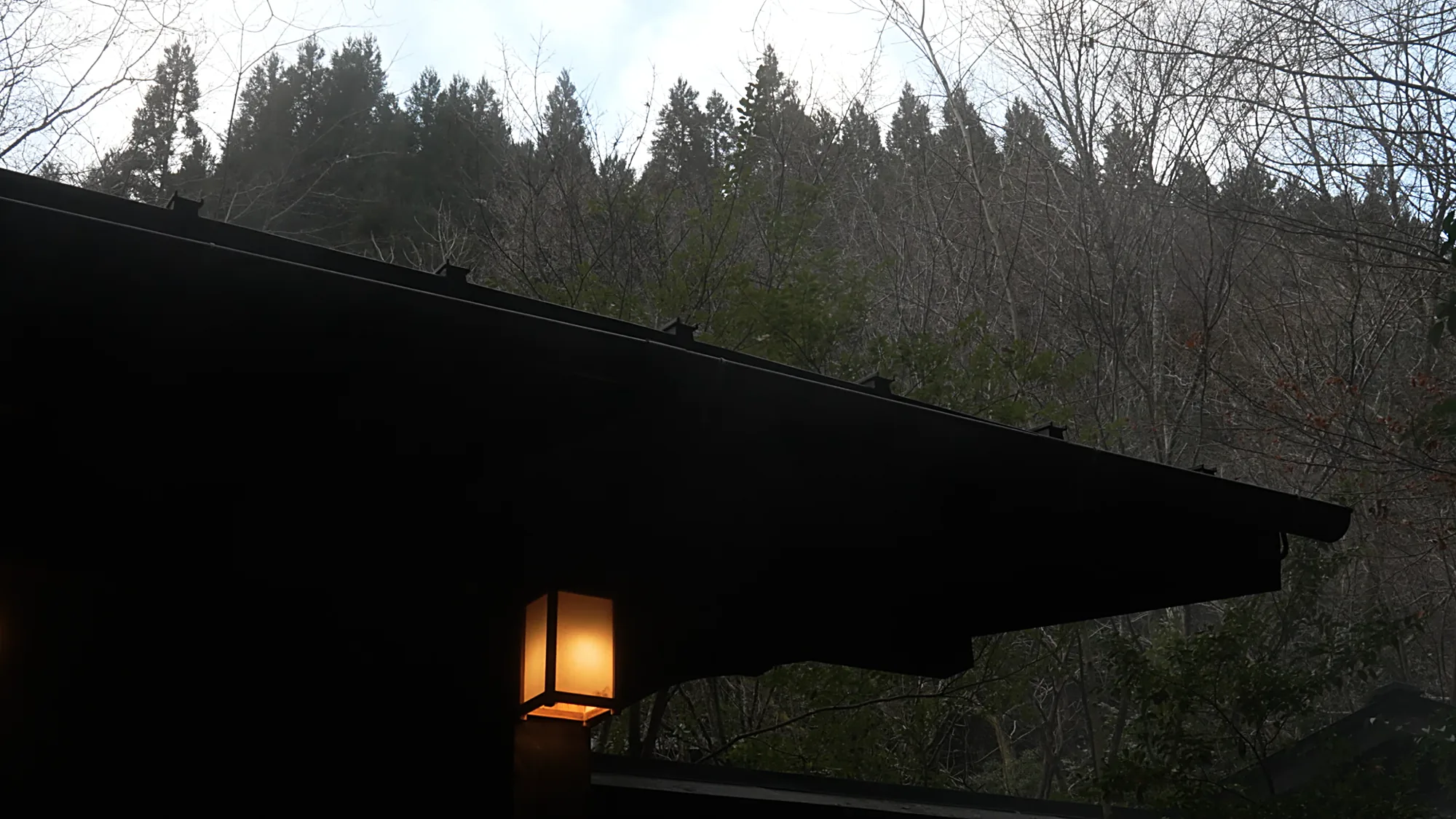
The best inn in February is not the best inn in October.
In spring the stream inns take it, Yamamizuki first and Sanga close, meltwater at full volume being the season's product, with the famous houses' sub-¥19,000 entry rooms making the upgrade affordable exactly when bookings ease. In summer the ranking spreads outward: Senomoto Kogen Hotel makes its annual case, grassland and horizon at their best in the valley's warmest months, while inside the village the centre houses win the 8:30 circuit and Miyama Sanso's dark sky pairs with the season's clear spells.
In autumn the high ground and the riverside split the prize, Kiyashiki's view rooms for the fortnight the valley burns, the gorge-side pools for bathing under it, and the booking calendar, not the ranking, decides who actually sleeps where. Across all four seasons one verdict never rotates: the modest centre tier, Genka foremost, is never the wrong answer, because location is the one axis weather cannot touch.
Travellers who book by season should read this section as the tie-breaker layer above the head-to-heads; the duels pick between two houses, the calendar picks between two versions of the village.
How a car re-ranks the field
The rankings above quietly assume the bus, and four wheels rewrite them in predictable ways. With a car, the outliers rise a full tier: Senomoto's grassland stops being a logistics question and becomes a doorstep, Miyama Sanso's dark sky sits an easy drive from dinner, Hozantei's headwater quiet costs nothing in convenience, and the whole five-hamlet extension, Tanohara's cure-ground, Manganji's river bath, joins the stay's orbit.
Simultaneously the centre premium softens, because a driver can reach the lanes in minutes from anywhere in the valley, so the thing the centre inns sell hardest, position, is partially replicated by an ignition key, though never at lantern hour, when the parking rules and the code push every car to rest and the walkable guest wins the evening back.
The car also re-ranks by season: it is worth most in autumn, when the colour drives are half the trip, and least in deep winter, when tyres, chains and daylight rules make the bus the wiser chassis. The net re-ranking for drivers: promote the quiet tier and the highland houses one notch, hold the centre classics for one-night trips where the evening is everything, and remember the one thing the car cannot buy at any inn, which is the right to park it on the lanes; the visitor code's parking rule is the great equaliser, and after dusk every guest in the village, however they arrived, is a pedestrian in a yukata, which is the state the whole place was designed around.
When your first choice is full
Kurokawa's inns are small, so treat every favourite as the head of a family rather than a single door. If Yamamizuki is full, its own family runs deep: Miyama Sanso is the annexe with the darker sky, and Shinmeikan the sibling with the cave, all under the same group. Failing those, Sanga and Hozantei hold the riverside register.
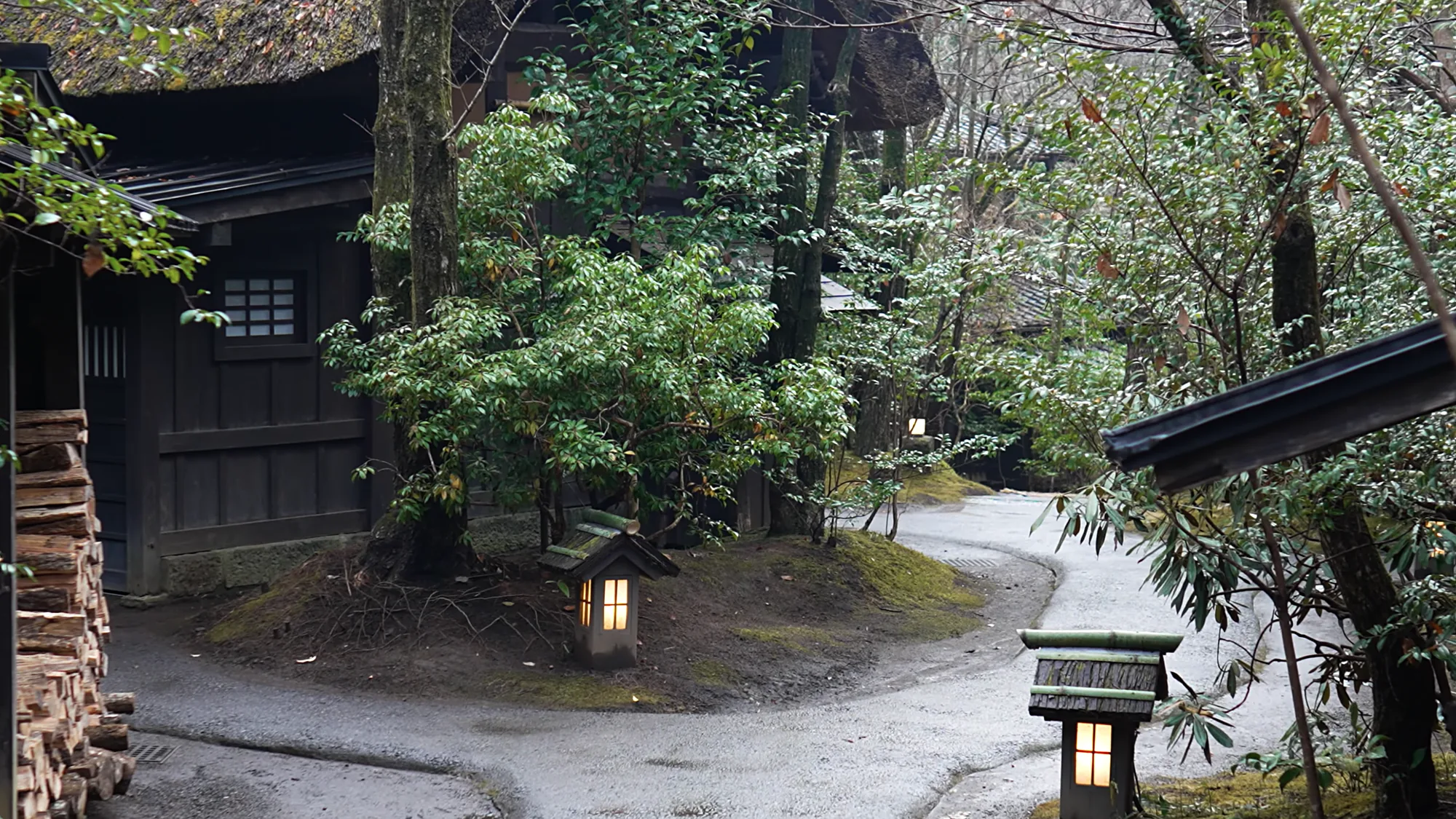
The second choice in this valley is closer to the first than anywhere else.
If Shinmeikan is full, Fumoto keeps the same centre-of-the-lanes footing, and Genka, thirty seconds away, holds the location at the village's lowest price. If a room with a private open-air bath is the requirement and Konoyu is taken, the association's directory filter for that exact facet is the honest tool, because more inns carry it than any English list names, and we decline to guess which.
If Gekkoju is beyond reach or booked, Miyama Sanso is the closest sourced experience below it, at roughly a third of the price. And if everything you wanted is gone, remember the village's own arithmetic: the tegata makes every inn a base for the same three famous baths, so the modest room that is still available loses far less than it seems. In Kurokawa, the second choice sleeps in the same valley, eats from the same larder, and bathes in the same water.
The dissenter's shortlist
Consensus lists deserve a loyal opposition, so here is ours, three picks against our own verdicts, argued from the same record. Against Shinmeikan for the first night, take Genka: the cave inn's fame fills its calendar, while thirty seconds away the village's smallest house offers the same centre, the same lanes at the door, at the field's lowest price, and the tegata puts the cave itself one stamp away; the dissent holds that location is what the centre inns really sell, and Genka sells it cheapest.
Against Yamamizuki for the water, take Misato: the consensus stunner's riverside setting is unmatched, says the record, but the record's single most distinctive water sentence belongs to the colour-changing sulphur bath at the mid-band house, and a bather who has seen many beautiful rivers but never watched a bath change colour should weight novelty over setting once.
And against the villa tier for the occasion, take Senomoto's best rooms: the five-peaks horizon at a fraction of Gekkoju's floor, the dissent running that a milestone is a view plus a promise, and the grassland horizon is the biggest view the association sells at any price.
We hold our original verdicts; the dissents exist because the record genuinely supports both readings, and a ranking honest enough to argue against itself is worth more than one that pretends the calls were easy.
Micro-awards the main list had no room for
Best inn for rain: Shinmeikan, whose cave ignores weather entirely and whose centre position shortens every wet walk. Best for stargazers: Miyama Sanso, the only listing that sells the night sky in its own words. Best for a phone-free trip: Nonohana, where the advertised product, nature's sound only, is the digital detox pre-installed. Best for early risers: any centre house, whose position turns the empty 8:30 circuit into a doorstep amenity, with Genka the cheapest ticket to it.
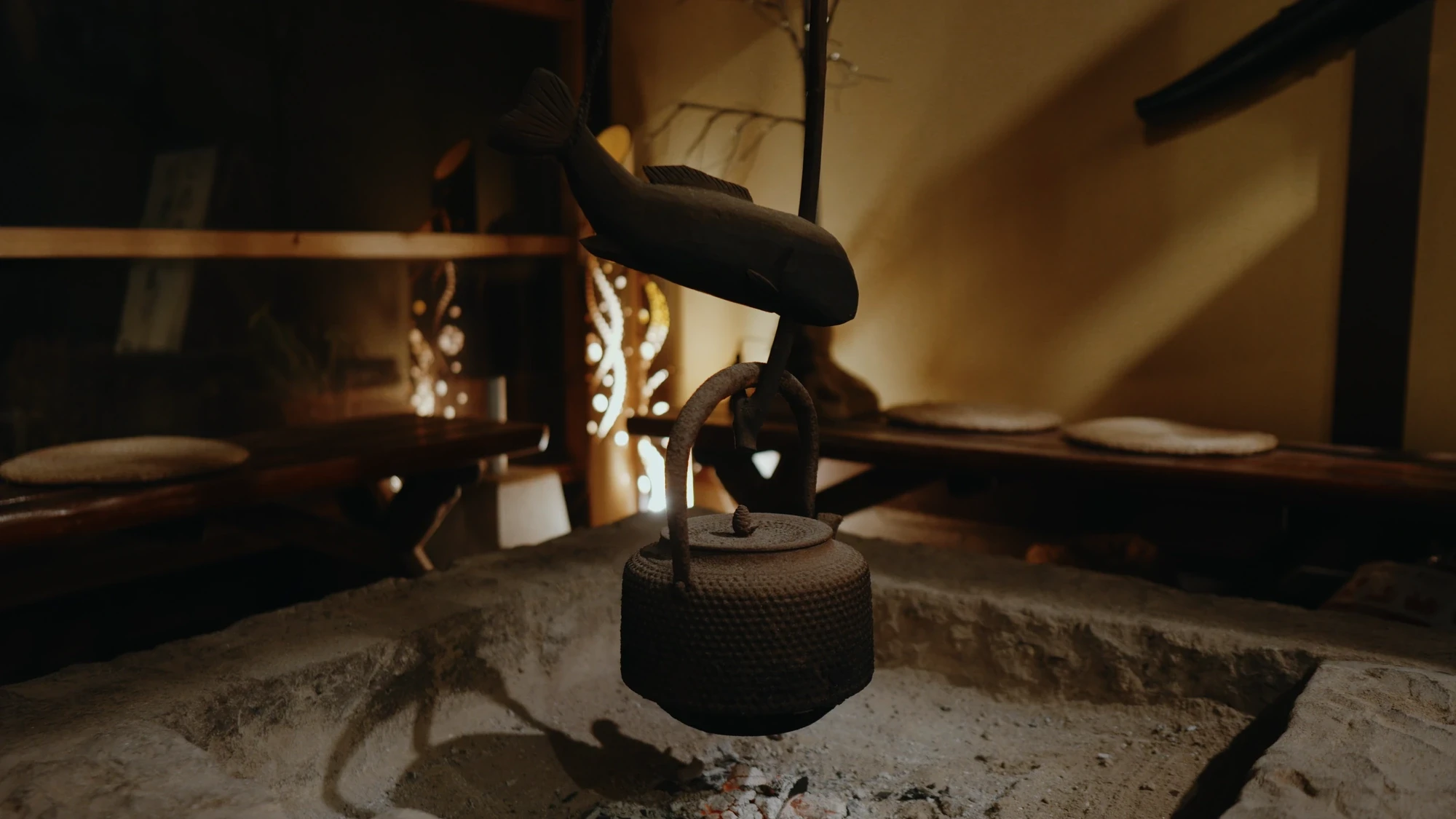
Best hearth to sit at after the bath. Somebody had to say it.
Best for bath-counting maximalists: Ikoi, thirteen under one roof. Best single sentence in the directory: Misato's, the only water in Kurokawa that changes colour, which is also the best free preview of what this village's plain-spoken record can deliver. Each award is one documented fact wearing a verdict, which is, in miniature, this entire page's method.
Build your own ranking: the four axes
Our verdicts weight what we value; yours should weight what you do, and the record supports a do-it-yourself method. Rank every candidate on four axes, each anchored to documented facts. Setting: centre, stream, hillside or grassland, the directory's own placements, weighted by whether you want the lanes at the door or the world away.
Water: the house's documented bath assets, the cave, the Senninburo, the tachiyu, the colour-changer, the thirteen-bath depth, weighted by how much of your bathing will happen at home versus on stamps. Table: the descriptors' food signals, the creative-kitchen house, the private-dining listing, in-room dining where the facet shows, weighted by whether dinner is your evening's event or its fuel.
Room: band position, view statements where charts carry them, in-room water where the facets show it, weighted by hours you will actually spend awake in it. Score your shortlist honestly across the four, and the exercise's real product appears: most disappointed guests weighted setting when they cared about table, or paid for water they used once, and the four-axis pass catches the mismatch before money does. Our full verdicts remain above for calibration; the method is for the trip we cannot see, which is yours.
Verdicts that will age, and verdicts that will not
Rankings decay at different rates, and honesty includes a forecast. Most durable: the structural verdicts, centre against quiet, the tegata's leveling of bath access, the per-person meal-inclusive economics, all properties of the village's design rather than any house's current form, safe to act on for years. Durable with review: the water verdicts, since sources and baths change slowly, and the price-tier map, whose bands drift but whose shape, floor at the centre, gap below the villa, has held.
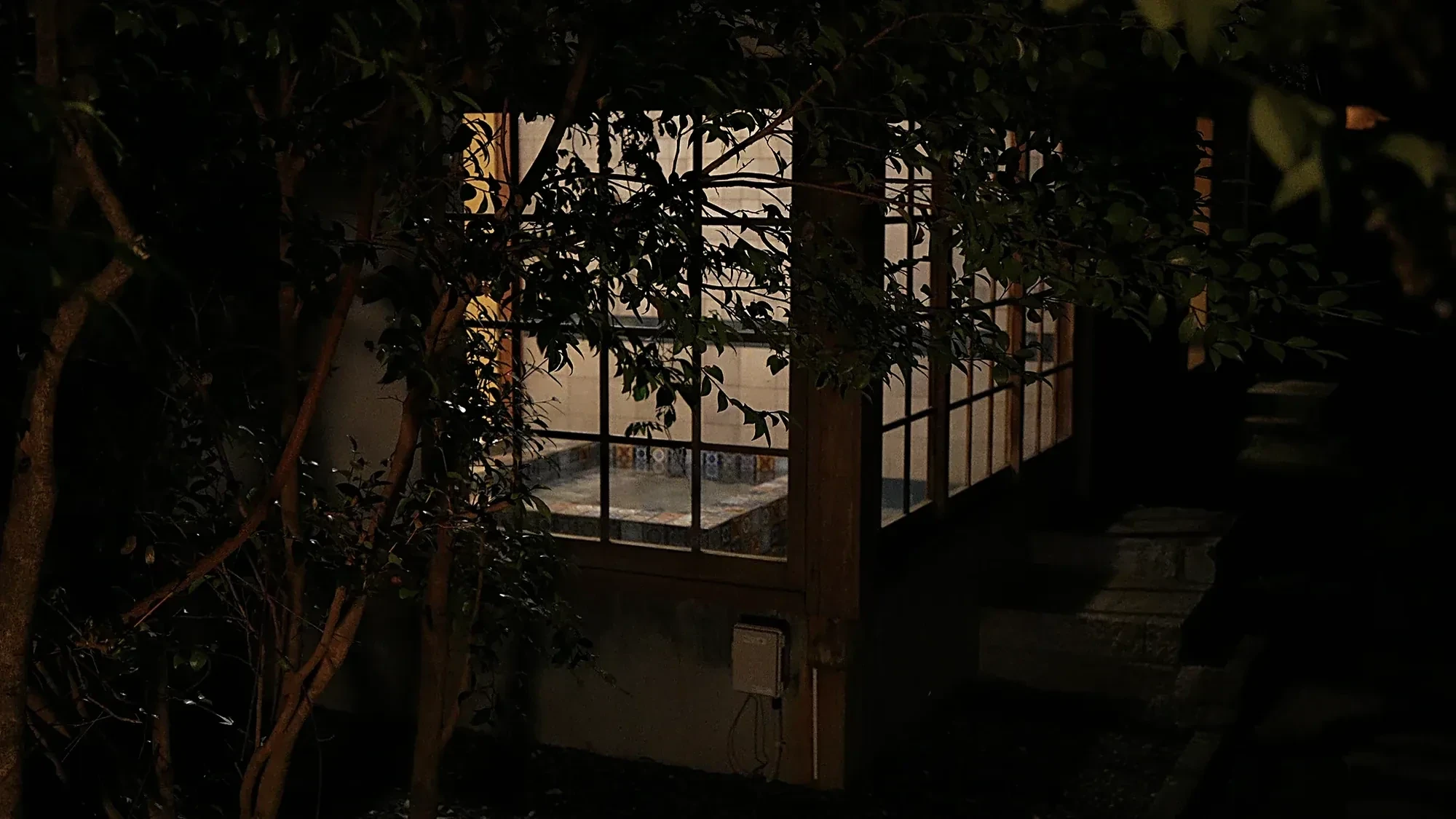
Prices move, management changes, the water does not.
Aging visibly: anything touching renovation and novelty, where the record itself shows the clock running, Fumoto's bath house renewed in August 2024, two reservation-only restaurants arriving in late 2025, the anniversary programme expiring March 2027; verdicts leaning on freshness should be re-read against the directory each year. And expiring by design: availability-based advice, which is true until this evening's bookings.
This page carries its read dates in the sources below precisely so you can judge the decay yourself; the directory re-reads in minutes, and the method above rebuilds any verdict from a fresh read. A ranking is a photograph of a moving village, ours was taken in September 2026, and the subject, on the evidence of its last forty years, moves carefully and in one direction, which is the kindest thing a ranking can say about its own shelf life.
Tips
Shortlist three inns of the same type rather than one dream inn; Kurokawa availability decides fast.
Confirm dinner inclusion and seating time when booking; kitchens here run one service.
Staying outside the center? Ask about evening shuttle runs before relying on dark lane walks.
Use the tegata deliberately: book the modest inn, bathe at the famous three.
November and Yuakari weekends sell out first; book two to four months ahead or go midweek.
Frequently asked questions
What is the best ryokan in Kurokawa Onsen?
How much does a Kurokawa ryokan cost?
Should I stay in the village center or outside it?
Do I need to stay at a famous ryokan to use its baths?

Verified by The Japan Onsen Society
Show all sources
Verified July 7 to 16 and September 6–7, 2026 by The Japan Onsen Society. Every price and one-line inn description is from the association's own member listing (K5). The eleven booking facets are citable as a list; which inn carries which facet sits behind the association's filter and is NOT assigned to any named inn here. Kōnoyu's nine in-room-bath rooms are from kashikiri-onsen.com.
30 member inns · per-person two-meal prices ¥12,727 (お宿玄河, 4 rooms) to ¥122,700 (月洸樹) · one-line descriptions · Misato colour-changing water · Kurokawa-sō three free private baths · Fumoto renovated Aug 2024 · Ikoi 13 baths + 名湯秘湯百選 · the 11 facets → 黒川温泉観光旅館協同組合 oyado list kurokawaonsen.or.jp/oyado/ → verified Sep 7, 2026
VERIFY:
Per-inn FACET assignment (barrier-free, pets, private open-air bath, etc.) — behind the filter UI, NOT captured; do not state a named inn carries a facet
The alphabetical tail of the member list (Yūsai and after) — ~24 of 30 captured
Takefue and other non-K5 names — not in the association member table read; treat as unconfirmed
Rate bands ¥15,000–50,000 and luxury ¥50,000–100,000+: spot-check 5–6 live listings
Shuttle availability at out-of-center inns
"~30 ryokan" against kurokawaonsen.or.jp list
Affiliate link slots per inn at publish
USD conversions assume ~¥150/$1. Update ¥→USD at publish.
黒川温泉観光旅館協同組合 お宿一覧 (Kurokawa Onsen Ryokan Co-operative Association, member inn directory) - every price band and one-line self-description used in the comparisons above, the Kurokawa-so free-private-baths listing, the facet filter, re-verified September 7, 2026
日本温泉協会 温泉地詳細[黒川] (Japan Spa Association, spring-area record) - Yamabiko's largest rotenburo, Okunoyu's \~2,000 tsubo, Fumoto's eight baths and standing bath, Shinmeikan's hand-dug cave, verified July 7 and September 6, 2026
山の宿 新明館 歴史 (Shinmeikan, history page) - the founding-story basis for the first-night verdict and the Fuji Resort Group family (Shinmeikan, Yamamizuki, Miyama Sanso), verified September 6, 2026
山みず木 お部屋 (Yamamizuki, room chart) - the nine bath-equipped rooms in the scarcity column, verified August 18, 2026
黒川温泉観光旅館協同組合 お店一覧 (shop directory) - the late-2025 restaurant openings cited in the aging forecast, verified September 6, 2026
Related guides
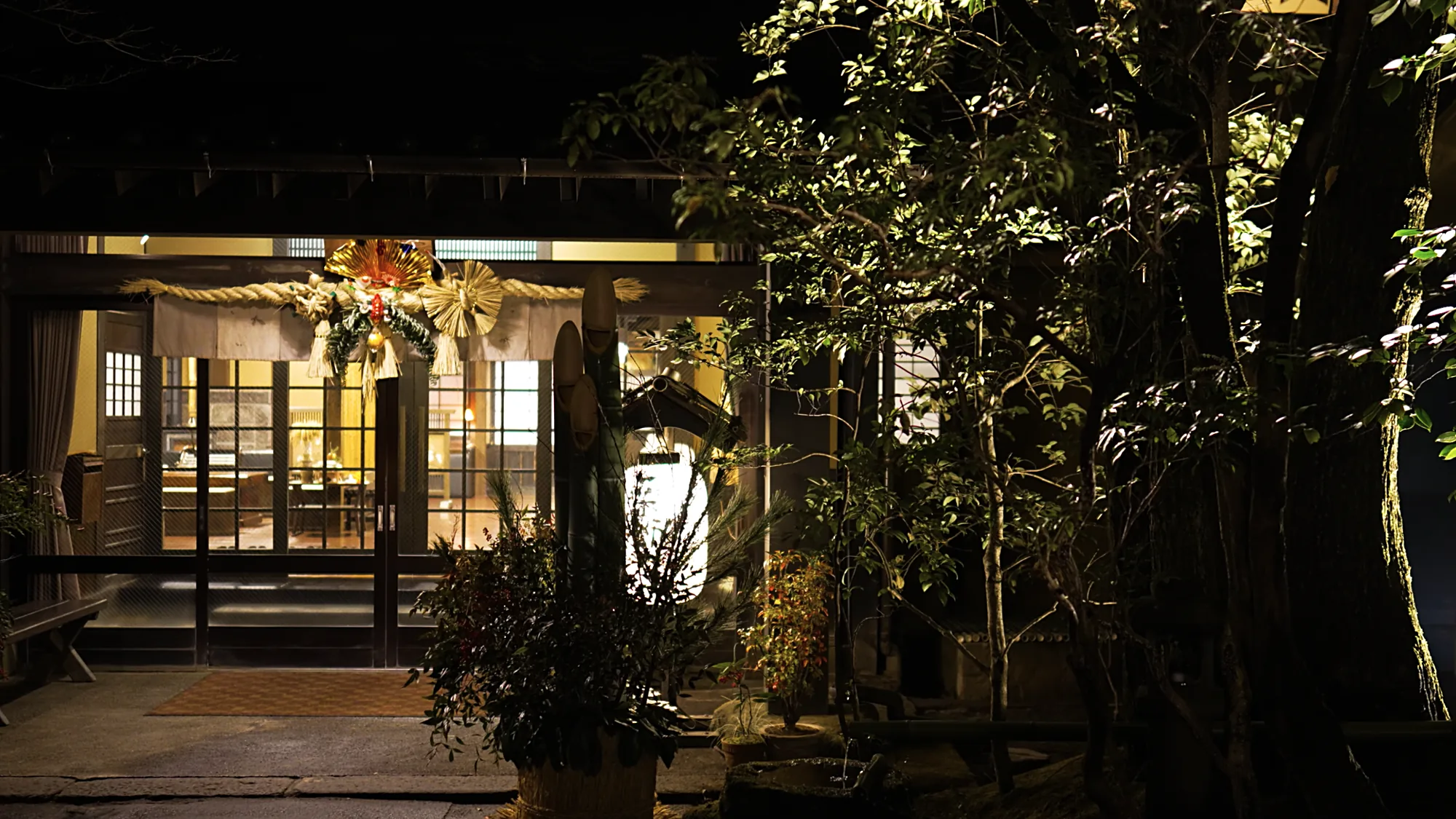
Where to Stay
Where to Stay: Ryokan Guide
Every Kurokawa bed is a ryokan with dinner, from ¥12,727 to ¥122,700. Choose by setting and budget; the tegata gives everyone the baths.
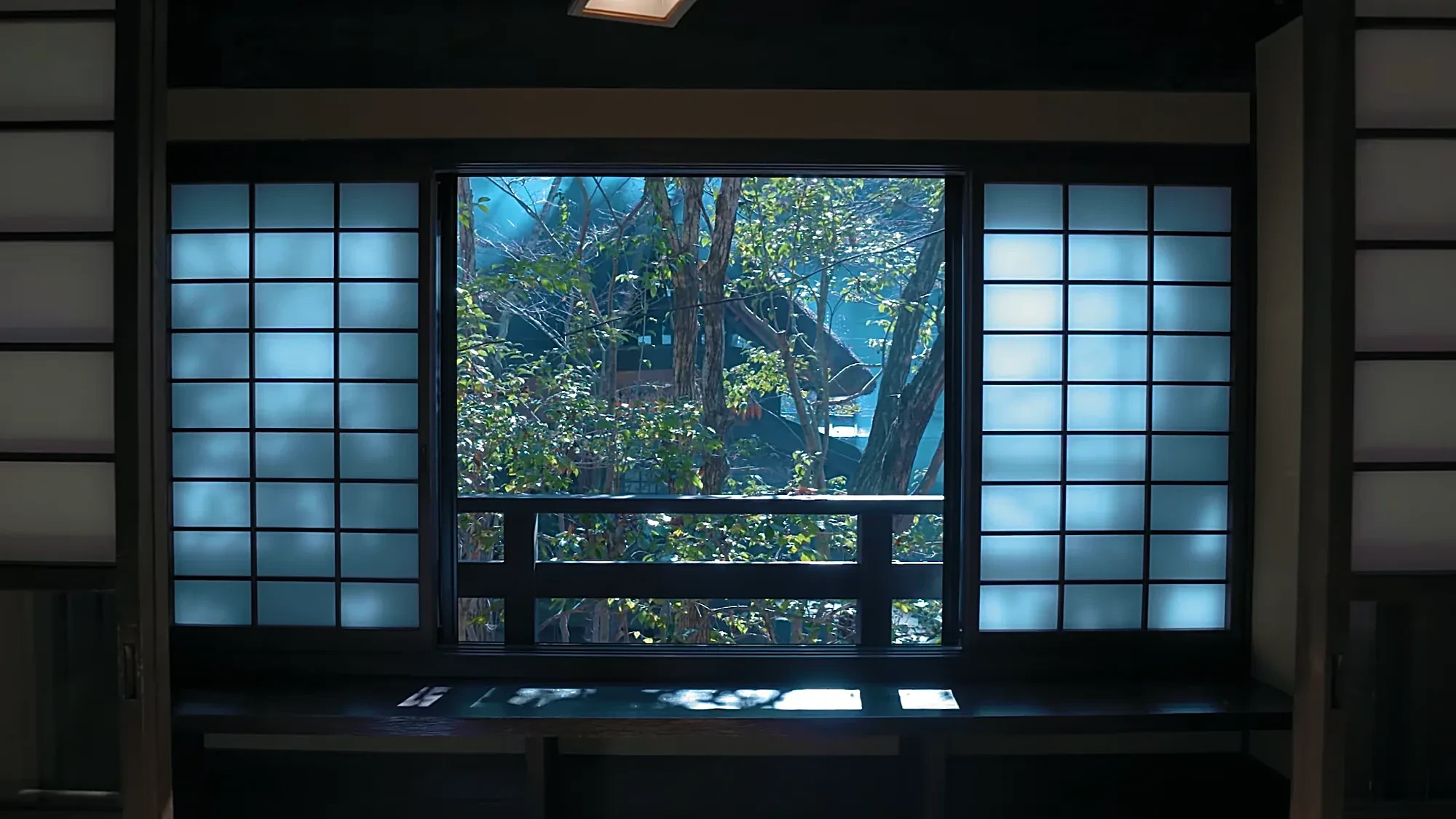
Where to Stay
Luxury ryokan
No marble lobbies here — the design code forbids them; luxury is seclusion, private water and a small kitchen.

Where to Stay
Kurokawa Onsen: The Complete Guide
A wooden pass buys three baths from twenty-five. The innkeepers agreed, decades ago, to look like this.