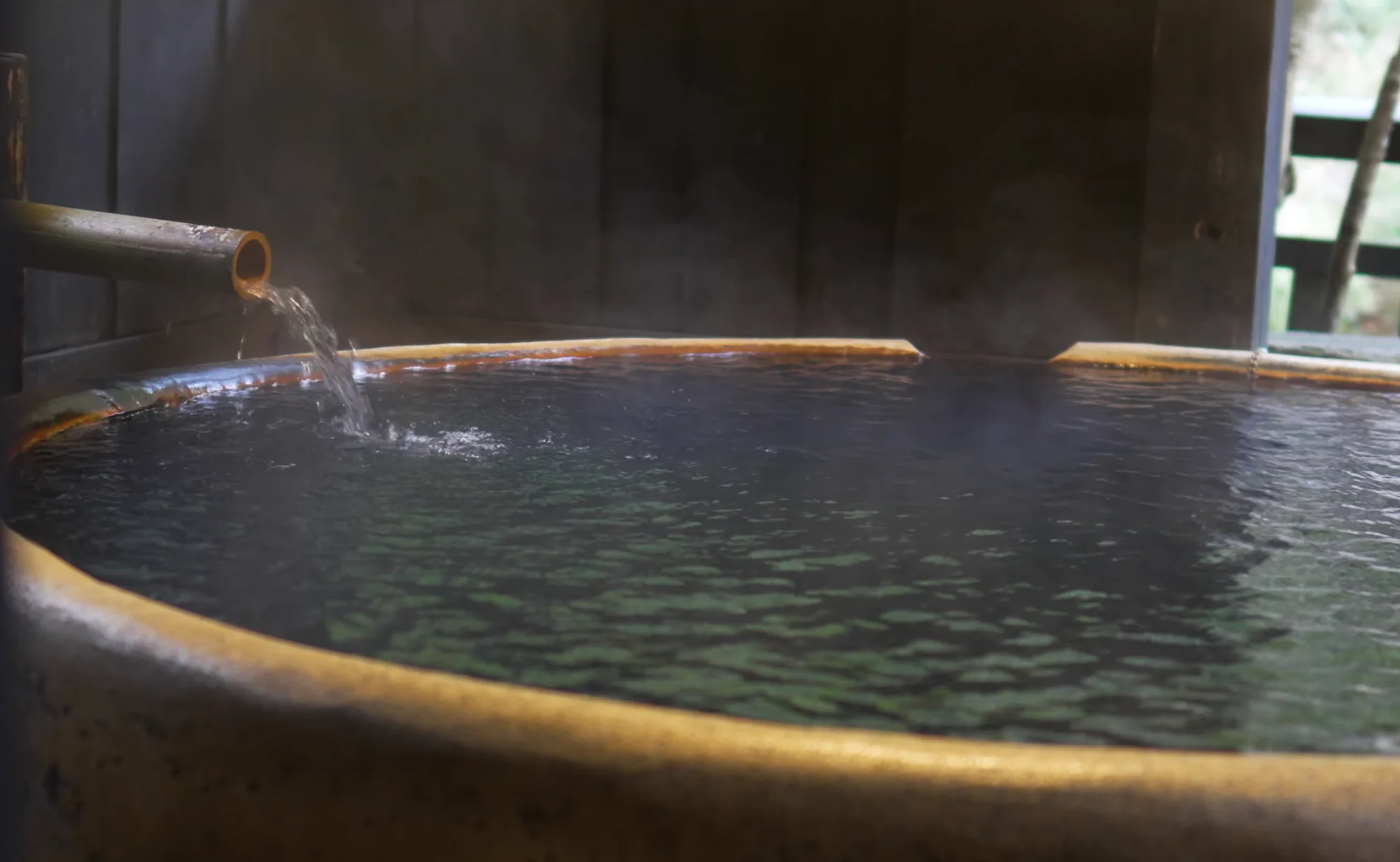
Kashikiri: privacy by the hour
The majority of the village's ~30 inns keep at least one family bath rentable for exclusive use, typically 40–60 minutes at ¥1,000–2,500 (~$7–17), free at some houses for their own guests. Mechanics: reserve at check-in (or by sign-up sheet at smaller inns), lock the door, and the bath is your party's alone; pre-wash rules and no-towels-in-water etiquette apply exactly as in shared baths, with the JOS hub covering the universals.
Day visitors can rent kashikiri at some inns and bath facilities, though house guests get priority and weekend inventory. Who it is for: families with small children, couples, tattooed travelers avoiding policy questions, and anyone easing into onsen culture in private, which is precisely how the village intends it to be used. The ryokan-focused money page lists where; this page's business is how.
A few mechanics are worth spelling out, because they are what make the private bath the easy button it is. Blocks are short and turned over briskly — commonly 40 to 60 minutes — so the useful move is to book the moment you check in rather than after dinner, when the evening slots have gone.
At smaller inns the booking is a clipboard by the bath rather than a front desk; write your name against a slot and the bath is yours at that hour. Some inns rent to day visitors as well as guests, but guests hold priority and take the weekend inventory first, so a day-tripper set on a private soak should ask early or plan a private in-room bath instead.
Kōnoyu, for one, keeps nine guest rooms with their own valley-view open-air bath — the village's cleanest route to a rotenburo you never share — though that belongs to the where question our private-bath ryokan guide answers.
For tattooed travellers the kashikiri bath is not a nicety, it is the way in. The ryokan association is explicit that tattoo policy is set inn by inn and handled case by case through each inn's own enquiry, and it publishes no master list of which inns admit ink in their public baths — so any confident six-inn roster you find elsewhere is unpublishable as fact.
A booked private bath sidesteps the whole question: behind a locked door, the public-bath policy simply does not apply. Our tattoo-friendly guide covers the nuances; the short version is that a kashikiri reservation makes the village work for you without a single awkward conversation.
The day visitor's private hour
Everything above gets easier if you sleep in the village, but the private bath is not actually gated on a room key, and the one fully sourced example proves the day route works. Yamamizuki opens its kashikiri to bath-hopping visitors from 10:00 to 21:00 with a last reception at 20:00, at ¥2,000 (about US\$13) for fifty minutes, handled on the day at its Inoya cafe reception rather than by advance booking, which stays a privilege of staying guests.
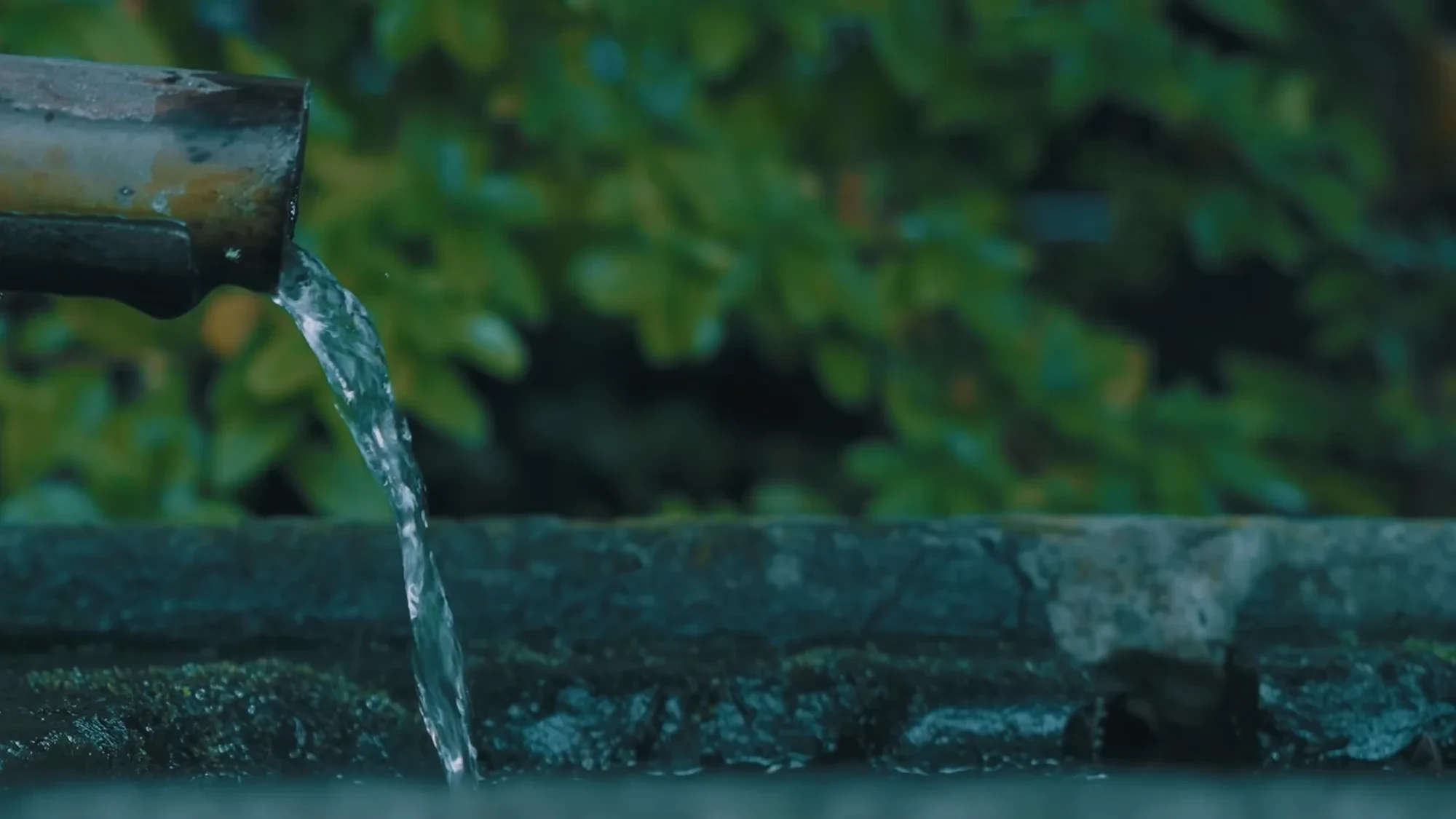
You do not have to sleep here to get an hour of it to yourself.
Read that structure as the village's general pattern for day-use privacy: same bath, same price, same hour, but a walk-up queue instead of a reservation, which means the practical day-visitor strategy is to present yourself early. Arrive at the reception when your bus gets in, put your name against the first afternoon slot that suits, and build the tegata circuit around it; reversing the order, baths first and privacy last, is how day visitors discover that the evening blocks belonged to the house guests all along.
And when a walk-up bath is full, remember the category has a second door: the village's two konyoku-free alternatives for a couple or family who missed the slot are a quiet gender-separated bath taken side by side by clock instead of by pool, or the sticker spent together over a shared table, which is its own kind of private room.
The kashikiri as social technology
Step back from mechanics and the private bath reveals itself as the village's cleverest social invention, the hinge that lets every other system work. Consider what the fifty-minute block absorbs: the shy first-timer who will graduate to the shared pools next trip; the tattooed guest the association's own policy routes here; the three-generation family whose members could never share a gendered pool; the couple the konyoku daunts; the child mid-tantrum; the bather whose faith or scarring or simple preference makes public nudity a cost rather than a neutral.
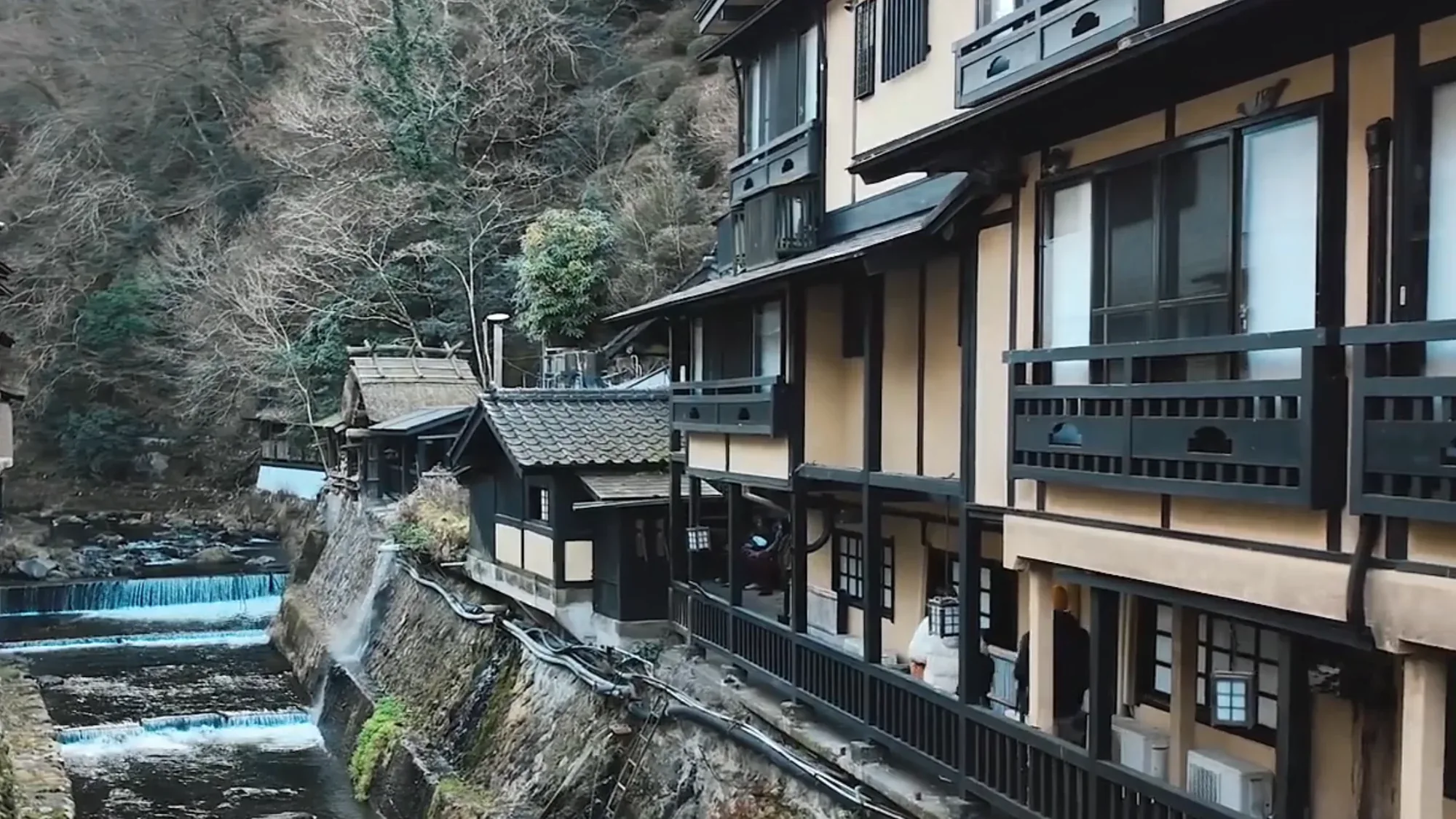
The booked hour exists because the village decided privacy should be rentable.
Without the kashikiri, every one of those cases becomes a policy argument at a front desk or a person quietly excluded from the village's core product; with it, each becomes a booking. That absorptive function explains the format's ubiquity here, most inns keeping at least one lockable bath, and its official standing, the association reaching for it by name in its most delicate FAQ answer.
It also explains this page's insistence on treating the three systems as one machine: the separated circuit carries the crowds, the konyoku carries the heritage, and the kashikiri carries everyone the other two cannot, which is how a village of thirty small inns manages to bathe, without friction, very nearly every human configuration that steps off the bus. Social problems this old are rarely solved by a door with a lock, but this one, mostly, was.
Bathing as a family
Families use this page's machinery more than anyone, and three sourced facts organise the family bath day. The child tegata exists at ¥700 (about US\$4.70) for ages three through twelve, one disc per child, so the shared-bath circuit is open to children on the same terms as adults, with the food sticker as the honourable retreat when a small bather has had enough hot water.
The kashikiri block is the standard family solution village-wide, and inns expect the request; say the children's ages when you book so the house can set the right expectations about supervision, water depth and timing. And where the plan calls for maximum ease, the free reservable private baths at Kurokawa-so remove even the hourly clock from the equation.
The etiquette a family owes in exchange is the same short list as everyone's, washed bodies, quiet voices, no phones past the changing room, plus one addition that is really safety rather than manners: rustic rotenburo have stone edges, deep spots and hot inflows, and a parent's hand matters more than any rule.
Kurokawa is one of the easiest famous onsen villages in Japan to bathe in with children, precisely because its private-bath culture means no family ever has to choose between the onsen experience and their own comfort.
Couples' bathing, ranked honestly
Couples arrive at this page with one question wearing four costumes, how do we bathe together, and the systems rank cleanly for it. First choice, the kashikiri hour: purpose-built for two, fifty minutes, a locked door, the documented ¥2,000 (US\$13) rate splitting to ¥1,000 a head, bookable in advance by staying guests; this is the format the village itself suggests for togetherness, and nothing else matches its certainty.
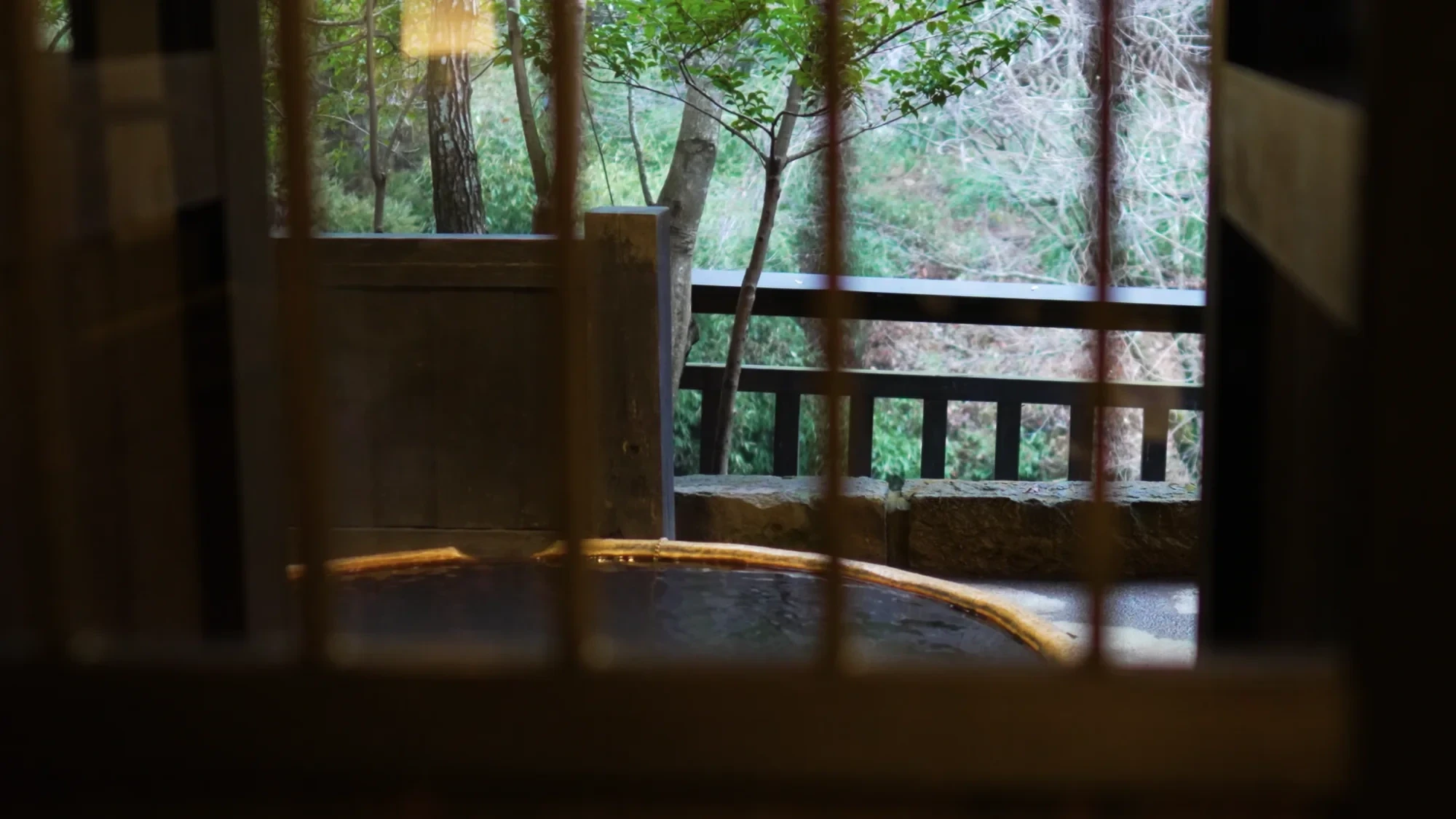
Ranked by whether you would actually both fit, which narrows it fast.
Second, the in-room bath: the same togetherness around the clock at the room-category premium, ranked second only because it is a booking decision rather than a day decision. Third, the konyoku: genuinely shared open-air bathing, the only format where a couple soaks together under the sky in the big scenic pools, ranked third because its arrangements, wraps, hours, availability, vary by house and evening, and because one partner's comfort cannot be assumed on the other's behalf; couples who choose it should choose it together, literally.
Fourth, the paired-separate compromise: same inn, same hour, adjacent doors, met at the entrance after, which sounds like no answer at all and is in fact how most Japanese couples bathe most of the time, the shared part being the walk, the before and the after. The honest ranking advice: book the first, consider the second, attempt the third once with the script above, and never disdain the fourth, whose lantern-lit walk home is not obviously the lesser romance.
Konyoku: the mixed tradition, done properly
Several Kurokawa ryokan maintain konyoku rotenburo, mixed-gender outdoor baths surviving from an older bathing culture, and the village handles them with a standard architecture: separate men's and women's changing rooms opening onto the shared outdoor pool, so no one crosses a room unclothed.
Swimwear is not permitted, but modesty wraps or rental towels for women are common at participating baths, and several inns post women-only hours on their mixed baths; Okunoyu, for instance, has reserved certain mixed outdoor baths for women from 8 to 10 pm, with baths going guest-only overnight.
Practical counsel: check the specific inn's current arrangement (wrap policy, women's hours, day-use windows) rather than assuming, enter via the correct changing room, and treat sightlines with the same discretion you would want. First-timers who find the idea daunting lose nothing by choosing the women-only hour, the kashikiri alternative, or simply the gender-separated baths that remain the village norm.
One rule is worth stating plainly, because it is the village's own and not our etiquette: photography in the open-air baths is prohibited in principle across Kurokawa, an association rule rather than any single inn's, and in a mixed bath it is the line that matters most — phones stay in the changing room, full stop. The rest is architecture doing the work.
Because the men's and women's changing rooms open separately onto the shared pool, the only moment anyone shares is in the water itself, where bathers are already submerged or wrapped; no one crosses a room unclothed. That is why konyoku here reads as calm rather than charged, and why the honest counsel is simply to follow the posted arrangement and keep your voice down.
Why the mixed tradition survived in this valley
Konyoku's national retreat is a century old, prefecture by prefecture, bathhouse by bathhouse, and its survival in pockets like this one is never accidental, so the local mechanics deserve naming. The first mechanism is rural continuity: mixed bathing was the small mountain community's default, one source, one pool, everyone's bath, and a valley that stayed poor and remote long enough, absent from its own prefectural map until 2000 by the association's account, simply never installed the segregating renovations that prosperity funds; by the time money arrived, the design code was in charge, and the code's instinct, nature as it is, extended to bathing culture as much as to signage.
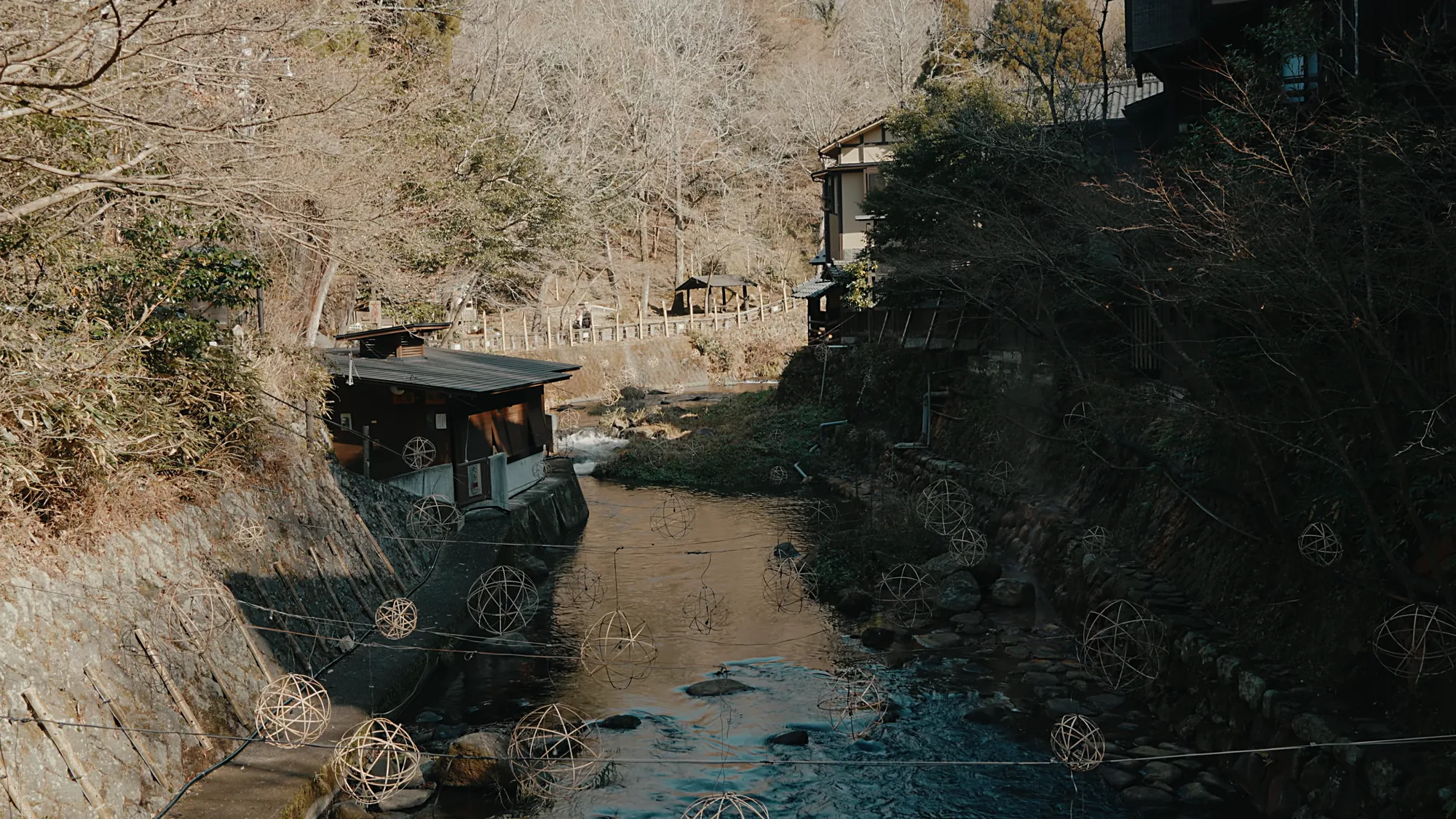
Mixed bathing survived here because the baths were built before the rules were.
The second mechanism is the protection engineering this page keeps documenting: the wraps, the women's hours, the gendered changing architecture, modern retrofits that let an old format meet modern comfort halfway instead of dying of it. And the third is the neighbouring proof, one hamlet over, where Manganji's stone-ringed pool in the running river preserves the format's original state, bathing in the landscape itself, so the village's curated konyoku stands not as an anachronism but as the middle term of a visible local continuum, river to protected pool to private room.
Read that continuum end to end and the mixed bath stops being a curiosity to dare and becomes what it is, the oldest layer of the valley's bathing archaeology, still warm.
The konyoku's architecture, walked through
The mixed bath's protections are spatial before they are social, and walking the documented layout in words demystifies it better than any reassurance. You enter from the lane through a gendered door, men's or women's, exactly as at any separated bath; nothing about the entrance differs. The changing room behind it is single-gender, private, unhurried, with its own baskets and its own threshold, and this is where the wrap, where provided, goes on, cloth secured before any shared space begins.
The changing room's far door opens onto the pool area, and here is the format's whole trick: both gendered doors open onto the same water, usually at separate points, often with the entry steps arranged so that entering bathers face away from the pool's middle. The shared zone is the water itself, where bathers are submerged to the shoulders or wrapped, and the sightlines that matter, the walk from door to water, are each gender's own.
Exit reverses the path, back through your own door, your own room, your own basket. Understood spatially, the konyoku asks one thing more than a separated bath, the few metres between your door and the water, wrapped or waist-deep quickly, and delivers one thing no separated bath can, the shared pool under the open sky, which is how this whole country bathed for most of its history. The architecture, in short, has already done the awkwardness-removal; what remains is only the deciding.
A first konyoku, scripted
For the bather circling the mixed pool's edge in theory, here is the first visit, scripted to remove every unknown. Choose the moment before the bath: a women-only hour where posted, the documented evening window at Okunoyu being the flagged example, converts the format's hardest step into a familiar one; failing that, a weekday mid-morning, when the pools run quietest.
Ask at the desk, one gesture and one word, konyoku?, and receive the day's arrangement: wrap provided or not, which hours, which doors. In the changing room, wrap before the far door, snug at the chest or waist, and carry nothing else; the small towel stays with your basket in mixed formats where the wrap replaces it.
Cross to the water at your own pace, enter at the steps, and settle to shoulder depth, where the format's social contract completes itself, every bather equally submerged, eyes on the steam, the rock face, the sky, the middle distance, which experienced mixed bathers will already be demonstrating.
Stay as long as the heat allows, exit by your own door, and notice, dressing, what almost every first-timer reports: the anticipated awkwardness spent itself in the changing room, and the bath itself was simply a bath, larger-hearted than most. The one rule that carries the whole format is the sightline courtesy, attention angled away, which costs nothing and is the entire price of admission to a tradition most of Japan has already lost.
What the wrap is, exactly
One object anchors the mixed format's comfort and remains vague in most guides, so here is the wrap described plainly. The yugi or bath wrap provided at participating konyoku is a purpose-made bathing garment, typically a knee-to-chest tube or tied sheet of quick-drying cloth, worn in the water, which distinguishes it from the small towel, never submerged anywhere, and from swimwear, prohibited everywhere.
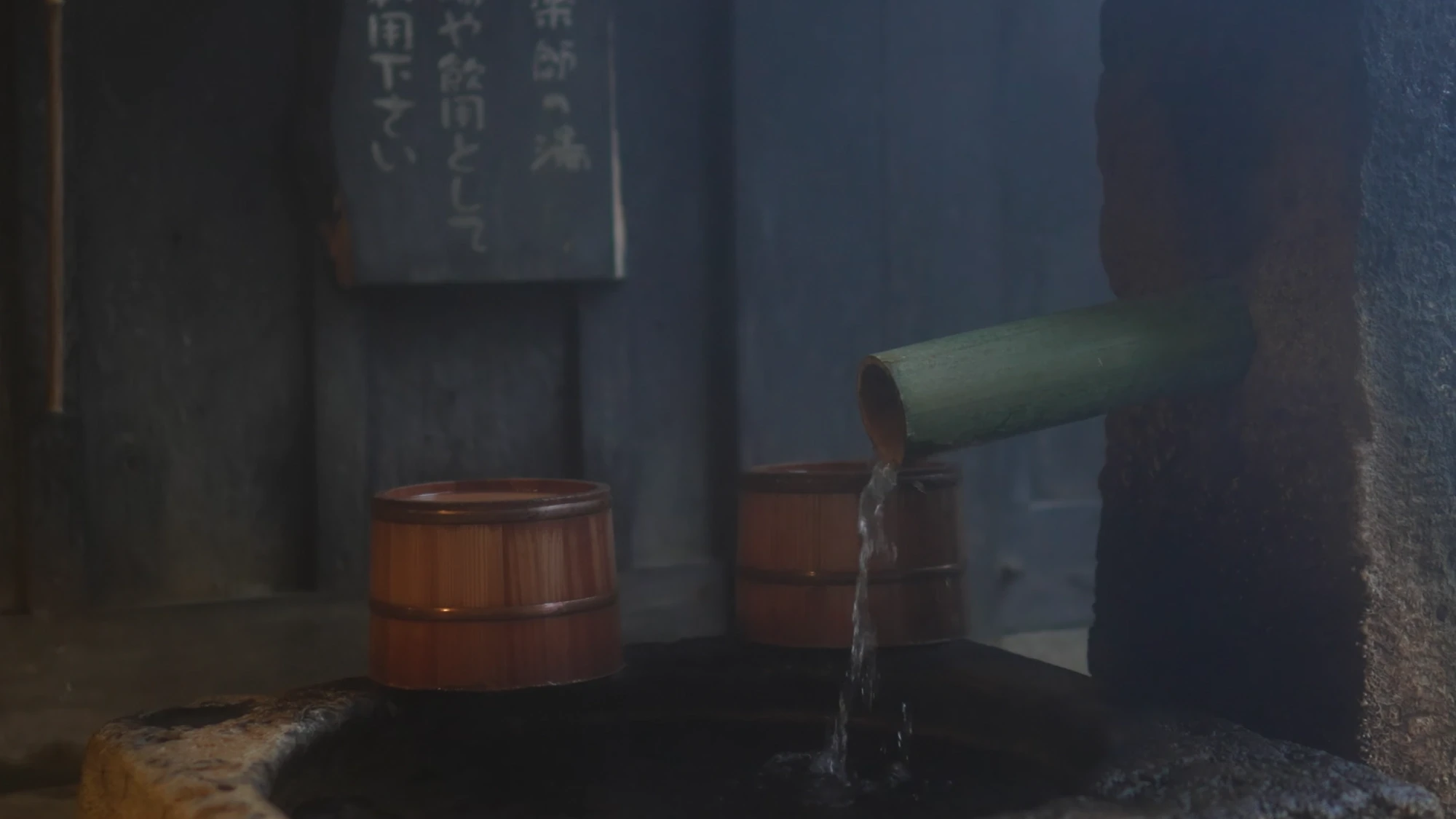
The wrap is provided, not improvised. Ask at the desk rather than guessing.
Where the arrangement provides wraps, they are issued at the desk or in the changing room, worn snugly from the changing room's far door onward, and returned after; where an arrangement instead specifies rental towels or its own system, the posted terms govern, and the desk explains them in a gesture.
The wrap changes the format's arithmetic completely for the hesitant, which is why this page keeps returning to it: wrapped, a mixed bath asks no more exposure than a beach, and the walk from door to water, the format's one honest challenge, becomes a non-event.
Two practicalities finish the object: wring it at the pool's edge before re-entering the changing room, sparing the floor, and never substitute your own swimwear for a missing wrap, since the absence means that bath runs on the traditional terms, at which point the women-only hour or the kashikiri block is the comfortable answer. Small object, whole format; the konyoku's modern survival is partly sewn into it.
The wildest bath in the family
For perspective on how deep this area's open-bathing tradition runs, look one hamlet over. At Manganji, one of the five springs in Kurokawa's national designation, the open-air bath is built into the bank of the Shizu River and ringed with stones, so bathers soak effectively in the running stream, in the open, below a temple founded in the thirteenth century, in water clean enough that it shelters a protected freshwater alga.
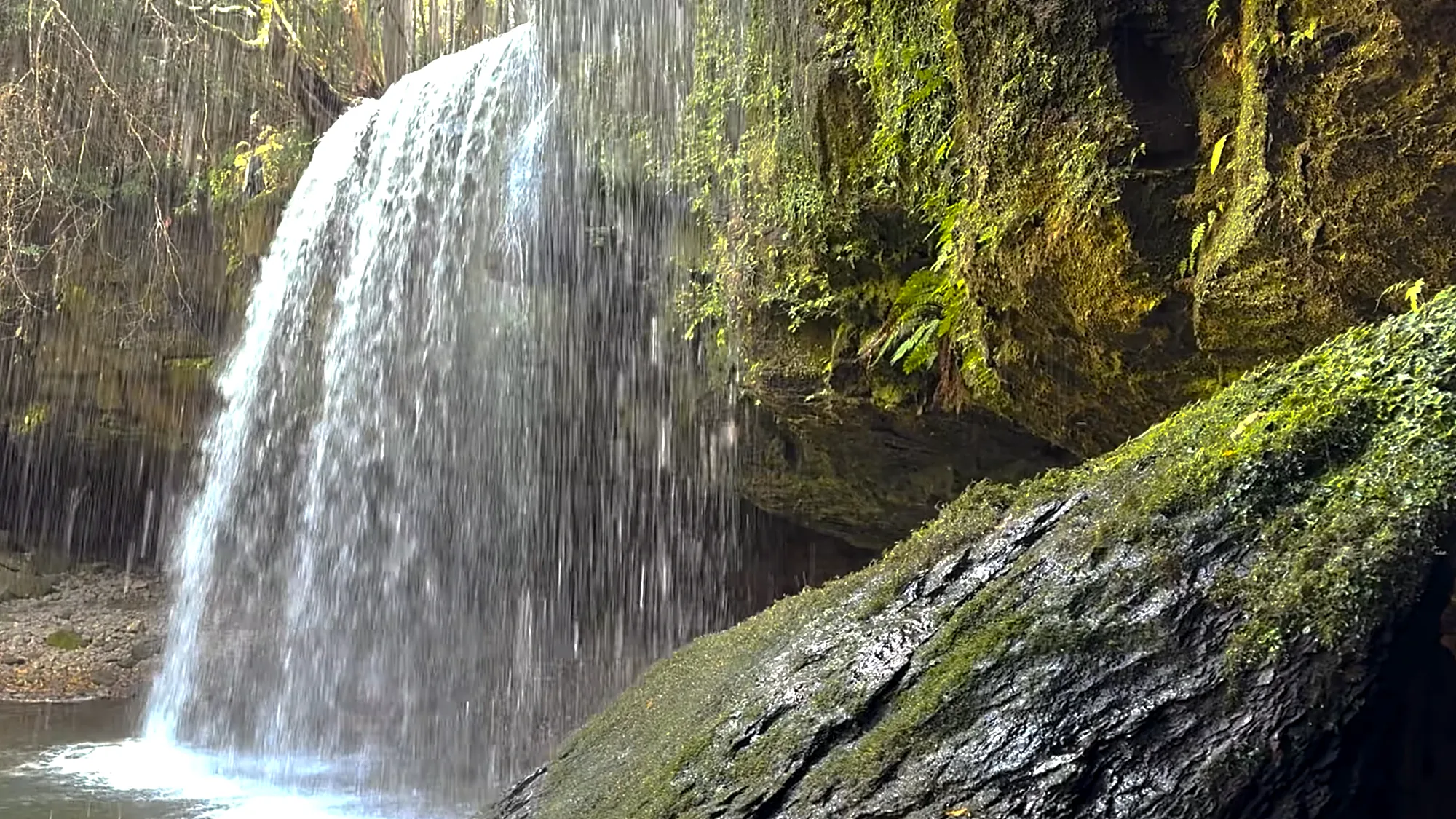
The wildest bath in the family is the one with the least built around it.
That is not a curated konyoku with changing-room architecture; it is bathing as this valley did it before architecture, and it makes Kurokawa's own mixed baths, with their wraps, women's hours and separate doors, look like what they are, a heritage practice carefully fitted with modern protections. Visitors who find even the protected version daunting need no persuading.
But for the curious, the pairing is the point: try Kurokawa's konyoku one evening and stand by Manganji's river bath the next day, and you will have seen both ends of a tradition most of Japan has quietly dropped, half an hour apart, inside a single designation.
Choosing among the three modes
The village's bathing menu now reads: separated shared baths (the default everywhere, including the tegata circuit's famous rooms), kashikiri (privacy on demand, modest fee), and konyoku (the heritage experience, protections in place). A sound first visit uses all three deliberately: tegata stamps in the separated baths for the famous settings, one kashikiri hour for the private soak, and, for the curious, a konyoku visit during a quiet hour or a women-only window. None requires courage so much as a check of the posted rules, which Kurokawa, characteristically, keeps clear and standardized.
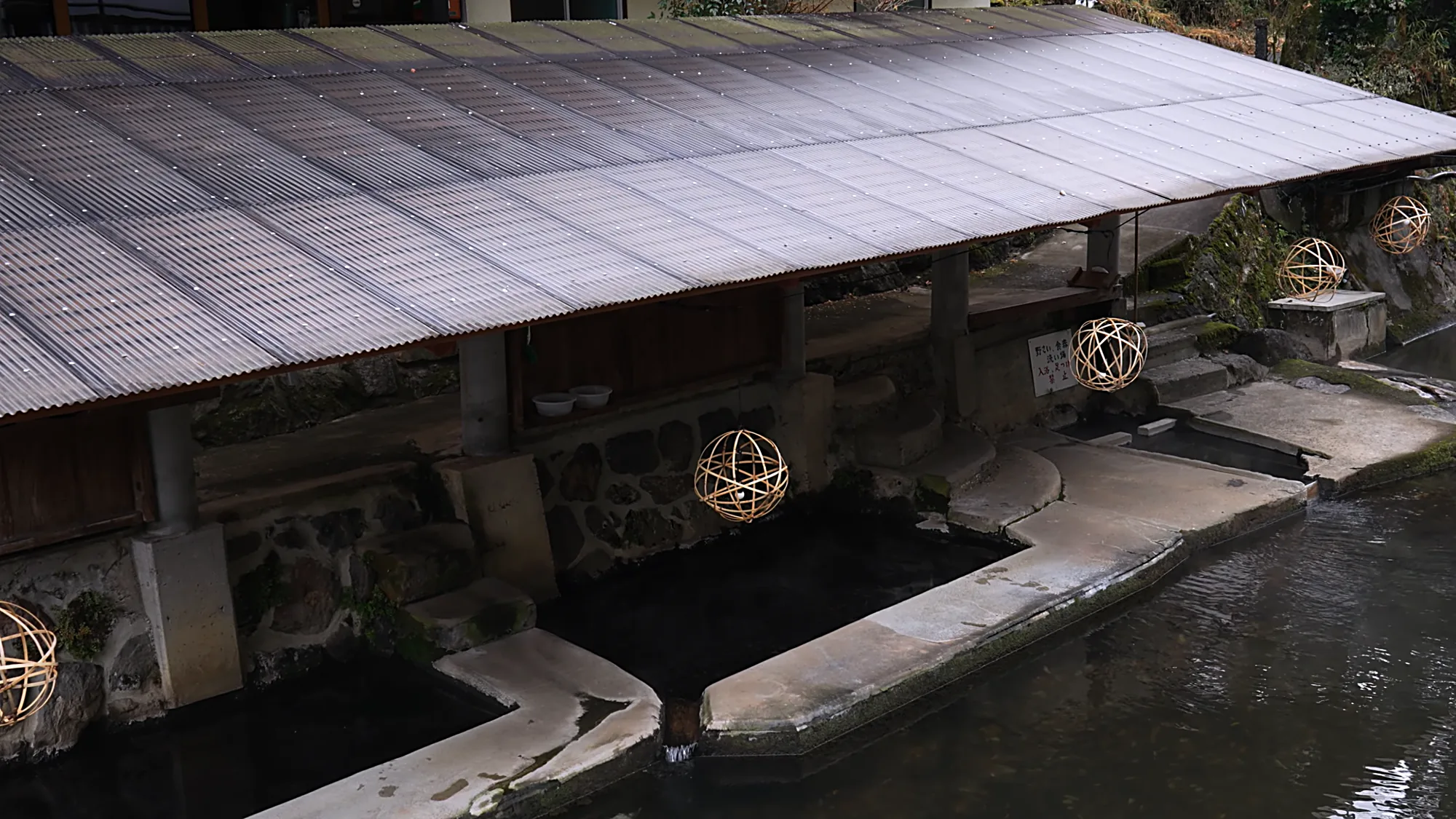
Booked, mixed, or separated. Most visitors end up doing all three.
One day, three systems
The village's bathing systems interleave best when a single day uses all three deliberately, and the composed version runs like this. Morning belongs to the separated circuit: two tegata stamps at the famous doors in the 8:30-to-noon window, the cave's enclosure or the Senninburo's steam field, bathing the village as most bathers do.
Early afternoon belongs to the private system: the kashikiri block claimed at the day's start, the documented walk-up pattern at the Inoya-style receptions, fifty minutes behind a locked door for the couple, the family, the ink or the introvert, timed to the post-lunch lull when blocks run easiest. And early evening, for the curious, belongs to the mixed tradition: a konyoku hour at a posted arrangement, wrap on, sightlines soft, the day's third format and its oldest.
Threaded between the three run the interludes the village built for exactly this, the sticker counter, the footbath, the bench above the river. The day's arithmetic: two stamps, one metered hour, one mixed soak, four bathing experiences across three distinct systems, at a documented cash cost of the tegata plus the block, roughly ¥3,500 (US\$23) all told.
No other onsen town in Japan can stage that day inside one walkable village, because no other town maintains all three systems side by side, which is the quiet point of this page: Kurokawa is not a bathing destination with some options, it is the country's living museum of bathing formats, open daily, coins accepted.
The systems, answered in one passage
For the reader who needs the machinery in a paragraph: Kurokawa runs three bathing systems side by side, and each has a door for you. The separated shared baths are the default, the tegata's twenty-five doors and every inn's own pools, entered by gender, no reservation, standard onsen rules.
The kashikiri private baths are the universal solvent, rentable blocks at most inns, the documented example pricing fifty minutes at ¥2,000 (US\$13) with advance booking for staying guests and walk-up reception for day visitors, free with reservation at one listed house, and officially recommended wherever shared bathing does not fit, ink, children, shyness or faith included.
And the konyoku mixed baths are the surviving heritage layer, several inns maintaining shared open-air pools behind gendered changing rooms, with wraps commonly provided and women-only hours posted, the flagged evening window at Okunoyu being the documented example. Use the first for the famous settings, the second for everyone the first cannot seat, and the third, once, with the script above, for the oldest bath in the valley's repertoire. Nothing requires courage; everything requires the posted arrangement read and the desk asked, which in this village is one gesture.
Etiquette, compressed
Wash before entering, always; towels stay out of the water; wraps where provided are worn in konyoku, not improvised elsewhere; keep voices low and phones sheathed everywhere, cameras being the one true taboo of mixed bathing; and children join family baths freely while konyoku suitability varies by inn. The full etiquette canon lives on the JOS hub; Kurokawa adds only its own good habit, the assumption that every bath, shared or not, is borrowed from the village rather than bought from it.
From the mailbox: the four recurring questions
Can we wear swimsuits in the mixed baths? No; konyoku follows onsen rules, not pool rules, and the provided wraps or towels are the modesty layer where arrangements include them, swimwear staying in the bag village-wide. Can children join the mixed baths?
Family bathing is deep in the format's rural history, and children in konyoku remain common in principle, but suitability varies by house and hour, women-only windows excluding by definition, so the desk's answer at the specific bath outranks any general one, and the kashikiri hour stands ready as the family format the village prefers anyway. What about menstruation?
The considerate standard across Japanese bathing applies in every format here: skip the shared pools during the days themselves, and let the private systems, the kashikiri block or the in-room bath, carry the trip's bathing without any loss; inns field the quiet rebooking of a private hour without ceremony. And can we photograph the mixed bath, empty, for the memory?
No, flatly: the village-wide prohibition on photography in the baths is at its most absolute in the formats built on trust, and the changing-room threshold is where every camera's day ends. Four questions, four short answers, one shared principle: the mixed tradition survives here because its rules are kept by everyone, which is exactly why a first-timer can trust it.
Tips
Reserve kashikiri slots at check-in; evening blocks go first everywhere.
Nervous about konyoku? Use women-only hours (e.g., 8–10 pm windows) or start kashikiri.
Confirm wrap/towel policy per inn before assuming; arrangements differ.
Enter mixed baths through the correct changing room; the architecture does the awkwardness-removal.
Phones stay in the changing room in every bath, mixed above all.
Frequently asked questions
Does Kurokawa Onsen have mixed-gender baths?
How do private (kashikiri) baths work in Kurokawa?
Are bathing suits allowed in Kurokawa's mixed baths?
Which should a first-timer choose?

Verified by The Japan Onsen Society
Show all sources
Verified July 7 to 16 and September 6, 2026 by The Japan Onsen Society. The kashikiri price band and the konyoku women-only hours are visitor-reported and marked ; the rest rests on the ryokan association's own pages.
Tattoo policy set inn by inn, handled through each inn's own enquiry, no published per-inn list · photography in the rotenburo prohibited in principle → 黒川温泉観光旅館協同組合 FAQ kurokawaonsen.or.jp/faq/ → verified Sep 6, 2026
~30 member inns → 組合 kurokawaonsen.or.jp/about/ → verified Sep 6, 2026
Kōnoyu: 9 guest rooms with private valley-view open-air baths → kashikiri-onsen.com
Okunoyu: mixed baths reserved women-only ~8–10 pm, guest-only overnight → okunoyu.com → confirm current arrangement
Kashikiri, konyoku and general onsen etiquette universals → the JOS onsen-etiquette hub
VERIFY:
Which inns currently operate konyoku baths (avoid naming beyond Okunoyu's documented example until confirmed)
Okunoyu women-only 8–10 pm and guest-only overnight details (maigomika source; confirm on okunoyu.com)
Wrap/rental-towel prevalence claim ("common at participating baths")
Kashikiri price band ¥1,000–2,500 consistency with money page; day-visitor access examples
Separate-changing-room architecture as village standard for konyoku
Children-in-konyoku policies if we later add specifics
USD conversions assume ~¥150/$1. Update ¥→USD at publish.
山みず木 温泉 (Yamamizuki, spa page) - day-use kashikiri 10:00–21:00, last reception 20:00, ¥2,000 per 50 minutes, same-day handling at the Inoya cafe with advance booking reserved for staying guests, verified August 18, 2026
日本温泉協会 国民保養温泉地 南小国温泉郷 (Japan Spa Association, national recuperation-area profile) - Manganji's stone-ringed riverside bath in the Shizu River, the protected alga, and the 13th-century temple, verified September 6, 2026
黒川温泉観光旅館協同組合 入湯手形 (tegata page) - the child pass price and age band, the one-per-person rule, and the food-sticker option, verified August 18 and September 6, 2026
黒川温泉観光旅館協同組合 お宿一覧 (member inn directory) - Kurokawa-so's three free reservable private baths, re-verified September 7, 2026
日本温泉協会 温泉地詳細[黒川] (Japan Spa Association, spring-area record) - Okunoyu's mixed baths and the documented women's-hours example behind the script and rankings, verified July 7 and September 6, 2026
黒川温泉観光旅館協同組合 よくある質問 (official FAQ) - the mixed-bathing question the association fields and the kashikiri-as-alternative framing, verified September 6, 2026
Related guides
The Baths
The waters
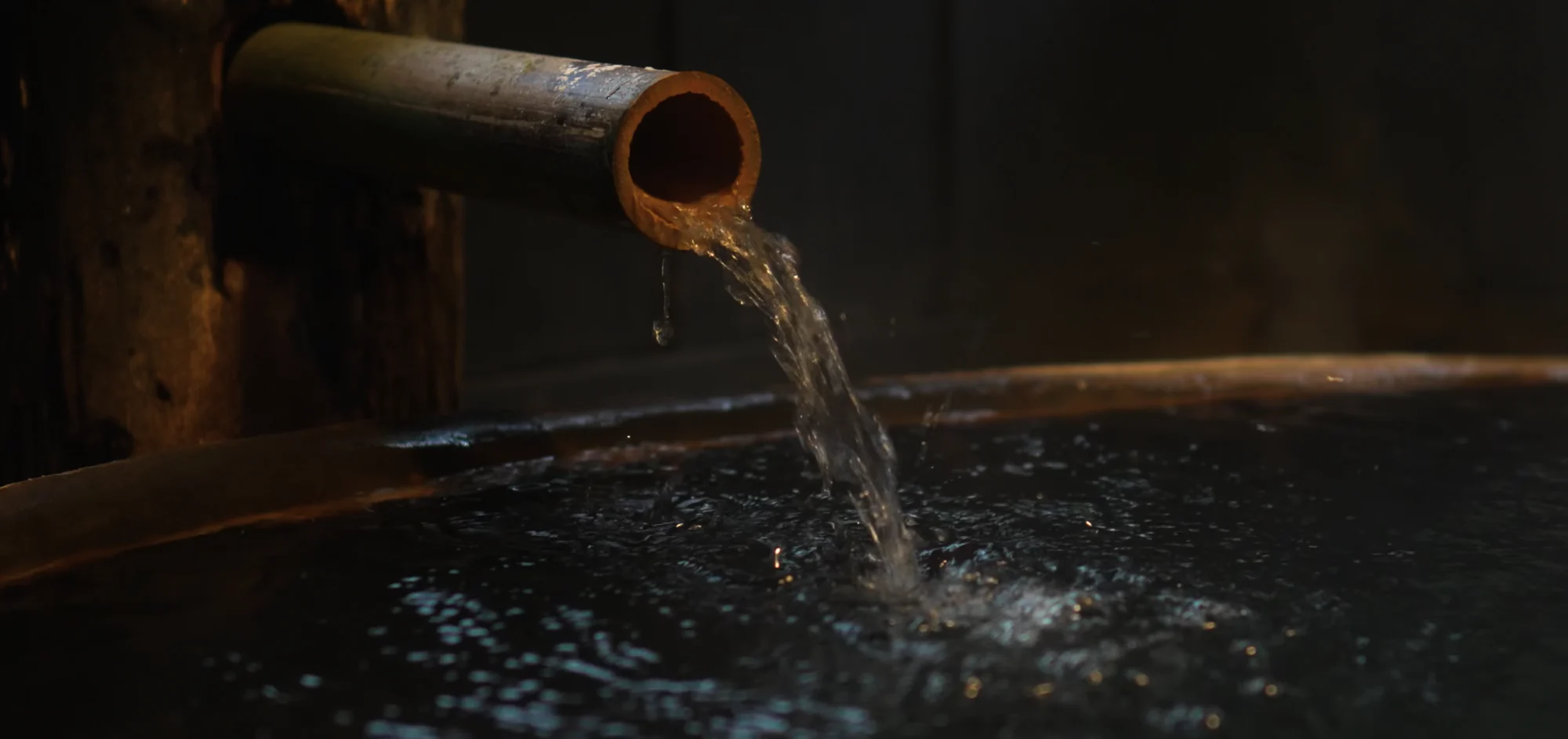
Kurokawa has no single water. Each inn owns its source, so bath-hopping is chemistry-hopping — sulphur, chloride and bicarbonate within one lane.
The Baths
The Best Open-Air Baths (Rotenburo)
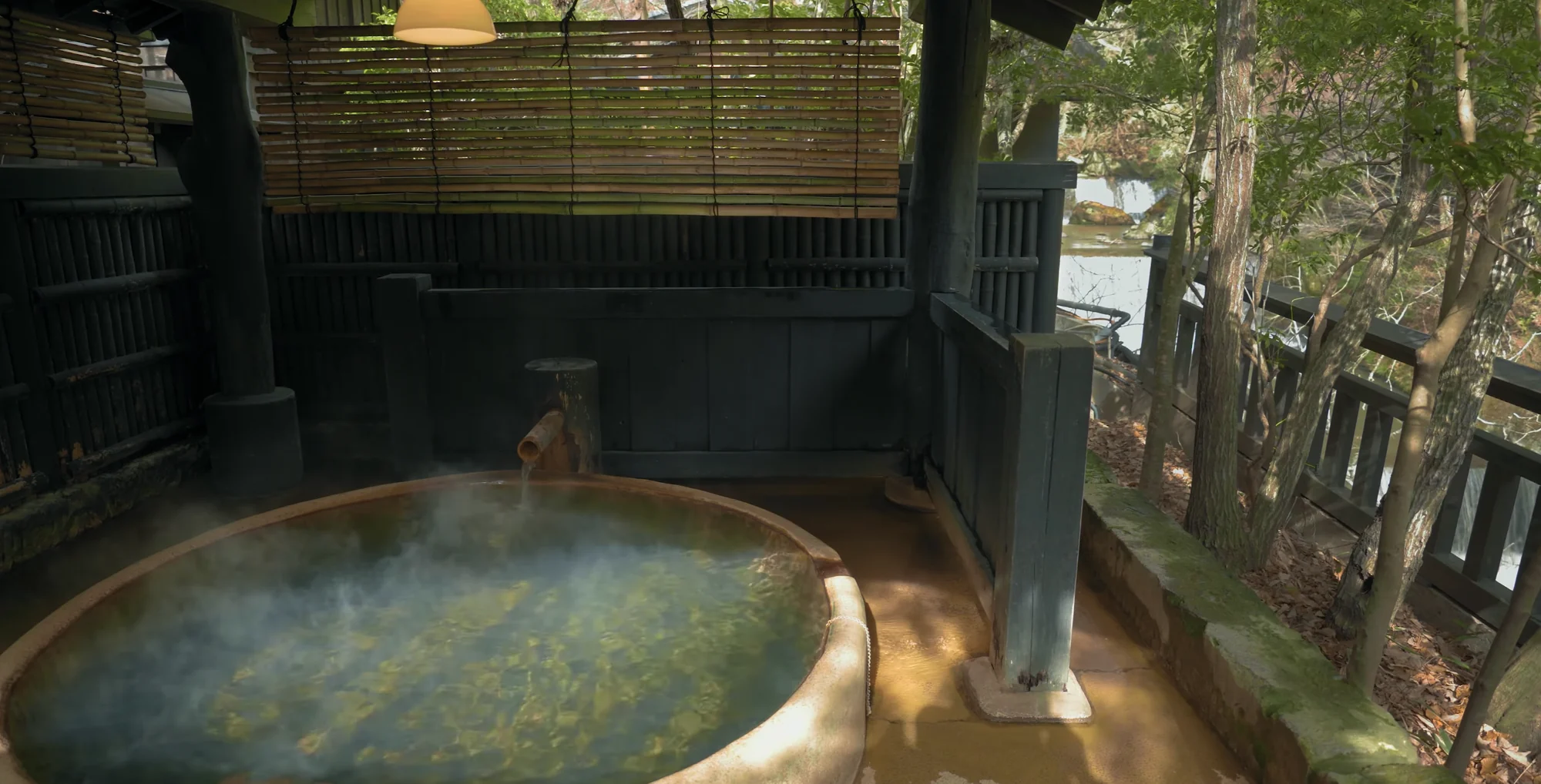
The tegata buys three of twenty-five open-air baths. Choose for contrast — a river, a cave, a pond — not three of the same.

The Baths
Kurokawa Onsen: The Complete Guide
A wooden pass buys three baths from twenty-five. The innkeepers agreed, decades ago, to look like this.